
Japanese Horse Chestnut Honey (とちのき蜂蜜)
The Story
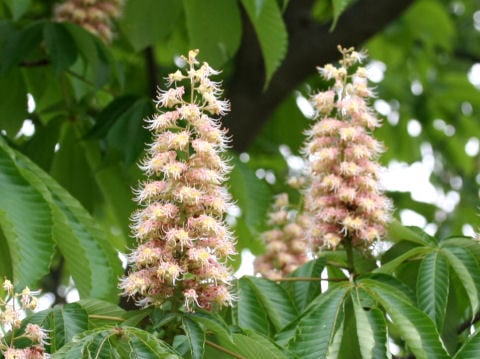
Aesculus turbinata takes between forty and sixty years to reach full nectar production. The honey it produces is described by Japanese beekeepers as the best domestic honey in the country. The trees are endemic to Japan and declining.
The tree grows in the cool, moist mountain forests of eastern Japan - stream valleys and old-growth broadleaf forest from Kyushu to Hokkaido, primarily concentrated in Tohoku and the mountains of Nagano. It reaches 30 meters in height, a meter or more in girth, and forms the canopy in the places where it still stands in numbers. Mature specimens are often found at mountain shrines designated as sacred trees. The large palmate leaves, seven leaflets in a fan shape, were said to resemble the fan carried by tengu, the mythical mountain spirits of Japanese folklore.
In late May and June the tree produces upright flower spikes, white blooms with red spots clustered into dense panicles that rise from the branch tips like inverted Christmas trees. The nectar yield from an established tree is exceptional: a single specimen can produce 20 kilograms of honey in a good season. One tree, half a century of growth, 20 kilograms of honey.
The name creates confusion in English. Aesculus turbinata is correctly called Japanese horse chestnut - it shares the genus with the maronniers of the Champs-Elysees, Aesculus hippocastanum. It has no botanical relationship to sweet chestnut, Castanea crenata, which is a different tree in a different family that produces a different honey entirely. The two plants share nothing except the word chestnut in their English common names and a superficial resemblance between their nuts. Some Japanese retailers use the French name marronnier (maronie) for tochinoki honey, which at least places the tree in the correct genus while trading one form of confusion for another.
The character 栃 is a kuji - a kanji invented in Japan, not inherited from China. The tree does not grow in China, so no Chinese character existed for it. The Japanese etymology traces to jissen (ten thousand), referring to the abundance of the tree’s nuts. The prefecture of Tochigi (Tochigi-ken) takes its name directly from the tree. Tochi no ki - the tochi tree - gives Tochigi its name because the old forests were full of them.
Characteristics
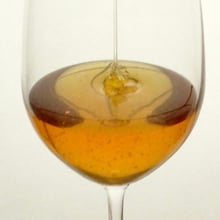
Pale to mid amber, unusually clear. The fragrance is the identifying feature - vivid floral, immediately recognizable, strong enough that Japanese beekeepers have a specific saying about it: tochi mitsu ga ichiban umai, tochinoki honey tastes the best. That claim surfaces across unrelated sources and registers as genuine consensus rather than marketing. The flavor is full and sweet with a distinctive spicy undercurrent and a clean finish. Does not crystallize easily. Single mature trees yield up to 20 kilograms in a good season; the constraint is not the honey but the trees.
Click to Display — The Details: botanical origin, sensory profile, and its regional identity
Botanical Name: Aesculus turbinata (Blume) - Japanese horse chestnut
Botanical Family: Sapindaceae (formerly Hippocastanaceae)
Bee Species:
Apis mellifera (Western honeybee) for commercial tochinoki production. In traditional mountain forest contexts, Apis cerana japonica (Nihon mitsubachi) works tochinoki blooms as part of its full-season foraging, but the once-yearly autumn extraction of the resulting hyakkamitsu (hundred-flower honey) means tochinoki cannot be isolated as a monofloral from that bee. All commercially documented tochinoki honey is from Apis mellifera production.
Color:
Pale to mid amber with high transparency. Dorato’s Hokkaido-sourced jar describes the color as tottemo tomeidodo ga takaku sukitotta iro - very high clarity, transparent. A faint reddish cast appears in some batches; this comes from the tree’s distinctively colored pollen and does not affect flavor.
Flavor Profile:
Rich, full-bodied sweetness with a clean finish and a faint spicy edge. Dorato describes it as kokunoa amasa to honnori kanjiru supaishii sanmi - a rich sweetness with a gently spicy acidity.
Tasting Notes:
The color is transparent to pale amber, cleaner in appearance than most comparably rich honeys. The sweetness arrives full and rounded - more body than acacia, none of buckwheat’s mineral darkness. Behind it, a faint spicy note that Dorato documents specifically and that multiple beekeepers describe independently: not pepper, not resin, more like a warm aromatic undercurrent that keeps the profile from being simply sweet. The finish is clean. High fructose content means the honey does not crystallize readily - the texture stays consistently smooth across storage. The reddish pollen in some batches shifts the color toward warm amber; the sensory character is unchanged.
Aroma:
Vivid, immediately present floral fragrance. Among Japanese domestic honey types, tochinoki is consistently identified as having the most distinctive and intense aroma. The fragrance is the first thing noticed and tends to persist in the memory.
Forage Origin:
The nectar comes from Aesculus turbinata flowers - the upright conical panicles that emerge from branch tips in late May through June. Each panicle carries both hermaphrodite and male flowers; most are male. The hermaphrodite flowers, which set the nuts, are concentrated at the lower part of the flower spike. The nectar secretion from a single mature tree is substantial enough that bees actively seek out established specimens. Pollen is distinctively reddish, which accounts for the warm amber tint in some batches.
Aesculus turbinata belongs to the Sapindaceae family - the same family as lychee, longan, and maple - placed there by the APG IV system in 2009. It was formerly classified in its own family, Hippocastanaceae. The genus Aesculus has about 15 species distributed across the Northern Hemisphere; Aesculus turbinata is the only one native to Japan. The European horse chestnut (Aesculus hippocastanum) and the North American buckeyes are close relatives but distinct species.
The tree is most dense in the mountain forests of Tohoku - Aomori, Iwate, and the Aizu district of Fukushima - and extends north into Hokkaido and south through the mountain spine of central Honshu. It prefers moist, fertile soils in valley bottoms and lower mountain slopes, often growing along streams at elevations from 500 to 1,500 meters. It is a climax forest species: it dominates mature broadleaf forest but does not regenerate quickly after disturbance, and it cannot establish in the dense shade of plantations. Where old-growth broadleaf forest was replaced with sugi (Japanese cedar) or karamatsu (larch) under the postwar reforestation program, the tochi trees are gone and do not come back.
The nuts of Aesculus turbinata are large, chestnut-like in appearance, and completely inedible without processing. They contain high concentrations of saponins and tannins that make them intensely bitter and potentially harmful raw. This chemical defense also makes the nuts resistant to decay and insect damage - they store well and were the basis of emergency food supplies in mountain communities. The honey carries none of this bitterness. The nectar is separate from the nut chemistry.
Pairings:
Hard and semi-hard aged cheeses are the most natural pairing. Dorato recommends this specifically: the honey’s richness and spicy edge balance the sharpness of aged Gouda, Parmesan, or Pecorino without either element being flattened: contrasting intensity from complementary directions, the same logic as aged balsamic with parmesan.
Sweet potato preparations pair well: Dorato documents suito poteto as a specific match. The honey’s aromatic depth sits beside rather than on top of the sweet potato’s earthiness. In Japanese cooking, a small amount on roasted sweet potato or in sweet potato dorayaki achieves the same effect.
Soba noodles with a small amount drizzled alongside the tsuyu dipping broth is a Tohoku mountain tradition that makes compositional sense: buckwheat and tochinoki honey come from the same high-altitude ecology and their flavors occupy adjacent rather than competing registers. On toast with cultured butter, tochinoki delivers more presence than acacia without the mineral heaviness of buckwheat. For drinking: pu-erh tea, aged oolong, and hojicha (roasted green tea) work well; the roasted notes do not fight the honey’s floral character.
Health Uses:
Traditional use across Tohoku mountain communities overlaps with the tree’s broader folk pharmacology. The nuts were used in folk medicine for digestive complaints. The honey was used as a general tonic and in medicinal preparations. These are cultural records, not verified therapeutic claims. The high fructose content and low crystallization tendency make tochinoki honey practical for medicinal preparations that require a consistently fluid honey.
Origin Story
The character 栃 was invented in Japan. The two components trace to jissen (10 x 1000 = 10,000), a reference to the abundance of the tree’s nuts, with the wood radical added to specify the plant. Chinese botanical taxonomy has no equivalent because Aesculus turbinata does not grow in China. The character exists because Japan needed a word for something that belongs specifically to Japan.
The province of Tochigi carries the tree’s name because the old forests were
full of tochinoki. The prefectural designation formalizes what was already
true before prefecture boundaries existed: this was tochi country. The tree
was designated Tochigi’s prefectural tree as formal acknowledgment of a
historical fact.
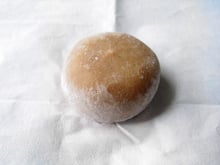
The nuts have been eaten since the Jomon period. Archaeological excavations at sites across Tohoku and central Honshu find charred tochi nuts in stone-age contexts, consistent with the calories and carbohydrates the nuts provide once properly processed. The processing technique - soaking in ash water, repeated rinsing to remove saponins and tannins, grinding, and preparation as tochi mochi (栃餅) - is demanding enough that food historians treat it as a significant cultural technology. Tochi mochi is not something discovered accidentally. It required systematic knowledge about which plant compounds to remove and how to remove them. The accumulated technique encodes information about how to survive on a tree that most animals cannot eat.
Tochi mochi persists as a regional specialty across Tohoku and the mountain districts of central Honshu. Mountain pass rest stops in Aizu, in the Nakasendo highlands, and across the Tohoku interior still sell it. The grey-brown color and earthy depth that distinguish it from plain mochi are the direct result of the residual tochi character that survives even after processing.
The picture book Mochi-mochi no Ki (モチモチの木), written by Saito Ryusuke with cut-paper illustrations by Takidaira Jiro and published by Iwasaki Shoten in 1971, is built around a tochi tree. The title’s mochi refers to tochi mochi: the food the grandfather makes from the tree’s nuts. The text does not use the word tochinoki - the tree is named only by the food it produces - but every Japanese reader over the age of eight understands the identification. The book entered the national primary school curriculum in the third-grade language textbook and by 2020 was part of the curriculum in every school in the country. For nearly fifty years, Japanese children have been introduced to the tochi tree not as a botanical fact but as a presence: the enormous tree that stands in the dark outside a mountain hunter’s hut, frightening at night, generous in autumn, essential to the people who depend on it.
The Saito Ryusuke text quoted in the classroom: “Konani shita yatsu wo mochi ni kone agete, fukashite taberu to, hoppeta ga okkochiru hodo umai nda” - turn the nuts to flour, knead them into mochi, steam and eat, and your cheeks will fall off from the goodness. Every generation of Japanese schoolchildren since 1971 has heard those words. They connect to a tree whose honey most of them have never tasted.
Cultural Context
The tochinoki has accumulated cultural weight across every layer of Japanese mountain life. As food, as timber, as sacred tree, as the subject of the most widely read children’s book in the national curriculum - the tree precedes the honey in Japanese cultural memory. The honey is what the flowers produce. The rest of the tree is already there.
Tochinoki are frequently designated as goshinboku (sacred trees) at mountain shrines. Great age, imposing size, and the tree’s long association with mountain communities make it a natural candidate for this status. Specimens several hundred years old stand at shrine sites across Tohoku and the Kanto mountains. The combination of ecological longevity and cultural significance creates a register where the tree is understood as a presence rather than a resource.
The timber is equally prized and equally responsible for the tree’s decline. Tochi-moku (栃杢) is the term for the tree’s figured grain - irregular fiber growth in old-growth specimens produces swirling, bird’s-eye patterns that command premium prices in furniture and lacquerware. The wooden bowls (wan) used in traditional kaiseki cuisine and Buddhist temple settings are frequently tochi. The same characteristics that make the tree beautiful as timber - old growth, large diameter, straight form - make it a target for logging. The beekeeper and the woodworker are competing for the same trees, and the woodworker has the chainsaw.
The plant’s flower, tochi no hana (栃の花), is a confirmed summer kigo in the traditional Japanese haiku calendar, appearing in multiple saijiki (seasonal almanacs) alongside maronie no hana (European marronnier flower) as a related summer entry. The flower blooms in the same weeks that mark the transition from spring to early summer in mountain Japan - the window when the bee migration from renge and acacia moves upslope toward the higher forest.
Tochi no hana kitto saigo no yuuhi sasu
Tochi blossoms - / surely catching the last / rays of evening sun.
Iijima Haruko (飯島晴子), 1921-2000 / Composed at Chichibu, Saitama / Trans. HoneyTraveler / Iijima Haruko Zenkushu (Kadokawa, 2003) ISBN 978-4-8291-7501-9
Harvest & Forage
The bloom runs from late May through June in Tohoku, timed to arrive after the acacia flush at lower elevations. Elevation shifts the window: lower slopes bloom first, higher forest follows. Hokkaido production extends into early July. The harvest window at any single site is approximately two to three weeks. Beekeepers time hive placement for arrival before the bloom opens and extract immediately after to capture the fragrance at its peak.
Rain during the bloom window reduces nectar secretion and limits flight. The tochinoki bloom is not as weather-sensitive as acacia - whose bloom can be reduced to near nothing by a single wet week - but timing still requires attention. A beekeeper working mountain forest sites at multiple elevations can sometimes extend the effective harvest period by moving between elevations as the bloom progresses upslope.
The fundamental harvest constraint is not weather or timing but tree count. A tochinoki producing 20 kilograms of honey requires fifty or more years of prior growth. The trees that produce honey today were established before most of the beekeepers who work them were born. There is no seed-to-harvest planning cycle that addresses this within a commercial operation. Production is determined by the trees that exist.
In the Tohoku production zone, tochinoki often follows renge and acacia in the seasonal sequence. Sugi Bee Garden’s annual migration reaches Akita in early June; the Tohoku mountain tochinoki bloom is the next significant flow as hives move to higher forest positions after the lower-elevation acacia harvest.
Beekeeping Context
Tochinoki honey is produced commercially using Apis mellifera positioned in mountain forest apiaries. The established production zone is the Tohoku mountain arc - Aomori, Iwate, and the Aizu district of Fukushima - with Hokkaido as the northern extension of the range.
In Iwate Prefecture, Yamamoto Beekeeping (山本養蜂場) at Appi-Hachimantai has won the Iwate Prefectural Governor’s Award (the top category in the prefectural honey competition) for their tochinoki honey, sourced from established trees in national forest land around the Appi Kogen and Hachimantai highlands. The citation confirms that the production trees are old-growth national forest specimens - not a managed nectar planting but a known stand that has produced reliably for decades.
In the Aizu district of Fukushima, Matsumoto Beekeeping (松本養蜂場 - Japan’s first JONA-certified organic honey producer) documents tochinoki from the Aizu forest alongside kihada (Amur cork tree) and bodaiju (linden). Miel-Mie Honey Hunter Ichikawa sources Aizuwakamatsu tochinoki as a named lot, product code SO0411, documenting provenance at the prefecture and district level. L’Abeille (Imabari, Ehime) carries Aomori tochinoki in 125g and 250g formats in their domestic catalog.
Dorato (Kyoto-Nishijin, Kobe-Sannomiya) sources from Hokkaido, representing the northern edge of the commercial production range. The Hokkaido expression occupies the same general character profile as the Tohoku production - the tree does not change across that range - but the Tohoku mountain zone represents the documented concentration of named-producer lots.
Unlike acacia (Robinia pseudoacacia), which regenerates aggressively and can be established in new plantings, tochinoki cannot be quickly replenished. Beekeepers who work the tochinoki harvest know specific trees and specific stands. Production is tied to what exists, not to what can be planted. A stand of tochinoki that has been harvested for thirty years cannot be replaced within a working beekeeper’s career if it is logged.
Named Producers
- Yamamoto Beekeeping (山本養蜂場) - Appi-Hachimantai, Iwate Prefecture. Iwate Prefectural Governor’s Award (county knowledge prize, top category) for tochinoki honey sourced from national forest land.
- Matsumoto Beekeeping (松本養蜂場) - Aizuwakamatsu, Fukushima Prefecture. Japan’s first JONA-certified organic honey producer (2006). Tochinoki from the Aizu forest documented alongside kihada and bodaiju.
- Miel-Mie field lot SO0411 - Aizuwakamatsu, Fukushima. Honey Hunter Ichikawa Takusaburo, named lot documentation.
Translations
Tochi mitsu (栃蜜) - common abbreviated Japanese name; tochi no hana no hachimitsu (栃の花の蜂蜜) is the more descriptive form. Marronnier honey (マロニエの蜜 / maronie no mitsu) - occasional French-derived name used by some retailers, invoking the European horse chestnut genus connection; less common than tochi mitsu in domestic contexts.
Further Reading
- Mochi-mochi no Ki (モチモチの木) - Saito Ryusuke, illus. Takidaira Jiro. Iwasaki Shoten, 1971. ISBN 978-4-265909-06-3. The picture book built around a tochinoki tree that has been in the Japanese national primary school curriculum since 1971.