
Stingless Bee Honey
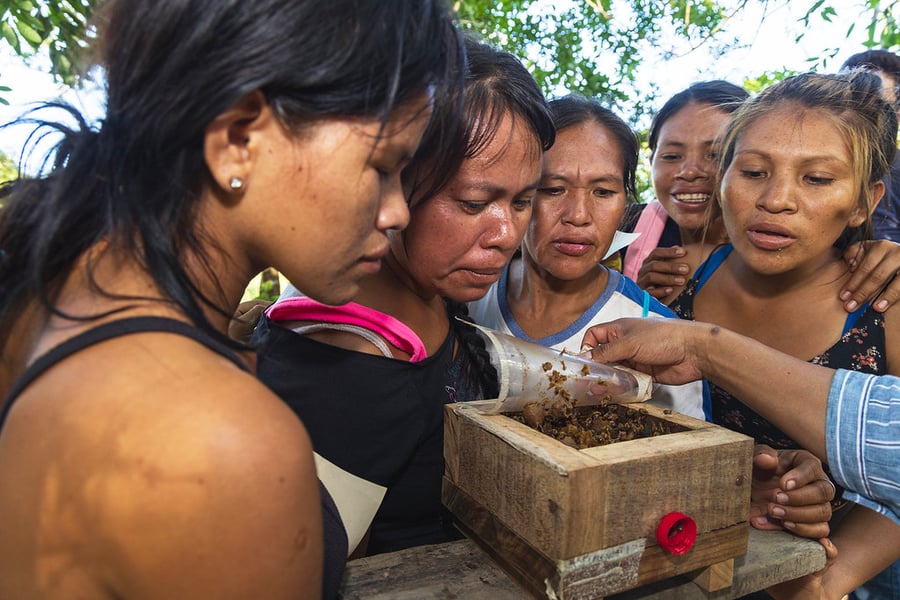
Stingless bees (Meliponini) thrive exclusively in tropical and subtropical climates, including countries like Brazil, Mexico, Australia, Indonesia, and regions of sub-Saharan Africa. They are important native pollinators in the tropics, pollinating 45 to 90% of native or cultivated plants there.
Their unique evolution is directly tied to geography. The are European honeybees evolved in temperate zones, requiring them to hoard massive, calorie-dense honey surpluses to survive freezing, flowerless winters--a treasure trove they must fiercely defend with venomous stingers.
In contrast, tropical stingless bees can forage year-round. Because they never face a barren winter, they only store small amounts of honey to fuel daily colony operations and nurse their young. Without giant, predator-attracting honey hoards, they lost the evolutionary need for stingers, defending their resin-fortified nests through biting and camouflage instead.
⸻
How They Adapted to the Environment
In tropical climates, bees face constant warmth, high humidity, and continuous biological activity inside the nest. Under these conditions, open dehydration is entirely unreliable. While bees in temperate zones can rely on drier air to ventilate and dry nectar into a low-moisture honey reserve, tropical bees must take a different approach to avoid rapid spoilage. This distinct strategy is embodied in stingless beekeeping -- known as meliponiculture -- the traditional practice of cultivating native tropical bees that evolved specifically for these humid environments.

More about Xunankab (Melipona beecheii) and the Living Tradition of Meliponiculture
In the humid forests of Yucatán, the survival strategy described above is not theoretical -- it is visible, cultural, and alive. This short film follows Doña Nevy and fellow Mayan keepers of the Xunankab bee, whose stingless colonies thrive not by drying nectar, but by sealing it into cerumen pots where acidity and microbial balance preserve the honey naturally.The video reveals how nest architecture reflects climate: rounded storage vessels instead of open comb, enclosed chambers instead of ventilated frames. In these conditions, honey remains fluid, aromatic, and biologically active -- a product shaped by humidity rather than dryness.
Beyond biology, the film shows how this moisture-adapted system is embedded in ritual and reciprocity. Annual ceremonies ask the forest for flowering and nourishment; harvest celebrations give thanks. The bee and the jungle exist in mutual dependence, just as the community depends on both.
Founded as part of the Slow Yucatán Presidia initiative, the revival of meliponiculture links ecological resilience with cultural continuity -- demonstrating how adaptation to humidity produced not only a different honey, but a different way of living with bees.
Stingless bees evolved specifically within these humid environments. Because they cannot simply dry their food out, their survival strategy reflects an adaptation to moisture rather than cold. Their preservation dependsinstead on sealed storage, elevated acidity, and strict microbial control.
Their specific adaptations to high humidity are fascinating and result in a completely different type of nest structure and honey.
Honey Storage with Pots
Stingless bees do not build wax comb. Instead, they construct nests using cerumen/propolis, a composite material made from plant resins blended with bee-produced wax. Often using gums, latex or sometimes even soil.
Cerumen is used to form nest walls, brood chambers, and the containers in which honey and pollen are stored. Honey is kept in small, sealed pots, not in open cells.
There is no open dehydration phase. Once honey is sealed in cerumen pots, water is not actively driven off. This structural fact underlies many of the honey’s defining properties.
How Does Pot Storage Affect the Honey?
Pot storage in warm, humid nests results in honey with predictable characteristics:
• Moisture content: typically 25–35%
• Acidity: pH around 3.0–4.0
• Fermentation: mild fermentation is possible
• Texture: fluid; crystallization is rare
Higher moisture permits controlled fermentation, which increases acidity. Lower pH suppresses many spoilage organisms. Alcohol forms only as a secondary by-product and remains limited.
These properties arise from storage strategy and environment, not from incomplete processing.
Comparison With Other Honeys- Table
Stingless Bee Honey Compared with Other Honey Types
| Property | Stingless Bee Honey | Commercial Nectar-Based Honeys | Forest (Honeydew) Honeys |
|---|---|---|---|
| Storage structure | Cerumen pots | Wax comb | Wax comb |
| Open dehydration phase | None | Yes | Yes |
| Moisture content | 25–35% | 15–20% | 15–20% |
| Acidity (pH) | ~3.0–4.0 | ~3.5–5.5 | ~4.0–5.5 |
| Fermentation | Possible (mild) | Minimal | Minimal |
| Alcohol (ABV) | 0–0.5% (usually <0.1%) | ≈0% | ≈0% |
| Texture | Fluid | Viscous | Viscous |
| Crystallization | Rare | Common | Rare to slow |
| Storage needs | 4–8 °C | Room temperature | Room temperature |
| Mineral content | Moderate | Lower | High |
| Typical yield per colony | ~0.5–5 kg/year | ~20–40+ kg/year | ~20–40+ kg/year |
What This Means For Consumers
Higher moisture content requires cool storage, unlike comb honeys. Refrigeration at 4–8 °C slows fermentation and preserves eating quality.
Lower pH (around 3–4) and pronounced aroma produce immediate sensory impact. People typically add small amounts and stop once acidity registers, rather than increasing quantity to build sweetness.
High moisture and fluid texture mean stingless bee honey disperses quickly and does not provide structure. It performs poorly in baking and prolonged heating. It is commonly added late in preparation, mixed into liquids, or used where acidity and aroma matter more than sweetness or thickness.
Mild fermentation and trace alcohol (≤0.5%) produce visible signals: bubbles, pressure in sealed containers, or sharp alcoholic notes. These indicate fermentation is progressing and prompt cooling or earlier use.
Low yields (approximately 0.5–5 kg per colony per year) limit availability. Production is biologically constrained and largely local.
Combined with refrigeration requirements and sensitivity to heat and time, this limits export and contributes to higher cost. Scarcity reflects ecology, not branding.
Try It!
When you’re traveling in the tropics, stingless bee honey is one of the most rewarding "try it here" foods you can seek out--because it’s truly local, made in tiny amounts, and often tastes unlike any honey from home. It comes from stingless bees that store honey in small sealed pots inside the colony, which gives it a bright, tangy character and a fluid texture. If you can, visit a keeper with a hive box (meliponiculture): you’ll see how the colony is organized, how the honey pots are arranged, and why harvests are small. Buying directly from a beekeeper or small producer is also the easiest way to get a fresh batch that’s been handled properly--often kept cool and sold in small bottles--so you can enjoy it at its best.
The Invisible Architects: How Stingless Bees Shaped the Ancient World
The Ancient Energy Food
Carrying liquid honey across dense jungle or arid landscapes presented a practical challenge. Ancient societies responded not by abandoning honey, but by engineering it into solid, lightweight rations designed for endurance and movement.
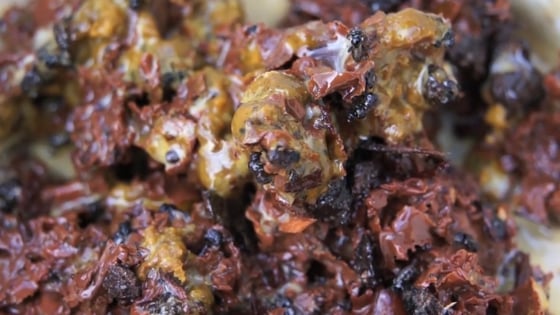
With stingless bees, the solution began inside the hive. Unlike European honeybees, which build fragile hexagonal combs, Meliponines store honey and fermented pollen in clustered, egg-shaped cerumen pots -- a tough structural composite of wax and plant resin. Researchers Tim Heard and D. Haley note that Indigenous Australians gathering native "sugarbag" honey could extract these intact pots and transport them in carved wooden coolamons. This image shows a rather diffent picture, with honey pots broken and rather messy. But this is what they took out of the hive, ready to eat. Perhaps if being stored, they were more careful and rather than draining the liquid, hunters carried the sealed pots themselves. Consumed whole, they provided tart honey, protein-rich fermented pollen (bee bread), and resinous wax in a compact ration that required no fragile clay container.
In Mesoamerica, honey became a binding technology. Bernardino de Sahagún’s Florentine Codex, alongside later analysis by Sophie D. Coe, documents how the Aztecs mixed toasted amaranth seeds with sticky local honey -- or sometimes agave syrup -- to create dense dough cakes known as tzoalli. While often shaped into ritual figures, these dehydrated blocks also functioned as highly efficient travel rations. Pochteca merchants and marching armies could stack them in cloth sacks, carrying concentrated calories without the weight or risk of shattered pottery.
Beyond fermented doughs, the Maya developed a durable "dry" provision using the honey of the Xuna’an Kab -- the "Royal Lady" Melipona bee. By kneading this acidic honey into toasted, ground maize, they formed dense, sun-dried wafers called kaj. The high acidity acted as a natural structural binder and preservative, helping resist mold in the humid lowlands. These compact rations sustained elite aj k’u’ultun messengers along the sacbe stone road networks and jungle hunters tracking prey for days without hauling heavy liquid gourds.
Travelers could carry these solid dough forms dry, break off pieces directly from a leaf as they walked, or dissolve portions in water to produce a quick, calorie-dense drink. Honey could also sweeten ground maize or cacao mixtures in the field. By transforming liquid honey into stable solids, these societies bypassed the need to transport fragile containers through forest heat. What appears as simple sweetness reveals itself as adaptive food technology -- engineered, portable, and built for movement.
An Ancient Pharmacy
To the ancients, this honey was far more than just a sweet burst of calories--it was a literal chemical powerhouse. Because stingless bees naturally mix antimicrobial jungle tree resins directly into the walls of their hives, their honey absorbs those intense infection-fighting properties, making it a highly prized medicine across the ancient world.
India: The Living Tradition of Makshika
In India, the medicinal use of stingless bee honey forms a fascinating bridge between ancient tradition and modern healthcare. The foundational texts of Ayurveda--specifically the Sushruta Samhita--categorized honey into eight types, explicitly revering Makshika (stingless bee honey) as the highest therapeutic grade. Ancient physicians valued its deeply penetrating nature (sukshma marganusari), driven by the antimicrobial plant resins the bees mix into their cerumen pots. Texts prescribed it for Shodhana (purifying) and Ropana (healing) surgical wounds, and as a premier ingredient in ocular treatments to clear severe eye diseases. Crucially, this is not merely a historical footnote. In India's institutionalized modern Ayurvedic hospitals, highly trained doctors continue to prescribe Makshika today, proving this indigenous knowledge remains a vital, living practice.
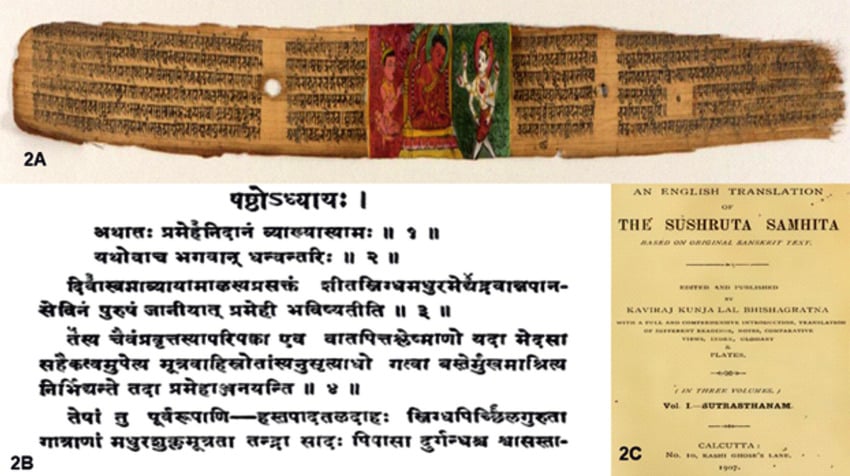
Expand to read the direct translation of the ancient verses that codified stingless bee honey as a premier medical treatment.
Transcript & Translation: Sushruta Samhita
Section: Sutrasthana (Fundamental Principles) | Chapter 45: Dravadravya-vidhi Adhyaya (Liquid Substances)
The Eight Types of Honey (Verses 132–133)
Pauttikam bhramaram kshaudram makshikam chatram arghyam | Auddalakam dalam chaiva madhvashtavidham uchyate ||
Translation: Honey (Madhu) is classified into eight distinct varieties based on the bee of its origin. These eight types are: Pauttika, Bhramara, Kshaudra, Makshika, Chatra, Arghya, Auddalaka, and Dala.
The Supremacy of Makshika / Stingless Bee Honey (Verse 134)
Tesham makshikam shreshtham...
Translation: Of these eight varieties, the Makshika is considered the best and foremost. The Makshika type of honey is the color of til (sesame) oil and is produced by the small reddish native bees.
Therapeutic Properties (Verses 135+)
Madhuram kashayanurasa ruksham sheeta... shodhanam ropanam sukshma marganusari chakshushyam...
Translation: Honey is primarily sweet (madhura) with an astringent (kashaya) after-taste. It is dry (ruksha), cooling (sheeta), and possesses the unique ability to penetrate deep into the most minute channels of the body (sukshma marganusari). Because of these deeply penetrating qualities, it effectively cleanses and heals surgical wounds and ulcers (shodhanam ropanam). It is exceptionally wholesome for the eyes (chakshushyam). Specifically, Makshika honey, being light (laghu) and dry (ruksha), is the superior grade utilized for treating severe ocular diseases, asthma, jaundice, and for the rapid healing of tissues.
Indonesia: Jamu Medicianal Use
Across the Indonesian archipelago, the integration of stingless bee honey into traditional medicine reveals a systematic approach to healing similar to Ayurveda. Long before modern clinical studies, traditional healers recognized that the tart, watery honey of native stingless bees--known as Madu Klanceng--was a crucial pharmacological catalyst. High in antimicrobial resins gathered from the jungle for their cerumen pots, this honey was used to extract and amplify the medicinal properties of powerful native rhizomes like kunyit (turmeric) and jahe (ginger). These formulations, known as Djampi (the root of Jamu), were prescribed to treat respiratory infections, accelerate wound healing, and restore internal balance.
Historical Evidence: The 17th-Century Botanical Record
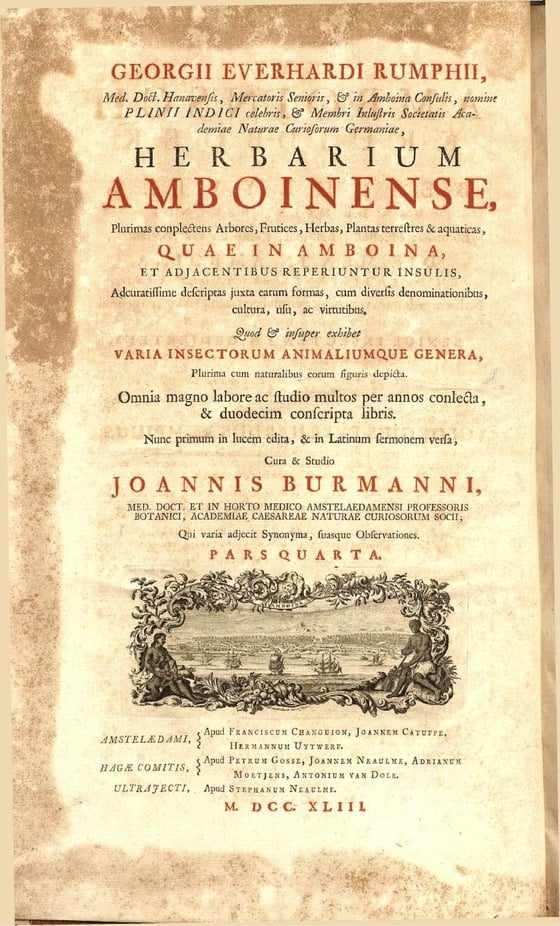
The medicinal use of stingless bee honey was first systematically documented in the 1600s by naturalist Georg Eberhard Rumphius. In his monumental Herbarium Amboinense, he recorded how indigenous healers in the Indonesian archipelago prized the resin-rich honey of native stingless bees (recorded as Kelulut). His observations provide the primary historical proof that this tart liquid was a valued pharmacological tool, used long before modern clinical interest.
Traditional Remedy: Respiratory Relief
Formulation: Madu Klanceng (Stingless Bee Honey) + Jeruk Nipis (Key Lime).
Application: A premier traditional prescription for severe coughs, asthma, and lingering chest infections.
The Synergy: The naturally fermented, acidic stingless bee honey acts as a potent antimicrobial agent. Combined with the high acidity of local lime, the mixture cuts through phlegm while the honey coats the respiratory tract to fight underlying infection.
Traditional Remedy: Internal Recovery
Formulation: Madu Klanceng (Stingless Bee Honey) + Kunyit (Turmeric).
Application: A core component of Jamu Bersalin (post-partum tonics) and a treatment for digestive ulcers.
The Synergy: Turmeric is a legendary anti-inflammatory. Using the watery Madu Klanceng as a pharmacological binder maximizes the body's absorption of the turmeric's active compounds, reducing internal swelling and accelerating tissue repair.
Mesoamerica: The Sacred Medicine of Xunan Kab
Halfway across the globe, the Maya cultivated a profound medical and spiritual relationship with Melipona beecheii, a native stingless bee they revered as Xunan kab ("royal lady"). Maya healers, known as h-men, recognized that the watery acidity and potent resin content of this specific honey made it a highly effective pharmacological tool. They famously took advantage of its unique chemical profile by using it as natural eye drops to safely dissolve fleshy, blinding growths on the cornea (pterygium) and clear cataracts, a practice still utilized today. This honey was also the cornerstone of their spiritual pharmacy. The Maya fermented the tart honey with the bark of the Lonchocarpus tree to brew balché. This sacred, purifying mead was consumed during highly regimented agricultural and healing rituals, acting as a chemical bridge to communicate with the divine. Today, this tradition remains an unbroken chain in the Yucatán Peninsula. Modern Maya beekeepers still tend to Xunan kab in traditional hollow log hives called hobon, preserving an indigenous system of ecological medicine that has survived for millennia.
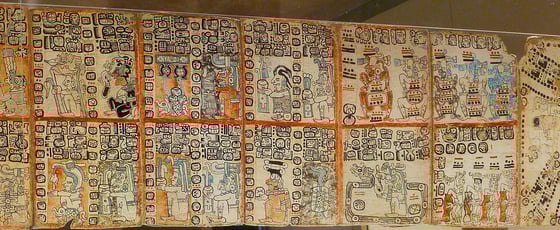
Expand to read about the Madrid Codex and the ancient records of Maya stingless beekeeping and sacred balché.
Historical Records: The Madrid Codex & Ethnohistorical Accounts
Subject: Yucatec Maya Beekeeping and Medicinal Mead
The Madrid Codex (circa 900–1521 CE)
Unlike the medical manuscripts of India and Indonesia, much of the written Maya record was destroyed during the Spanish conquest. However, one of the three surviving pre-Columbian Maya books--the Madrid Codex--dedicates an extensive section (pages 103–112) entirely to the husbandry of stingless bees. These almanacs depict various gods, including the diving bee god Ah Muzen Cab, overseeing the hollow log hives (hobon) and harvesting the honey, underscoring its immense cultural and spiritual value.
The Medical Incantations
The Ritual of the Bacabs, a colonial-era transcription of ancient Maya medical incantations, frequently references the use of wild honey. It was routinely prescribed as a primary binding agent for medicinal poultices and herbal remedies used to treat skin infections, respiratory ailments, and digestive disorders.
The Accounts of Balché
The Spanish friar Diego de Landa, in his 16th-century manuscript Relación de las cosas de Yucatán, recorded the profound importance of the honey-based mead,
Spiritual Conduits
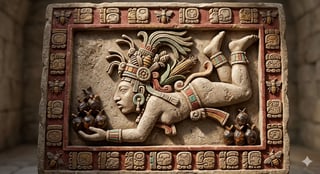
For the Maya, the stingless bee Melipona beecheii was not merely an insect but a sacred intermediary. Their patron deity, Ah Muzen Cab, often called the "Descending God," appears in the ruins of Tulum and Cobá suspended upside down -- a posture that recalls a bee diving toward a blossom or hive. In murals and carvings he carries wings, antennae, and sometimes honeycomb itself, embodying both pollinator and protector. In later Yucatec sources such as the Chilam Balam, he is credited with sustaining life during cosmic upheaval, reinforcing his association with fertility, crops, and forest renewal.
Honey also entered ritual life through balché, a ceremonial drink made by fermenting Melipona honey with the bark of the balché tree (Lonchocarpus). Consumed during rites such as the Ch’a Cháak rain ceremony, it induced purification and altered states used to petition the forces governing rain, soil, and harvest. In Maya cosmology, the hive mirrored the universe: ecological balance, agricultural abundance, and sacred order were inseparable.
The Maya were not alone in granting stingless bees a sacred role. Across the tropics, Meliponine bees appear as teachers, messengers, and architects of order.
In northern Australia, Yolngu traditions speak of Sugarbag Dreaming. The ancestor Ganbulapula is remembered striking trees to rouse the hidden bees and following their flight through the bush. Honey -- "sugarbag" -- signifies more than sweetness; it embodies insight and continuity with ancestral law. During ceremonies such as the Djungguwan, bees mark the path of the soul. Locating a hive becomes an act of dialogue, not extraction, and trackers may dust bees lightly to follow them back to ancient tree hollows held as spiritually charged places.
In Amazonian Brazil, Kayapó accounts describe a shaman who learned social order from stingless colonies. Village layouts echo the circular geometry of a nest, while neighboring Ikpeng songs petition bees as guardians against storms.
In southern Africa, San creation narratives tell of a bee carrying life across floodwaters, its sacrifice giving rise to humanity. Among the Mbuti of the Congo, honey season signals renewal: camps shift with the bloom, and forest honey becomes a form of communion with the living land itself
The Architects of Ancient Metallurgy
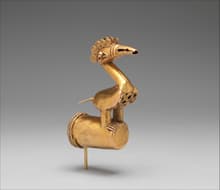
Perhaps the bees’ most remarkable legacy is their role in ancient industrial engineering. Stingless bees produce cerumen--a mixture of wax and plant propolis that functions much like a moldable plastic.
This specialized wax revolutionized the lost-wax casting process. Standard beeswax was too soft and melted from the heat of human hands. However, the high melting point and structural strength of cerumen allowed royal artisans to sculpt impossibly detailed, intricate molds.
From the gold tunjos of the Colombian Muisca to the hair-thin gold masks of the pre-colonial Philippines and the bronze statues of the Javanese empires, these tiny insects were the invisible architects behind many of the ancient world’s technological and cultural achievements.
Beekeeping At Home
Home-based stingless bee hive in Queensland, Australia, showing the resin entrance tube and steady flight activity at the colony entrance.
Keeping stingless bees at home is usually done with a hive box (a small wooden "stingless bee hive") that houses a colony that’s been rescued from a fallen log or split from an established colony by an experienced keeper. Inside, the bees build their own resin-rich nest structure and store honey in small pots, so the keeper’s job is mostly to provide a safe, stable cavity and then leave them to run the colony. A typical home setup is: place the hive box on a stand, keep it out of harsh afternoon sun, protect it from ants, and avoid opening it except for rare, careful inspections.
A real-world example: in Australia, many people keep native stingless bees (often Tetragonula species) in suburban backyards specifically for garden pollination and conservation-friendly "native bee keeping." The hive boxes are commonly called stingless bee hives or hive boxes, and one widely referenced style is the OATH box (a standard box design used by hobbyists). Most backyard keepers treat honey as an occasional bonus--small harvests, not a pantry staple.
Why keep stingless bees?:
1. Better pollination for fruit trees, herbs, and flowers near the home.
2. Low-stress beekeeping: stingless bees are gentle and easy to live with.
3. Learning and stewardship: people enjoy observing a native species and supporting local businesses.
References
- Meliponiculture (term definition) -- ScienceDirect Topics
- Backyard stingless bee keeping in Australia (practice context) -- Aussie Bee
- OATH box (common Australian hive-box design name) -- Aussie Bee
- Native stingless bee hive keeping guide (hive-box guidance; Australian local government PDF) -- Cumberland City Council
- Vit, P., Pedro, S. R. M., & Roubik, D. W. (Eds.). (2013). Pot-Honey: A Legacy of Stingless Bees. Springer.
- Heard, T. (2016). The Australian Native Bee Book: Keeping Stingless Bees in Australia for Pets, Pollination and Sugarbag Honey. Sugarbag Bees.
- Haley, D. (2021). Sugarbag: Australian Native Stingless Bees.
- Bhishagratna, K. K. (Trans.). (1907). An English Translation of the Sushruta Samhita. (Original Sanskrit text circa 600 BCE).
- Weaver, N., & Weaver, E. C. (1981). Beekeeping with the Stingless Bee Melipona beecheii by the Yucatecan Maya. Bee World, 62(1), 7–19.
- Beers, S. (2001). Jamu: The Ancient Indonesian Art of Herbal Healing. Periplus Editions.
- Roys, R. L. (1931). The Ethno-Botany of the Maya. Middle American Research Institute, Tulane University.
- De Sahagún, B. (1950–1982). Florentine Codex: General History of the Things of New Spain (A. J. O. Anderson & C. E. Dibble, Trans.). University of Utah Press. (Original work compiled 1545–1590).
- Falchetti, A. M. (1995). El Oro del Gran Zenú: Metalurgia Prehispánica en las Llanuras del Caribe Colombiano. Banco de la República.
- Coe, S. D. (1994). America's First Cuisines. University of Texas Press.
- Steinkraus, K. (Ed.). (1995). Handbook of Indigenous Fermented Foods (2nd ed.). CRC Press.
- Sushruta. (c. 1st millennium BCE). Sushruta Samhita, Sutrasthana, Chapter 45 (Dravadravya-vidhi Adhyaya). Classical Ayurvedic medical compendium.
- Anonymous (commissioned by Crown Prince of Surakarta). (1814). Serat Centhini, Vol. III. Surakarta Court Manuscript.
- Maya Scribes. (c. 900-1521 CE). Madrid Codex (Codex Tro-Cortesianus). Pre-Columbian Maya manuscript.
- Anonymous Yucatec Maya Authors. (Colonial period, 17th-18th century). Ritual of the Bacabs. Yucatec Maya healing manuscript.
- De Landa, D. (1566). Relacion de las cosas de Yucatan. Colonial manuscript documenting Maya culture and ritual practices.
- Rumphius, G. E. (1741–1750). Herbarium Amboinense: Volume V & Auctuarium. Amsterdam: Meinard Uytwerf; Beekman, E. M. (1999). The Ambonese Curiosity Cabinet: Georgius Everhardus Rumphius. Yale University Press.
- Vit, P., Bankova, V., Popova, M., and Roubik, D. W., eds. Stingless Bee Nest Cerumen and Propolis, Volume 2. Springer Nature, 2024.