Borage or Viper's Bugloss Honey
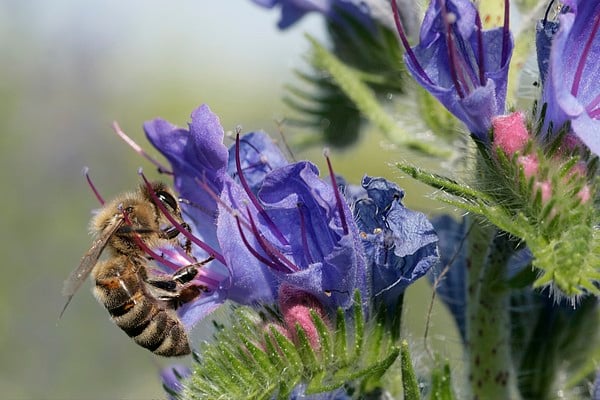
Viper’s Bugloss (Echium vulgare) honey is also known as Borage honey or Blue Borage honey. This should not be confused with honey made from Borage (Borago officinalis), a commercially grown plant used for seed oil, nor with honey from Purple Viper’s Bugloss (Echium plantagineu), popularly known in Australia as Patterson’s Curse.
Botanical name
Echium vulgare, Borage Family (Boraginaceae)
Characteristics
Slow to crystallize due to high fructose content. May last years if properly stored.
Pairings
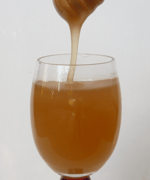
Viper’s Bugloss honey is a yellow gold color with a light clean taste, a floral bouquet and lemon characteristics.
It is delicious in tea or coffee and compliments a strong cheese such as blue or Roquefort. Interestingly, in honey tastings it is often among the favorites by men, although also enjoyed by women.
Cultural notes
AKA: Blue Bottle, Blue Weed, Wild Borage, Bugloss, Viper’s Bugloss, Cat’s-tail, Blue Cat’s-tail, Viper’s Grass, Iron-weed, Langdebeef, Our Lord’s Flannel or Our Saviour’s Flannel, Snake Flower, Snake’s Bugloss, Viper’s Herb, Blue Thistle, Blue Devil, pa’ qué te quiero mañosa (Spanish — “why do you want to touch” — a reference to its thorns)
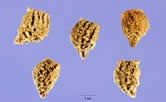
The name Viper’s Bugloss came about from a perceived resemblance between the seeds and a viper’s head, or the spots on the stem like a viper’s skin. It was thought to be a useful antidote to snakebite based on the fanciful logic of 14th century herbalist’s Doctrine of Signatures that states that the appearance of a plant indicates its use to humanity. In his 1656 The Art of Simpling, herbalist William Coles described the plant: “its stalks all to be speckled like a snake or viper, and is a most singular remedy against poison and the sting of scorpions.” The Latin name Echium originates ultimately from the Greek echis for viper, while bugloss is derived from the Greek for Ox Tongue — a reference to the shape and roughness of the leaves.
Translations
- Italian: Miele di Erba Viperina
- German: Gewohnlicher Natternkopf honig
- French: Le miel de viperine
- Spanish: Miel de Bugloss de la vibora
Source regions
- New Zealand
- Italy (Sicily, Sardinia)
- Mediterranean (Italy, Morocco, Spain, Turkey)
- South America (Chile)
References
- Image Credits: Image with bee: by Arne Ader, Closeup by Luis de Pablos Alcázar
- Photo: Evelyn Simak, CC BY-SA 2.0, via Geograph Britain and Ireland