
Dandelion Syrup
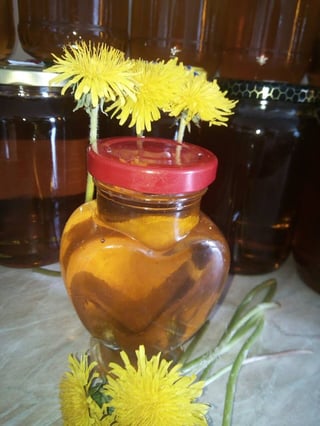
A few years ago, while browsing the winding stalls of the Baščaršija in Sarajevo, I kept spotting jars labeled “dandelion honey.” The syrup inside had the exact golden translucence and viscosity of a light spring wildflower honey. But when I talked to the vendor, I learned a surprising fact: the local bees had nothing to do with it.
It was my introduction to the world of vegetal honeys–traditional folk syrups made by people, not pollinators. Across the Balkans, communities have long used the common dandelion to create a sweetener that visually and culinarily mimics true honey. In Bosnia, locals call it med od maslačka (literally “honey from dandelion”), which often leaves travelers doing a bit of agricultural detective work to figure out if the jar came from a hive or a stovetop.
Foraging the Spring Harvest
Unlike a beekeeper waiting for a nectar flow, the makers of dandelion syrup rely on direct foraging. In early spring, when the hillsides surrounding Sarajevo erupt with bright yellow dandelion heads (maslačak), families harvest the blossoms at their peak.
The process is straightforward but time-consuming. The flower heads are gently simmered in water to extract their color and aromatic oils. This infusion is then strained–often through a cloth to catch any green plant matter–and the resulting golden liquid is slowly concentrated over heat with sugar and a bit of lemon juice for acidity.
Traditional Bosnian Recipe: Med od Maslačka
Sastojci (Ingredients):
- 200-300 yellow dandelion heads (pick them when the sun is high and they are fully open)
- 1 Liter cold water
- 1 kg sugar
- 2 lemons (sliced into rounds)
Priprema (Preparation):
- The Soak: Wash the yellow heads quickly to remove any dust. Put them in a large pot with the water and lemon slices. Bring it to a boil, then let it simmer for about 20 minutes.
- The Rest: Take the pot off the stove, cover it, and leave it alone until the next morning. This lets the “soul” of the flower stay in the water.
- The Strain: Pour everything through a thick cloth or a very fine sieve. Squeeze the flowers well so you don’t lose any of that golden juice.
- The Cooking: Stir the sugar into the juice. Cook it on a very low fire for 2 or 3 hours. You want it to thicken slowly until it looks and pours like real honey from the hive.
- The Jarring: Pour the hot syrup into clean glass jars and close them tight.
The finished syrup looks and pours just like a light honey. It carries a distinct, gentle floral aroma, backed by a faint, pleasant bitterness from the dandelion petals that perfectly balances the heavy sweetness.
Thrift and Tradition
To understand why this syrup is often referred to as “honey” in local languages (Löwenzahnhonig in German, or miel de pissenlit in French – the same preserve France also calls cramaillotte, from a regional word for the flower), you have to look at the history of rural agriculture. Before refined sugar became cheap and widely accessible, sweetening agents were precious. While true honey was a highly valued commodity, it wasn’t always plentiful enough for everyday peasant use.
Families had to be resourceful. By treating the abundant, free dandelions springing up in their pastures the way a bee treats nectar–gathering the essence and reducing it down–they created an accessible, seasonal substitute. It is a perfect example of regional thrift.
Culinary Uses
Today, people use dandelion syrup exactly as they would a light, liquid honey. It is drizzled over fresh cheeses, spread on morning bread or pancakes, and stirred into herbal teas. In many Bosnian households, it is still treated as a gentle spring tonic to “cleanse the blood” or soothe the throat at the end of winter.
Traditional Uses
In Balkan folk medicine, dandelion (maslačak) has long been prized as a potent spring detoxifier. The blossoms are packed with active botanical compounds that are traditionally believed to help stimulate the liver and cleanse the blood after a long, stagnant winter. Beyond its use as a general tonic, this syrup is a generational remedy for respiratory ailments; for decades, local grandmothers have stirred one or two teaspoons into a warm cup of tea or milk to soothe a child’s chronic cough.