
Meloja
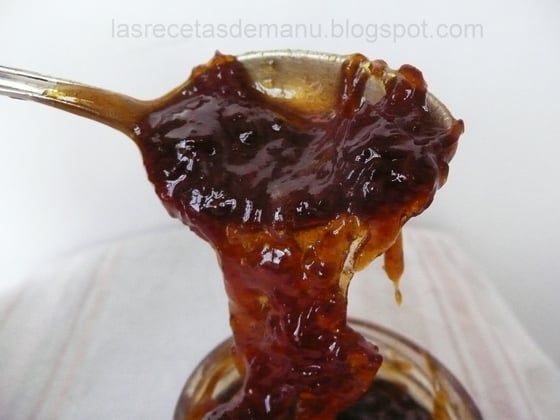
The Moorish Roots of a Folk Syrup
To understand meloja, a dark, thick preserve from the mountains of southern Spain, you have to look back to the era of Al-Andalus, when Moorish culture shaped the Iberian Peninsula. The dish is of Arab origin: the Ark of Taste records meloja as a legacy of Arab gastronomy, used to make mead or to sweeten dishes when honey was scarce. The name is Spanish – the Real Academia’s dictionary defines meloja as lavaduras de miel, honey washings. The Arabic root arrub lives on in arrope, the wider family of reduced syrups covered later on this page.
Back then, pure, first-press honey was highly valued and often reserved for medicinal use or the wealthy. While historical chronicles from the Kingdom of Granada note the region’s abundant honey, the everyday farmers needed a way to stretch that harvest. Meloja was the practical solution. It wasn’t made from premium honey; it was made from the leftovers.
Traditional Meloja is a dual-phase preserve consisting of a heavy, translucent mahogany syrup and firm, geometric cubes of fruit. Unlike standard jams, Meloja is structural; the fruit maintains its shape and clarity even after long cooking. It is a product of the traditional Andalusian apiary, originally made from “scrappings”–the dark honey and beeswax residues left over after the main harvest.
The Process
The production of Meloja involves a slow transformation of raw fruit into a stable, carvable solid.
The process begins by cubing a hardy, white-fleshed fruit like the Citre (Citrullus lanatus var. citroides), a primitive relative of the watermelon. These cubes are soaked in a water and quicklime (cal viva) mixture for several hours. This encalado step creates a mineral barrier that ensures the fruit retains its sharp corners–a visual testament to its transformation from a rugged, inedible gourd into a honey-saturated, edible jewel.
After rinsing, the cubes are added to a copper vat containing honey residues. The mixture is simmered over a low fire for twelve to fifteen hours. During this time, the water in the fruit evaporates and is replaced by concentrated honey. As the sugars darken, the fruit cubes undergo a complete metamorphosis, emerging as translucent ambers with the yielding, candy-like texture of a fruit that has been forged rather than simply cooked.
Serving and Usage
Meloja is traditionally served by separating the fruit from the syrup. A “jewel” of the preserved fruit is sliced into thin rounds and placed on a piece of fresh, salty goat cheese (Queso de Cabra). The thick, viscous syrup is then drizzled over both the fruit and the cheese. This combination provides a contrast between the salt of the cheese, the firm texture of the fruit, and the smoky sweetness of the honey reduction.
Regional Variations
While the ritual of the fire and the lime remains constant, the fruit used often depends on local availability. This results in a spectrum of colors and textures across the Andalusian landscape.
- The Arid Regions: In drier areas like Almería, beekeepers typically use the Citre melon. Its dense white flesh produces a translucent, amber jewel that allows light to pass through.
- The Fertile Valleys: In regions with more water, naturally orange pumpkins or local gourds are frequently used. These result in a more opaque, deep-sienna fruit with a buttery texture.
Because “Meloja” is a category of folk-preserving rather than a fixed industrial recipe, there are many local variations. The final appearance–whether a clear amber or a solid orange–is simply a reflection of the specific honey and the resilient gourds or melons found in that beekeeper’s valley.
Dig into the Science of the 'Set'
1. Ionic Cross-linking
The fruit maintains its sharp corners because of the quicklime soak. The calcium ions from the lime bridge the pectin chains within the fruit’s cell walls. This creates a rigid ionic bond that heat cannot break, allowing the fruit to stay firm while a normal jam would collapse.
2. Resistance to Crystallization
Meloja remains a liquid syrup rather than turning into a gritty solid because the long cooking time causes Thermal inversion. The complex sugars break down into simpler forms that are harder to organize into a crystal lattice. Additionally, pectin leached from the fruit acts as a stabilizer, increasing the viscosity and further preventing sugar crystals from forming.
Cultural Connections: From Survival to Celebration
During the Spanish Civil War and the food shortages that followed, caloric, zero-waste foods like meloja were crucial for survival in the countryside. Today, it’s tied more to regional tradition and holidays like Semana Santa (Easter).
During Easter, Spaniards eat Torrijas, a dish similar to French toast where day-old bread is soaked in milk or wine, dipped in egg, and fried in olive oil. In many southern towns, these are drenched in hot meloja syrup. The savory, slightly resinous edge of the dark syrup cuts through the rich fried bread in a way standard sugar can’t match.
It’s also used in everyday rural cooking, poured over migas (fried breadcrumbs), stirred into yogurt, fresh cheese, flan, ice cream, fruit, puff pastry, toasted bread, or served with polea, a simple porridge made of flour, milk, lemon peel, and anise.
Arrope: The Bee-Free Folk Syrups
This is where meloja fits perfectly into the wider family of folk syrups. In Andalusia, it’s known as Meloja, but across Spain, you’ll find similar reductions called Arrope.
True Andarax Valley meloja uses a honey base, but the broader arrope family relies on whatever plant sugars are locally abundant.
- Grape Must: In vineyard regions, unfermented grape juice is slowly boiled down into a thick, black reduction.
- Figs: In Extremadura, dried figs are boiled in water, strained, and the juice is reduced into a thick syrup.
- Carob Molasses: Across the Mediterranean, carob pods are boiled down to create a dark, earthy reduction.
The local agriculture dictates the recipe, mirroring the function and viscosity of honey without always using bees.
The Modern Hunt
For the best rewards, don’t get too focused on exact names or even a specific set of ingredients. Finding the real deal is a detective job; you might be hunting for Meloja in Andalusia only to find the same thing called Arrope once you cross the regional border.
The contents are just as unpredictable. In one village, you’ll find a jar of honey-forged fruit scented with cinnamon and dried orange peel; in the next, the “jewels” are replaced by the heavy, buttery crunch of local walnuts.
When I finally make this trip, I’ve got a few places mapped out. The Sierra de Grazalema Natural Park is known for traditional desserts boiled with local honey, and further north in the Sierra de Hornachuelos, local menus still feature meloja alongside regional dishes. Exploring these folk syrups and hyrbrid honeys shows just how resourceful traditional food systems can be, and I’m looking forward to getting off the main roads to see how that centuries-old process actually translates to the palate.
To find the real deal, you have to get off the main highways and into the valleys where the copper vats are still simmering. Finding meloja is a detective job; you might be hunting for it in Andalusia only to find the same beekeeper’s sweet called Arrope once you cross into a neighboring province.
Where to Find Meloja
The search for meloja and its adjacent cousins follows a specific geography across Spain:
Province of Almería (The Spiritual Home)
- Andarax Valley: This is the primary production hub for the traditional honey-based version. The Ark of Taste records a single remaining producer in the valley – the preserve is listed precisely because it is disappearing.
- Towns: Focus your hunt in Laujar de Andarax, Canjáyar, Terque, and Huecija.
- Benahadux: A key village where the traditional Ark of Taste methods are still actively documented.
Province of Córdoba
- Hornachuelos: This town is so defined by the preserve that the locals are nicknamed “Melojos”.
- The Hunt: Check the artisan workshops near the Sierra de Hornachuelos Nature Reserve, which serves as the province’s largest beekeeping center.
Province of Cádiz
- Grazalema: Home to Licores Grazalemeños, the Borrego family firm that makes an artisan meloja from fruits gathered in the Sierra de Grazalema, sold through Grazalema Online and the Alándalus Club shop in Cádiz.
- Jerez de la Frontera: Home to established producers like Rancho Cortesano, who prepare variants using cider pumpkin and walnuts.
Province of Granada
- Lanjarón: The gateway to the Alpujarra and a major stop for roadside mielerías (honey shops).
- Órgiva: Famous for its Thursday market where local artisans and beekeepers gather.
- Poqueira Gorge: The high villages of Pampaneira, Bubión, and Capileira are the best visual checkpoints for finding artisanal jars.
Adjacent Regions (The “Arrope” Territory)
- Extremadura: Once you cross north out of Andalusia, start asking for Arrope. You can find it in towns like Zafra, produced by generational makers.
- Murcia & Valencia: These coastal provinces also produce Arrope, though the recipe often shifts toward grape-must reductions rather than a honey base.
See Also
- Curious dessert with honey and pumpkin residue – Documentary footage offering a beautiful, nostalgic look at a family gathering around the fire to traditionally boil and prepare artisanal meloja. YouTube.
- Arrope Manchego – traditional pumpkin syrup from La Mancha. enchoasdeluxe.com
- – Excellent overview of Andalusia, including regions, wildlife, history and more. Wikipedia.
- – Discover markets in Spain. marketsinspain.com.