France Honey
Jump to Regional Travel and Honey Pages
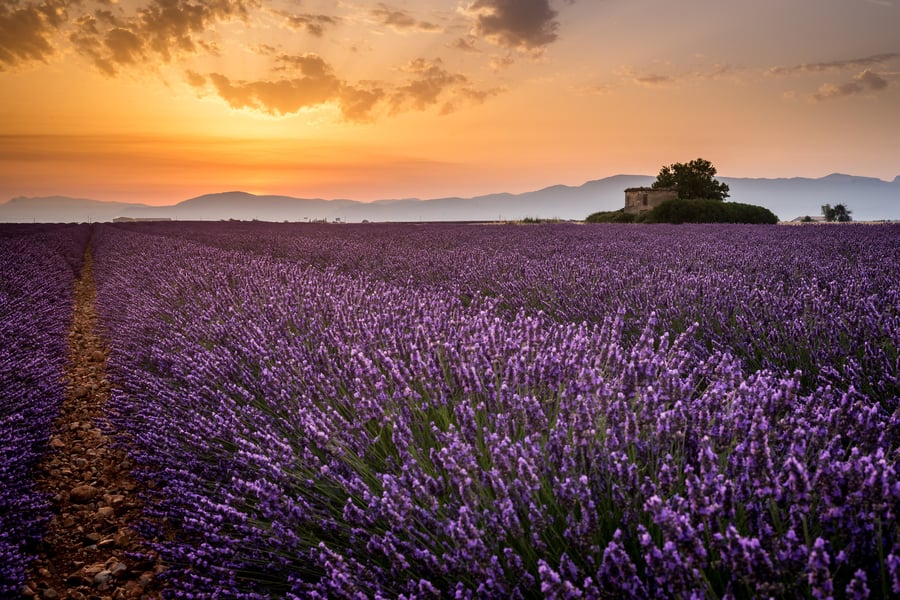
France’s honey traditions are defined by an enduring reverence for terroir – the idea that an agricultural product is the direct, unadulterated expression of its geographic origin. The country treats honey with the classification systems it applies to wine and cheese, and the apicultural identity that follows is built on regional specificity rather than mass commodification.
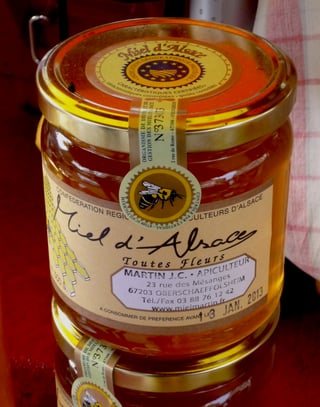
So the honeys are distinct, and each is sold under the name of its flow or its place: honeydew off the silver fir of the Vosges, six Corsican honeys named for their season, lavender of Provence, which the specialty grocers of London and Michigan list. The overseas territories add another bee and another year: on Réunion and Mayotte the bee is Apis mellifera unicolor, and Réunion’s main flow comes in March and April, so the French calendar runs the year round. The count runs from thirteen flows in the state’s production survey to the thirty-two classes of honey that took a medal at the national competition of 2025.
One of them was famous for centuries. Miel de Narbonne, a rosemary honey of the garrigue of the maritime Corbières, was the honey the Paris trade asked for by name from the seventeenth century to the twentieth, and it was known abroad: the London dispensatories named it from 1726, by 1828 as Mel Narbonense, and in The Honey Bee, London, 1827, Edward Bevan wrote that in this quarter of the world it was regarded as the finest. Today the honey is sold under its flower’s name, as Corbières rosemary.
French honey is met first at the beekeeper’s own hand, the farm gate and the honey house on the road, and in Paris at houses founded for it, one of them, by its own account, in 1898 by the president of the beekeepers' union. It is judged at a national competition that sends every jar to a laboratory before any tasting, and celebrated at a national honey festival, five days in September 2026, and at village honey fairs. It is made in a country that eats more honey than it harvests, in every year the state has counted; the difference is imported, and the supermarket shelf carries mostly all-flower honey. Where a jar is bought decides which honey it is.
The honeys below are the ones France is known by, each for a different reason: some for what they sell abroad, some for a name written into law, some for what a region ate when it had no sugar, some for a bee that lives nowhere else.
Honeys France Is Known By
- Provence Lavender Honey (Miel de lavande de Provence) – the French honey sold abroad: L’Abeille Occitane’s took the American Specialty Food Association’s gold in the honey category in 2018.
- Vosges Fir Honey (Miel de sapin des Vosges) AOP – dark honeydew off the silver fir, malted rather than floral, and a French honey name a court protected in 1952, before any appellation existed.
- Corsican Honey (Miel de Corse - Mele di Corsica) AOP – six honeys named by season rather than by flower, from the spring clementines to a maquis harvest taken as late as February.
- Chestnut Honey (Miel de châtaignier) – the honey of France’s chestnut country, where it was long the only sugar on the table; tannic and bitter, amber to dark amber in the jar.
- Mayotte Stingless Bee Honey (Myel ti poban) – the honey of the mélipone, a stingless bee found nowhere else, which an order of January 2020 placed under full protection.
- Acacia Honey (Miel d’acacia) – from the black locust, the flow French beekeepers move hives toward when they want a better price; with chestnut, the one they named most in the 2024 survey.
- Pink Peppercorn Honey (Miel de baie rose) – the flow Réunion’s beekeeping year is built around, off a tree that has spread through the island’s ravines, old farmland and lava flows.
- Alsace Honey (Miel d’Alsace) IGP – six honeys under one protected name since 2005, all-flower to fir honeydew, on one condition: the hives stand in the Bas-Rhin or the Haut-Rhin.
- Cévennes Honey (Miel des Cévennes) IGP – the designation that writes lavender out, barring sunflower, rapeseed, lucerne and lavender from a honey of chestnut, heather, raspberry and bramble.
- Picardy Linden Honey (Miel de tilleul de Picardie) IGP – the newest French designation, registered in November 2025: a pale, minty honey of the small-leaved linden that grows wild in the Picardy forests.
- Landes Honey (Miel des Landes) – a reputation INAO dates to the nineteenth century and a designation not yet granted: seven honeys of the sandy pine plateau, the application published in June 2026.
- Green Honey (Miel vert) – Réunion’s honey of the tan rouge, a tree of the island’s wet mountain forests that grows nowhere but Réunion and Mauritius; Cordemoy’s flora called it renowned in 1895.
- Wild-Harvested Honey of Mayotte (Miel de cueillette de Mayotte) – honey taken from wild colonies in the forest, a practice the island’s people hand down and count as a marker of who they are.
- Narbonne Honey (Miel de Narbonne) – the honey Paris asked for by name from the seventeenth century to the twentieth, a rosemary honey of the Corbières garrigue, sold today as Corbières rosemary.
- Gâtinais Honey (Miel du Gâtinais) – by the mid-nineteenth century the honey Paris ate most, made on sainfoin and sold by the forty-kilo barrel; the crop is rare now, the name is not.
History and Tradition

Almost nothing about French honey is accidental. What the bees were kept for, the hive they are kept in, the bee itself and much of the flowering it works were each decided, and each decision has a date.
Bees were kept here for wax and for sweetness before honey was a craft. Beeswax stood at the same value as honey in Charlemagne’s Capitulaire de Villis; from about 1200 the lords closed the forest and set the bigres, swarm-hunters in their service, to gather its swarms; in the Cévennes a tenant’s annual due was paid in wax and honey, in acts from 1353. Honey was the home sugar, and when the blockade of 1806 cut the cane off – raw-sugar imports fell from 25,000 tonnes to 2,000 in a year – Napoleon wrote in March 1810 that grape syrup and honey were making up for sugar everywhere. Beet sugar, electric light and the paraffin candle took both reasons away. What is left is a craft: on FranceAgriMer’s 2021 count some 40,000 to 60,000 people keep bees as a pastime and about 3,500 as producers, and the producers make seven jars in ten.
A Normandy bee wall of a hundred niches was built, on Godefrey's dating, in the 1810s, the years the blockade made honey stand in for sugar
At Tessy-sur-Vire in the Manche stands a cob wall built by Jean-Baptiste Gendrin to hold a hundred straw skeps, the basket hives of the time; thirty-four niches remain. Hubert Godefrey, who catalogued the bee walls of the Normandy bocage, the region's hedged farmland, calls it the largest in France and supposes it built in the 1810s, tying that date to the sugar shortage of the blockade years.
The Cévennes acts give the older economy its dates: a pound of wax as the due in 1353, a carteron of honey, a capacity measure of a little under two and a half litres, in 1371, half a pound of wax in 1504, and in 1488 a parcel called Ranc de Label paying its rent in honey.
The French have named a honey for its place since the seventeenth century at least: Narbonne’s, and by the middle of the nineteenth century the Gâtinais’s, made on sainfoin and sold to Paris by the forty-kilo barrel in four grades. The written specifications came long afterwards, to protect names the country already used.
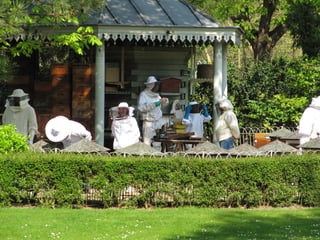
The hive that could be opened came late, and the school came first. The old French hives, a hollowed chestnut trunk in the Cévennes, a straw skep in a niche of a Normandy wall, were harvested by smothering the colony; the moveable-frame hive that lets the combs be lifted and returned, the Dadant, was designed by a Frenchman in Illinois, and in the Cévennes it rivalled the trunk hive only in the 1970s. When the state counted hives in the Lozère in 1943 it found 2,426 hollowed chestnut trunks and 694 frame hives. Beekeeping has been taught in the Jardin du Luxembourg since 1818, and the society Henri Hamet founded in 1856 has run the course since, with two aims of its own account: to train travelling instructors drawn from every department, and to fight the smothering, which the law banned in 1942. The course is still volunteer-taught and open to all.
Between 1941 and 1944 the state put beekeeping into the training of schoolteachers, and the Liberation kept the measures
The Senate records beekeeping taught in its garden from 1818, an inheritance from the Carthusians whose land it had been, and taken over in 1856 by Hamet's society; under the Third Republic, on the Senate's account, the course gave about forty diplomas a year; it gave forty-five in 2022 and fifty-five in 2023.
Between 1941 and 1944 the French state, treating honey as a supplement to the national food supply, legislated to expand apiaries, to put beekeeping into the training of schoolteachers and to fix what each beekeeper must deliver; the Liberation kept those measures, and with them the ban of 9 November 1942 on killing colonies for their honey.
The bee was bought in. FranceAgriMer’s 2025 genetics sheet records that open-air mating and imported races have hybridised most of the stock, that the Buckfast line is widely used, and that about 150,000 queens a year are imported into some 1.2 million production hives. The native black bee, Apis mellifera mellifera, is now kept on purpose, in conservatoires and on islands closed by order; Corsica’s specification requires it.
Last came the flowering people sowed: sunflower and rapeseed, lavandin planted for the perfume trade from the early twentieth century, acacia, the black locust, introduced, and the Landes pine forest planted from 1857, its honey off the heathers beneath. The oilseeds grew from 152,000 hectares in 1950 to two million by 2000, a rise INRA’s historians set in the years of the common agricultural policy’s price support, and rapeseed rose again from 2005 with biodiesel. The last forty years added the varroa mite, in a French hive from 1 November 1982; the neonicotinoid insecticides on sown seed, banned from 1 September 2018; and the yellow-legged hornet, in the Lot-et-Garonne in 2004 and in practically every mainland department within twenty years. The state’s winter survey counted 31 per cent of colonies lost in the winter of 2024-2025.
Quality and Standards
France protects its regional honeys through two European frameworks, the appellation d’origine protégée (AOP) and the indication géographique protégée (IGP), administered by the Institut national de l’origine et de la qualité, the body that also governs wine. An AOP guarantees that every step of the making – the harvest, the extraction and the potting – happened inside the named region by the methods its specification sets, and it is held by Miel de Corse and Miel de sapin des Vosges. An IGP requires at least one of those steps inside the region and a quality or reputation the place accounts for; it is held by Miel de Provence, Miel d’Alsace, Miel des Cévennes and Miel de tilleul de Picardie. Each specification is written by the producers themselves and verified by an independent body, and both frameworks exist to defend the name from fraudulent blending and imported substitutes. The Label Rouge, the state’s mark of superior quality, is on Provence’s lavender honey. A seventh designation, Miel des Landes, is before the European Commission, its French specification upheld at the Conseil d’État in March 2025 and its application published for objection on 17 June 2026.
Every jar sold in France, whether or not it carries one of those names, meets a baseline set by the EU honey directive, which defines honey as the product of Apis mellifera (the honeybee), with composition limits and rules on what a label may claim. Since 1 July 2022 the label on blended honey packed in France must name the countries the honey came from; since 14 June 2026 the rule runs across the EU, the countries in descending order of share, and the shares themselves are printed, so a jar of mixed honey now tells the buyer where most of it grew. The same 2026 decree abolished the category miel filtré (filtered honey): a honey stripped of its pollen may no longer be sold in France as honey, which keeps the evidence of origin in the jar.
Three islands are closed to imported bees by order, to hold their black bee, as the Corsican syndicate and the black-bee conservatories record it: Corsica since 1982, Belle-Île since 1985, and Ouessant since 1991, renewed in 2018.
Réunion is closed in both directions. By European Union order no live bee, no used hive equipment or wax and no comb honey for eating may leave the island for anywhere in the Union, the mainland included; by prefectoral order of 24 March 2016 none may be brought in, down to a passenger’s luggage. Honey in a jar may leave; honey in the comb may not. New Caledonia has barred imported bees since 1997 against the varroa mite, and bars them again from its main island to the Loyalty Islands and the Île des Pins, which have no American foulbrood, the bacterial disease of bee brood.
Enforcement sits with the DGCCRF, the state’s consumer and fraud-control service, whose published categories of anomaly include mislabelled origin, forbidden claims, and faux-producteurs (beekeepers reselling bought-in honey alongside their own). Behind every name is the pollen, the honey’s identity card in INAO’s words: in 2023 a court at Perpignan convicted Miel du Roussillon’s director of selling 140,000 kilos of foreign honey as French, after one doubting customer had a jar’s pollen read. For what the terms on any honey label mean in general, see the site’s guide to honey quality and labelling.
Specialty Retailers
- Les Compagnons du Miel / France Miel (Port-Lesney, Jura, 1958). A cooperative of professional beekeepers which, by its own account, had 233 members in 2026, two of them in Spain, and packs their honey under one name. Runs its own honey laboratory, founded 1968 inside its bottling plant, testing members’ honey for authenticity and origin in more than ten thousand analyses a year, and since 1988 doing the same for outsiders.
- La Maison du Miel (Paris, 1898). Founded, the house says, by Charles Galland, president of the French beekeepers’ union, to bring the regional honeys of France to the capital.
- Famille Mary (Maine-et-Loire, 1921). Begun with two hives at the Moulin de Beau Rivage in 1921 and a van to the La Baule market by 1936.
Competition Record
- Concours des miels de France, 8th edition, 4 February 2025, Colza (rapeseed), or (gold) – Christelle Appéré, Les Ruchers du Léon (Plounévez-Lochrist, Finistère). A rapeseed honey taking gold in a judged national category.
- Concours des miels de France, 8th edition, 4 February 2025, Colza (rapeseed), argent (silver) – Samuel Dubois, Les Ruchers des 3 Rivières (Arceau, Côte-d’Or).
- Concours des miels de France, 8th edition, 4 February 2025, Sapin (fir), or (gold) – Julien Frizon, L’Abeille de Lorraine (Yutz, Moselle).
- Concours des miels de France, 8th edition, 4 February 2025, Châtaignier (chestnut) and Maquis, or (gold) – Colin Dupré (Calenzana, Haute-Corse), who also took coup de cœur (the class for honeys with too few entries to form a category of their own) in bruyère blanche (white heather) and in chêne (oak).
- Concours des miels de France, 8th edition, 4 February 2025, Acacia, or (gold) – Julien Laffargue, Rucher de Claron (Bougue, Landes).
- Concours des miels de France, 8th edition, 4 February 2025, Maquis, argent (silver) – Antoine Guidicelli, Maria Catalina (Santa Lucia di Mercurio, Haute-Corse).
- Concours des miels de France, 8th edition, 4 February 2025, Maquis, bronze – Serge Cagninacci (Urtaca, Haute-Corse).
Festivals and Events
- Grande Fête nationale des miels de France – nationwide, five days from 23 to 27 September 2026. Beekeepers, associations and rucher-écoles open their honey houses to the public, an operation the Syndicat National d’Apiculture and L’Abeille de France run against the fraud coverage they say has cost French honey its name; a departmental search on the event’s own site lists who is opening.
- Fête du miel de Mouans-Sartoux – Mouans-Sartoux, Alpes-Maritimes, the last Sunday of April (26 April 2026 for the 32nd edition), 10h to 19h and free. The Provençal beekeeping year’s gathering: the stalls are beekeepers’ own, with extraction demonstrated, a hive opened in public, tasting taught, and the Syndicat des miels de Provence behind it.
Illustrative Links
Links in other languages show a
 icon. Click the icon to open via Google Translate in a new tab -- close the tab to return. Click the link itself to visit the original site directly.
-
Le rucher du Jardin du Luxembourg – The Senate’s own history of the apiary in its garden, giving the 1818 date, the Carthusian inheritance, and the terms of the 1872 licence. (Sénat)
-
Miel de Corse - Mele di Corsica – The register entry for the Corsican appellation, with the pollen analysis that certifies origin and the link to the specification that names its six honeys. (INAO)
-
Le miel et l’apiculture – The ministry’s summary of national production, organic share and designations, on FranceAgriMer data. (Ministère de l’Agriculture)
-
Concours des miels de France – The national honey competition, its judged categories and its palmarès (prize list). (Union nationale de l’apiculture française)
-
Les apiculteurs habilités en AOP Miel de Corse – The Corsican syndicate’s own map, marking members who sell direct with a yellow bee and those whose honey reaches shops with an orange one. (Syndicat AOP Miel de Corse - Mele di Corsica)
-
Les miels – The regional agricultural office’s directory of Corsican AOP honey producers, grouped by micro-region. (ODARC / Gusti di Corsica)
-
Le projet de l’ACANB – The Ouessant black bee conservatory in its own words. (Association de conservation de l’abeille noire bretonne)
-
APIGUA – The Guadeloupe beekeepers’ association, which names the island’s endemic stingless bee. (APIGUA)
-
Miel et autres produits de la ruche – Réunion honeys carrying the national park’s mark. (Parc national de La Réunion)
See also
Further Reading
- Le Goût du miel – Michel Gonnet and Gabriel Vache (Éditions UNAF, 1985): Apidologie’s review of the field credits the Gonnet team with the first sensory analysis of honey, and the union whose competition and training network this page describes is what published it.
- Le Traité Rustica de l’apiculture – Henri Clément (Éditions Rustica, 2018): A French beekeeping manual, hive to harvest, by a Cévennes beekeeper.
- Les miels : variétés, bienfaits, recettes – Patrick Chanaud (Édisud, 2010): A practical guide to French honeys by type, with recipes, covering the honeys this page names.
Sources
81 Sources - Click here to display
- FranceAgriMer (2024, 2025, 2026). Observatoire de la production de miel et de gelée royale, and Fiche filière apiculture.
- FranceAgriMer (2025). Fiche génétique apicole: biodiversité et territoire.
- FranceAgriMer (2025). Huiles essentielles de lavande et lavandin: production, marchés et enjeux pour la filière en 2023, Les Études de FranceAgriMer, édition janvier 2025.
- FranceAgriMer (2026). Fiche filière Oléagineux, édition janvier 2026.
- Agreste (2025). GraphAgri 2025, Utilisation du territoire and Oléagineux et protéagineux, Statistique agricole annuelle, Ministère de l'Agriculture.
- INRA (2013). Vers des agricultures à hautes performances, volume 4, rapport pour le Commissariat général à la stratégie et à la prospective, chapitre 1.
- Terres Univia (2021). Rapport d'activité 2021, Historique, les dates clés.
- DGCCRF (2023). Authenticité et qualité des miels: les anomalies restent nombreuses, results of the 2021 control plan, 6 October 2023.
- DGCCRF (2026). Réglementation sur les produits du petit déjeuner: une FAQ pour informer les professionnels, 16 June 2026.
- DGCCRF (2023). Enquête de la DGCCRF sur la francisation de miel: 50 000 euros d'amende et 6 mois de prison, communiqué, 6 October 2023.
- InterApi (2025). Estimation de la production de miel 2025, communiqué de presse, 18 November 2025.
- Préfecture de La Réunion (2024). Détection de la loque américaine, maladie des abeilles, à La Réunion, communiqué, 27 March 2024.
- Anses (2025). Envenimations par des frelons à pattes jaunes et autres hyménoptères en France hexagonale, étude de plusieurs sources de données sanitaires de 2014 à 2023, rapport d'étude de toxicovigilance, saisine n° 2024-AST-0153, June 2025.
- Anses (2021). Résultats de l'enquête nationale 2021 sur la mortalité hivernale des colonies d'abeilles, presentation for the Plateforme ESA follow-up group, 14 December 2021.
- Plateforme ESA (2025). Enquête Nationale de Mortalité Hivernale des colonies d'Abeilles ENMHA 2024-2025, Résultats nationaux, rapport, version du 10 octobre 2025.
- Plateforme ESA (2022, 2023, 2025). Premiers résultats de l'ENMHA, hivers 2021-2022 and 2022-2023, and ENMHA résultats de l'enquête 2023-2024, note courte.
- Muséum national d'Histoire naturelle, INPN (2024). Le frelon à pattes jaunes a débarqué en Corse, Le Frelon asiatique Vespa velutina, Inventaire national du Patrimoine naturel, 4 September 2024.
- GDS Corse (2025). Lutte contre le frelon asiatique en Corse, 10 September 2025.
- INRAE (2019). Le varroa, parasite cauchemar des abeilles domestiques, dossier abeille, 20 May 2019.
- ITSAP-Institut de l'abeille (2017). Mallette pédagogique, Module 5, Sanitaire théorique, October 2017.
- European Commission (2005). Commission Regulation (EC) No 736/2005 of 13 May 2005, registration of Miel d'Alsace (PGI), OJ L 122, 14 May 2005.
- European Commission (2015). Regulation (EU) 2015/551 of 24 March 2015, registration of Miel des Cévennes (PGI).
- European Commission (2025). Commission Implementing Regulation (EU) 2025/2275 of 4 November 2025, registration of Miel de tilleul de Picardie (PGI), OJ L, 11 November 2025.
- European Commission (2026). Publication of an application for registration, Miel des Landes (PGI), PGI/FR/03002, OJ C/2026/3214, 17 June 2026.
- European Commission (2026). Geographical indications and quality schemes explained, Directorate-General for Agriculture and Rural Development.
- INAO (2025). Notice of the registration of Miel de tilleul de Picardie, 12 November 2025.
- ODG Miel d'Alsace (2023). Cahier des charges de l'IGP Miel d'Alsace, homologué par arrêté du 15 novembre 2023, BO-Agri n° 2023-48.
- Association Miels des Hauts-de-France (2024). Cahier des charges de l'IGP Miel de tilleul de Picardie, homologué par arrêté du 26 juin 2024, BO-Agri n° 2024-28.
- Groupement Qualité des Miels et des Produits de la Ruche du Languedoc-Roussillon (2015). Cahier des charges de l'IGP Miel des Cévennes, BO-Agri n° 16-2015.
- Direction des affaires vétérinaires, alimentaires et rurales de Nouvelle-Calédonie (2019). L'apiculture en Nouvelle-Calédonie, résultats de l'enquête 2019.
- Chambre d'agriculture de Nouvelle-Calédonie, CPA and SIVAP (2017). Réglementation en apiculture.
- Conservatoire botanique national de Mascarin (2026). Index de la flore vasculaire de la Réunion, Weinmannia tinctoria.
- Parc naturel régional du Gâtinais français (2026). L'homme au cœur du Parc, les apiculteurs.
- Île-de-France Terre de saveurs (2026). Miel du Gâtinais, product sheet.
- Musée vivant de l'apiculture gâtinaise (2026). Museum statements, Château-Renard.
- INAO (2026). Product register and cahiers des charges for the registered French honey designations, and the Label Rouge entries LA/24/89 Miel de lavande et de lavandin and LA/13/94 Miel toutes fleurs.
- INAO (2025). Une décision du Conseil d'État en faveur de la reconnaissance en IGP du Miel des Landes, news release.
- Council of the European Union (2001). Council Directive 2001/110/EC of 20 December 2001 relating to honey, as amended by Directive (EU) 2024/1438.
- République française (2003). Décret n° 2003-587 du 30 juin 2003 relatif au miel.
- République française (2022). Décret n° 2022-482 du 4 avril 2022 relatif au miel.
- République française (2026). Décret n° 2026-312 du 24 avril 2026 relatif au miel.
- République française (2016). Loi n° 2016-1087 du 8 août 2016 pour la reconquête de la biodiversité, de la nature et des paysages, article 125, JORF n° 0184 du 9 août 2016.
- République française (1942). Loi du 9 novembre 1942 relative à l'interdiction de la destruction des colonies d'abeilles par étouffage.
- Ministère de la Transition écologique et solidaire (2020). Arrêté du 24 janvier 2020 fixant la liste des insectes représentés dans le département de la Guadeloupe protégés sur l'ensemble du territoire national et les modalités de leur protection, JORF n° 0036 du 12 février 2020.
- Ministère de l'Alimentation, de l'Agriculture et de la Pêche (2009). Arrêté du 30 juillet 2009 relatif aux labels rouges LA 13/94 Miel de toutes fleurs et LA 24/89 Miel de lavande et de lavandin, JORF n° 0195 du 25 août 2009.
- Ministère de l'Agriculture (2026). Le Label rouge, signe de qualité supérieure.
- Sénat (2026). Dossier d'histoire, Une journée au Jardin du Luxembourg sous la Troisième République: le rucher; Jardin du Luxembourg, Histoire et patrimoine, Le rucher-école.
- Société centrale d'apiculture (2026). Histoire du rucher du Jardin du Luxembourg; Cours d'apiculture, le rucher-école du Jardin du Luxembourg; Historique, le 19e siècle; Promotion 2022 (Jean-Henri Fabre) and Promotion 2023 (Gilles Boddaert - Guy Ducroux), diploma lists.
- Pomet, P. (1694). *Histoire générale des drogues*. Paris: Loyson & Pillon. Part II, ch. XXIV, Du miel.
- Quincy, J. (1726). *Pharmacopoeia officinalis & extemporanea: or, a Complete English Dispensatory* (6th ed.). London. Section 597, Mel.
- Gray, S. F. (1828). *A Supplement to the Pharmacopoeia* (4th ed.). London: T. and G. Underwood. p. 178.
- Bevan, E. (1827). *The Honey Bee; its Natural History, Physiology, and Management*. London: Baldwin, Cradock, and Joy. pp. 66, 230.
- Regnoult, M. (1949). *Le miel, aliment et médecine*. Thèse pour le doctorat vétérinaire, École nationale vétérinaire de Toulouse.
- Jacob de Cordemoy, E. (1895). *Flore de l'île de la Réunion (phanérogames, cryptogames vasculaires, muscinées)*. Paris, p. 416.
- Perichon, S. (2024). L'abeille mellifère (Apis mellifera unicolor) à Mayotte: un insecte doué de sagesse et de vertu. *Revue d'ethnoécologie*, 25. https://doi.org/10.4000/12a67
- Lehébel-Péron, A., Travier, D., Renaux, A., Dounias, E., & Schatz, B. (2016). De la ruche-tronc à la ruche à cadres: ethnoécologie historique de l'apiculture en Cévennes. Revue d'ethnoécologie, 9. https://doi.org/10.4000/ethnoecologie.2531
- Fournier, J. (1999). Essais de fabrication de sucre de raisin sous le Premier Empire. Revue d'histoire de la pharmacie, 87(322), 227-234. https://doi.org/10.3406/pharm.1999.4742
- Godefrey, H. (2005). Des murs à abeilles dans le bocage normand. Abeilles & Cie, 109.
- Napoléon Ier (1866). Correspondance de Napoléon Ier, t. 20, n° 16352, à Louis Napoléon, roi de Hollande, 20 mars 1810. Imprimerie impériale, pp. 275-276.
- Esnault, O., Sinelle, J., Bègue, H., Lesquin, S., Reynaud, B., & Delatte, H. (2014). Caractérisation de l'apiculture réunionnaise: chiffres-clés, pratiques et typologie. La Santé de l'Abeille, 262.
- Wragg, D., Techer, M. A., et al. (2018). Autosomal and mitochondrial adaptation following admixture: a case study on the honeybees of Reunion Island. Genome Biology and Evolution, 10(1), 220-238. https://doi.org/10.1093/gbe/evx247
- Piana, M. L., Persano Oddo, L., Bentabol, A., Bruneau, E., Bogdanov, S., & Guyot Declerck, C. (2004). Sensory analysis applied to honey: state of the art. *Apidologie*, 35(Suppl. 1).
- Gonnet, M., & Vache, G. (1985). *Le goût du miel: l'analyse sensorielle et les applications diverses d'une méthode d'évaluation de la qualité des miels*. Éditions UNAF.
- Larousse (2026). Encyclopédie, Charles Dadant.
- Mejean, J., Tonnelier, M., & Nicolich, E. (2023). Les SIQO: protection et valorisation des miels français. *Réussir Apiculture*, 28 June 2023.
- Colombo, E. (2026). La production de miel 2025 dessine une nouvelle France apicole. *Réussir Apiculture* (ADA France), 15 June 2026.
- Syndicat des miels des Landes (2023). Cahier des charges de l'IGP Miel des Landes, homologué par arrêté du 17 août 2023.
- Syndicat des miels des Landes (2026). Cahier des charges de l'IGP Miel des Landes, version juin 2025, approuvé par le comité national de l'INAO le 26 janvier 2026; IGP Miel des Landes, les dernières avancées, the project's timeline.
- Syndicat AOP Miel de Corse - Mele di Corsica (2017). Dossier de presse, septembre 2017.
- Fédération des conservatoires de l'abeille noire (2026). Conservatoire pages for Ouessant and Belle-Île.
- Specialty Food Association (2018). sofi Awards, Gold, Honey: The French Farm's L'Abeille Occitane Pure Lavender Honey.
- Fortnum & Mason (2026). French Lavender Honey, 500g, product listing.
- Zingerman's Mail Order (2026). Lavender Honey from Provence, product listing.
- Union nationale de l'apiculture française (2025, 2026). Palmarès du Concours des miels de France 2024, 8e édition, 4 February 2025 (the honey sheet, 117 medal rows); Palmarès du Concours des miels de France 2026, 9e édition, 5 February 2026; Concours des miels de France, the competition page.
- Les Compagnons du Miel (2026). Notre coopérative and Notre laboratoire d'expertise, cooperative statements, Port-Lesney.
- La Maison du Miel (2026). Company history statements, Paris.
- Syndicat National d'Apiculture (2026). Grande Fête nationale des miels de France du 23 au 27 septembre 2026; and, with L'Abeille de France, the event's departmental finder at fetedesmiels.labeilledefrance.com.
- Commune de Mouans-Sartoux (2026). 32e Fête du miel, 26 avril 2026, event page: dates, hours and programme.
- Syndicat des miels de Provence (2026). La 32ème fête du miel de Mouans-Sartoux, c'est le dimanche 26 avril 2026, 24 March 2026.
- Famille Mary (2026). Notre histoire, company statement, Maine-et-Loire.
- La Borda d'Ambrosi (2026). Le retour des miels de crus rares, blog post, Sillas.