
Provence and Languedoc Honey
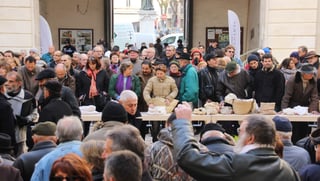
The Saturday market at Uzès has been held on the same arcaded square since 1241. Around two hundred traders now spill out of the Place aux Herbes into the lanes and the boulevards, and the tourist office describes its own square without much restraint – the honey-coloured stone, the arcades, the crowded terraces and the stalls overflowing with colour. At Narbonne the hall has traded under iron and glass every day since 1901; Petit Futé calls it the soul of the town, working from seven in the morning, and the stallholders’ own page puts the smell of an olive stall in the central aisle first.
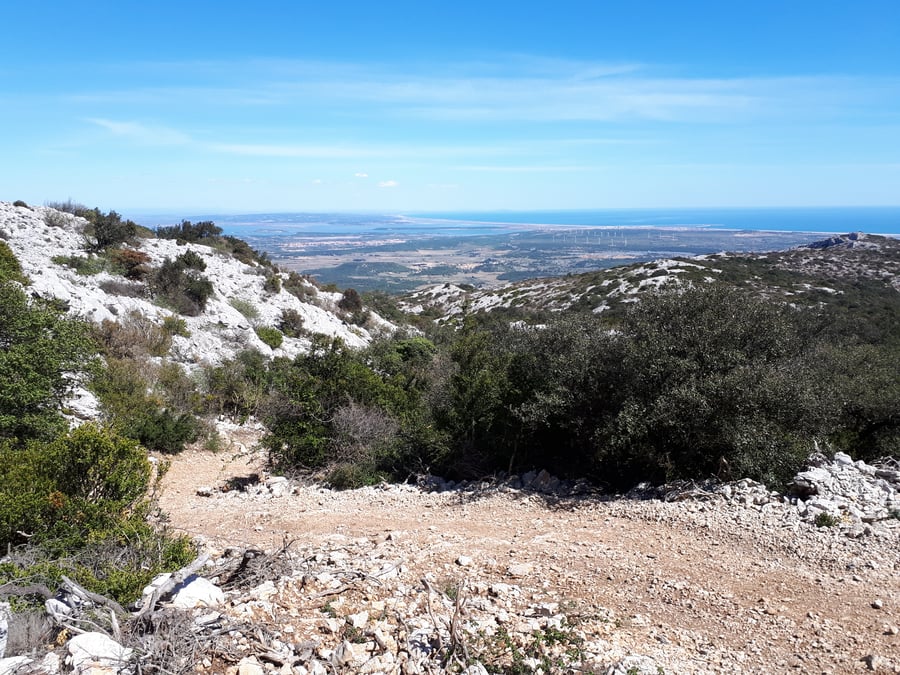
Two winds make the weather here. The mistral comes down the Rhône valley and the tramontane down the corridor of the Aude, both of them cold, dry and northern, and what they do is push the cloud and the haze out to sea. That is why the light in this part of France is hard and clean, why the ridgelines cut so sharply, and why the colours carry: red mudstone at the Salagou, ochre quarries at Roussillon, and at Mourèze a dolomite chaos cut into towers that the locals have named one by one – the Guardian, the Sphinx, the Shepherd.
The hills are covered in kitchen herbs. Thyme, rosemary, winter savory and rockrose grow knee-high straight out of the limestone, and on a hot afternoon the whole hillside smells of them. When the lowland flowers are finished in June the hives are driven up to the plateaux at night for the lavender, the way the flocks used to go up the drove roads for a second flush of grass.
Because the limestone is full of holes, the rivers here run underground and come back up in unlikely places – a whole plateau’s water in one shaft at Fontaine-de-Vaucluse, and at Port-Miou, in the calanques, a river that arrives under the sea, which is why the water there is cold even in August. The vines above Banyuls stand on hand-built drystone terraces too steep for machinery; the oysters at Bouzigues hang on ropes in a lagoon with no tide and are eaten all year round, and the oysters to ask for by name are the exondées; at Collioure two anchovy houses remain of up to thirty, and one leaves its old salting room open above the shop, free and unbooked, where, as the house puts it, the women working the fish explain the whole history and nobody should hesitate to ask questions. At Sault they have made nougat since 1887 from the almonds and the lavender honey of the same ground, and close to a third of a white bar is the honey.
The drought also sets the timetable. Between June and September a prefect can close a massif for the day and says so the evening before; the lavender on Valensole is at its best in the first fortnight of July and cut soon after; and the good markets are finished by two in the afternoon.
Food
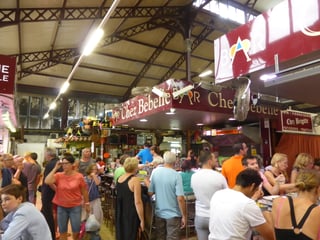
Under the iron and glass of the 1901 market hall at Narbonne, an order for a cut of meat is shouted across the aisle through a megaphone by a former professional rugby player. The butchers wrap it and throw it back over the heads of the customers; Gilles Belzons catches it one-handed and puts it on the griddle, and it comes with chips and tomato-rubbed bread. Nothing in the dish comes from outside the building, and the hall trades from seven in the morning until two in the afternoon.
Anchovies salted in a room above the shop at Collioure, oysters from a lagoon with no tide, and a hall that throws your meat across the aisle and shuts at two
Narbonne -- Les Halles every day of the year, 7h to 14h; Chez Bebelle Tuesday to Sunday, from 8h to about 14h. The hall was inaugurated on 1 January 1901 and carries about seventy food traders a short walk from the TGV station; Monday is the quiet day, Thursday and Sunday the busiest, and on those two days the open-air market takes the surrounding avenues as well. The hall's own page introduces Gilles Belzons and gives the hours. The counter grills but does not butcher, so the meat has to come across the aisle (Les Halles de Narbonne -- French ). It divides people: Petit Futé's 2026 writer calls it convivial, noisy, unusual and good to eat in; a reader of Gilles Pudlowski's site calls it a pointless circus. Both are true of the same room.
Collioure -- Anchois Roque Monday to Friday, 8h15 to 11h45 and 14h05 to 16h45; closed the first and last week of the year. The house has been in the trade since 1870 and the visit upstairs takes fifteen to twenty minutes; its own page gives the hours and says plainly that a visitor should not hesitate to ask questions (Anchois Roque, 17 route d'Argelès -- French ). The other surviving house, Maison Desclaux, has salted since 1903 and fillets by hand: its jars run from about six euros for a small tin to fifty for a large bocal in oil.
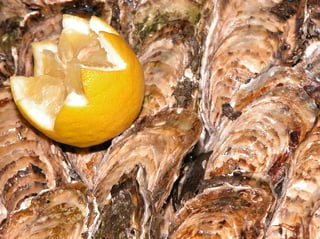
Bouzigues, Thau lagoon -- the tasting counters keep their own days; Le Cercle des Huîtres 12h to 14h30. The months-with-an-R rule does not apply on Thau. The department's Conchylitour lists the farms that keep a counter, at Bouzigues, Mèze, Loupian and Marseillan, all signed up to a charter on welcome and access (Hérault Tourisme -- French ). The thing to ask for by name is the exondée, an oyster deliberately lifted clear of the water on a rotating table. A reviewer on the producer's own page, signing himself A P, gives it five out of five and says why: the setting is authentic, simple and original, oyster lovers should order the exondées, and "I have never tasted oysters as good as these." The farm takes bookings for the terrace facing Sète (Le Cercle des Huîtres -- French
). L'Ambre de Thau, a producer a short way along the shore, publishes the opposite pattern -- seven days, 10h to 23h -- and is the only late counter found on the lagoon.
A clam whose season is a closure, the truffle market that sets the region's price, and a nougat that is a third lavender honey
The Camargue -- tellines all year, shore-gathering shut in July and August. The telline is a wedge clam of two or three centimetres, raked out of a few centimetres of wet sand and fried with garlic and parsley. The rules are the season: a minimum landing size of 2.5 cm, gathering on foot and in daylight only, a cap for amateurs, and no shore-gathering at all in July and August; professional fishing on the Camargue bed has needed a licence since a prefectural order of 22 May 2007. They are getting scarcer, and the people who sell them say so. Licence-holders fell from 130 in 2003 to about sixty by 2020; Valérie Graulou, who has sold her husband's catch on the Arles market for thirty-five years, describes poachers taking the big spawning females from the offshore troughs on 1.60 m stilts -- no mothers, she says, means no spawn -- and Jean-Claude Benoit, prud'homme at Martigues, puts the consequence on the plate: the tellines being sold are smaller and smaller, and you only have to go to a restaurant to see it.
Carpentras -- Friday mornings, mid-November to the end of March. Two markets run on the same morning and they are not the same market: the professional floor in the courtyard of the Hôtel-Dieu from nine, and the retail one on the forecourt of the Maison de Pays from eight, which opens several weeks later in the season. Buyers come from eight departments, everything is cash and sold by weight, and the truffles are nicked open so the flesh can be seen before anyone chooses. The commune publishes the weekly quotations, and they are worth reading before you go: on 6 February 2026, thirteen kilos of category I mélanosporum at 400 to 550 euros a kilo, and on 13 February no quotation could be established at all for want of volume, and on 30 January for want of sellers (Ville de Carpentras -- French ). The commune's own word for the room is that it is intimate and silent.
Sault, on the plateau d'Albion -- open every day, closed 19 January to 19 February; the workshop visit has run on Tuesday afternoons in summer. The oldest nougaterie in the Vaucluse has been working here since 1887, and the recipe is the plateau in a bar: white and black nougat pressed between two sheets of wafer, made with lavender honey and almonds gathered between Mont Ventoux and the Montagne de Lure. The proportion is on the house's own order sheet: the white nougat is thirty per cent roasted almonds and thirty per cent Provence lavender honey, the protected one, and the black is sixty per cent almonds with lavender honey again. The same sheet sells the honey by the jar -- lavender, rosemary, garrigue, heather, chestnut and lime. The tourist board carries the hours and the free workshop visit, which needs confirming for the current season before anyone plans around it (Nougaterie André Boyer, place de l'Europe -- French ).
Culture
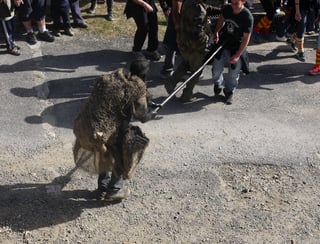
On three Sundays between the start of February and the start of March, in three villages of the Haut-Vallespir, young men are sewn into sheepskins, smeared with oil and soot, and sent through the streets to mark the faces of the people watching. Nobody stands behind a barrier. UNESCO inscribed the bear festivities of the Pyrenees in 2022, all three 2026 editions ran, and at Prats the men of the village still dance the medieval line dance that Prats alone has kept teaching.
A week of bear at Prats and the one village that still teaches the dance, a ring that opens to let a newcomer in, and a Sète intern who climbed onto the plank and fell off
Prats-de-Mollo-la-Preste -- the bear on the Sunday, but the festival runs a week; Arles-sur-Tech and Saint-Laurent-de-Cerdans take the other two Sundays. At Prats the programme runs from the Tuesday to the Tuesday, with a Catalan feast of grilled spring onions, booked at the tourist office, the handing over of the bear's paw at eleven on the Sunday morning, the bears dressed at Fort Lagarde at two, a two-hour chase through the upper and lower town, the shaving on the Foiral at half past four, and dancing at midnight and one in the morning. The organisers publish the week hour by hour (Fêtes de l'Ours -- French ). Prats alone keeps and teaches the medieval line dance, the medieval dance the men of the village perform; L'Indépendant's correspondent on the February 2026 edition reported it danced under a blazing sun, and that one new bear, Alexandre, had waited almost ten years to be accepted (L'Indépendant -- French
). The festival is free; the communal meals are booked and paid.
Perpignan -- Mondays at 19h30 from the end of June to early September, free; Céret's festival is three days in mid-July. The sardana is danced in a ring, hands joined, to a band of eleven to thirteen players, and the ring opens: the dancers lift their joined hands and a newcomer steps in. That is not an inference, it is what the organisers say -- the public is invited to join the rings, and experienced dancers stand beside beginners. Perpignan runs free Monday ballades through July and August with a beginners' class first (Perpignan Tourisme -- English). Céret's festival, running since 1959, closes its competition day with a single fraternity ring of up to five hundred dancers, and everything is free except the closing concert (Vallespir Tourisme -- English). The town is worth the day either way: Picasso and Braque painted cubist canvases here in 1911 and the modern art museum holds the result, which a visitor in September 2026, Quinten Jiskoot, summed up as "a beautiful museum for modern art with a nice collection in a renovated building. The lighting is very good." One useful correction to the romance: the sardana arrived in the Vallespir in 1905, carried by Catalan exiles.
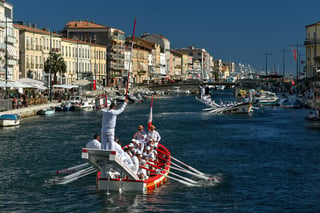
Sète -- the Fêtes de la Saint-Louis, 19 to 25 August, free. Water jousting is the state's own listed heritage here, with eight bearer towns along this coast. Two heavy barques are rowed at each other; the jouster stands out on a beam at the stern with a lance and a shield and tries to put the other man in the canal. The 282nd Saint-Louis ran in 2026 on the Cadre Royal and the winner's name was engraved on a painted shield. One account comes from someone who tried it: a Midi Libre intern climbed onto the plank at the press tournament and went straight in -- he could no longer see the crowd or hear anything, he wrote, and was thinking only about his back leg; then, floundering in the canal, that he had not done enough core training that year (Midi Libre -- French ). The president of the Ecole de Joutes de la Marine puts the point of the school plainly: the aim is to teach them how to lose (Midi Libre -- French
).
The bull whose name goes on the poster and the arena that shuts to sightseers for him, the museum a poet paid for with a Nobel Prize, and two hundred frescoes with the city's own free map
Arles and the Gard villages -- the course camarguaise season runs early April to the end of October; the Cocarde d'Or is always the first Monday in July. No bull is killed. A man in white takes ribbons and tassels off the horns with a hook, and the honoured party is the animal: the state's own heritage fiche says the sport exists to show the fighting spirit and the intelligence of the Camargue bull, the bull's name goes on the poster, and some have a village statue or a grave at the mas where they lived. The Cocarde d'Or, created in 1928, is the peak of the season and fills the Roman amphitheatre, preceded through the streets by the run that brings the bulls in from the pasture behind mounted herdsmen, the run in which mounted gardians bring the bulls in from the pasture (Arles Tourisme -- French ). The traveller's consequence is worth knowing: on that Monday the monument is closed to sightseers and admits ticket-holders only. Two named visitors have written about it: Keith Van Sickle, who goes once or twice a year, calls it "reasonable people can disagree"; another, at a village fête at Aubais, wrote that there was "definitely a sense of confusion and sometimes fear on the part of the bull" and that he was glad injured bulls were taken out.
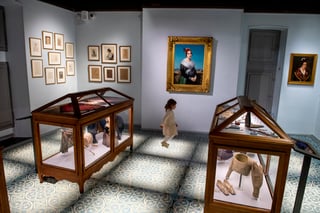
Arles -- the Museon Arlaten, daily except Monday, 9h30 to 18h; free for everyone on the first Sunday of the month. Frédéric Mistral said in 1896 that he wanted a Pantheon of Provence, and when he won the Nobel Prize in 1904 he spent the prize money installing it in a former Jesuit college; the labels were written in Provençal, after the language had already stopped dominating the region. It closed in October 2009 and did not reopen until May 2021, after eleven years and 22.5 million euros. The museum publishes its own hours, its Sunday guided walk at 15h and its free app in eight languages (Museon Arlaten, 29 rue de la République -- French ). On pace, the academic review of the new route in Culture & Musées says anyone who wants to look at and read the whole of it will need time. The chapel is closed for an indefinite period after a fragility was found in the ceiling decoration.
Nîmes -- painted over a fortnight at the end of August, free and there all year. Expo de Ouf is run by a tiers-lieu rather than a museum, and it has put more than two hundred frescoes on the Gambetta and Richelieu quarters since it started. The city calls the result a free open-air gallery, accessible all year (Ville de Nîmes -- French ), and, unusually, there is a real self-guided route with a map: the city's art-and-history service publishes it (Nîmes, Ville d'art et d'histoire -- French
).
Natural History
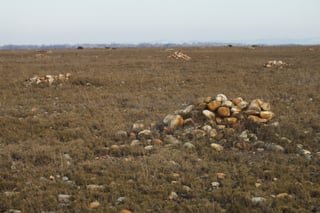
Between the Alpilles and the sea there are sixty thousand hectares of round grey pebbles that most people cross at a hundred and ten kilometres an hour without stopping. The Crau is the fossil delta of the Durance, five million years of stones carried down from the Alps; about seventy-five thousand years ago the river was pushed aside, the delta dried, and what was left is the only ground in France that reproduces the conditions of the North African and Iberian steppes. Its managers put the difficulty plainly: the plain is crossed by car, looking arid and desolate, and nobody stops.
The steppe that holds the whole French population of two birds on a three-euro permit, a delta living off its own demolished river mouths, and salt pans worth the end of June
Saint-Martin-de-Crau -- the Peau de Meau trail, 4.7 km, permit obligatory; free warden-led outings the first Friday of the month except July and August. Because this stony steppe is the only ground of its kind here, it carries a large share of the national populations of lesser kestrel and little bustard and sometimes the entire French population of pin-tailed sandgrouse and calandra lark; close to three hundred of France's 479 bird species have been seen on the plain. In August the locusts reach sixty thousand to the hectare. Grazing is the management: 160 graziers put a hundred thousand ewes on it in winter and spring before they go up to the Alps. The permit and the map come from the Ecomusée de la Crau in the town, three euros and valid two days; once broken, the steppe does not grow back and cannot be restored (CEN PACA -- French ).
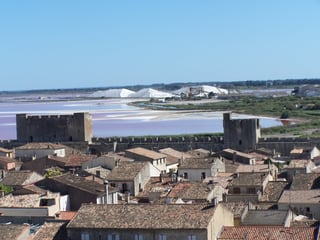
The Camargue -- La Capelière open Tuesday to Sunday with a winter closure; the Gacholle lighthouse free; Salin de Badon now only on a warden-led visit. France signed the Ramsar wetland convention in 1986 and had to list something, so the Camargue became the first French Ramsar site that December. The delta itself works differently. Its shore is not fed by what the Rhône brings down now, but by sand from the mouths the river abandoned when it changed course, redistributed along the coast, and the exhaustion of those stocks is what the geomorphologists offer as the cause of today's erosion. Beauduc beach is built out of the demolished Bras de Fer, Faraman and Piémanson lobes; the étang des Batayolles was the hinge between the eroding coast and the accreting one when it was last surveyed, and the hinge moves east. The reserve's own practical page is blunt about conditions -- wind, sun and mosquitoes (Société nationale de protection de la nature -- French ). Two engineering decisions are still visible: the arms have been fully embanked since the 1860s, and the Grand Rhône's mouth was multi-channel, three to six separate outlets, until works in 1855 blocked all
but one.
Aigues-Mortes -- the salt pans, by little train, on foot, by bicycle or by four-by-four; the little train resumed on 7 February in 2026. The delta's other colour is on the salt. The tour runs about an hour and a quarter round the pans and ends on the salt mountain itself, the only high ground on a flat horizon and looks back over the pans and the ramparts. Nadège G, who went in July in a group of four, came away describing breathtaking landscapes and an extraordinary range of pinks; Michel, who went the month before, supplies the timing, which is to go at the end of June during the harvest. A third visitor, Bernard T, gives the site full marks for beauty and objects to what the car route costs. Departures need a minimum of ten people and can be changed or cancelled without notice, and dogs are not admitted.
A booking cancelled at six the evening before, seventy named towers of dolomite, and three kilometres of older rock shoved over younger
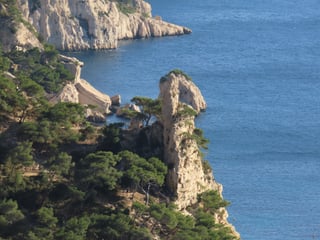
The Calanques -- Sugiton and the Pierres Tombées take a compulsory free booking on named summer dates, opening three days ahead at 9h and closing the day before at 18h. The booking exists because En-Vau, which the park says holds four hundred towels in relative comfort, sees twelve hundred people at once in summer. And the booking is not the last word: if the massifs close for fire risk, every reservation is cancelled outright, and the decision is published the evening before (Parc national des Calanques -- French ). The roads down to Sormiou, Morgiou and Callelongue were shut to cars daily through the summer of 2026. En-Vau falls into shade through the afternoon.
Mourèze and the Salagou, Hérault -- the Courtinals path is a family walk with an orientation table. Sediments laid down in a warm shallow sea 160 million years ago became dolomite, and rainwater, frost and run-off have since cut it into a chaos of over three hundred hectares in which seventy towers are named and catalogued: the Guardian, the Oracle, the Sphinx, the Bear, the Shepherd. The managing body records that the lunar landscape has been turning to Mediterranean garrigue since pastoralism ended in the middle of the twentieth century, and that the Salagou and Mourèze together became a Grand Site de France in July 2024 (Geoparc Terres d'Hérault -- French ). The red under the black basalt is ruffe, an iron-rich Permian mudstone, which the Grand Site's own booklet dates to between 295 and 250 million years.
Bugarach and Tautavel, at the Corbières end -- the Tautavel museum is open all year. The Pech de Bugarach is an upside-down mountain and the geological survey says so: its map notice for the Quillan sheet describes a spectacular advance of three kilometres of Jurassic over mid-Cretaceous, older rock pushed bodily over younger along the north Pyrenean front, and the Galamus gorge sits on the same line. The figure is the geological survey's own, in the explanatory notice to the Quillan sheet of the 1/50,000 map. Twenty kilometres away the Caune de l'Arago has produced 152 human remains, including a milk tooth dated between 560,000 and 580,000 years; the museum publishes its calendar and tariffs (Musée de préhistoire de Tautavel -- French ).
Built Heritage
In 1554 Adam de Craponne obtained the right to take water out of the Durance and cut an earth ditch some twenty-five kilometres to Salon; he paid for it himself, with partners, one of whom was Nostradamus. The canal still runs. Between June and August it carries more than thirty-one thousand litres a second, about a sixth of the Durance’s mean flow, and watering the Crau grasslands is what recharges the aquifer that supplies the Crau with drinking water, and there is no ticket office anywhere on it.
Eight fortresses added to the World Heritage list in July 2026, a roofline that is really a nineteenth-century argument, and a castle it is pointless to visit in a high wind
Carcassonne and the Corbières -- the walled city is free and open at all hours; only the count's castle and the rampart walk are ticketed, and in heat waves opening moves to the cool of the morning. On 26 July 2026 UNESCO inscribed the [Royal Capetian Fortresses of Languedoc](https://whc.unesco.org/en/list/1755/) -- Carcassonne together with Aguilar, Lastours, Montségur, Peyrepertuse, Puilaurens, Quéribus and Termes -- as the backbone of the defensive system the Capetian crown built after the Albigensian crusade. Carcassonne now carries two inscriptions, and anything written before that summer calls these castles a candidate. Montségur is one of the eight and lies over the departmental border in the Ariège. The roofline everyone photographs is an argument rather than a survival: Viollet-le-Duc roofed the towers in slate rather than the region's flat tiles and was accused of scandal by, among others, the historian Hippolyte Taine, his own doctrine being that to restore a building is to return it to a complete state that may never have existed at any one moment. In the 1960s the heritage service deliberately broke his unity, re-roofing parts in tile and shingle, and since the late 1980s the reference state has been put back to his. The monument's own account of the controversy.
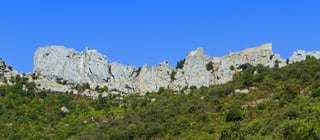
Duilhac-sous-Peyrepertuse and Cucugnan -- Peyrepertuse twenty minutes up from the car park, Quéribus not at all in a strong wind. Peyrepertuse is a three-hundred-metre vessel of stone along a limestone crest at about eight hundred metres, and the upper castle of Sant-Jordi is reached by what the site itself calls a vertiginous stair cut into the living rock, known by tradition as the Saint Louis stair. The walk up from the car park takes twenty minutes; the tourist office's advice for summer is closed shoes, water, a hat and sun cream, and most people give the site an hour and a half to two hours. Quéribus stands on a pinnacle over the Grau de Maury, and the wind decides whether the visit happens: Petit Futé says there is no point going in a high wind because you will not get through the entrance door, the local press notes visits are dangerous in strong wind and forbidden in a violent storm, and a visitor writing as Ruffinou puts it from the parapet -- the site becomes dangerous and a visitor is left reeling and deafened. Puilaurens is the hot-day alternative: twenty minutes on a shaded forest track, much less exposed. For a verdict on which one to choose, the French travel blog Perspectives de voyage is unequivocal after a stay in the Aude: the visit to Peyrepertuse was without any doubt one of the high points of their stay, and if you were to visit only one of the Cathar castles, this is the one to concentrate on. Walkers who go up on foot rather than from the car park add a practical caution on the route pages: the climb is steady enough, but the descent is the hard part and feels longer than it is.
Vers-Pont-du-Gard -- the site is open 8h to midnight every day; on foot or by bicycle it is free. The Pont du Gard exists to carry a constant gentle fall across a gorge on the fifty-kilometre aqueduct from Uzès to Nîmes. Access to the site itself costs nothing for walkers and cyclists; it is the parking, at nine euros, and the museum spaces that are paid, and the museum spaces close from November to February. The department's own first-person account recommends the museum's full-size reconstruction of the worksite (Gard Tourisme -- French ), and a site guide says to come in the morning, when the sun is on the north face.
An aqueduct that costs nothing to walk to, a museum wall built from the tombs of its own city, ice carted to Toulon until 1789, and a wine cellar in a Dominican church
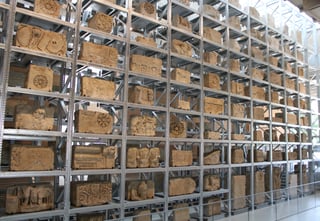
Narbonne -- Narbo Via, and the Horreum in the town centre. The spine of the museum is a moving wall of 760 stone blocks, most of them cut from the burial monuments of the Roman city, built into the ramparts on the order of François I, released when the ramparts came down between 1868 and 1884, and now re-formed on an automated storage system. The museum keeps the Horreum as well, underground galleries of the first century BC beneath the streets, the substructure of a vanished public building (Narbo Via -- French ). A French travel writer said that with two days in Narbonne he would keep a whole morning for it rather than rush it at the end of a day.
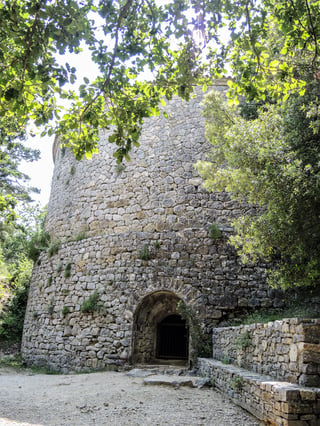
Mazaugues, Sainte-Baume -- free, two minutes from a laid-out roadside car park. Before mechanical refrigeration, Toulon was iced from this massif and Marseille from its south-western end. Spring water was caught, channelled and frozen on terraced basins walled in drystone, then stored in rock-cut wells and carted out by night through the summer. About twenty survive at the eastern end. The glacière de Pivaut is twenty-three metres high and 17.6 across, held up to 3,100 cubic metres of ice, and appears to have been used for only two years. What you walk round is the tower, the settling and freezing basins, the service tracks and the meltwater drain -- and the terraces here were built to hold water back for freezing rather than to grow anything, the same drystone vocabulary doing industrial work.
The Languedoc villages -- the cave coopérative stands at the edge of the village beside the church and the school. After phylloxera and the merchant fraud that led to the winegrowers' revolt of 1907, the answer this region built was the communal cellar, and the regional inventory calls the results the cathedrals of wine. Construction runs from 1905 to 1965. The cellar of the Vignerons Libres at Maraussan is protected by the state as the symbolic building of the movement (Ministère de la Culture, Mérimée PA34000029 -- French ); a specialist inventory disputes its primacy on the ground that the 1901 body sold wine rather than made it, and that Cébazan's L'Égalitaire came first around 1897, so the safe claim is what the state protects it for. Two buildings say the most: at Collioure the cooperative was installed in 1926 inside the church of a fourteenth-century Dominican convent, and the tall oak casks still stand in the nave; at Laroque the 1950 cellar is now a Lidl with its architecture kept.
I want to dig deeper
Three things here take more than a morning. The drystone country of the Cabardès and the Gard garrigue, where the walls, the huts and the cleared fields were one piece of work, and where the same masonry was used to build wine vats in the open. The Catalan end of the ribbon, which needs no car and holds two long-established makers in one dead-end valley. And the Canal du Midi, which is seventeenth-century hydraulics at walking height, with a tunnel you can walk through and a staircase of locks that drops boats twenty metres.
Walking the drystone country beside a drove road, four days at the Catalan end without a car, and the hill where three tunnels cross at different heights
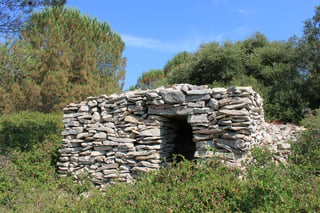
The drystone country -- any season, but the garrigue closes by prefectural order at extreme fire risk. UNESCO inscribed the art of drystone construction in 2018, and the citation itself names hives among the structures the technique builds ([the inscription](https://ich.unesco.org/en/RL/the-art-of-dry-stone-walling-knowledge-and-techniques-02106)). The best single walk is at Aragon in the Cabardès, where the waymarked Pierre sèche et Garrigue path climbs to the plateau by an avenue of capitelles and then runs for a stretch alongside an old drove road, with the Carcassonne plain and the Pyrenees in view -- two systems on one path. The naming is worth getting right: capitelle was strictly a Nîmes-area word, and at Congénies an inventory found more than 110 huts that the people who own them call cabanes. In the Nîmes garrigue the same masonry was also used to build vats: a horseshoe outside and a keyhole inside, the vestibule deliberately raised to a person's height with a load on the shoulder, and the back of the cell sealed with clay and fat lime so grapes or olives could be trodden in it. The Village des Bories above Gordes is the ticketed version of the same thing, and its own site makes the argument plainly: the huts are the by-product of the seventeenth- and eighteenth-century land clearance that produced the fields, thousands of tonnes of stone lifted and stacked.
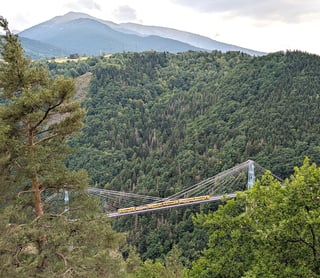
The Catalan end without a car -- the Train Jaune runs open carriages spring to autumn only; the Saint-Laurent workshops open on fixed slots. Come in at Perpignan and use the coach to Céret, which stops five hundred metres from the modern art museum: the collection exists because the painters were here, Picasso and Braque making cubist canvases in 1911, and the ten-euro ticket admits for the whole day so the building can be left for lunch and re-entered. Up the valley at Saint-Laurent-de-Cerdans two makers hold the end of a dead-end road. Les Toiles du Soleil has woven since the 1890s -- the weaver describes the cloth himself as a thick canvas of 300 to 350 grammes, close-woven cotton in asymmetric stripes from thirty-two colours -- and the manufacture visit is now sold on the firm's own ticketing at five euros, handed straight back as a shop voucher, which a printed guide and a review both still say does not exist (Les Toiles du Soleil -- French ). In the same village Créations Catalanes is the last maker in the Pyrénées-Orientales of the laced canvas sandal the sardana is danced in, on a guided visit Thursday afternoons from mid-June to the end of September. Then take the Train Jaune out of the region westward: metre gauge, 63 kilometres in about three hours, over the Pont Gisclard, which is the oldest and only suspension railway bridge still in service in France. Reviewers who rode in the open carriage and those who rode in a closed one describe different journeys.
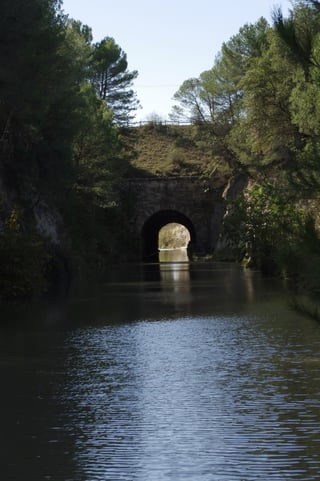
The Canal du Midi -- the towpath is walkable and free all year; the boats lock through at Fonseranes. At Colombiers the canal goes through the hill of Ensérune in the Malpas tunnel, dug in 1679 and the first navigable canal tunnel ever built, with a footpath along the left bank so you can walk through it. Underneath it, about a metre lower, runs the Béziers-Narbonne railway tunnel of 1855; lower still runs a thirteenth-century gallery cut to drain the Étang de Montady, whose radial ditches still make a wheel in the fields when you look down from the oppidum above. Three bores at three levels through one hill, six centuries apart, and a train can be heard passing while you stand under the vault. At Fonseranes the staircase of locks built between 1673 and 1680 drops boats twenty-one and a half metres in eight basins; since the Orb aqueduct opened in 1856 a passing boat uses six of them, which is why a site called nine locks works as six. Canker has taken 33,350 of the canal's 42,000 plane trees as of January 2026, and the arched vault UNESCO cited in [the inscription](https://whc.unesco.org/en/list/770/) is largely gone on long reaches, replaced by young limes and oaks.
The Honey of Provence and Languedoc
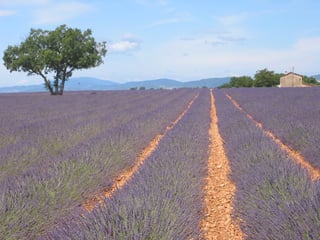
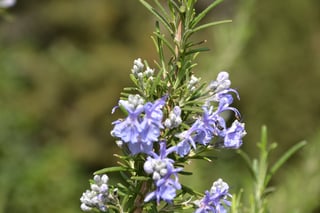
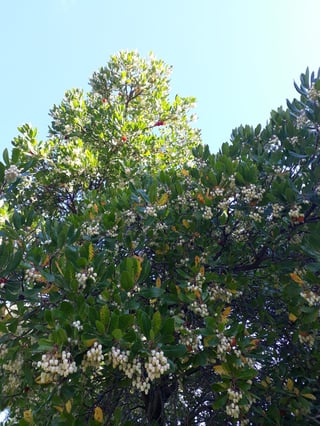
The honey here is made off the cleared scrub and off a crop that came in when something else failed. The garrigue gives the spring honeys, rosemary first and thyme inside the polyfloral, off the same thin limestone the walls were built from; the plateaux give lavender, both the fine and the hybrid kind, planted on upland that had lost its vines, and protected by a geographical indication whose zone runs to the upper limit of the downy oak. On the siliceous islands inside the limestone, in the Maures and the Esterel and on the schist above Estagel, the maquis gives tree-heather in spring and strawberry-tree honey in late autumn. And because summer dries the lowland flowers by the end of June, the hives move: Provence-Alpes-Côte d’Azur made 51 per cent of its honey volume on the road in 2024, the highest share of any French region. There is no honey route here and no signed trail; the places that sell direct keep their own hours.
The Honey Road
One line along the ribbon, west to east. The honey is the reason to go; everything else happens along the way.
Narbonne -- year-round (city gateway); the shop is in the old town, the market round the corner. Start where the honey is sold rather than where it is made. La Maison du miel du Rucher Narbonnais is a walk-in shop at 31 rue Droite kept by Nathalie and Sylvain Vienne, who take their bees into the Lauragais seed crops for pollination; the shelves carry rosemary and garrigue honeys from the Corbières and the Clape. Do not go looking for a jar labelled Miel de Narbonne. The name is genuinely old, and the state's own food-heritage inventory attributes it to the rosemary density of the Clape and a very early flowering -- but it went out with the vine expansion of the early twentieth century, the inventory itself records the appellation as little used today, and no maker now prints it. The house that could puts Miel de Romarin on the jar.
The Corbières -- Montséret, seven days a week all year. East out of Narbonne into the hills the fortresses stand on, past Fontfroide in its own valley, to the Miellerie des Clauses: a working miellerie with a shop that opens every day of the year, which in this region is unusual enough to plan around (Miellerie des Clauses, Montséret -- French ). The road on from here is the one the castles are on -- Termes, Villerouge-Termenès with its medieval rôtisserie, then the Grau de Maury and Quéribus.
The Fenouillèdes and the Roussillon -- July for hare's ear honey, and only in some years. The honey most particular to this corner is made here and in few other places: hare's ear honey, off a plant that favours the clay-limestone soils of the Fenouillèdes and flowers in July, and that yields, in the producers' own words, only in years when the spring rain came at the right moment. Les Ruches de Tautavel keeps about two hundred hives across Rasiguères, Maury, Saint-Paul-de-Fenouillet, Cucugnan and Tautavel and sells from its own boutique beside the prehistory museum; a few kilometres away at Estagel, on schist rather than limestone, La Gare des Abeilles makes the maquis honey the same ground carries. Between the two lies Tautavel and its prehistory museum.
The Var massifs -- La Butinerie April to October; the massif may be shut on the day. Skip east along the coast. In the Maures, on the siliceous ground that gives the strawberry tree and the tree-heather, La Butinerie has built a living sensory museum inside its own extraction hall, with a guided visit at half past ten on Fridays, published from 1 September, for six euros and a shop and tastings alongside (La Butinerie -- French ). This is fire country between June and September, so read the prefecture's colour for the massif the evening before and keep the day loose.
The plateaux -- lavender in flower in the first fortnight of July, and cut soon after. North to the Luberon and the plateaux where the IGP honey is made. Sénanque is a working Cistercian house whose monks withdraw while visitors are inside, keeps bees, and asks plainly that nobody walks into the lavender because it is a crop (Abbaye Notre-Dame de Sénanque -- French ). From there the D6 crosses the Valensole plateau, where the farm gates sell the lavender honey and the fields are cut by the middle of July. End at Valensole itself, where the village's living bee museum is free to enter.
Getting Here
The region has gateways along its whole length rather than one. One motorway spine and one high-speed line run the whole four hundred kilometres, with a station or an airport roughly every hundred: Perpignan, Narbonne, Béziers, Montpellier, Nîmes, Avignon, Aix-en-Provence TGV, Marseille Saint-Charles, Toulon. You come in wherever a given leg of the region starts, and the driving is along the line rather than into it. Nothing here sits behind a long approach: Valensole is fifty minutes from Aix by road, Collobrières in the middle of the Maures forty to fifty minutes from Toulon, Plan-d’Aups under the Sainte-Baume about forty from Marseille.
The real division is between the places a train reaches and the places it does not. At Narbonne the covered market and Narbo Via are both a short walk from the station; Perpignan, Céret by coach, Villefranche-de-Conflent, Aix, Marseille, l’Estaque and Aubagne all work without a car, and the Calanques trailheads are on city buses. Everything else needs one, and the gap is wider than the mileage suggests: Valensole is fifty minutes by car and three hours forty by public transport, and Collobrières has two buses a day. Season matters more than distance. Between June and September a massif can be shut for the day on a colour published the evening before; lavender is at its best in the first fortnight of July; in August several workshops close and their visits show an empty shed; and the Train Jaune runs its open carriages spring to autumn only.
Seasonal Events Not to Miss
Fêtes de l’Ours, Haut-Vallespir – three Sundays between early February and early March; free. Arles-sur-Tech, Prats-de-Mollo-la-Preste and Saint-Laurent-de-Cerdans take one each, and at Prats the festival runs a full week around it. (The organisers’ programme for Prats, Fêtes de l’Ours – French )
Fête de la transhumance, Saint-Rémy-de-Provence – Whit Monday; 17 May 2027. More than four thousand sheep, rams, Rove goats and donkeys circle the old town from half past ten; the seam for a visitor is the country lunch on the plateau at one o’clock, booked by telephone. Town-centre parking is banned that day. (The commune’s programme, Ville de Saint-Rémy-de-Provence – French )
Pèlerinage des Gitans, Saintes-Maries-de-la-Mer – 24 and 25 May every year. The reliquaries come down from the upper chapel on a winch, Sara’s statue is carried into the sea by the Gitans, and the barque goes down escorted by gardians on horseback. (The sanctuary’s own programme, Sanctuaire des Saintes-Maries-de-la-Mer – French )
Cocarde d’Or, Arles – always the first Monday in July, 17h30. The peak of the course camarguaise season, in the Roman amphitheatre, preceded through the streets by the run that brings the bulls in from the pasture behind mounted herdsmen; tickets open about five weeks ahead, and on that day the monument admits ticket-holders only. (Arles Tourisme’s page for the season – French )
Festival de Sardanes, Céret – three days in mid-July; free except the closing concert. Running since 1959, and the competition day ends with a single ring of up to five hundred dancers in the bullring. (Vallespir Tourisme’s page – English)
Fêtes de la Saint-Louis, Sète – 19 to 25 August; free. The 282nd edition ran in 2026 on the Cadre Royal; the winner’s name is engraved on a painted shield hung in the jousting hall. (Archipel de Thau’s page for the fêtes – French )
Expo de Ouf, Nîmes – the painting fortnight at the end of August, the programme to mid-December; free. Fourteen editions and more than two hundred frescoes on the Gambetta and Richelieu quarters, left up all year. (The city’s listing, Ville de Nîmes – French )
The winter truffle market, Carpentras – Friday mornings, mid-November to the end of March. Buyers from eight departments, cash only, sold by weight, and the price set here is the reference for the region’s other markets. (The commune’s page, with the season’s weekly quotations, Ville de Carpentras – French )
Foire aux santons, Marseille – mid-November to early January on the Quai du Port; free. Created in 1803 and the oldest santon fair anywhere; it opens with a mass in Provençal and a costumed parade through the aisles. (The fair’s own site – French )
Where to Buy Honey
There is no honey route in this region and no signed miellerie trail, so the places below are the doors that open. Telephone or check the day before in every case: honey is a crop of uneven supply, a harvest can sell out in August and not return until the following year, and between June and September a prefectural order can shut the massif a producer works in.
La Maison du miel du Rucher Narbonnais, 31 rue Droite, Narbonne (11). A walk-in shop in the old town, kept by Nathalie and Sylvain Vienne, who put bees into the Lauragais seed crops; rosemary and garrigue honeys of the Corbières and the Clape, with the covered market a few minutes away. (The house’s own site, Le Rucher Narbonnais – French )
Miellerie des Clauses, Montséret (11). A working miellerie in the Corbières whose shop opens seven days a week all year, the only walk-in honey house found in the Languedoc open seven days a week all year. (The miellerie’s own site – French )
Les Ruches de Tautavel, Tautavel (66). About two hundred hives worked across Rasiguères, Maury, Saint-Paul-de-Fenouillet, Cucugnan and Tautavel, with a boutique in the village beside the prehistory museum; the place to ask, in a July that has had the rain for it, and for the yellow fleabane honey of the plain. (The producer’s own site, Les Ruches de Tautavel – French )
La Butinerie, Var (83). A miellerie in the Maures with a living sensory museum built inside its own extraction hall, open April to October, with a guided visit at half past ten on Fridays, published from 1 September, for six euros, plus shop and tastings. (The visits page, La Butinerie – French )
Miellerie du Salagou, Hérault (34). The miellerie of the red country described above, in the hills between Clermont-l’Hérault and Lodève. (The house’s page for the miellerie, Miellerie du Salagou – French )
Abbaye Notre-Dame de Sénanque, Gordes (84). A working Cistercian abbey that keeps bees and sells from its own shop, in a valley where the lavender is a working crop. (The shop’s hours, Abbaye de Sénanque – French )
The markets. Narbonne’s covered market trades every day from seven to two; Aix’s producers’ market on the place Richelme runs every morning of the year from eight to one and carries honey among the producers; Perpignan, Uzès on Saturday and Carpentras on Friday all carry producers who bring their own jars.