
Hokkaido Thistle Honey (アザミ蜜)
The Story
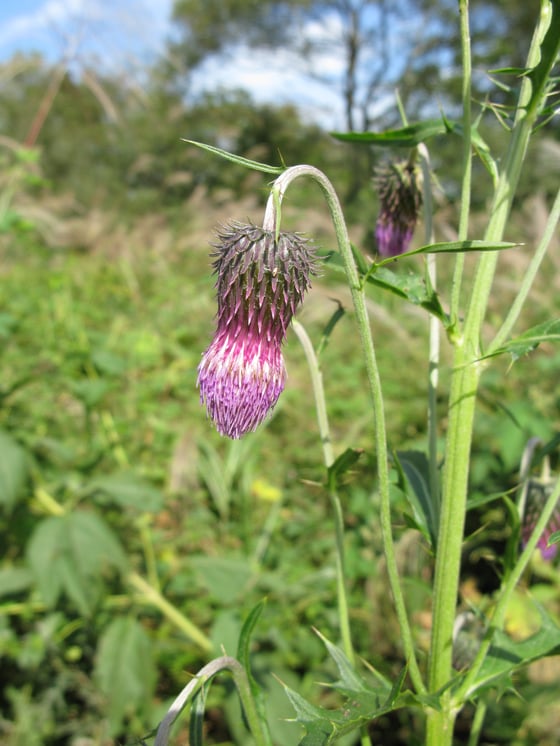
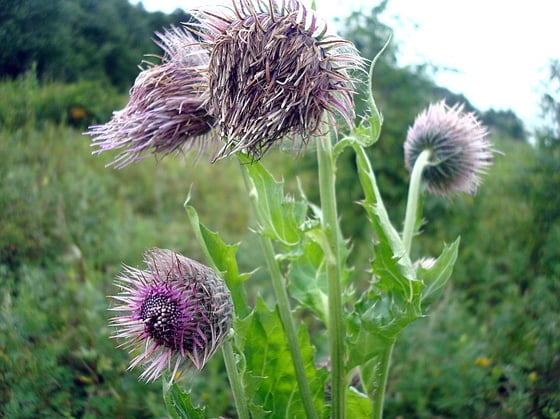
Every August, beekeeping families based in Kagoshima and Miyazaki – the southernmost reaches of Kyushu – move their colonies north to Hokkaido. Some have been making this journey for over a century. They come for the thistles.
Japan has more than 150 thistle species. All but five grow nowhere else on earth. Of these five, two produce commercially harvested honey in Hokkaido, and both bloom in the same brief midsummer window that closes the northern migration season before the first cold arrives. Beekeepers who work acacia in May, tochinoki in June, and linden in July position their hives in thistle stands for the final act. When the bloom is over, the season is over.
The honey those two plants produce is not the same. タカアザミ (tall thistle, Cirsium pendulum) grows to three meters along riverbanks and open grassland across Hokkaido and northern Honshu. It is a biennial – it flowers once, sets seed, and dies – which means stand locations shift year to year and no beekeeper can rely on the same field twice. Its honey is clean and crisp, with a refreshing acidity and a finish that resolves quickly. チシマアザミ (Kuril-Ezo thistle, Cirsium kamtschaticum) grows from Hokkaido north through the Kuril Islands to Kamchatka. It produces a richer, deeper honey with a citrus edge, harvested in remote wilderness where Hokkaido summers still feel genuinely cold. Asamidori Beekeeping, one of the oldest honey operations in Japan, specifically distinguishes and names the Kuril-Ezo thistle honey rather than selling it under the generic thistle label.
Between them, these two thistles define the northern end of the Japanese honey calendar. The honey they produce can be found nowhere else in the country.
Characteristics
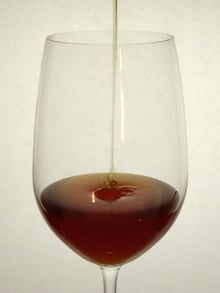
Hokkaido thistle honey divides cleanly along species lines. The tall thistle (タカアザミ) produces the lighter, crisper expression: amber with yellow-green fluorescence, clean acidity, white crystallization, approachable and non-lingering. This is the honey that most retailers label simply as アザミ蜜 (thistle honey) without specifying species. Multiple migratory beekeeping families harvest it along the same northern circuit each August.
The Kuril-Ezo thistle (チシマアザミ), marketed as エゾアザミ蜜 (Kuril-Ezo thistle honey), produces the richer expression: fuller sweetness, citrus edge, deeper and more complex finish. Asamidori Beekeeping is the only documented producer who names this honey separately and attributes it to the specific species. It is harvested in remote wilderness – areas where deer and bears are recorded – and is becoming rarer as Hokkaido temperatures rise and stand density decreases.
Both expressions share a geographic identity: Hokkaido-only production, midsummer harvest, and a rarity that attracts specialist producers from the opposite end of Japan.
Click to Display — The Details: botanical origin, sensory profile, and its regional identity
Botanical Name: Cirsium pendulum (Fisch. ex DC.) - tall thistle, タカアザミ; Cirsium kamtschaticum (Ledeb. ex DC.) - Kuril-Ezo thistle, チシマアザミ / エゾアザミ
Botanical Family: Asteraceae
Bee Species:
Apis mellifera (Western honeybee) for all documented commercial production. Colonies are moved to Hokkaido by migratory beekeepers specifically to work the thistle bloom. Hive placement timing is precise – the window is approximately two weeks for the tall thistle (タカアザミ) and somewhat longer for the Kuril-Ezo thistle (チシマアザミ), which blooms across a wider July-September range. Missed timing or poor stand density means no harvest.
Color:
Tall thistle (タカアザミ) honey is amber with a yellow-green fluorescence when held to light. The color comes from riboflavin – vitamin B2 – present in the nectar. Riboflavin fluoresces yellow-green naturally but breaks down under light exposure, shifting the honey’s color over days from the initial amber-green toward a deeper amber with blue tones. This is not a defect or a sign of aging; it is the honey’s identity visible to the eye, and it happens unusually fast. Yamada Beekeeping documents color change within days of harvest. White crystallization develops over time, with fine even texture.
Kuril-Ezo thistle (チシマアザミ) honey from Asamidori Beekeeping is described as slightly darker than expected for a clean-tasting honey. No riboflavin fluorescence has been documented for this species.
Flavor Profile:
The two Hokkaido thistles produce profiles that sit at opposite ends of the same clean register.
Tall thistle (タカアザミ) honey is crisp and moderate in sweetness, with a refreshing acidity – what Dorato describes as sawayakana sanmi to kire no aru amami, a sharp sweetness with a clean, non-lingering finish. The acidity is present but not aggressive; it lifts the sweetness rather than competing with it. Multiple independent sources confirm the same character: Yamada Beekeeping describes it as elegant and mellow with a moderate acidic note; BeeDo describes it as fruity and full-bodied with low bitterness. The finish does not linger.
Kuril-Ezo thistle (チシマアザミ) honey is fuller and deeper. Asamidori Beekeeping describes it as rich sweetness with a deep, complex flavor. A citrus edge is documented alongside the sweetness. Where the tall thistle resolves cleanly, the Kuril-Ezo thistle stays in the mouth longer. Both are approachable; neither is challenging. The difference is between clean and complex, not mild and strong.
Tasting Notes:
Tall thistle (タカアザミ): the entry is clean and moderately sweet. Behind the sweetness there is a distinct acidity – refreshing, not sharp – that several producers describe independently. The finish is crisp and short. Yamada Beekeeping’s assessment: elegant and mellow. BeeDo: fruity full sweetness, low bitterness, approachable. Crystallized, the texture is fine and even. Color in liquid form ranges from amber to amber-green depending on light exposure and age; crystallized, the honey is white.
Kuril-Ezo thistle (チシマアザミ): richer entry, fuller body, with the sweetness staying longer than the tall thistle’s clean finish. The citrus note that Asamidori documents works as a counterpoint to the depth rather than a sharp top note. The overall profile is not what a light northern honey might suggest – not cleaner than expected, but more complex. Asamidori notes the honey becomes rarer each year as Hokkaido summers warm and deep-wilderness stands contract.
Aroma:
Tall thistle (タカアザミ) has a light floral aroma. Producers describe the character as light and approachable. Not assertive.
Kuril-Ezo thistle (チシマアザミ) carries a citrus note documented by Asamidori. The citrus note and richer flavor profile suggest a more pronounced aroma than the tall thistle expression.
Forage Origin:
タカアザミ (tall thistle, Cirsium pendulum) is a biennial that reaches three meters in height. It grows along riverbanks, road embankments, open grassland, and disturbed agricultural edges across Hokkaido and northern Honshu, extending south to Nagano. The flower heads hang pendant from arched upper branches – pale purple, tubular, dozens clustered on each plant – and bees work them systematically. Being biennial means the tall thistle flowers once and dies rather than returning the following year. Stand locations shift with each generation. Beekeepers cannot rely on the same field twice.
The tall thistle is one of five Japanese Cirsium species that also grow on the Asian continent – distributed through Korea, northeast China, and Siberia. All other Japanese thistles, more than 145 species, are found nowhere outside Japan. Commercial monofloral production from the tall thistle is documented only in Hokkaido, even though the plant extends south to Nagano. The density and isolation conditions required for a monofloral harvest appear to exist only in northern Hokkaido localities. BeeDo specifically notes that thistle honey is limited to particular localities even within Hokkaido.
チシマアザミ (Kuril-Ezo thistle, Cirsium kamtschaticum) is a perennial that grows one to two meters tall with upright branching stems and large pendant red-purple flower heads. Its distribution runs from Hokkaido northward through the Kuril Islands to Kamchatka – a subarctic and continental range. It blooms from July through September. The name エゾアザミ (Ezo thistle) uses the historical name for Hokkaido and is a common alias for the same species; both names appear in commercial honey labeling. Widely recognized as the most commonly encountered thistle in Hokkaido, it is the species most residents identify as simply the local thistle. Asamidori Beekeeping harvests it in areas deep enough into Hokkaido wilderness that deer and bears are noted as part of the production landscape. The エゾアザミ蜜 (Kuril-Ezo thistle honey) label is used specifically to distinguish this expression from the generic アザミ蜜 (thistle honey) label that applies to tall thistle production.
Japan has cultivated and eaten azami – the word covers all thistles of the genus – since at least the Yayoi period. Honey production from Hokkaido thistles is a modern practice by comparison, but it builds on a landscape where thistles have always been part of the vegetation.
Pairings:
Tall thistle (タカアザミ) honey pairs well with fresh and lightly tangy dairy – fromage blanc, chevre, plain yogurt. The clean acidity and crisp finish sit against the mild tang without overwhelming it. Dorato documents fresh cheese, yogurt, and tea as primary pairings. For tea, the honey’s light character works well with green tea and lightly oxidized oolongs where a heavier honey would compete. Mitsubachi no Sato recommends strong aged cheeses as well – Camembert and Gorgonzola – where the crispness cuts through richness rather than matching it. Melted cheese on toast with thistle honey drizzled over is a documented preparation. The honey also works in simmered dishes (nimono) where a neutral honey lacks presence but a strongly characterized honey would dominate.
Kuril-Ezo thistle (チシマアザミ) honey follows similar lines. Asamidori recommends bread, toast, vanilla ice cream, yogurt, and tea. The citrus note makes it particularly well suited to lightly oxidized teas. The richer body can support stronger flavors than the lighter tall thistle expression.
Health Uses:
Traditional uses in Japan attach to the azami plant more than to the honey specifically. Azami roots and stems were used in folk medicine for hair treatment, headache, stomach complaints, and general tonic use from at least the eighth century. Flowers and roots steeped in shochu as azami-shu (thistle spirit) is a documented folk preparation. The Engishiki records azami as a cultivated food in the imperial kitchen. These are cultural records from the plant’s long history; they are not therapeutic claims for the honey.
Origin Story
The word アザミ (azami, thistle) comes from あざむ – to wound, to deceive. Touch the flower and the thorns surprise you. The name encodes the plant’s character. The character 薊 (the azami character) that writes it in Japanese appears in some of the oldest texts in the language.
In the Nihon Shoki, compiled in 720 AD, the consort of Emperor Suinin carries the name 薊瓊入媛 (Azaminiiribime, thistle-jewel-entering- princess). The character for a roadside wild plant appears in an empress’s name. Wooden tax tablets excavated from the ruins of Prince Nagaya-o’s mansion, dating to 684-729 AD, record azami presented as tribute alongside fuki – a traded commodity with exchange value, not a foraged weed. Archaeological evidence from Makimuku, the Yayoi-Kofun transitional site associated with the shaman queen Himiko, places azami among the foods eaten there around 247 AD. By 927 AD the Engishiki records formal cultivation of azami in the Naizenshi, the office managing the imperial kitchen. A plant that grew on every embankment in the country had been brought inside palace grounds and grown deliberately.
The reasons are practical. Azami shoots, young stems, and roots are all edible. The roots – called yamagobo (mountain burdock) – are still pickled in miso and sold at mountain hot spring resorts across Tohoku. The flowers and roots are steeped in shochu as a folk tonic. The plant feeds bees, birds, and people in the landscape where it grows.
Scotland’s national emblem is a thistle. Japan and Scotland reached the same plant by different routes – one through imperial food cultivation and poetic tradition, one through a legend about a barefoot invader who stepped on a thistle in the dark and cried out – and both ended up with the thistle as a cultural marker of defensiveness and resilience. The HoneyTraveler Thistle Honey page covers the European and New Zealand expressions.
The migration story that produces this honey is its own form of continuity. Nishizawa Beekeeping was founded in Miyazaki in 1909. More than a century later, the family still moves colonies from Miyazaki to Aomori to Hokkaido each season, following the flowers north. Nishitarumizu Beekeeping, founded in 1960 in Kagoshima, makes the same journey three generations in. Both families travel the full length of Japan – from the southernmost working farmland to the northern edge of Hokkaido – to harvest a honey that blooms for two weeks in one of the remotest landscapes in the country.
Cultural Context
Azami accumulated cultural meaning in Japan across many centuries before anyone was making monofloral honey from it. It appears in poetry as the plant that stands alone in difficult ground, that persists where others retreat, that wounds the careless hand.
Nagatsuka Takashi, the Meiji-era poet, wrote a tanka about azami flowers soaked in fine rain, comparing the fineness of the rain to mist blown from the mouth. Taneda Santoka, the wandering haiku poet who spent much of his life without a permanent home, wrote what may be the most compressed azami poem in the tradition:
あざみあざやかなあさのあめあがり (Azami azayaka na asa no ame agari – thistles vivid after morning rain)
The cascade of a-sounds – azami (thistle), azayaka (vivid), asa (morning), ame (rain), agari (clearing) – is the formal structure of the poem. The haiku is quoted alongside a tanka by Nagatsuka Takashi in the 暦生活 (Koyomi Seikatsu) seasonal calendar, which documents both poets’ azami verses in the context of the spring kigo. Santoka’s collection 草木塔 (Somokuto, 1940) is the commonly cited source.
In the haiku seasonal calendar, 薊 (azami, thistle) is a late-spring kigo covering ノアザミ (Japanese thistle, Cirsium japonicum), which blooms from spring into early summer. The tall thistle and the Kuril-Ezo thistle bloom from midsummer through autumn and fall into the 秋薊 (aki-azami, autumn thistle) category – carrying the spare, cooling quality that Japanese seasonal poetry associates with early-autumn grassland.
The flower language of azami is 独立 (independence) – borrowed partly from the Scottish tradition and partly from the plant’s own character. The plant holds its ground. Every attempt to grasp it punishes inattention.
Harvest & Forage
The harvest window for the tall thistle (タカアザミ) runs from mid-July to early August in Hokkaido, closing the northern migration season. At any individual site the bloom lasts approximately two weeks. Beekeepers time hive placement to arrive before the flowers open and extract immediately after to capture the monofloral profile before late-summer foraging from other species dilutes it.
The biennial life cycle of the tall thistle creates year-to-year variability in stand location and density. A field that produced a good crop one season may carry few plants the next, because the previous generation has already flowered and died. Beekeepers cannot rely on the same location twice. Local knowledge of where plants are coming into their flowering year is part of what makes experienced migratory beekeepers effective at this harvest.
The Kuril-Ezo thistle (チシマアザミ) blooms across a wider window, July through September, which gives somewhat more flexibility in timing. Asamidori Beekeeping notes that Hokkaido summers are warming and deep-wilderness stands are contracting, making the Kuril-Ezo thistle harvest rarer each year. Climate variability is reducing the production ceiling even as demand holds.
Both species reward beekeepers who have worked the same landscape for years. The families currently harvesting Hokkaido thistle honey are measured in generations, not seasons.
Beekeeping Context
The defining feature of Hokkaido thistle honey is that it is produced almost entirely by migratory beekeepers based outside Hokkaido. Two of the most documented producers are more than a century old and based in southern Kyushu.
Nishizawa Beekeeping (西澤養蜂場, Miyazaki) was founded in 1909. The family migrates annually from Miyazaki to Aomori to Hokkaido, harvesting mikan in the south, acacia and tochinoki in the north, and thistle and buckwheat at the top of the circuit. Their Hokkaido thistle honey is currently sold as 北海道産あざみの花のはちみつ (Hokkaido thistle-flower honey, 110g).
Nishitarumizu Beekeeping (西垂水養蜂園, Kagoshima) was founded in 1960 in Chiran-cho, Kagoshima – the southernmost tip of Kyushu. Now in its third generation, the family migrates from Kagoshima through Nagasaki, Akita, and into northern Hokkaido, working 美深町 (Bifuka-cho) and 紋別市 (Mombetsu) for the thistle harvest. Their operation was featured in Yamada Beekeeping’s BeeWorld Japan documentary series.
Asamidori Beekeeping (朝翠養蜂販売, originally Sapporo, now Odawara) was founded in 1919. It specifically harvests and names the Kuril-Ezo thistle expression – sold as エゾアザミのはちみつ (Kuril-Ezo thistle honey) – separately from the generic アザミ蜜 (thistle honey) label, with hives placed in deep Hokkaido wilderness.
BeeDo (北海道, Hokkaido) is a Hokkaido-based producer that sells アザミ蜜 (thistle honey) from specific localities, noting its rarity even within the island.
Dorato (Kyoto/Kobe) carries 国産アザミ (domestic thistle honey, Hokkaido origin) as an occasional seasonal product, not a year-round catalog item.
Named Producers
- Nishizawa Beekeeping (西澤養蜂場, Miyazaki) – founded 1909. Migratory circuit: Miyazaki, Aomori, Hokkaido, Okinawa. Sells 北海道産あざみの花のはちみつ (Hokkaido thistle-flower honey, 110g). Species: unlabeled.
- Nishitarumizu Beekeeping (西垂水養蜂園, Kagoshima) – founded 1960. Third generation. Migrates Kagoshima to Bifuka-cho and Mombetsu. Featured in Yamada Beekeeping BeeWorld Japan. Species: unlabeled (tall thistle, Bifuka-cho production documented).
- Asamidori Beekeeping (朝翠養蜂販売, originally Sapporo, now Odawara) – founded 1919. Sells エゾアザミのはちみつ (Kuril-Ezo thistle honey) explicitly as Kuril-Ezo thistle. Deep wilderness harvest. Notes increasing rarity from warming summers.
- BeeDo (北海道, Hokkaido) – Hokkaido-based producer. Sells アザミ蜜 (thistle honey) from limited localities. Notes rarity even within Hokkaido.
- Dorato (Kyoto/Kobe) – stocks 国産アザミ (domestic thistle honey, Hokkaido origin) occasionally. Not a year-round item.
Source Regions
- Cirsium pendulum – tall thistle (タカアザミ) – Japan, Hokkaido: biennial. Produces the standard アザミ蜜 (thistle honey) label. Clean, crisp, riboflavin fluorescence. Primary commercial expression.
- Cirsium kamtschaticum – Kuril-Ezo thistle (チシマアザミ / エゾアザミ) – Japan, Hokkaido north through Kuril Islands to Kamchatka: perennial. Produces エゾアザミ蜜 (Kuril-Ezo thistle honey). Rich, deep, citrus edge. Documented by Asamidori Beekeeping.
- See also: Thistle Honey page for European and New Zealand expressions (Galactites tomentosa in Sicily and Sardinia, Carduus nutans in New Zealand).
Translations
アザミ蜜 (azami-mitsu, thistle honey) – the standard commercial label applied to tall thistle production. エゾアザミ蜜 (ezo-azami-mitsu, Kuril-Ezo thistle honey) – used specifically by Asamidori Beekeeping for the Kuril-Ezo thistle expression. The character 薊 (azami, meaning thistle) appears in Japanese writing from the Nihon Shoki (720 AD) onward. In English, both expressions are correctly called thistle honey; the species distinction requires the Japanese labels or Latin names to carry meaning.