
Leatherwood Honey
The Story
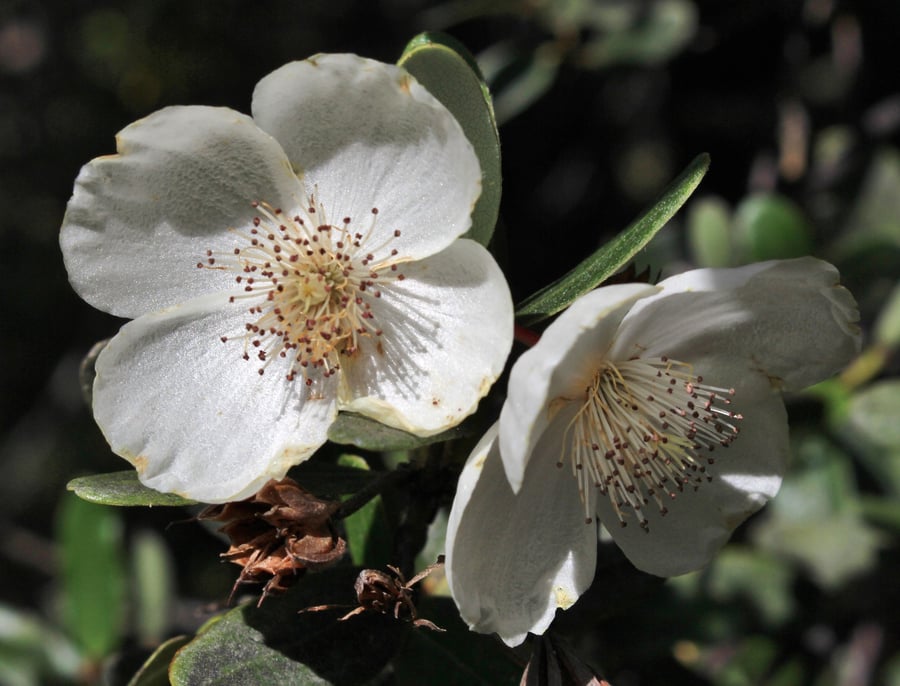
Tasmania shares many of the same plants and animals with Australia but it also has many unique species–the result of roughly 12,000 years of separation from Australia by the rising waters of the end of the last ice age. Some of the oldest forests in the world grow here and are considered so valuable that over 2.5 million acres are protected as a World Heritage Site. Leatherwood is a cool temperate rainforest tree that produces masses of white, showy flowers with a sweet scent and considerable nectar. Leatherwood is thought to have evolved on the ancient super-continent of Gondwana. The name is likely in reference to the leather colored sheath that covers young leaves and petals and to the toughness of the wood.
Leatherwood honey is Tasmania’s premier honey, accounting for about 76% of the state’s honey production in 2020-21. Unlike many aromatic honeys that offer a feminine perfumed scent, Leatherwood honey is musky and spicy. It reaches all the way to the back of your throat and propels you along in a full bodied taste experience! The texture is creamy and smooth and it is not too sweet or acidic, it melts in your mouth and offers a lingering aftertaste. Note that it does crystallize into very fine crystals and can get quite firm. It is best appreciated in its liquid, creamy form. Very gently heat it for 2-3 hours at under 100 degrees F. To truly appreciate this honey it must be liquid and creamy. After heating, it will stay liquid for many weeks. The color is creamy yellow to ocher.
Characteristics
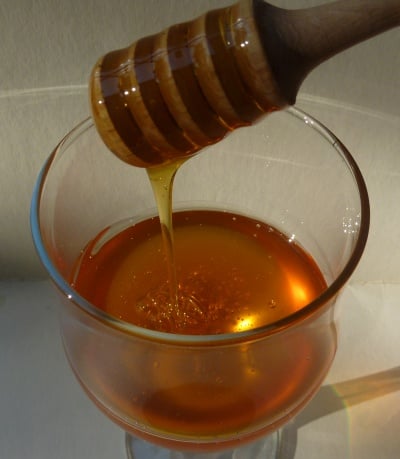
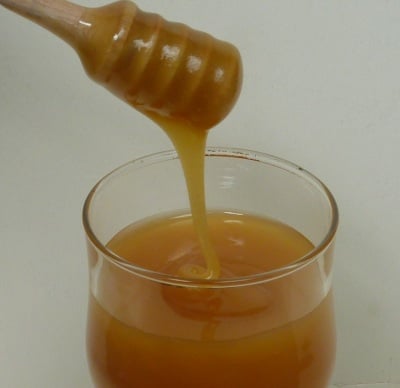
Leatherwood is a light-to-medium honey, running creamy yellow to ochre; measured colour averages 0.39 absorbance units. It is notably dry, averaging 15.8% moisture where the Codex ceiling is 20%, and only mildly acidic at around pH 5.0. The aroma is intense and balsamic; the flavour is musky and spicy with a long, lightly piquant finish, both traceable to two characteristic volatiles, hotrienol and 2,6-dimethylocta-3,7-diene-2,6-diol. It is slow to crystallise, and when it does the crystals are fine, setting the honey to a smooth, creamy paste rather than a coarse grain.
Click to Display — The Details: botanical origin, sensory profile, and its regional identity
Botanical Name: Leatherwood (Eucryphia lucida)
Botanical Family: Cunoniaceae
Bee Species:
The honey is worked by the western honey bee, Apis mellifera. The industry runs on the Italian strain, Apis mellifera ligustica, brought to Tasmania in 1884 and favoured because it is even-tempered and keeps rearing brood late in the season – useful for a nectar flow that peaks in high summer. The older Northern European dark bee, Apis mellifera mellifera, reached the island in the early 1830s and now survives mainly as feral swarms in the forest, descended from those early hives; it is little used commercially.
Color:
Creamy yellow to ochre; measurably light to medium.
Flavor Profile:
Musky, spicy and balsamic; not overly sweet.
Tasting Notes:
Full-bodied with a long, lightly piquant finish. Smooth, creamy mouthfeel, neither sharply sweet nor acidic. Slow to crystallise into a fine, creamy set.
Aroma:
Intense and balsamic, with notes of citrus and white flowers.
Defining Compounds:
The activity in leatherwood honey is hydrogen-peroxide-based (measured at 6-35 ug/g), the opposite mechanism to manuka’s non-peroxide MGO, so the two are not comparable. Its authentication marker is 4-methoxymandelic acid, a phenolic confirmed in E. lucida nectar itself and used to verify genuine leatherwood honey.
Forage Origin:
Leatherwood honey is nectar honey from Eucryphia lucida, a tree endemic to the cool temperate rainforests of western and southern Tasmania and found nowhere else. It is not a eucalypt: it belongs to the family Cunoniaceae (order Oxalidales), part of the ancient Gondwanan flora. Mostly an understorey tree beneath myrtle beech, sassafras and blackwood, it can reach 30 metres where a light-well or gully lets it into the canopy. Through summer it carries a heavy show of white flowers about 2-3 cm across that secrete copious nectar; flowering runs mainly from December to April, and beekeepers work the main flow from January to mid-March, trucking hives deep into the forest and camping with them for weeks. That nectar is more than the honey crop: it also feeds the colonies through the season, which is why E. lucida underwrites commercial beekeeping across Tasmania. A second species, Eucryphia milliganii (Dwarf Leatherwood), flowers later and grows at higher, more exposed sites above about 800 m; it yields leatherwood honey too, but is far less important to the industry than E. lucida.
Pairings:
Leatherwood stands up to strong partners: aged cheddar, blue and triple-cream cheeses, and fresh ricotta. Its floral, spicy character suits herbal teas and citrus-forward desserts, and it is prized in baking that lets it show – almond cakes, shortbread, spiced biscuits. Many Tasmanians take it plainly, on hot buttered toast or straight from the spoon.
Origin Story
Little about leatherwood honey has changed in a lifetime. Beekeepers still truck hives deep into the western forests and camp with them through the flowering, working ground their families have worked for generations – R. Stephens has been extracting at Mole Creek since 1920, now into a fourth generation. The industry’s institutions are nearly as old: the Tasmanian Beekeepers Association formed in 1946 over the question of leatherwood apiary sites, and in its own words “has been discussing the problem about leatherwood ever since.” That question has always been access – the best trees stand deep in forest that is variously logged, reserved, or World Heritage. The honey’s standing is now formal: Tasmanian leatherwood was among the first Australian foods entered on the Slow Food Ark of Taste, the international register of culturally significant foods at risk, nominated by Julian Wolfhagen of the Tasmanian Honey Company.
Harvest & Forage
Leatherwood flowers mainly from December to April, and the commercial flow is worked from January to mid-March. To keep the crop monofloral, beekeepers place hives deep inside leatherwood-dominant rainforest, away from pasture and eucalypt flora that would dilute it, and time extraction to the flowering. The flow is unusually weather-dependent: the flowers can secrete heavily one season and fail the next. In the 2018-19 crop failure, 90 to 100 per cent of leatherwood trees either did not flower or withered within a day and secreted no nectar, and state honey production fell to about 400 tonnes; two years later, as leatherwood recovered, it passed 1,000 tonnes. Because there is no large pasture-honey crop underneath it, Tasmania’s total output rises and falls with the leatherwood season. Bushfire adds to the risk – fires in 2016 and again on the West Coast in 2025 burnt leatherwood stands – and the 2025 state survey notes climate variability now affecting flowering and nectar abundance.
Beekeeping Context
Leatherwood is a migratory-apiary honey: colonies are moved from home bases to the flowering trees for the season and the crop is carried back out to extract. What makes the system unusual is where the trees are. More than 70 per cent of Tasmania’s honey comes off public land, and the best leatherwood stands sit on state forest, in reserves, and inside the Tasmanian Wilderness World Heritage Area, so hives go in by licence rather than onto open ground. In the World Heritage Area, apiary sites are confined to the Recreation Zone, which along roads is a strip 50 metres either side of the centreline. Site allocation on production forest follows guidelines endorsed by the Tasmanian Beekeepers Association in 2019. Access is the enduring constraint: the government’s 2025 survey records that the availability of the leatherwood resource “continues to be a challenge for the industry,” and public money has gone into upgrading roads and culverts to reach existing sites rather than to open new ground.
Named Producers
Blue Hills Honey, Mawbanna (northwest, since 1955). A family apiary on the edge of the takayna forest the honey comes from, with an interpretation centre and cafe; the closest a visitor gets to leatherwood country. Open Tuesday to Saturday.
R. Stephens Apiarists, Mole Creek (since 1920, fourth generation). The shop opens onto the factory floor on weekdays; certified-organic leatherwood under the Golden Nectar label.
The Tasmanian Honey Company, Perth (since 1978). Julian Wolfhagen’s company, which put leatherwood on the Slow Food Ark of Taste; a shop on the main road south of Launceston. The hives themselves are not open to visitors.
Melita Honey Farm, Chudleigh. Open seven days, with a glass observation hive and honey ice cream made on site; around fifty honeys, not all Tasmanian, so read the labels. Closed in 2020 and reopened under new ownership in 2021.
The Honey Pot, Huonville, and Bruny Island Honey, Great Bay. Two shops run by one family from about a thousand hives, with leatherwood sites in the southwest.
Certifications
Slow Food Ark of Taste – among the first Australian foods listed on the international register of culturally significant foods at risk (Australian Ark established 2003); nominated by Julian Wolfhagen of the Tasmanian Honey Company.