Australia Honey
Jump to Regional Travel and Honey Pages
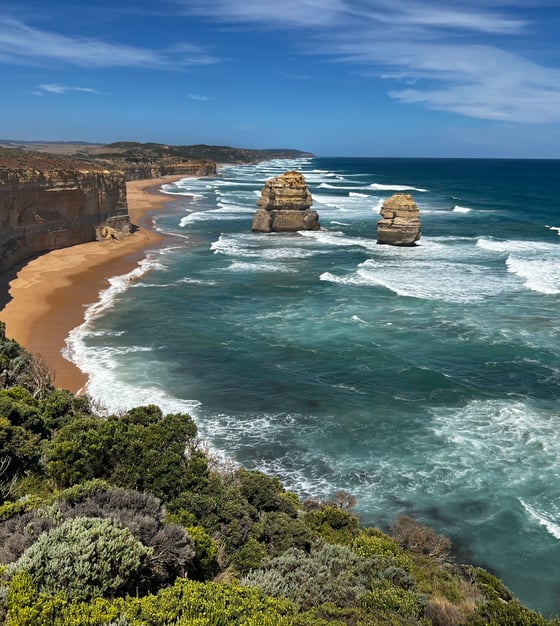
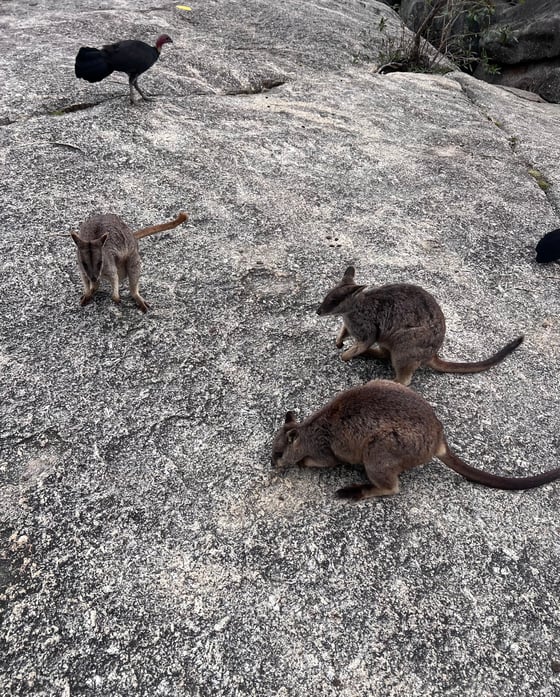
Australia is the flattest, driest, and most ancient of the inhabited continents, and the most exhausted underfoot. Across most of the landmass the surface has not been renewed by mountain- building or ice for tens of millions of years, and rain has done little in that time but carry the nutrients away. What grows on soil this old and this poor is a particular kind of plant: tough- leaved, slow, and frugal. The eucalypts and their relatives in the myrtle family came to dominate the continent precisely because they could hold hard, oil-rich leaves for years rather than spend scarce nutrients renewing them, and because they flower not on an annual schedule but when conditions briefly permit. Australian honey begins in this chemistry. It is, overwhelmingly, eucalypt honey, and the eucalypt is the country’s answer to ground that could support little else. But the honey story does not begin with the eucalypts, and it does not end with them either. Two quite different honeys are made on this one old landmass, and the trees that sit at the centre of it are only part of the picture.
Why some Australian eucalypts flower only once a decade, and how that affects the honey
A temperate fruit tree flowers every spring, on schedule. Many Australian eucalypts do not. Jarrah flowers heavily about once every two years; other species flower at intervals of four years or ten, and even a flowering year yields nectar only if rain has come at the right time. A 2008 study of sixty-six commercial apiarists across south-eastern Australia recorded flowering intervals running from annual to more than a decade, with most species flowering once every two to four years.
The timing itself holds even when the frequency does not. A species that flowers in November flowers in November, in the years it flowers at all. So the year offers beekeepers not a calendar but a scatter of separate events, each fixed in season and place but not in whether it will come at all. A stand of one eucalypt species in bud is one such event: a location, a short window, and then nothing from that species for years.
This is what makes Australian beekeeping migratory. Hives are moved to meet the bloom rather than kept in one apiary through a predictable season, and the named single-species honeys that result are not a planned monofloral program but the harvest of wild stands flowering on their own schedules. It is also why those honeys are scarce and vary from batch to batch: each jar is the record of one flowering, in one place, in one year.
The honey most people picture is the newcomer. Seven hives of European honey bees came ashore at Sydney in 1822, off the convict ship Isabella, and were sold to colonists who wanted them for a familiar reason: honey like the honey of home. At first that is close to what they got. The immigrant bees worked the settlers’ gardens and the European plants brought out with them, the familiar honey produced from a few square miles of transplanted England. Then they absconded to the bush, as bees do, and over the next half century the industry followed them into the country. The first honey exports left Maitland in 1845, six casks for Britain; by the 1950s a beekeeper working karri country south of Perth set a world honey-production record that stood for decades. The honeys the industry became known for were named for the trees the bees found there: leatherwood, jarrah and karri, yellow box and ironbark. The eucalypt character of Australian honey was acquired here, not imported. And two centuries on it is shifting again, its hives increasingly trucked into farmed crops like canola, clover, lucerne (alfalfa), sunflower and citrus, primarily for pollination or colony buildup rather than making honey, yet a growing share of the honey is the result of bees working crops.
What is the difference between European honey and Stingless Bee honey?
Both honeys start the same way. The bees gather floral nectar, carry it home, add their own enzymes, and fan it to drive off water. A European honey bee can take the water down to about eighteen percent and then cap the cell with wax, at which point the sugar is too concentrated for anything to grow, which is why an ordinary jar keeps almost indefinitely.
A stingless bee cannot dry it that far. Working in a humid climate, it gets the water down only to roughly a quarter to a third of the honey, then seals the store in a cerumen pot, a small vessel built from the bee's own wax mixed with collected tree resin. The seal keeps the air out, but at that water content the sugar is not concentrated enough to stop the yeasts and bacteria already inside, so the honey slowly ferments in the pot, turning some of its sugar to acid. That fermentation is the source of the tang, and the reason this honey does not keep on the shelf the way ordinary honey does.
The pot is not a neutral container. The resin in its walls is chemically active, and it gives the honey a resinous, aromatic edge as well as much of the antimicrobial strength the honey is valued for, measured in recent studies as equal to or above most ordinary honeys. The container is closer to part of the recipe than to packaging.
The sugar is different too. Ordinary honey is mostly fructose and glucose. Stingless bee honey is largely trehalulose, a rare low-GI sugar that is the chief component of almost no other food. Between the high water content and that sugar, stingless bee honey does not meet the ordinary legal definition of honey, and for years that left it in a grey zone where it could not lawfully be sold as honey at all. In July 2024 the Australian food code added a separate standard, Standard 2.8.3, defining native bee honey as its own category with its own rules: at least fifty percent reducing sugars instead of sixty, up to twenty-eight percent moisture instead of twenty-one, and at least two percent trehalulose. It must be labelled in a way that names what it actually is, with examples in the standard including "native bee honey" and "native stingless bee honey." It is honey by its own law now, rather than by courtesy of the ordinary one.
The other honey never moved. Long before the ship, the warm north and east held sugarbag, the honey of small native stingless bees, gathered from wild hollow trees by people who had done so for tens of thousands of years and gather it the same way still. It is so unlike the commercial kind that the standard which defines honey for sale will not cover it. Its main sugar is a rare one, trehalulose, which is the chief component of almost no other food, and on that ground stingless bee honey falls outside the ordinary definition entirely. Thinner and tangier than ordinary honey, kept in small cerumen pots of wax and resin rather than in wax comb, made by a bee with no sting, it was never a commodity and never livestock. To the Yolŋu of Arnhem Land the bee is kin. Beeswax pressed onto rock shelters has been dated back four thousand years, and the gathering is older than the dating can reach. The pattern is continental: sugarbag in the warm north and east, the honey of native honey ants in the desert interior, and Banksia nectar and cider gum sap in the cooler south where the stingless bees cannot reach.
Why the bee is kin, and why "sugarbag" is more than just honey.
For Aboriginal people, Country is not a place you live in or a view you look at. It is a living whole made of the land, the waters, the sky, the plants and animals, the people, and the stories and law that bind them, all understood as connected and as kin to one another. A person belongs to their Country much as they belong to a family, and carries a duty to care for it. Country can be healthy or neglected. It is not property that is owned, and not scenery that is passed through. Because everything in Country is related, a plant or an animal is more than the use a person makes of it. It can be food and kin and part of the law all at once, and eating something is not the opposite of being responsible to it.
The bee's place in this is exact. Among the Yolŋu of Arnhem Land, every person, clan, animal, plant, and place is sorted into one of two halves. Each half is called a moiety, named Dhuwa and Yirritja. This is not a division into two groups living apart; many clans share the same Country, and each clan, like everything else in the world, belongs to one moiety or the other. Membership is inherited and fixed, and it shapes who your kin are, who you may marry, and what you are responsible for. The two kinds of native stingless bee fall on opposite sides of this division: the lighter bee with the Dhuwa, the darker bee with the Yirritja, a mapping recorded by the anthropologist Natasha Fijn. The same light and dark distinction a gatherer reads in the bush runs through kinship and language as well, with separate names for the two bees and their honeys. A bee is not simply an insect that makes honey. It has a known place in the social order, and particular people are responsible for it. Because each kind of bee belongs to a moiety, so does its honey, carrying the same belonging the bee does.
The word "sugarbag" carries more than the English word "honey" does, and the Yolŋu language is exact about it. One word, guku, holds the bees, the honey, the wax, and the nest together. They are not divided into an animal and the product it makes. They are spoken of, and understood, as one thing. The word is exact because the nest was taken and eaten whole. A sugarbag nest cannot be drained like a European comb, because the honey sits in many small resin pots scattered among pollen and brood. So the nest was opened and everything lifted out together with the beaten end of a stick. A hive was a complete meal rather than a sweet treat: carbohydrate from the honey, protein and fat from the larvae, protein and minerals from the pollen. Even the spent wax was kept, chewed to free the last honey and then warmed soft to fix stone tools to their handles and to seal and waterproof.
This is why sugarbag is gathered rather than farmed, and why finding it is described as reading the Country. No one plants these bees or chooses their tree. The bee picks its own hollow, and the gatherer learns to see what the bee saw: a fleck of movement at a trunk, a flight line traced into the canopy, the seasons and the signs the bees give. Sugarbag is taken from within this web of kinship and responsibility, not lifted from a neutral landscape, and the knowledge of how to find it is held and passed down within a particular people, on a particular Country.
The industry the country built around the introduced bee is not large. Australia keeps about 866,000 hives across roughly 1,900 commercial enterprises and a much larger recreational sector, and produces around 39,600 tonnes of honey a year. New South Wales alone holds close to half the nation’s hives. Most of the honey comes from native vegetation that the industry does not own: state forests, national parks, public land worked under licence rather than held, and that forage has been contracting for decades. The country produces well above what it eats but is a net importer by volume, sending a premium minority of single-varietal honey abroad and bringing in cheaper bulk honey, mostly for blending and manufacture, and supermarket honey here has been found adulterated with undeclared syrups in 2018 and again in 2025 testing. In June 2022 Varroa destructor, the parasitic mite that has reshaped beekeeping in every other major producing country, was found at the Port of Newcastle; eradication was abandoned within the year, the two-year Transition to Management program concluded in February 2026, and Western Australia is now the last Varroa-free state. None of these are separate stories. They are facets of one: what it has meant, on this continent, to build a honey on an introduced bee and a forest that was here long before.
How is sugarbag honey actually obtained today?
Sugarbag and the jarred native bee honey on sale today are not quite the same thing. The bees are the same, and the chemistry of the honey is the same. But sugarbag in the traditional sense is the whole nest taken together, honey, pollen, brood, and wax, eaten as a single food. The jarred product is the honey alone, drained from the honey pots while the brood and the bulk of the pollen are left in the hive. Some pollen still travels with the honey; that is part of what gives it its character. What the jar leaves out is the larvae and the wax and most of the pollen stores, which in the traditional gathering were the rest of the meal.
The commercial channel is small, expensive, and concentrated in the warm parts of Australia where the bees can produce honey beyond their own needs, Queensland and the warm coastal strip of northern New South Wales. A strong hive produces only about half a kilogram to a kilogram of honey a year, against a European honey-bee hive's sixty kilograms, so volumes are tiny. Jars are sold in fifty, one hundred, and two hundred and fifty gram sizes, typically for thirty to forty dollars a jar, which works out at roughly two hundred to five hundred dollars a kilogram. Compared with the four to five dollars a kilogram a commercial Apis beekeeper receives, native bee honey is one of the most expensive honeys in the world.
Distribution is mostly direct from the producer rather than through supermarkets. The named operators include Tetra Native Bees in Burpengary East, Sugarbag Bees in Brisbane (Tim Heard, who wrote the standard reference book on keeping these bees), Bee House Cottage Kitchen near Rockhampton, Hive Haven in the Glass House Mountains, Nature's Gold, and Bee All Natural, among others. Most sell from their own websites, at farm gate, at farmers' markets, and through specialty and tourism retailers. Supply is irregular: a cool or wet season can leave even established producers with nothing to sell for months.
The traditional gathering continues alongside this commercial channel, and there is now a small Indigenous-led version of the commercial channel as well, with Aboriginal producers keeping hive boxes on Country and selling jarred native bee honey under the 2024 standard. So the same bees now reach a buyer in two quite different forms: the wild-gathered nest, taken whole as it always has been; and a jar of clear honey, which is one part of that nest, separated and sold.
A handful of Australian honeys carry a national identity rather than a regional one. Yellow box, ironbark and river red gum come from the box-ironbark country of the inland south-east, spanning several states; jarrah, the country’s activity-rated flagship, comes from the south-west forests of Western Australia; leatherwood, the strongest single-botanical honey identity in the country, comes from the cool-temperate rainforest of western Tasmania; Kangaroo Island honey is national for the bee rather than the flower, the island holding one of the most intact surviving Ligurian populations, closed to every other bee by law since 1885; sugarbag, the country’s oldest honey, is national by cultural standing rather than volume; and a newer identity is forming around Australian Leptospermum honey, the same genus as New Zealand’s manuka and now graded the same way. Each of these is set in its place on the regional pages that follow. While this page has focused on the national honeys, the regions are where the honey actually is.
Tap or click a region to explore its honey. Map data: Natural Earth via martynafford/natural-earth-geojson (CC0).
Honeys Australia Is Known By
- Sugarbag – the honey of Australia’s native stingless bees, taken from wild nests by Aboriginal people for thousands of years and gathered still.
- Leatherwood (Eucryphia lucida) – from an understorey tree of the wet western Tasmanian rainforest that grows nowhere else, and it made 768 of the 1,012 tonnes of honey Tasmania produced in 2020-21.
- Jarrah (Eucalyptus marginata) – sold on a measured antibacterial strength: Western Australia’s agriculture department tested 62 jarrah samples in 2011 and found activity averaging the equivalent of a 30 per cent phenol solution.
- Kangaroo Island honey – defined by its bee rather than its flower: the Ligurian Bee Act of 1885 closed the island to every honey bee but the Italian Ligurian, and the stock isolated there since is one of the most intact surviving populations of it.
- River red gum (Eucalyptus camaldulensis) – the pale, quick-setting honey of the inland river systems of the south-east, and Queensland’s own honey flora records that it candies readily and needs careful warming to run again.
- Yellow box (Eucalyptus melliodora) – Australia’s everyday table honey, pale and slow to crystallise, and it already held that place in 1912, when Albert Gale, formerly bee expert to the New South Wales government, wrote that the native honey most appreciated came from white box, yellow box and the prickly tea-tree.
- Ironbark – from several eucalypt species that keep their dead bark instead of shedding it, so that gum hardens in it until the trunk is furrowed and iron-hard; it has been sold under that one bark name since at least 1893, when three of the thirteen beekeepers whose honey New South Wales showed at the Chicago world’s fair named ironbark among the trees it came from.
- Australian Leptospermum honey – graded and sold on the same methylglyoxal measure as New Zealand manuka, and the name stays open to Australian producers because trade mark registries in the United Kingdom in 2021 and in New Zealand itself in May 2023 refused to reserve manuka honey for New Zealand honey alone.
- Banksia – the winter crop of Australian beekeeping: banksia flowers in autumn and winter when little else does, and South Australia’s commercial hives winter on more than 250 licensed sites in the banksia heath of Ngarkat Conservation Park, building strength for the spring almond pollination.
History and Tradition
The honey of Australia is far older than its honey industry. For many thousands of years before the first hive was landed here, Aboriginal people gathered honey from the continent’s own insects. In the warm country of the north and along the eastern seaboard that honey was sugarbag – the honey of native stingless bees, taken from nests in hollow trees. In the arid interior it was the honey of honey ants, dug from mulga country, where certain workers hang in the nest swollen with nectar as the colony’s living store. This is among the oldest honey-gathering traditions anywhere on earth, and it was here, unbroken, long before 1822.
It was never only food. Sugarbag was medicine, and it was ceremony. In Arnhem Land, among the Yolŋu, it is sacred: the Honey Spirit is an ancestral being, Sugarbag Dreaming songlines cross the country, and sugarbag belongs within the totemic order of the Dhuwa and Yirritja moieties. The knowledge is exact – a gatherer catches a bee, fixes a fleck of white down to it, and follows it home to the nest – and the language is exact with it: the Wiradjuri word for honey is ngarruu, and the Gubbi Gubbi of the Sunshine Coast carried several names for the native stingless bees – gaiya, guta, gila – and named the honey of the paler bee and the honey of the darker bee separately. Honey was prized enough to be given as a gift and traded as a valued commodity. The practice is written into the land itself: heritage surveys have recorded old sugarbag trees as culturally modified trees, a datable physical record of the gathering. And it is not a closed chapter. Sugarbag is still gathered, and now also kept in boxes, and in 2024 the honey of Australian stingless bees was given its own place in the national food standards code – the continent’s oldest honey, two centuries after the newcomer arrived, entering the formal market on its own terms.
Hived beekeeping in the European sense is, by that measure, a recent arrival. No honey bee of the genus Apis lived on the continent before 1822, when the first colonies of the European honey bee were landed at Sydney from the ship Isabella; further shipments followed within a few years, and Italian Ligurian stock arrived later in the century. The bees met a continent of flowering trees and took to it at once. The first recorded honey export left Maitland, in New South Wales, in 1845 – some 350 kilograms shipped to Britain in six casks.
What grew from those landings was shaped by the irregular flowering the bees could not change. Because nectar events are scattered in place and unpredictable in time, the industry that developed was migratory, and it was built by families who moved hives long distances and held knowledge of the country across generations. The pattern is still legible in the oldest operations – multi- generation enterprises in Victoria, Western Australia and Queensland, several founded in the 1880s and 1890s, some among the first in the country to move hives by rail. In 1954 the beekeeper Rob Smith, working karri country south of Perth, set a world honey- production record that stood for decades.
The modern industry rests on an institutional layer the colonial beekeepers did not have: a national peak body, the Australian Honey Bee Industry Council, funded partly by a levy on honey; an industry- owned food-safety and quality-assurance program, B-QUAL; and a national research program administered by AgriFutures Australia. The honey is judged, too. Apiculture has been judged competitively in Sydney since 1888, and the Sydney Royal National Honey Show is still the benchmark against which Australian honey measures itself.
Quality and Standards
Honey is regulated in Australia first as a food. Under the Australia New Zealand Food Standards Code, “honey” is a prescribed name carrying a compositional standard; labels must not mislead, and floral source and batch identification are required. A separate standard, added to the Code in 2024, now defines Australian native (stingless bee) honey on its own terms, because its sugar and moisture chemistry differ from those of honey from the European bee.
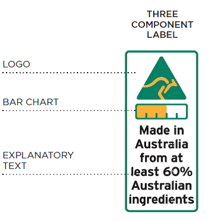
The regulation most visible to a buyer is country-of-origin labelling. Honey is a priority food under the country-of-origin labelling standard: a packaged Australian honey must carry the kangaroo-in-a-triangle logo and a bar chart stating the percentage of Australian content. This speaks directly to the imported-blend problem – Australia imports cheap bulk honey, and adulteration of supermarket honey with undeclared syrups has been documented more than once – and it is the single most useful label for a reader trying to buy Australian honey with confidence.
Quality assurance beyond the legal minimum is industry-run. B-QUAL, established by the national peak body, is a voluntary HACCP-based food-safety and quality-assurance program that also covers biosecurity and meets export requirements. Organic certification is likewise voluntary for honey sold within Australia: it is granted by private certifiers working to the National Standard for Organic and Bio-Dynamic Produce, the best known being Australian Certified Organic and its “Bud” logo.
Stingless bee honey now sits inside this framework on its own terms. FSANZ Standard 2.8.3, gazetted in July 2024, defines native bee honey as a separate prescribed-name category with its own compositional rules – at least fifty percent reducing sugars, up to twenty-eight percent moisture, and at least two percent trehalulose – and requires the jar to be labelled as native bee honey, native stingless bee honey, or Australian native bee honey. This matters at the point of purchase because the standard names what the jar contains; before 2024, the same honey was sold without legal definition and at the buyer’s risk of confusion with ordinary honey, which it is not. There is no activity grade for stingless bee honey and no geographical-indication system; what a buyer has to rely on is the labelled compliance with Standard 2.8.3, identification of the bee genus and species where the producer gives it (most often Tetragonula carbonaria, Tetragonula hockingsi, or Austroplebeia australis), the producer’s own traceability, and the simple fact that the commercial channel is small enough that direct-from-producer is the usual route. Refrigeration after opening is a quality requirement, not a preference – the honey’s high moisture content means it ferments at room temperature, reliably and visibly, within weeks rather than years.
One absence is worth stating plainly, because it sets Australia apart from the European honey countries. Australia has no geographical-indication system for honey. Names such as Kangaroo Island honey, jarrah honey and leatherwood honey are marketing designations and trade reputation, not legally protected appellations; the formal Australian GI register is, in practice, for wine. Activity grades – the TA rating used for jarrah and other Western Australian honeys, the MGO rating used for Leptospermum – are industry and laboratory conventions, not government regulation. For a reader, this means that trust in an Australian single-origin honey rests on the producer’s own traceability and testing, and on the country-of-origin label, rather than on a protected-name regime.
Specialty Retailers
- Beechworth Honey (Beechworth, Victoria; a family business since the 1880s). Australia’s largest independent honey specialist. Its standard honey is sold in supermarkets nationwide; the full single-varietal range is carried through its website and three Victorian shops – the flagship at Beechworth and stores at Healesville and central Melbourne. The best national starting point for tasting widely from one source, though not a substitute for the regional producers below.
- Australian Honey Store – a multi-brand online retailer carrying named varietal and single-origin honeys from producers across several states, Tasmania among them. Its value is breadth rather than depth: a single point of access to regional honeys that are otherwise scattered across small producers.
Competition Record
- Sydney Royal National Honey Show 2025, Champion Liquid Honey – Dr Vanessa Findlay, PanTerra Park (Coila, on the New South Wales south coast). A grey box honey – a single-species eucalypt honey – judged up through the eucalyptus, liquid-honey, all-honey and all-bee-products classes to best exhibit across the Sydney Royal’s food categories.
- Sydney Royal National Honey Show 2025, Champion Natural Granulation or Creamed Honey – The Honey Barn (Hawkesbury and Central Tablelands, New South Wales). A naturally granulated (creamed) honey blended from mixed floral sources.
- Sydney Royal National Honey Show 2025, Champion Beeswax – Rod Kay and Lynda Kay (natural yellow beeswax).
- Australian Beekeeper Award 2022 (inaugural) – Jake Leske (The Queen’s Cut, Adelaide Hills, South Australia). AHBIC’s national award for an emerging industry leader, announced at the 4th Australian Bee Congress, Sydney.
- Golden Bee Award 2024 – Fiona Chambers (Wheen Bee Foundation). AHBIC recognition for international achievement in bee and pollinator work.
Illustrative Links
- Australian Honey Bee Industry Council – The national peak body for the honey bee and pollination industry, with industry data, biosecurity guidance, and the Australian Beekeeper Award. (AHBIC)
- Sydney Royal National Honey Show – Australia’s pre-eminent honey competition, judged since 1888 and the only one awarding gold, silver and bronze medals; run by the Royal Agricultural Society of New South Wales. (Royal Agricultural Society of NSW)
- AgriFutures Honey Bee and Pollination Program – The national research, development and extension program for the beekeeping and pollination industry, and the source of the Size and Scope industry snapshots. (AgriFutures Australia)
- Organic and bio-dynamic produce, Department of Agriculture, Fisheries and Forestry – The Australian Government framework for organic and bio-dynamic produce, including the National Standard and the approved certifying bodies. (Department of Agriculture, Fisheries and Forestry)
- Australia New Zealand Food Standards Code – The food standards code administered by Food Standards Australia New Zealand, including Standard 2.8.2, which prescribes what may be sold as honey. (Food Standards Australia New Zealand)
- B-QUAL Australia – The honey industry’s own voluntary food-safety, quality-assurance and biosecurity certification program, established by AHBIC and administered by Safe Food Australia. (B-QUAL Australia)
See also
Further Reading
- The Immigrant Bees 1788 to 1898: A Cyclopaedia on the Introduction of European Honeybees into Australia and New Zealand – Peter Barrett (self-published, 1995): The definitive documentary record of how the introduced honeybee arrived and spread across the continent, the event this page’s history turns on.
- Australian Bee Lore and Bee Culture – Albert Gale (William Brooks, 1912): An early manual of Australian beekeeping from the decades when the migratory eucalypt-honey industry this page describes was still taking shape.
- A Cluster of Bees: Sixty Essays on the Life-Histories of Australian Bees – Tarlton Rayment (Endeavour Press, 1935): The pioneering natural-history study of Australia’s native bees, the early scientific groundwork behind this page’s account of the stingless bees that make sugarbag.
- The Australian Native Bee Book: Keeping Stingless Bee Hives for Pets, Pollination and Sugarbag Honey – Tim Heard (Sugarbag Bees, 2016): The multi-award-winning standard reference on Australia’s native stingless bees and the sugarbag honey they produce.
- The Sugarbag – Nola Turner-Jensen, illustrated by Dub Leffler (Magabala Books, 2012): A Wiradjuri telling of the sugarbag tradition and its bee-tracking method, from Australia’s leading First Nations publisher.
Sources
- Clarke, M., & Le Feuvre, D. (2024). Size and Scope of the Australian Honey Bee and Pollination Industry: An Updated Snapshot for 2023. AgriFutures Australia, Publication No. 24-107.
- Birtchnell, M. J., & Gibson, M. (2008). Flowering Ecology of Honey-Producing Flora in South-East Australia. Rural Industries Research and Development Corporation, Publication No. 08/098.
- Food Standards Australia New Zealand. Australia New Zealand Food Standards Code: Standard 2.8.2 (Honey), and the Australian native bee honey standard, Amendment No. 229 (2024).
- Department of Agriculture, Fisheries and Forestry. National Standard for Organic and Bio-Dynamic Produce, Edition 3.8 (2022).