Eucalyptus Honey
The Story
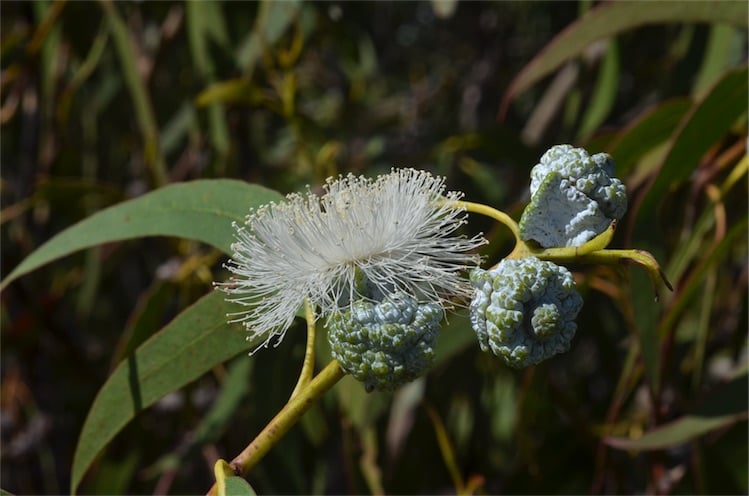
Eucalyptus honey is the honey of a single Australian genus that travelled. The gum trees evolved on the old, impoverished soils of the Australian continent, and for most of their history their nectar fed only Australian bees. Then the trees were carried out: Eucalyptus globulus alone is now planted across more than forty countries, and the honey sold simply as “eucalyptus” on shelves in Spain, Portugal, Morocco, Turkey and California is, overwhelmingly, the honey of a Tasmanian native tree growing far from home.
What the honey tastes of is more consistent than where it comes from. Across species and continents the recurring note is medicinal rather than floral: a clean, slightly cooling character that tasters reach for words like damp wood, menthol, and caramel to describe, sitting over a frank sweetness. The muscatel-grape comparison appears often enough in the literature to be worth naming, but it is the secondary impression, not the first. The genus is large and the honeys are not identical – a pale, mild yellow box and a dark, medicinal jarrah are both eucalyptus honey – but the family resemblance holds across the range.
The third thing to know about eucalyptus honey is that it does not keep its liquid form for long. Most gum honeys crystallise, several of them quickly and hard, and the set is a sign of an unblended single source rather than a fault.
Characteristics
Eucalyptus honey spans the colour scale, from the pale gold of yellow box to the near-black of a dark blackbutt, and the sensory weight tracks the colour: pale means mild and smooth, dark means bold and assertive. The unifying character is a clean, cooling, faintly medicinal quality – damp wood and menthol over caramel – distinct from the floral sweetness of clover or acacia. Crystallisation behaviour splits the genus in two: some, like yellow box and jarrah, stay liquid for many months on a high fructose-to-glucose ratio; others, like river red gum and grey box, set quickly and hard. Several gum honeys also carry a low glycaemic index, yellow box among the lowest recorded.
Click to Display — The Details: botanical origin, sensory profile, pairings, health and what gives it its character
Botanical Name: Eucalyptus (Eucalyptus spp.)
Botanical Family: Myrtaceae
Bee Species:
Apis mellifera, the introduced Western honey bee, carries effectively all commercial eucalyptus honey, in Australia and in every country where the trees have been planted. In its Australian homeland the same flowers are worked by native bees, including the social stingless bees Tetragonula and Austroplebeia in the warm subtropics, but the named single-source honey is a managed-hive crop of the introduced bee.
Color:
pale gold and light amber through medium and dark amber, by species
Flavor Profile:
clean and medicinal – damp wood, menthol, and caramel over a frank sweetness; muscatel as a secondary note
Tasting Notes:
The shared signature is a cooling, medicinal cleanness rather than a floral one. Tasters reach for damp wood, menthol, eucalypt forest and caramel; a muscatel-grape impression turns up often but reads as the second note, not the first. Across the genus the intensity climbs with the colour. The pale honeys – yellow box, river red gum, grey box, the ironbarks – are mild, smooth and buttery, the everyday table end of the range. The mid-amber honeys, jarrah above all, carry a pronounced malty caramel. The darkest – stringybark, blackbutt – run to toffee, molasses and a faint woody bitterness. The set honeys read differently from the liquid: the same flavour, narrowed and concentrated through a firm grain.
Aroma:
fresh eucalypt forest, a cooling menthol lift, warm caramel beneath
Defining Compounds:
The clean, cooling aroma common to eucalyptus honeys has been traced to a recurring set of volatiles. Studies of Portuguese Eucalyptus globulus honey identify linalool and its oxides, benzaldehyde, benzeneacetaldehyde, nonanal, and the ketone 4-ketoisophorone among the markers of the type, the same broad aromatic family that lends the honey its faint floral-medicinal lift. A second, separate property defines the medicinal-grade gum honeys: their antibacterial activity. In jarrah and a handful of other Western Australian forest honeys this activity is hydrogen-peroxide-dominant, generated by the enzyme glucose oxidase when the honey is diluted – which is why it is reduced by heat and light, unlike the heat-stable non-peroxide activity of mānuka.
Forage Origin:
Eucalyptus honey is made from the nectar of trees in the genus Eucalyptus, the dominant genus of the family Myrtaceae and the botanical centre of Australian honey. The genus runs to several hundred species, the great majority native to Australia, and a substantial number of them are worked for honey – the named Australian varietals are almost all single-species or single-genus eucalypt honeys, which is why the country produces so many distinct gum honeys from one botanical family.
Two points of naming matter to a buyer, because several eucalyptus common names are shared across unrelated species. “Blue gum” most often means Eucalyptus globulus, the Tasmanian species planted worldwide, but the same name attaches to Eucalyptus leucoxylon (South Australian blue gum) and to the Sydney blue gum, Eucalyptus saligna; the honey market is most consistent when it specifies “Tasmanian” or “southern” blue gum. “Blackbutt” is shared across entirely different species on opposite sides of the continent – Eucalyptus pilularis on the east coast, Eucalyptus patens and Eucalyptus todtiana in the south-west. “Ironbark” and “stringybark” name bark features that several species share rather than single species. The page treats these as the varietal categories they are, and the variant entries below say so plainly.
One boundary is worth stating. Three genera are loosely called “eucalypts” in Australia – Eucalyptus, Corymbia and Angophora – but only Eucalyptus is covered here. The spotted gum, marri and bloodwood honeys come from Corymbia, split off from Eucalyptus in 1995, and belong to their own category; standard varietal lists of eucalyptus honey are all-Eucalyptus.
Pairings:
The pale, mild gum honeys – yellow box, river red gum, grey box – are all-purpose table honeys: tea and coffee, yoghurt and dairy, drizzling and baking. The darker, more assertive honeys earn stronger company. Jarrah’s malty caramel sits well with aged cheddar and blue cheese and carries straight from the spoon. The toffee-and-molasses honeys, stringybark and blackbutt, hold their flavour through heat, which makes them cooking and baking honeys – glazes, slow-cooked dishes, dark breads – as much as table ones. The cooling, faintly medicinal note across the genus pairs more naturally with savoury and aged flavours than the floral honeys do.
Health Uses:
Most eucalyptus honey is an everyday table honey with the general properties of honey and no special medicinal claim. The exception is a small group of Western Australian forest honeys, jarrah foremost, which are sold on measured antibacterial activity under the Australian Total Activity (TA) rating, the local counterpart to the systems used for mānuka. Their activity is hydrogen-peroxide-based and therefore reduced by heat and light, so any honey intended for that use is kept unheated and stored cool. A buyer caution travels with the rating: Australia’s National Measurement Institute accredits TA measurement up to about TA 35, and values advertised above that are not from an accredited measurement.
Eucalyptus honey is also widely marketed for coughs and congestion, trading on the genuine reputation of eucalyptus essential oil. That reputation belongs to the oil, which is in the leaves; it is not meaningfully present in the honey, and the respiratory marketing says more about the tree than about what is in the jar.
Origin Story
Eucalyptus is the type genus of the Myrtaceae lineage that defines Australian honey, and the genus has a precise birthday. The French botanist Charles Louis L’Heritier described Eucalyptus in 1788 from a single species, Eucalyptus obliqua – messmate – collected on Bruny Island in Tasmania during Cook’s third voyage. The honey followed the bee: the Western honey bee reached Australia in 1822, took readily to the gum flowers, and the cheap, abundant eucalyptus honey that resulted became the foundation of a national industry built on wild and native forest rather than planted forage. That industry remains a wild-harvest, migratory system to this day, beekeepers trucking hives to flowering events rather than sowing nectar crops.
The second history is the one that made eucalyptus honey a world honey rather than an Australian one. Eucalyptus globulus, valued first for fast-growing timber and pulp, was planted across more than forty countries through the nineteenth and twentieth centuries; by one accounting more than half the world’s globulus area now lies in the Iberian Peninsula, split between Portugal and Spain. The plantation belt became a honey belt. Spanish and Portuguese eucalyptus honey, Moroccan and Turkish eucalyptus honey, Californian eucalyptus honey – all are overwhelmingly the honey of the same Tasmanian tree, relocated. River red gum, Eucalyptus camaldulensis, is the other great traveller, the dominant eucalypt honey of the Mediterranean basin and North Africa as well as of inland Australia. The honey labelled “eucalyptus” in most of the world is the original genus at one remove from its homeland.
Harvest & Forage
Eucalyptus flowering is the central fact of gum-honey production, and it does not run on a calendar. Most eucalypts flower irregularly, on multi-year cycles rather than annually, and even a flowering year does not guarantee a nectar flow worth extracting: jarrah blooms about every two years, red stringybark heavily only every two to five, while grey box and the introduced-plantation blue gum are among the reliable annual flowerers. The empirical backing for this is a long-term study of south-east Australian honey flora, which found flowering frequency ranging from annual to once a decade, with most species flowering at two-to-four-year intervals – but with the flowering period, the timing within the year, holding constant even when the frequency does not. Rainfall at the right moment is the dominant trigger.
The practical consequence is a migratory, opportunistic harvest. Beekeepers forecast flowering events and move hives to them, sometimes over long distances, taking a single-species crop where a stand comes into flow. It is why the named gum varietals are often scarce and batch-variable, and why several of them – jarrah, the long-cycle stringybarks – are treated like vintages, with years named between releases.
Beekeeping Context
Eucalyptus honey is, in its Australian homeland, a honey of migratory commercial apiaries working largely wild and public-land forage. The gum stands are native forest rather than planted nectar crops, so the industry depends heavily on access to state forests and national parks, and the honey is correspondingly exposed to land-management policy as well as to the weather. This is the structural difference between the homeland and the plantation countries: where Australian eucalyptus honey comes off wild stands on a forecast flowering event, the Iberian, North African and Californian crops come off managed timber and pulp plantations of a single species, a far more predictable but botanically narrower flow.
Source Regions
- Australia – the genus homeland; the full range of named varietals, from pale table honeys to medicinal-grade jarrah
- Iberian Peninsula (Spain and Portugal) – the largest Eucalyptus globulus plantation belt outside Australia and a major eucalyptus honey source
- Mediterranean basin and North Africa (Morocco, Turkey and neighbours) – eucalyptus honey predominantly from Eucalyptus camaldulensis
- California and the wider Americas (Uruguay, Chile) – plantation Eucalyptus globulus honey
Regional Variants
- Blue gum – Eucalyptus globulus – Australia (Tasmania and southern Victoria) and worldwide plantations: The genus’s great traveller and the world’s eucalyptus honey. As the most widely planted eucalypt on earth it is the species behind most honey sold simply as eucalyptus in Spain, Portugal, California and beyond. Pale to medium amber, with caramel and mint over a sweet-then-savoury body; this is the honey most often given the muscatel-grape comparison. The common name is shared: Tasmanian or southern blue gum is E. globulus, but South Australian blue gum is E. leucoxylon and Sydney blue gum is E. saligna.
- Yellow box – Eucalyptus melliodora – Australia (south-eastern tablelands and slopes): The everyday table honey of Australia and the only eucalypt whose Latin name, melliodora, means honey-scented. Water-white to pale gold, delicate and buttery with a faint floral-almond note – the mild end of the whole genus. Two properties define it commercially: it barely crystallises, staying liquid for years on a high fructose ratio, and it carries one of the lowest glycaemic indexes of any honey recorded.
- Jarrah – Eucalyptus marginata – Australia (south-west Western Australia, endemic): The medicinal flagship and the gum honey that genuinely rivals mānuka. Endemic to the south-west WA forests and found nowhere else, it is dark amber with a pronounced malty caramel. Sold on a measured Total Activity rating, its antibacterial strength is hydrogen-peroxide-based – on average more active than typical mānuka, but reduced by heat and light, where mānuka’s is not. Like yellow box it resists crystallisation and flowers only about every second year.
- River red gum – Eucalyptus camaldulensis – Australia (Murray-Darling Basin) and the Mediterranean basin: The most widely distributed eucalypt in Australia and the key cross-border variant: it is also the dominant eucalyptus honey species of the Mediterranean and North Africa. Clear golden to amber, fuller-bodied than yellow box with a fruity, after-rain eucalyptus note. Where yellow box stays liquid, river red gum crystallises quickly and sets hard – the property that most separates the two great pale table honeys.
- Grey box – Eucalyptus microcarpa – Australia (inland south-eastern woodlands): The reliable one. Where most eucalypts flower on erratic multi-year cycles, grey box flowers more or less every year, which makes it the dependable working honey behind much Victorian and southern New South Wales production. Medium amber and mild, mellow and sweet, it crystallises moderately quickly. Its autumn flowering is itself unusual among the spring-summer gums.
- Ironbark – Eucalyptus sideroxylon / Eucalyptus crebra (and others) – Australia (eastern, New South Wales and Queensland): A category rather than a single species, named for the hard, deeply furrowed dark bark several species share – thirteen of them are worked for honey in south-eastern Australia. The honey is pale across the whole category, and the dark bark is no guide to it: Queensland’s honey flora rates every ironbark from extra white to light amber, choice or good in flavour and heavy in body, and rates none of them dark. What changes with the tree is the detail – butterscotch from grey ironbark, cinnamon and caramel from mugga, and from red ironbark (E. fibrosa) a golden honey of medium density that candies to a coarse grain rather than the fine one the others set. Most jars rarely name the species. A low glycaemic index at 48, but fourth of the six Australian floral honeys tested rather than second: yellow box, stringybark and red gum all sit below it.
- Red stringybark – Eucalyptus macrorhyncha – Australia (south-eastern, NSW and Victorian forests): The beekeeper’s prized stringybark and one of the great Australian toffee honeys. Dark amber with a reddish cast, it tastes of caramel and caramelised walnut over an earthy depth, and stays liquid where its colour would suggest otherwise. It flowers heavily only every two to five years, sometimes longer, so its crops are treated as vintages. The Wiradjuri name for the tree, gundhay, is among the few Aboriginal honey-tree names in current commercial use.
- Messmate – Eucalyptus obliqua – Australia (south-eastern, into Tasmania): The type species of the entire genus – the tree from which L’Heritier defined Eucalyptus in 1788, collected on Bruny Island during Cook’s third voyage. As a honey it is the dominant Tasmanian stringybark (also called Tasmanian oak), dark and opulent in aroma, malty and bittersweet with a faint menthol note and woody tannin. It flowers more reliably than the mainland red stringybark, so the Tasmanian crop is the steadier of the two.
- Blackbutt – Eucalyptus pilularis / Eucalyptus patens / Eucalyptus todtiana – Australia (east coast NSW and Queensland; south-west WA): A single name spanning entirely different species on opposite coasts. East-coast blackbutt is E. pilularis, a NSW forest and koala tree; the two west-coast blackbutts are E. patens (Nyungar dwatta) and E. todtiana (Nyungar yarri). The honey is consistently dark – molasses, scorched caramel, roasted nuts – and the Western Australian forms are sold TA-rated alongside jarrah, extending the medicinal-honey identity beyond jarrah and marri. When buying it, the species and the state both matter.
Translations
- Miel de eucalipto (Spanish) – the name across Spain, where Galicia, Asturias and Andalucia carry the largest eucalyptus honey production in Europe, and across Spanish-speaking Latin America
- Mel de eucalipto (Portuguese) – the Beira Litoral is Portugal’s eucalyptus honey country, and the honey takes gold at the Concurso Nacional de Mel
- Miel d’eucalyptus (French) – the label language of Moroccan eucalyptus honey, much of which is sold into France
- Okaliptus balı (Turkish) – the Mediterranean and Aegean coasts, from Turkey’s first eucalyptus plantings at Mersin in 1939
- Asal al-kalibtus (Arabic) – Moroccan jars are commonly labelled in both Arabic and French