Australia National Honey

Jump to regional honeys

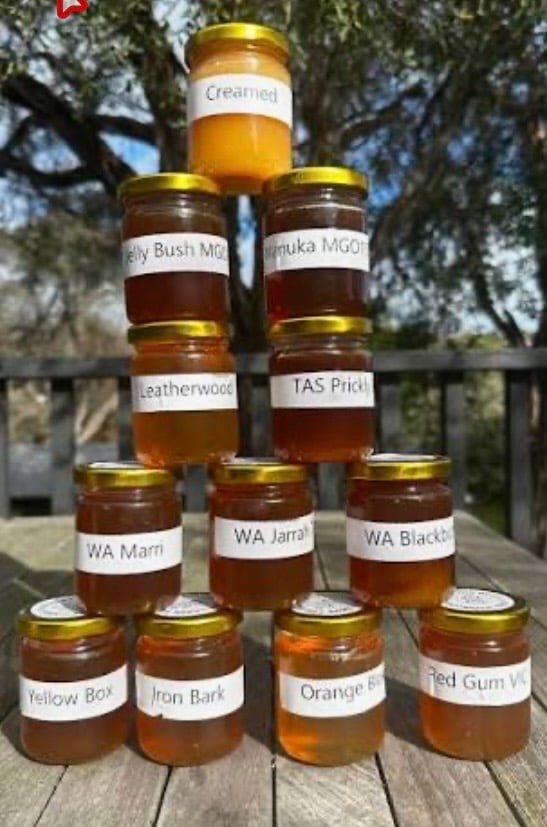
A stacked pyramid of honey jars.
Photo by: Savethebeesaustralia.com | CC BY 2.0
Honey from Australia

Some Australian honeys cannot be pinned to one region. The country’s cross-state eucalypt honeys – yellow box, ironbark, and river red gum – come from trees that grow across several states, gathered by a migratory industry that follows the flowering north and inland rather than staying put. Their identity is national rather than regional, so each is documented once here and shown on the regional hubs that produce it.

See notable honeys

Australian Manuka Honey Leptospermum is an Australian genus -- some eighty species here, one in New Zealand -- and at least seven of them make honey with exceptionally high antibacterial activity. Dark amber, earthy, with a tea-tree edge. Australian Orange Blossom Honey Light, citrus-scented spring honey from the orange groves of the Riverina, Murray Valley and Riverland -- judged Champion Commercial Honey at the 2023 Sydney Royal, blind, against some 500 entries. Banksia Honey A strong winter honey from the tree colonists called honeysuckle. One flower head holds more than a tablespoon of nectar, and it is bottled only when there is a surplus. Ironbark Honey Pale, mild and buttery, and the base under much of Australia's creamed honey. Beekeepers put ironbark first among the honey trees in 1912, and thirteen eucalypts carry the name. Jarrah Honey Australia's most valuable honey, off a tree that flowers heavily only every four to six years. Medium amber, nutty, and it stays liquid in the jar instead of crystallising. Macadamia Honey Malt-and-toffee honey from macadamia blossom -- the nut the world thinks is Hawaiian and is not: the global crop traces to trees near Gympie, Queensland, and these orchards stand in the tree's own native country. River Red Gum Honey The honey of the big pale-limbed gums along the Murray and the Darling: pale, mild and thick-bodied, and quick to crystallise in the jar. Sugarbag Honey Australia's original honey, from native stingless bees rather than the European honey bee. Thin, sharp and acid, stored in resin pots instead of wax comb, and carrying a sugar found in almost no other honey. A whole hive makes about a jar a year. Yellow Box Honey Australia's everyday table honey for more than a century: pale, mild and buttery, and it stays liquid for years. Measured at GI 35, the lowest of the Australian honeys tested, on the same high-fructose chemistry.