Miel de tilleul de Picardie IGP (Picardy Lime Honey)
The Story
Picardy’s lime honey is pale straw with a green glint, and it tastes of mint. The rules that now protect its name say why the other French lime honeys are darker, with a caramel edge: they carry honeydew as well as nectar, and this one is nectar alone.
The nectar is there in quantity because of how the forests were cut. For centuries the woods of Chantilly, Halatte, Saint-Gobain and Samoussy were worked as coppice with standards: the understorey felled on a rotation for poles and firewood, a few oaks left to grow tall. A small-leaved lime answers the axe by sending up a dozen new stems from the stump, so every cutting multiplied it. The result, in the forestry service’s own inventory, is a forest at Samoussy that is a third lime by area, and across the old Picardy about 8.3 million lime trees on 7,600 hectares, a concentration the specification says exists nowhere else in France.
The honey has carried the region’s name since at least 1770, when a commercial dictionary listed miel jaune de Picardie. It has been a protected geographical indication (IGP) since November 2025, the first honey of the Hauts-de-France to hold one. That means the name may go only on honey made to the specification’s rules inside 1,481 communes of five departments; a certifying body audits the producers, a jury of trained tasters is the final check on the honey, and the buyer’s proof is the EU logo beside the name on the producers’ own jars. In September 2026 the specialty honey shops of Paris were selling lime honey from the Jura, the Ardennes and the Haute-Marne, and one a lime it says comes from the forest of Chantilly without the protected name on it; for the name and the logo, the buyer goes north.
Characteristics
A pale honey with a strong taste. Liquid it is pale gold, and it sets slowly to a creamy off-white; the specification allows it sold either way, and both are on the shelves, with no jar saying which. The scent is green and fresh, the taste mint first and then a dry, faintly medicinal astringency that outlasts the sweetness, which is only medium. The honey is certified as nectar alone, with an electrical conductivity ceiling that shuts out the honeydew that darkens lime honey elsewhere. Pollen analysis will show chestnut and bramble beside the lime, because a lime flower sheds little pollen; the specification allows the lime marker to appear only as an isolated grain. Water at most 18 per cent, HMF at most 10 mg/kg at extraction.
Click to Display — The Details: botanical origin, sensory profile, and its regional identity
Nectar Contributors:
- Primary: Small-leaved lime and other limes (tilleul) (Tilia spp.)
- Secondary: Sweet chestnut (chataignier) (Castanea sativa)
- Supporting: Bramble (ronce) (Rubus fruticosus agg.)
- Background: Field crops in flower nearby (sunflower, rapeseed and other crucifers) (Helianthus annuus; Brassicaceae)
Bee Species:
Western honey bee (Apis mellifera). The specification names the species and no subspecies.
Color:
Pale straw yellow with greenish glints, in the specification’s words; creamy white once set, pale gold while liquid.
Flavor Profile:
Fresh and mentholated, with an edge the specification calls pharmaceutical and a producer training as a juror calls camphor and medicinal; astringent; medium sweetness and acidity.
Tasting Notes:
The producers reach for the same words: a supported taste of lemony mint at one house, fresh, mentholated and persistent at another, pronounced, fresh and delicately mentholated at a third; a producer training as a juror adds menthol first and powerfully, then camphor, then medicinal at the finish. One buyer, writing in 2018 of a jar from the Halluette, found eucalyptus and a silky texture. The finish is medium to long.
Aroma:
Vegetal, with fresh, mentholated notes of medium to strong intensity.
Defining Compounds:
Electrical conductivity at most 0.7 mS/cm. Honeydew honeys conduct more than nectar honeys, so the ceiling is in effect the line that keeps honeydew out; the specification states the limit and, separately, the nectar-only origin. Water at most 18 per cent and HMF at most 10 mg/kg at extraction, which is why the honey may not be warmed over a flame or with direct steam.
Forage Origin:
Primary: lime (tilleul, Tilia spp., Malvaceae). The specification certifies honey “from the nectar of the flowers of Tilia sp.” and names no species in the rule itself; its own account of the land says the small-leaved lime, Tilia cordata, is the species that matters in Picardy, wild and self-sown, and that a hectare of it yields more than 500 kg of nectar against about 200 for the large-leaved lime, Tilia platyphyllos. In the 2013 inventory the specification cites, lime was 3.2 per cent of the region’s standing timber, the eighth species by volume, about 8.29 million trees on 7,600 hectares. The forestry service’s 2016 fiche for the state forest of Samoussy gives lime a third of the wooded area, behind pedunculate oak alone. How it got there is a land-use history, not a soil claim: the forests were long run as taillis sous futaie, coppice with standards, and a lime stump cut back “can throw up a dozen stems”, so each rotation multiplied the tree. The DREAL’s sheet for the forest of Halatte describes the south of that forest as coppice with standards of oaks and limes, and the park’s own booklet records the regime since the Middle Ages and its end: the forestry service took the forest in 1966 and its 1997-2011 plan converted the coppice to oak high forest, abandoning the coppice cuts in the south. What that does to the lime flow in the decades ahead, no source has yet said.
Secondary: sweet chestnut (chataignier, Castanea sativa, Fagaceae). Chestnut pollen is one of the specification’s three marker pollens, which is how a laboratory tells a Picardy lime honey.
Supporting: bramble (ronce, Rubus fruticosus agg., Rosaceae). The third marker pollen, from the hedges and forest edges.
Background: field crops in flower nearby (tournesol, Helianthus annuus; colza and other Brassicaceae). The specification’s list of pollens that may appear as isolated grains includes sunflower and the rapeseed family: the arable plain around the forests turns up inside the forest honey.
Pairings:
A beer: Bee Mousse, brewed for the Chavignon house with lime honey from the Saint-Gobain and Samoussy forests. A mead: the Fourneaux house’s lime goes into a sparkling hydromel its maker describes with thyme, rosemary and undergrowth as well as mint.
Origin Story
The name is older than the label by 255 years. The Dictionnaire portatif du commerce of 1770 listed miel jaune de Picardie, and the Revolution’s price tables, fixing honey as a necessity of life, recorded the north’s own honey vocabulary: miel de pays at Laon, miel batard du district and miel blanc at Soissons, miel jaune and miel citrin at Clermont and Montdidier. The specification carries these from the regional culinary inventory of 1999, with the hive counts of the Second Empire, 43,985 in the Aisne in 1866 and 36,297 in the Oise in 1869, and a guidebook of 1905 on the Somme’s beekeepers “gathered in a society at Amiens”.
One claim travels with the honey. INAO’s page and the producers’ group say Chantilly takes its name from campus tiliae, the field of limes. The lexicographer Jean Pruvost, on Radio France in 2017, derives the town’s name probably from Cantiliacum, the estate of a Gallo-Roman landowner called Cantilius, and calls the lime derivation a false etymology.
Before the IGP the name lived two lives. In the forests, producers sold it from their own mielleries under the Chamber of Agriculture’s Terroirs Hauts-de-France mark, on a lime-leaf label, from a list of approved producers. In the supermarkets, it was an own-label regional line: Carrefour’s Reflets de France, Leclerc’s Nos Regions ont du Talent and Lidl’s Saveurs de nos Regions all sold a 375 g Miel de tilleul de Picardie packed in the Jura or at Gan in the Bearn, with no producer’s name on it. The producers' group says plainly that many of its members sell direct and others sell in bulk to the merchants and packers who supply the supermarket shelves. The global linden page carries the long campaign for the label and the taste the growers once blended away; here the story is the forest.
Cultural Context
The taste is judged by people. The final control under the specification is a sensory jury – “other regions handed that to laboratories”, the trainer who prepares it told France 3 – and the producers’ group trains consumers to sit on it: one juror, in November 2024, said she used to open a jar and think “I like it” or “I don’t”, and that she now attends to other sensations; a producer on the same panel said it let her explain the honey properly to her customers.
At Chavignon in the Aisne, the Complexe Apicole has been on its site since 1968 and has run a bee museum, Les Ateliers de l’Abeille, since 1984; in 2024 the house launched Bee Mousse, a beer brewed for it by a farmer-brewer thirty kilometres away with lime honey from the Saint-Gobain and Samoussy forests. It sells its IGP jar and a non-IGP Tilleul de l’Aisne side by side. At the Concours general agricole the honey competes in the lime class: a register producer at Maulde in the Nord took gold in 2024 for a 1,200 kg lot she entered as miel de tilleul de Picardie, and the Divette miellerie has five lime medals since 2007.
The producers’ group marked the registration with a Fete du miel de tilleul de Picardie at the Espace Dewailly in Amiens on Saturday 15 November 2025, four days after the regulation was published: free entry, a producers’ market of some twenty stands, workshops, beekeeping-supply stands and a brass band, and close to a thousand visitors by the group’s own count. It was the second fete of its kind by the region’s professional beekeepers, after one in Lille in 2023 organised by their association.
Harvest & Forage
The lime flowers from mid-June and the flow is short: barely three weeks between June and July, as France 3 put it. In 2025 it lasted eight to ten days, cut short by heat at the end of June, and still gave 25 to 40 kg and more per hive; one producer said he had never produced so much. In 2024 a Somme beekeeper took half a normal lime crop. In 2023 lime was a third of all the honey Hauts-de-France beekeepers declared to the national survey, and the lime flow gave the best yield of any in France that year, 18.75 kg per producing hive. The specification fixes the frame: hives may be fed nothing but honey from 30 April, are placed to work the lime before 31 July, and may be moved within the zone to follow it.
The hives go into the forest for the lime, and the specification’s pollen rule treats chestnut and bramble as markers of a true Picardy lime honey. Open-flame and direct-steam warming and ultrafiltration are forbidden, and seeding for a creamy set is capped at one per cent.
No jar we read carries a crop year. The specification sets the date of minimum durability at 24 months at ambient temperature or 36 below 15 C, counted from extraction, and the only date a buyer sees is that one; on the Fourneaux jars it fell in November. A price on this honey therefore never tells the buyer which harvest it was.
Beekeeping Context
INAO’s 2025 figures give 45 producers, 2,031 hives and 52.25 tonnes; the specification’s own account starts from about fifteen beekeepers and 35 tonnes in 2018. The producers’ group lists 22 houses with profiles, three of them in Flanders, beyond the zone the honey is made in, and a Normandy house on the register moves its hives into the forest of Halatte for the flow and prints the IGP name on its jars at home near Dieppe. The flow draws beekeepers from further off: the regional beekeepers’ association wrote in 2023 that houses from the Centre, Normandy, Ile-de-France and Brittany come to Senlis and Laon for it. Thirty producers were in the association when the label came, and the group’s president counts about eighty professional beekeepers, with more than fifty hives each, in the whole of the Hauts-de-France. Two packers are habilitated to bottle the honey.
The producers are small: a beekeeper working the forest of Chantilly from Lamorlaye, a farm sale one Saturday a month at Thiescourt, a shop, museum and supply counter on the RN2 at Chavignon.
Named Producers
Complexe Apicole, Les Ateliers de l’Abeille (EARL ACBB) – Jean-Francois Villaire, La Fontaine du Bois, RN2, Chavignon (Aisne). On the site since 1968; shop, beekeeping-supply counter and bee museum at one address, open Monday, Wednesday to Saturday 9h-12h and 14h-18h as published in September 2026, closed on public holidays. Sells the IGP jar and a non-IGP Tilleul de l’Aisne, and the lime-honey beer Bee Mousse; e-shop ships.
EARL Fourneaux et Fils – Jerome Fourneaux, Saint-Nicolas-d’Aliermont, near Dieppe (Seine-Maritime). A Normandy house on the IGP register that moves its hives into the forest of Halatte for the flow; prints Miel de Tilleul de Picardie with the EU logo as the jar’s headline. Shop Wednesday to Friday 10h-12h and 14h-18h, as published in September 2026, closed for part of the summer; markets Saturday in Dieppe, Sunday at Rouen’s place Saint-Marc; e-shop ships.
Miellerie de la Divette – Sylvaine Charpentier and Celestin Morel, 144 rue du Moulin, Thiescourt (Oise). Organic; the IGP name and logo on a jar that also carries the organic leaf; five Concours general agricole medals for its lime honey since 2007, the latest a silver in 2024. Farm sale the first Saturday of the month 9h-12h and 14h-18h and by appointment, as published in 2026; telephone first.
M comme Miel – Jean-Baptiste Vial, Lamorlaye (Oise). Hives in and around the forest of Chantilly; the first producer of the Oise-Pays de France park’s territory to carry the label, by the park’s own announcement of November 2025, with sale announced at the park’s shop at Orry-la-Ville. Contact the house before travelling.
Translations
- Miel de tilleul de Picardie – French, the protected name, printed in the singular and without abbreviation
- Miel jaune de Picardie – French, the name in the Dictionnaire portatif du commerce of 1770; on no jar today
- Picardy lime honey, Picardy linden honey – English
Certifications
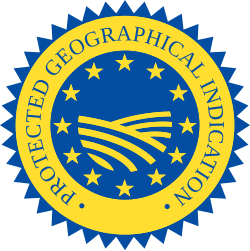 Miel de tilleul de Picardie IGP – Registered by the European Union in November 2025 under a specification homologated in June 2024: honey from the nectar of Tilia in 1,481 communes of the Aisne, Oise and Somme with edges of the Pas-de-Calais and Val-d’Oise; nectar alone, a conductivity ceiling of 0.7 mS/cm, three marker pollens, no feeding but honey from 30 April, hives placed for the lime before 31 July, no warming by flame or steam, and a sensory jury as the final check. The name is printed in the singular with the EU logo and the producer in the same field of the label.