
Sourwood Honey
The Story
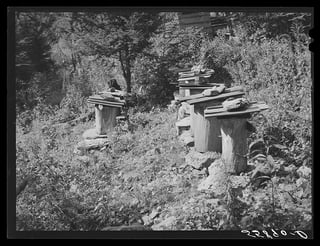
For the first fifty years anyone wrote about it, sourwood honey was something you had to travel for. A North Carolina beekeeper wrote in 1876 that he would have sent some north on trial, but for a home demand for all he could make; Pellett found in 1920 that local buyers usually took the whole crop, at prices above the open market; and Root’s bee encyclopaedia of 1923 said it was seldom found in markets outside the region where it was gathered. The tree has a record of its own: the Cherokee carved its wood into sled runners, pipe stems and butter paddles, and the settlers who came after them kept their bees in gums hollowed from black gum logs. The earliest beekeeper found writing of the honey, J. F. Montgomery of Lincoln County, Tennessee, in 1874, said the sourwood made the prettiest honey he ever saw.
What makes it is timing. The tree grows from Pennsylvania to the Gulf of Mexico, but it blooms among the last of the big trees, in June and July, after the spring honeys are in, so that beekeepers in the mountains of Georgia, the Carolinas, Tennessee and their neighbours can take it nearly on its own: a pale honey that tastes of anise more than of sugar.
Characteristics
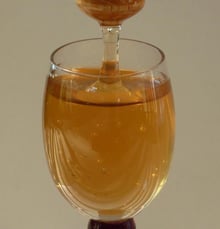
A 1962 USDA analysis of three pure samples from North Carolina and Virginia placed them between extra white and extra light amber on the Pfund scale, and a Georgia forestry bulletin calls it light amber. The nose is anise, which sellers round out with baking spice, and the taste is anise with low sweetness and an astringent finish. None of the three samples had granulated after six months undisturbed, which matches what the trade press wrote in 1920 and 1923 and what sellers say today, that a jar stays liquid for months.
Click to Display — The Details: botanical origin, sensory profile, and its regional identity
Botanical Name: Sourwood (Oxydendrum arboreum)
Botanical Family: Ericaceae
Bee Species:
Sourwood honey is made by the Western honey bee, Apis mellifera, which is not native to North America. The tree’s greatest use, a University of Georgia forestry bulletin says, is by bees; butterflies and moths visit the flowers occasionally.
Color:
Extra white to extra light amber in a 1962 USDA analysis; usually described as light amber
Flavor Profile:
Anise, with low sweetness and an astringent finish; sellers describe it as buttery and caramel
Tasting Notes:
A trained tasting panel that assessed sixteen honeys for the National Honey Board before 2002 marked sourwood high for anise in both aroma and flavour, low for sweetness and for the waxy and clover notes other honeys carry, and high for an astringent, mouth-drying aftertaste; a 1962 USDA analysis found the same honey low in glucose. The board’s 2002 guide for chefs summed the panel’s work up as a sweet, spicy, anise aroma and flavour with a pleasant, lingering aftertaste.
A North Carolina beekeeper wrote in 1876 of a flavour far nicer than white clover and more delicate; A. I. Root, the bee-supply publisher, replied in 1880 that its aroma had a suggestion of timber and forest trees; Pellett in 1920 called it heavy of body and fine of flavour. Today’s sellers describe caramel, cinnamon and gingerbread beside the anise, and the Slow Food catalogue a twang in the aftertaste.
Aroma:
Anise (black liquorice); baking spice in sellers’ descriptions
Defining Compounds:
The 1962 USDA analysis found a honey low in glucose and in acid. Its three pure samples gave fructose at 39.7 per cent and glucose at 24.6, a pH of 4.5 and total acidity of about 17 meq/kg; the bulletin’s comparison table marks sourwood lower than the average American honey in glucose and acidity and higher in pH.
Forage Origin: 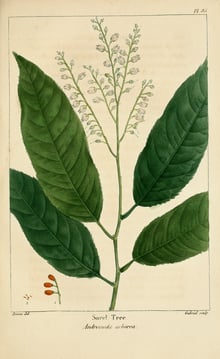
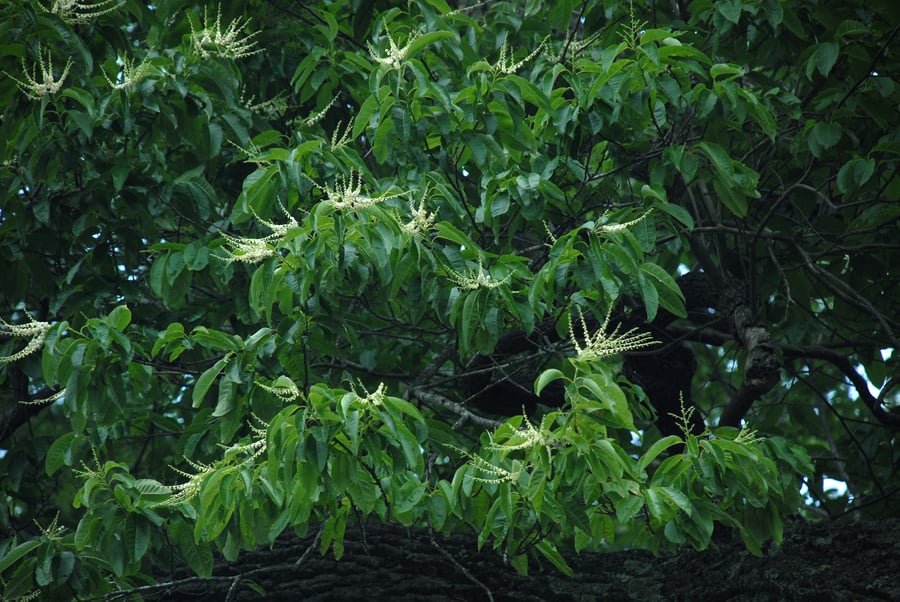
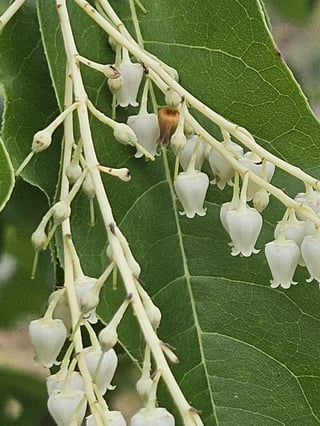
The bees take nectar from the flowers of the sourwood tree, Oxydendrum arboreum, the only species in its genus and a member of the heath family, Ericaceae, which also holds blueberry, cranberry, rhododendron and mountain laurel. The name is from the leaves, which oxalic acid makes sour; the tree is also called sorrel tree. In June and July it carries long one-sided racemes of small white urn-shaped flowers, three to eight at each branch tip, with rich nectar and little pollen.
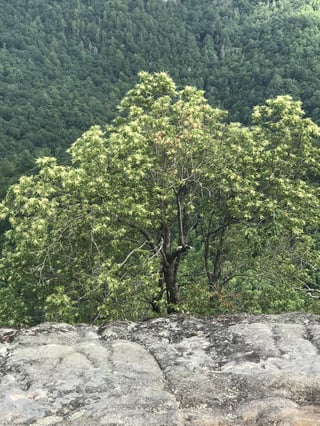
The tree is native to the eastern United States, from south-west Pennsylvania and southern Ohio and Indiana to the coast of Mississippi, Alabama and north-west Florida; abroad it is grown only as a garden tree, in Europe since 1752. It grows as single trees or, rarely, a small stand, a Georgia forestry bulletin says, most abundant in drier, more open oak stands, where the openness of the forest to light is critical; the Forest Service’s account classes it tolerant of shade and able to reproduce in the understory, most abundant on dry open slopes and ridges with chestnut oak and largest on the western slopes of the Great Smokies. It takes acid soils and avoids limestone, and at the northern edge of its range it is scarce enough that Indiana lists it as threatened and Maryland as endangered.
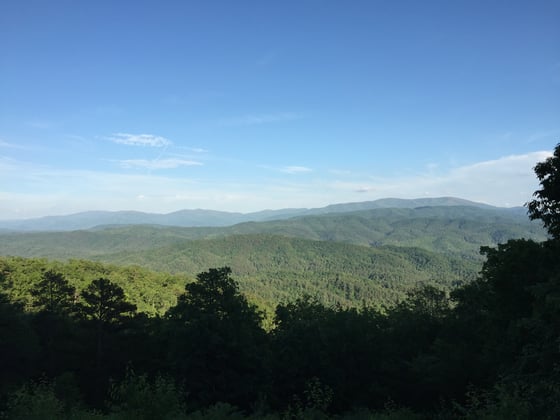
The honey is Appalachian because the flow is. Sourwood blooms after most spring nectar sources have finished, in June and July, which is why, Clemson’s extension service writes, it can be collected as essentially a single-flower honey; the same service calls it the most coveted nectar tree of upstate South Carolina and far commoner above the fall line than below it. Beekeepers in Georgia, North Carolina, West Virginia and Kentucky sell it under its name in 2026, and one North Carolina coastal-plain farm reported, on an undated page read in 2026, its own honey analysed at 51 per cent sourwood.
Sourwood pollen is scarce in sourwood honey, because the flowers give much nectar and little pollen: a jar that is mostly sourwood by nectar carries little of its pollen, and a laboratory corrects the raw count for it. Vaughn Bryant of the Texas A&M palynology laboratory places it among the weakest-represented pollens, the types a coefficient table corrects for; the authors of a 2024 study called 19 per cent, in one North Carolina sample, a significant share for this plant. North Carolina’s beekeepers’ association asks that at least 51 per cent of the honey come from the source, judged by pollen analysis; federal guidance asks only that the named plant be the chief floral source and gives no figure.
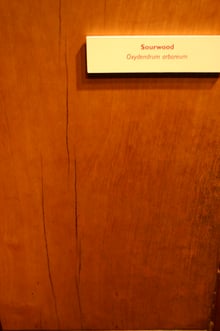
The tree has had other uses. The Cherokee ethnobotany compiled in 1975 records, beside the wood uses, leaf and bark preparations taken as tonics; settlers used the wood for tool handles and sled runners, and the Forest Service notes it still used locally for handles, fuel and pulp.
Two trees called sour gum, and sourwood's heath-family cousins
Sour gum is a name for sourwood and also for black gum, Nyssa sylvatica, a different tree whose spring honey North Carolina's extension table lists under its own name; a beekeeper complained of the confusion in 1878.
Several plants of the heath family, among them rhododendron and mountain laurel, carry grayanotoxins, and a toxic honey documented in North Carolina was, in the researchers' words, most likely from mountain laurel nectar. Sourwood blooms after both, and beekeepers who want it pure take the spring honey off first.
Pairings: 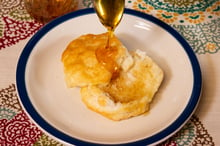
A certified North Carolina producer keeps her spring honey for baking and sourwood for pancakes, waffles and French toast. Sellers in Asheville, elsewhere in North Carolina and in Maryland put it on hot biscuits and cornbread and beside aged cheddar and blue cheese, with black coffee or Earl Grey; an Asheville cookbook author bakes it into muffins, stirs it into lemon curd and corn chowder, and roasts Brussels sprouts in it.
Two North Carolina meaderies described sourwood meads in 2020 and 2022.
Origin Story
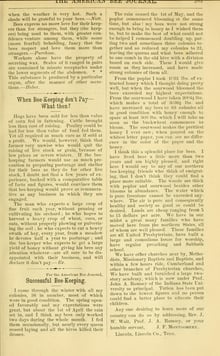
The oldest mention found in the beekeeping press is Montgomery’s letter of September 1874, in the American Bee Journal: poured on the whitest letter paper, you can see no difference in colour between the paper and the honey. Pellett’s American Honey Plants of 1920 gathered what the beekeepers he canvassed told him, and added that many people regarded it as the finest honey produced in America.
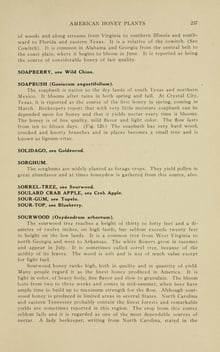
Beekeepers then wrote of the flow as dependable. J. T. Reeves of Laurel Springs, North Carolina, wrote in 1914 that sourwood had never failed in all the years of keeping bees there, and called it the king of all honey plants in the South; Pellett wrote that it seldom fails; Root’s 1923 entry gave it as reliable three years in five in north-west North Carolina.
The Cherokee record of the tree lists, beside its wood uses, that it was used to make honey, in a compilation of 1975 that does not date the practice; since honey bees are not native to North America, that use is of the colonial period or later. The Forest Service rates it of little value as timber, foresters treat its stump sprouts with herbicide to make room for better species, researchers in 2025 ranked it the fourth most abundant tree in the southern Appalachians, and its claim to fame, the Georgia forestry bulletin says, is the honey.
Sourwood for the coalfields
Two attempts have been made to put sourwood honey to work for coal country. In 2008 Coal Country Beeworks, a project at Eastern Kentucky University, planted about 4,000 sourwood trees on surface-mined land, with two coal companies' help, on the reasoning, in the project's words, that a tree normally considered trash makes one of the finest honeys in the United States; finding the trees was difficult and expensive, and deer ate some. By 2010 the project had changed its approach to moving bees to existing sourwoods. The second is a West Virginia programme, Appalachian Headwaters, formed in 2016 to invest a Clean Water Act settlement paid by a coal operator; its beekeeping collective sells sourwood honey from established forest, and the Appalachian Regional Reforestation Initiative's advisory of 2017 lists the mid-summer blooming sourwood among the trees fit for planting on mine land.
Cultural Context

Sourwood is the honey its region is known by: George Ellison, writing in the Smoky Mountain News, calls it the most famous honey produced in the region. Black Mountain, North Carolina, marks the start of the selling season with its Sourwood Festival each August; the town once gave away sourwood saplings, which, its chamber of commerce director recalled, did not transplant well.
The name on the jar is worth checking in North Carolina. Since 1984 the state’s agriculture department has allowed a floral name on honey that contains a significant amount of that flower’s pollen; in 2010 the North Carolina State Beekeepers Association adopted a standard of identity for honey, prepared by John T. Ambrose of North Carolina State University, under which a honey labelled sourwood must, by pollen analysis, be at least 51 per cent from that source and match it in colour, odour and flavour. In 2012 the department, citing the association’s tests, which found honey labelled sourwood on sale at state farmers markets with little or no sourwood pollen, began requiring vendors at its five farmers markets to apply for approval before selling honey labelled sourwood or North Carolina; the department said at the time that no identity standard for honey could be enforced under state or federal food law, and the permit reaches only those five markets.
At the Apimondia congress in Dublin in 2005, a Georgia beekeeper’s sourwood came home, in an Irish beekeeper’s words, with the title of best honey in the world; at the Black Jar honey contest in Asheville, run by the Center for Honeybee Research, a Georgia beekeeper’s sourwood won the 2025 grand prize. In 2026 the honey sells under its name from the producers themselves and from specialty honey shops in Asheville, in Maryland and in New York.
Harvest & Forage
The bloom runs by state and height. North Carolina’s extension note gives average dates: in the mountains from about 25 June for 25 days, in the Piedmont from 10 June for 20, on the coastal plain from 1 June for 20; the Asheville beekeepers’ flowering chart puts the season’s swing at as much as two weeks either way and warns that a mountain microclimate can shift the dates too. Georgia’s honey bee programme has the flow starting in the first two weeks of June and lasting, in some years, through July; the Asheville beekeepers’ club puts it from mid or late June through mid-July; in Wilkes County, North Carolina, peak bloom comes first at the lower elevations and later up the slopes, so hives on the escarpment get a longer window. A Henderson County beekeeper recorded in 1875 that bloom began on 3 July and lasted 26 days.
By the time sourwood opens in the North Carolina mountains, tulip poplar, black locust and black gum are over; basswood and the clovers overlap it, and the Asheville club tells its members to keep the sumac bloom, late June into early July, separate from the sourwood. A century ago the trade press found it often mixed with basswood or persimmon honey.
Most Georgia beekeepers, the state’s honey bee programme says, remove all spring honey before moving hives to the mountains or adding supers for sourwood; the Asheville calendar has the spring honey extracted in June, supers of drawn comb added in late June or early July, and the sourwood taken off in August. A Wilkes County beekeeper described putting the emptied frames back on his hives as the nearby trees came to the verge of bloom, and a beekeeper’s son remembered his father pulling the supers just as the sourwood began, because the honey to that point was poplar and clover, darker and heavier. In August 2023 a West Virginia operation reported heating its sourwood before extracting it, and drying a batch where it needed it.
The crop varies by county and by year. Wilkes County’s beekeepers reported 2020 as a banner year, 2021 as little to none, 2025 as a poor honey year and 2026 as the best sourwood crop since 2020; beekeepers in the Appalachian collective across the state line called 2020 and 2021 bonanzas. Asked what makes a good year, a dozen old beekeepers, one of them said, will give thirteen reasons, and no one has done the science; what they agree on is that very wet or dry weather and extreme temperatures cut the flow, and that heavy rain can wash the nectar out or knock the blossoms off.
Beekeeping Context
Sourwood is a honey beekeepers move for. Georgia’s honey bee programme speaks of moving hives to the mountains for it, Clemson’s of migratory beekeepers going up to the Piedmont and foothills to catch the flow, and beekeepers from the North Carolina Piedmont still place hives in the Wilkes County mountains for a few weeks each summer. The earliest such move found is in the American Bee Journal of 1895: two railroad carloads of bees and hives taken to Monteagle on Tennessee’s Cumberland Plateau the year before, where the linden came in, followed by sourwood. In the Smokies, the Park Service’s 1984 history handbook records, the beekeeper with log gums waited for August, after the sourwoods had bloomed, then broke the gum’s seal with a long hooked knife and cut out squares of light golden comb to fill ten-gallon tins.
In North Carolina a beekeeper can join the state association’s certified honey producer programme, which bars a single-source label unless the honey is from a known predominant nectar source, sourwood among its examples, or has been tested.
In southern West Virginia and south-western Virginia the Appalachian Beekeeping Collective, a programme of Appalachian Headwaters, gives bees, equipment, bear fencing, a winter course and a mentor to new beekeepers, former coal miners among them, and pools, extracts and bottles their honey; its 2025 federal research report counts 255 partners over five years and 87 active. The partners’ hives stand in forest the collective describes as “relatively undeveloped” and covered with well-established sourwood.
Named Producers
MtnHoney – Clarkesville, Habersham County, Georgia. Virginia Webb’s apiary; its sourwood is the one that took the Dublin and Asheville honours. Contact before travelling.
Mikell’s Farm Honey – Old Fort, McDowell County, North Carolina. Sharry and Doug Mikell are certified producers in the North Carolina State Beekeepers Association’s programme and have twice won the sourwood category of the Black Jar honey contest in Asheville. A small farm whose crop varies by year: ask before travelling.
Appalachian Beekeeping Collective – southern West Virginia. A non-profit programme of Appalachian Headwaters that trains and equips new beekeepers, former coal miners among them, in West Virginia and south-western Virginia and sells their sourwood under one label. What is in stock depends on the season: ask before travelling.
Festivals and Fairs
Sourwood Festival – Black Mountain, North Carolina (early August; 8-9 August in 2026): a town festival held since 1977 that its organiser, the Black Mountain Swannanoa Chamber of Commerce, says marks the start of the sourwood honey-selling season, with, in the chamber director’s words, plenty of sourwood honey at the festival.
Certifications
 Slow Food Ark of Taste: Sourwood Honey – Catalogued in 2008 as a food of the south-eastern United States at risk, with development named as the threat to the tree. A listing, not a production rule.