Tupelo Honey
The Story
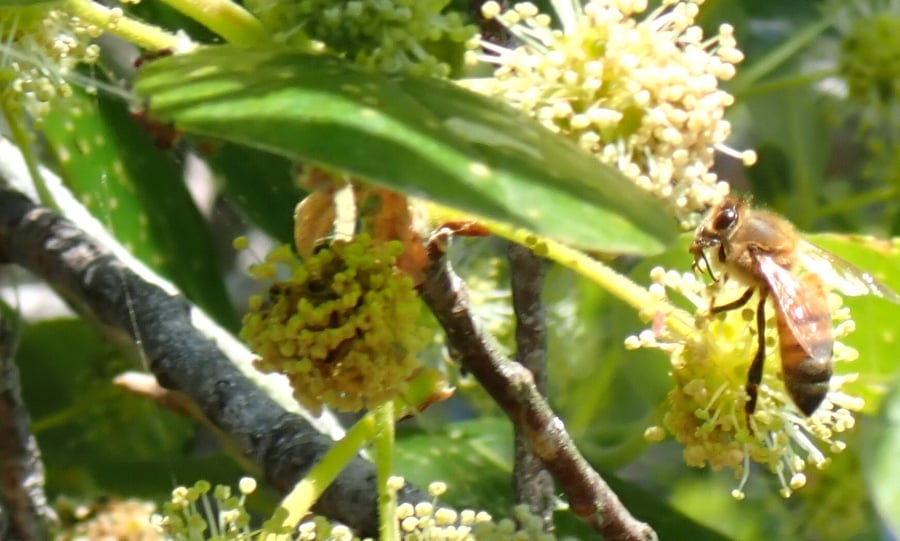
On 3 October 1765, on the Altamaha River in Georgia, John Bartram wrote in his diary of “a rare tupelo with large red acid fruite called limes, which is used for punch.” By 1911 the honey of the tupelo trees on Florida’s Apalachicola River was going to New York merchants by the barrel, and in 2016 the Florida Legislature named tupelo honey the official state honey.
White tupelo is a scarce tree of the river swamps of the southern coastal plain, on ground that is constantly wet and often flooded. Its honey comes from the few swamps where it stands thick, in north-west Florida and south Georgia.
The honey is made in a few weeks from one species of tree. It is light, flowery and slow to crystallise, and the trade values each crop by how much of it came from white tupelo rather than from the flowers blooming beside it.
Characteristics
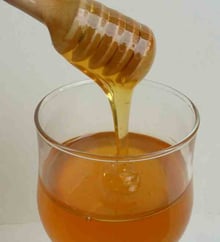
Extra light amber in colour and smooth in texture, with a sweet, flowery aroma, a spicy cinnamon flavour that a trained panel likened to red-hot candies, and a fruity finish. Laboratory analysis of ten Florida jars found rose, clove, citrus and cooked-apple aromas, and tupelo made up 37.9 to 88.0 per cent of their pollen, the share by which the trade prices a crop. The honey stays liquid: none of six 1957 samples granulated in the USDA’s six-month storage test, and the bulletin calls tupelo “nongranulating”; it is low in glucose, the sugar that crystallises. The test ran six months, and producers say a jar can still set in time.
Click to Display — The Details: botanical origin, sensory profile, and its regional identity
Botanical Name: White tupelo (Nyssa ogeche)
Botanical Family: Nyssaceae
Bee Species: 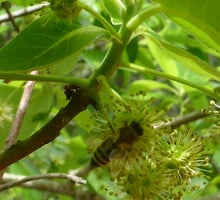
The western honey bee, Apis mellifera, which is not native to the Americas: European colonists brought it, and Florida’s early beekeepers took their bees from the forest.
Color:
Extra light amber; producers describe a faint green cast
Flavor Profile:
Sweet and flowery, with a spicy cinnamon note and a fruity finish
Tasting Notes:
The National Honey Board’s trained panel marked tupelo high for a flowery perfume and a fruity aftertaste. The Board’s 2007 guide calls the honey smooth in texture, Gleanings in Bee Culture in 1911 described it as “of heavy body”, and producers often call it buttery.
Aroma:
Flowery perfume and cinnamon; rose, clove, citrus and cooked apple in laboratory analysis
Defining Compounds:
Sugars. Tupelo stays liquid because of its sugars. In the USDA’s 1962 survey of 490 American honeys, six 1957 tupelo samples averaged 43.3 per cent fructose (levulose) and 26.0 per cent glucose (dextrose), against 38.2 and 31.3 per cent for all the honeys, and a Wewahitchka sample gave the highest fructose reading of the 490. The bulletin names glucose as the sugar that granulates, so the low glucose is what keeps the honey liquid. A 1908 USDA analysis found the levulose in the non-crystallising tupelo honeys “over 6 per cent greater than that observed for any other honey”, and a 2015 study of ten Florida jars measured fructose averaging 43.6 per cent, which it put more than two standard deviations above the American norm.
Aroma. Among the compounds the same study found, with vanillin, rose-scented phenylacetaldehyde and clove-scented eugenol, beta-damascenone was the most potent odorant in tupelo, and the study proposed it as a marker compound for telling tupelo from other single-flower honeys because of the uniquely high levels present.
Forage Origin: 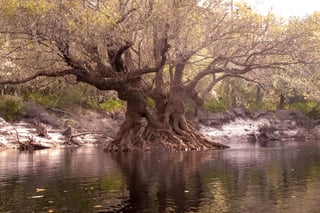
White tupelo (Ogeechee tupelo, Ogeechee lime, bee-tupelo; Nyssa ogeche, Nyssaceae, a family once placed with the dogwoods) is a small tree or many-stemmed shrub of Alabama, Florida, Georgia and South Carolina, native to those four states alone. It is an obligate wetland species of river and pond margins, swamps and wet flatwoods. The Forest Service finds that a permanently wet site with some movement of the water “is apparently requisite for satisfactory regeneration and growth”, on alluvial soils along the rivers, and that the tree grows best a few centimetres above the average water level and is seldom found more than 0.3 to 0.6 metres (one to two feet) above it. In its Florida range it makes up less than one per cent of the woody plants, so a honey crop depends on the few swamps where it grows thick.
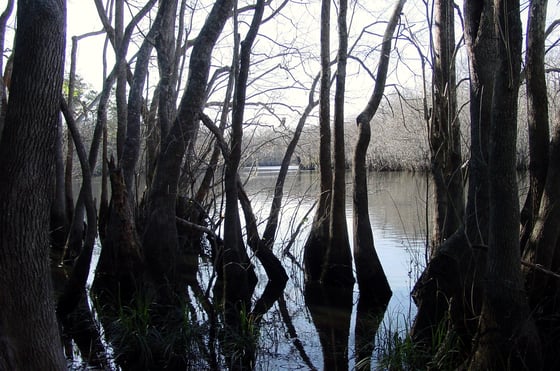
The Forest Service finds the tree “in abundance” along the Ogeechee, Altamaha and Suwannee rivers, but the honey is made where it stands thick. The USDA’s National Honey Report puts “most of the Tupelo honey in the country” in “a narrow band of a few miles on each side” of the Apalachicola, and UF/IFAS Extension calls the Dead Lakes and Apalachicola river region of Gulf County “prime habitat for one of the largest tupelo forests on earth”. Beekeepers also take it on the Chipola, the Choctawhatchee and Holmes Creek in Florida. In Georgia the National Honey Report records tupelo crops in 2018, 2019, 2022 and 2023, and Georgia producers name the Altamaha and the Alapaha as their rivers.
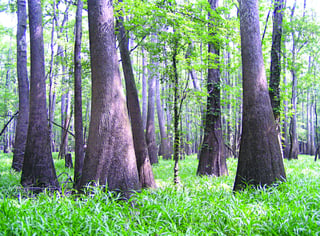
On the nontidal Apalachicola, Ogeechee tupelo, which the US Geological Survey calls “the species valuable to the tupelo honey industry”, declined by at least 44 per cent in number of trees between 1976 and 2004, years in which the floodplain dried as the river’s level fell after the channel below a dam eroded and was straightened and dredged and spring and summer flows declined.
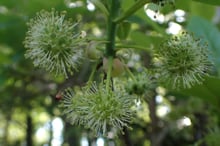
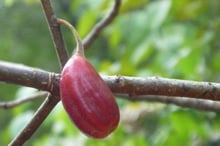
The flowers are small, greenish yellow and come after the leaves. The tree is polygamo-dioecious, and the Forest Service notes that “the male flowers, in particular, produce an abundance of nectar”. The fruit is a sour drupe about an inch long, yellow to red, which the Forest Service says is made into preserves and a drink. It is called the Ogeechee lime for its sour taste and its size; the tree is no relation of the citrus.
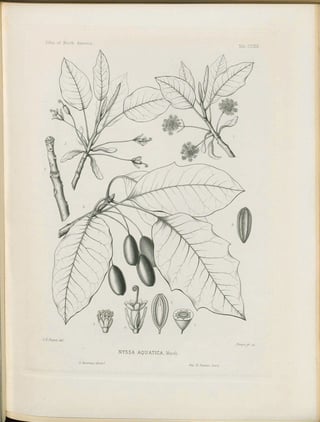
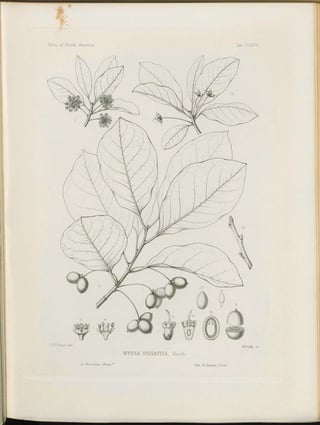
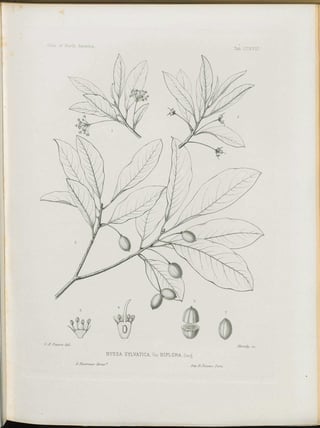
Frank Pellett listed four tupelo-gum trees in 1920: white tupelo, water tupelo (Nyssa aquatica), the highland black gum (Nyssa sylvatica) and the Southern black gum or water gum (Nyssa biflora). Water tupelo, which the US Geological Survey ranks “the most important tree in the nontidal floodplain in terms of basal area and density” on the Apalachicola (the ground its trunks cover and the number of them), is also worked for honey; J. T. Maxwell’s 2012 dissertation reports that local beekeepers hold white tupelo to make the best, and that few mix the two. The black gums bloom earlier in the swamp. A Central Florida family apiary sells a black gum tupelo and holly blend, and a North Carolina producer writes that “16% of the nectar that makes up our honey comes from black tupelo trees (Nyssa sylvatica)”, so a jar labelled tupelo can hold the honey of another Nyssa. The town of Tupelo, Mississippi, shares the name only.
Pairings: 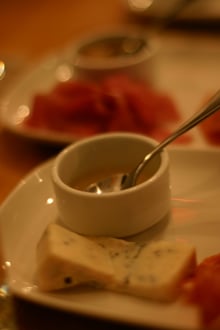
Serve it with blue cheese, aged Pecorino and other robust cheeses, as the National Honey Board suggests, or bake with it; the Board calls it an excellent choice for baked goods. George Watkins made mead from it and told the Southern Foodways Alliance that “the tupelo honey made a better tasting wine.”
Origin Story
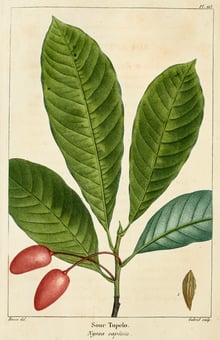
The tree was named for its fruit. Humphry Marshall published the species in 1785 as “The Ogeche Lime Tree”, from Bartram’s catalogue. William Bartram, son of the John Bartram who noted the tree in 1765, described “large, tall trees of the Nyssa coccinea, si. Ogeeche” by the Altamaha in his Travels of 1791, and wrote that they were called Ogeechee limes “from their acid fruit being about the size of limes, and their being sometimes used in their stead”. The word tupelo may come from a Creek (Muscogee) word for a swamp tree.
The honey trade grew up on the lower Apalachicola in the late nineteenth century. Settlers at Wewahitchka, founded in 1875, planted citrus groves and built up apiaries. A letter dated Marchant, Florida, 26 November 1900 describes a swamp “covered with a heavy growth of the famous tupelo gum which produces a honey very light in color, weighing fully twelve pounds per gallon and possessing the property of never granulating”, with “as many as 600 colonies in one place”. In 1911 Gleanings in Bee Culture wrote of A. B. Marchant, “well known to the New York honey merchants”, who with his neighbours loaded bees onto steamers and carried them about a hundred miles upriver; other yards on the river stood “up on stilts”.
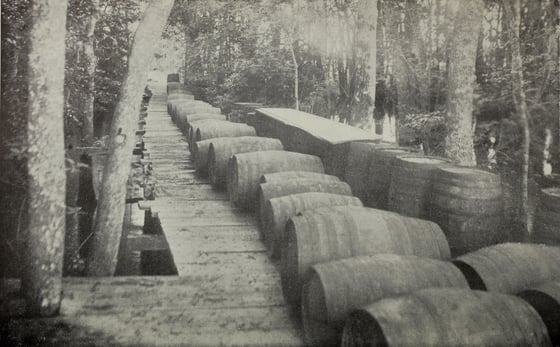
Beekeepers set their camps on whatever high ground they could find in the swamp. They reoccupied prehistoric shell mounds because “they offered high ground in the low-lying swamp”, and built platforms and honey houses along the two rivers. Kelly S. Hockersmith’s 2004 thesis dates the camps’ occupation to 1878-1943, and they fell out of use after the late 1940s. Honey went to market by the barrel on the river steamboats; later a workboat carried barrels to a warehouse in Apalachicola, where the honey was put into cans and later into glass.
At first much of it was a blending honey. Frank Pellett wrote in 1920 that “bottlers like to use tupelo honey for blending with other grades to retard granulation.” Florida’s first bee inspections, under an act of June 1919, began in the Apalachicola region, which L. Cutts’s history of Florida beekeeping describes as “reported to have more bees than any other area of the state.” Between 1920 and 1940, by the same account, tupelo “shifted from a honey for blending to a specialty honey recognized as one of the premier honeys of the United States.”
The state has also certified it. Florida’s law has let a beekeeper apply for “certified honey” since 1953, and has protected the word certified on honey since 1986. In 1962 the state agriculture department began a programme to certify tupelo honey as a marketing tool, and in July 1969 it reported 224 drums certified that year, on colour, moisture, flavour, soluble solids and pollen counts. The same bulletin noted that tupelo generally went to health stores for its ratio of levulose to dextrose, the old names for fructose and glucose. Writing in Bee Culture in 2003, M. T. Sanford quoted the department’s website: “Inspectors collect and submit samples to the food lab for certification as Tupelo honey.”
Cultural Context
The honey has a place in popular culture through a song and a film. Van Morrison’s “Tupelo Honey” is the title song of his 1971 Warner Bros. album. Victor Nuñez’s Ulee’s Gold (1997) stars Peter Fonda as a beekeeper who keeps bees in the swamps of north Florida; it was filmed in tupelo season on the land of the Lanier family of Wewahitchka, who served as consultants, and its end credits roll over the Van Morrison song.
In the trade the honey is known as scarce and expensive. “There is a saying that five times as much tupelo honey is sold than is made,” Ted Dennard, founder of the Savannah Bee Company, told Salon in 2023, and in 2026 he told Southern Living that “the price for it got so high and we could only sell half as much as we used to sell so now we buy fewer barrels.” Georgia’s Department of Agriculture markets it as a Georgia honey; its Georgia Grown programme says “We’re one of few states that produces the highly coveted, best-in-class Tupelo honey.” Donald Smiley of Wewahitchka told the Southern Foodways Alliance in 2005 that he had supplied the Tupelo Honey Cafe since, as he recalled, it opened in 1999.
Harvest & Forage
White tupelo usually begins to bloom around the middle of April, and Wewahitchka beekeepers describe a bloom of three to five weeks in April and May. The date moves with the season: in 2020 the bloom came “a week or ten days later than normal”. The colonies are built up before it on titi, red maple, willow, black gum, holly and clover, and those honeys have to come out first. Beekeepers empty the hives of red maple honey so that the combs are clean when the tupelo opens, and harvest, as the Apalachicola Riverkeeper puts it, “just as the blooms fade so no other nectar sources can contaminate the honey”. During the flow the supers can fill in three to five days. George Watkins, an Apalachicola beekeeper, kept a few white tupelo trees in his yard to judge when to move his bees upriver.
Other flowers bloom in the swamp with it. Gallberry and palmetto flower at the same time; the National Honey Report recorded the overlap every year from 2020 to 2024. In ten Florida jars from five producers, analysed for the 2013 and 2014 crops, holly pollen came second to tupelo in nine; in the tenth it came first, and the study judged that jar a holly honey. Florida’s rule asks that a honey sold under a flower’s name come “predominately” from it and sets no share, so the trade sets its own: in June 2024 the National Honey Report recorded tupelo awaiting purity tests, its price “to be determined partly by the percentage of tupelo with values over 80% receiving the highest prices”.
Wind, rain and cold can each cut the crop, and the USDA’s monthly reports show how far it swings. Florida’s 2018 season was “one of their best seasons in years”; the 2019 crop was expected to be “lower than normal because of tree damage caused by Hurricane Michael”; the 2020 flow was very low, possibly for lack of humidity at the bloom; in April 2023 “a freeze around the middle of the month essentially wiped out the tupelo honey crop” in Florida, while Georgia reported that its “Tupelo pull”, the honey taken off the hives, “was successful with good volume”; and the 2024 Florida crop “may be the best in the past five years.” In April 2026, in a spring the magazine reported as one of widespread drought, a beekeeper at Bee Wild Raw Honey in Bristol told Garden & Gun: “In a typical year we should make fifty barrels. This year we’re hoping to make fifteen.”
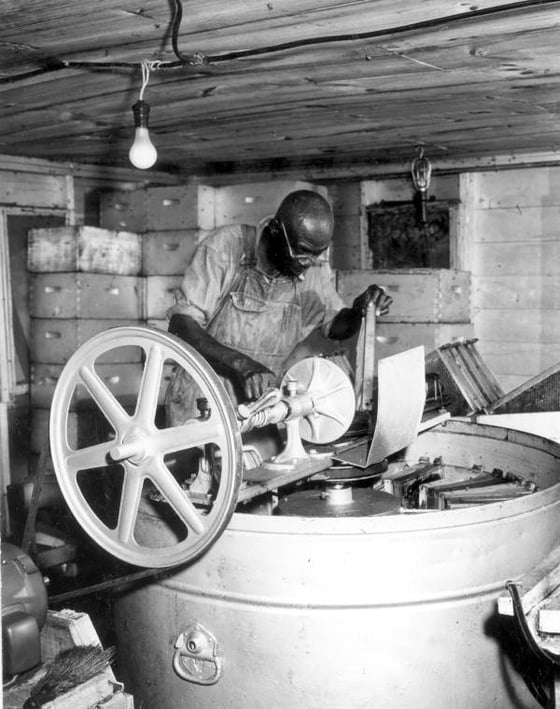
Tupelo is extracted with little processing. One producer described warming the honey overnight in a tank at 90 to 100 degrees Fahrenheit and drying it with dehumidifiers, and a 2015 study of the honey calls this minimal processing, “without the use of filtration and pasteurization”, “common practice among Tupelo producers.”
Beekeeping Context
The swamp floods for several months of the year, so hives are kept above or beside the water. In 1900 a beekeeper wrote that setting bees on platforms “has not yet been done that I am aware of”; by 1911 yards stood “up on stilts” and beekeepers moved their bees by gasoline launch and raft, and by 1948 a working barge carried an extracting room and living quarters. “For decades, bee barges were the only way to make tupelo honey,” The Bitter Southerner reported in 2021. “Although you can still see roughly a dozen bee barges along the river, more roads and riverfront properties allow beekeepers to place their hives on land near the trees.”
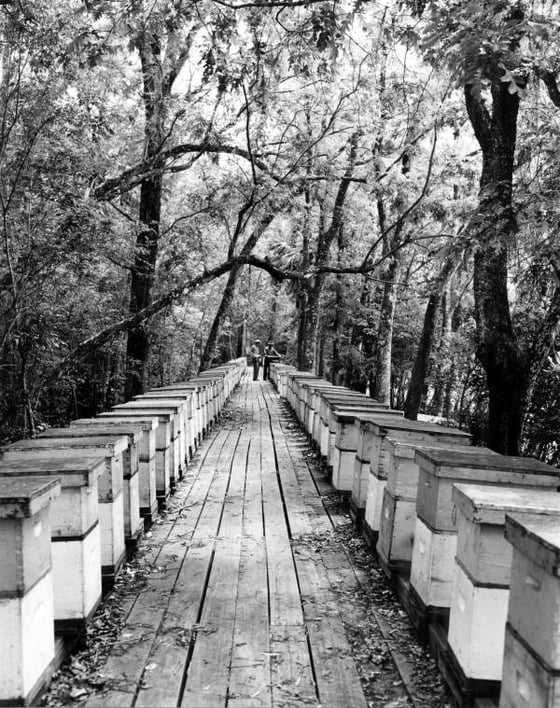
Tupelo honey is a migratory crop: beekeepers bring their hives to the river for the bloom. Florida beekeepers once moved them into Alabama and Georgia for the summer and back for the spring, and George Watkins described taking hives about ten miles up the river to his docks and bringing them back after about three weeks.
It is a small trade. “All told, there are probably fewer than 200 beekeepers producing the honey in any notable quantities in Florida and Georgia, wholesale buyers and agricultural officials estimate,” The New York Times reported in 2019. A 2015 study counted 54 beekeepers in the Tupelo Beekeepers Association.
Named Producers
L. L. Lanier and Son’s Tupelo Honey – Wewahitchka, Gulf County, on the lower Apalachicola. A family honey house whose business goes back to 1898, by the Port St. Joe Star’s account; the family describes moving bees downriver by barge onto platforms raised above the water. Check before travelling.
Smiley Honey – Wewahitchka, Gulf County. Started by Donald Smiley in 1989 and bought by its present owners in 2022. Check before travelling.
Rish Tupelo and Co. – Wewahitchka, Gulf County. A family tupelo house that sells at the town’s May festival. Check before travelling.
Bee Wild Raw Honey – Bristol, Liberty County. A family apiary that sells its own tupelo. Check before travelling.
Orchard Pond – Tallahassee, Leon County. The farm keeps its bees at home for part of the year and moves them to the Apalachicola for the tupelo bloom, to sites it says local beekeepers have passed down for generations. Check before travelling.
Register Family Farm – Freeport, Walton County. A veteran-owned farm that says it has set hives along the Apalachicola and the Choctawhatchee since 2013, and sends honey that misses its own taste standard to bulk packers rather than under its label. Check before travelling.
Swamp Honey – Ludowici, Long County, Georgia, by the Altamaha. Sells its tupelo as Georgia tupelo from the Altamaha swamps, direct from the beekeeper, and names the crop year on its listings. Check before travelling.
Wildlight Honey – Savannah, Georgia. Sells a raw Georgia tupelo it says is harvested along the flood plains of the Alapaha River. Check before travelling.
Festivals and Fairs
Tupelo Honey Festival – Lake Alice Park, Wewahitchka, Florida (third Saturday in May): the town’s one-day honey festival, sponsored by the Wewahitchka Employees Club and first held in 1941, according to the Port St. Joe Star, with independently judged honey tastings and a court of local tupelo vendors; admission is free and proceeds fund scholarships.
Certifications
 Slow Food Ark of Taste: Tupelo Honey – Slow Food’s catalogue of foods at risk of being lost includes tupelo honey, with its territory given as Florida and Georgia.