Luz.Doce: A Mead House at Porto Moniz, Madeira
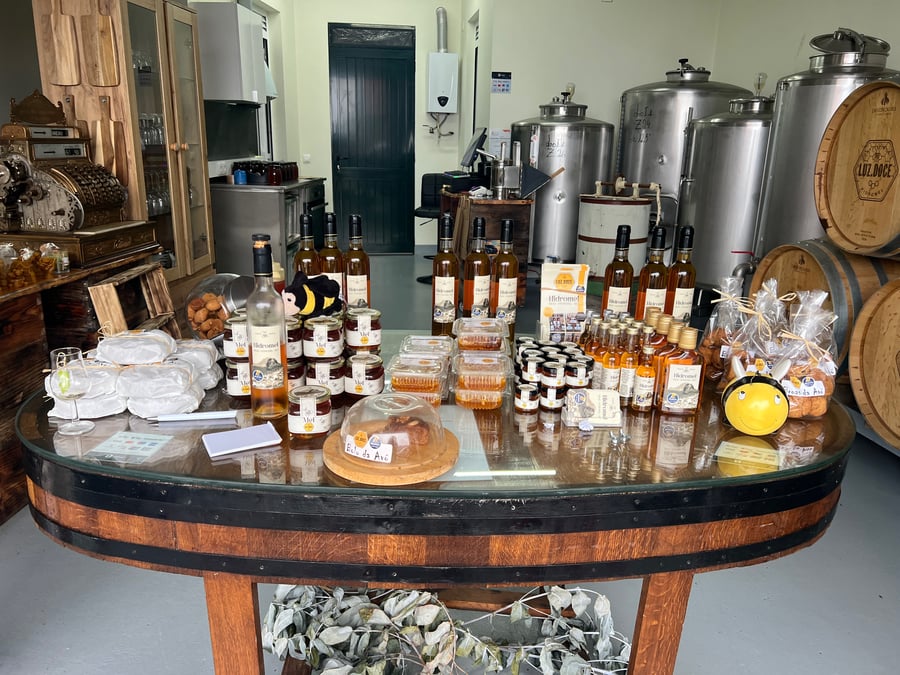
Porto Moniz is the town at the north-west tip of Madeira. A bee suit on a mannequin stands at the door of Luz.Doce, and inside one room holds the shop counter, a row of steel tanks and four oak barrels.
The barrels are for hidromel (mead), the drink made by fermenting honey and water.
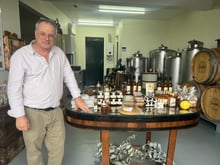
Carlos Pestana, the beekeeper who makes it, met us on a Thursday afternoon in November. I asked if the shop was his. “It’s mine and my wife,” he said. “My wife is the business wife.”
The bees came to Carlos from his grandfather, who kept them at Calheta, on the island’s west coast. “My father didn’t like the bees,” he said. “I love the bees.”
He keeps thirteen hives. “I don’t have the time,” he said of keeping more.
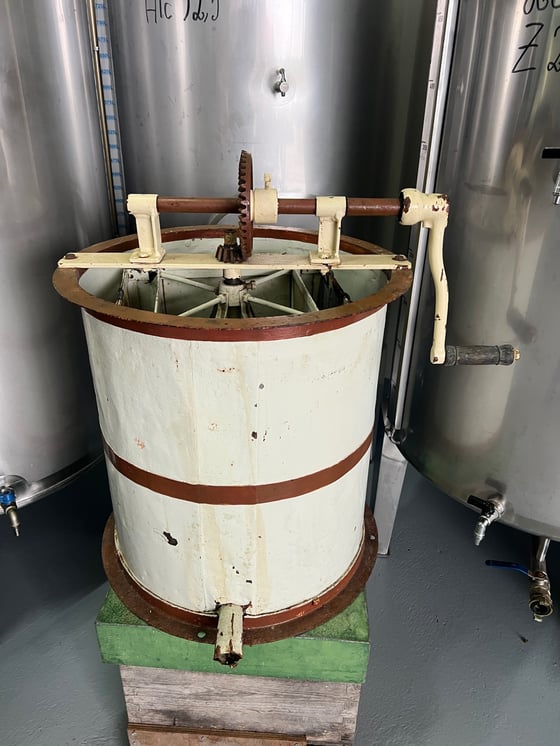
Two of his grandfather’s machines are in the shop. One is a honey extractor, a drum that holds four frames of comb and is turned by a hand crank, so that the honey is thrown out of the comb. “This is the first machine I have,” Carlos said.
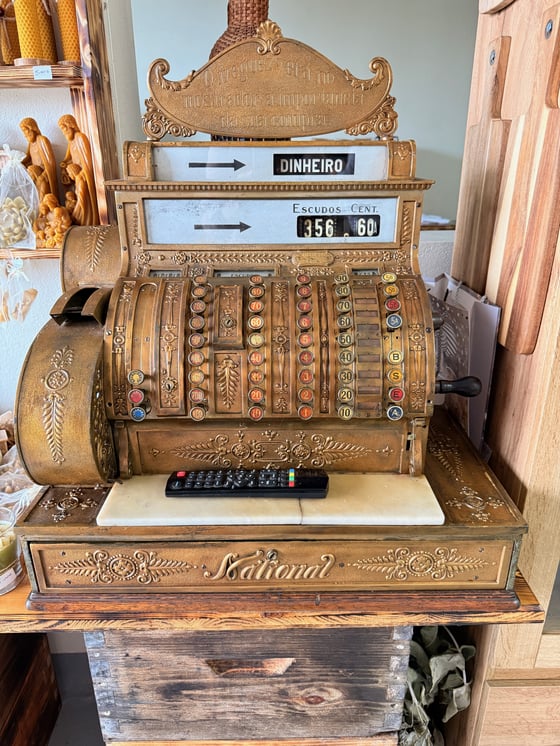
The other is the cash register, a National whose amount window is lettered in escudos, the currency Portugal used before the euro. It has no paper roll now, but it still works, and Carlos showed us the key he uses to reset its running totals.
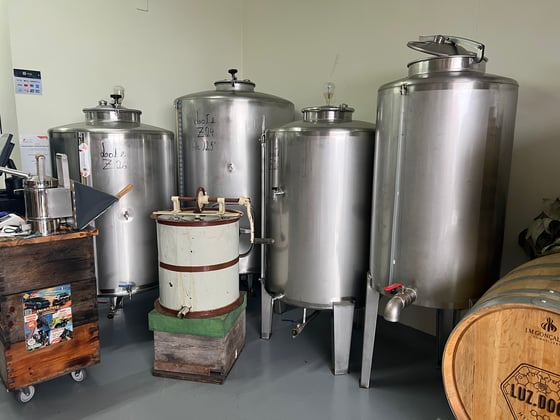
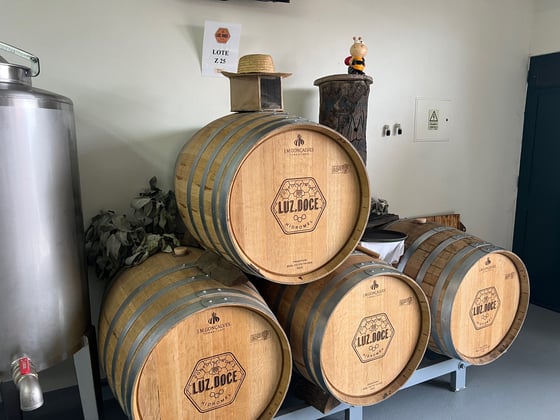
Carlos makes one mead. “The fermentation is here,” he said at the steel tanks, and at the barrels he said the mead was “sleeping”. The barrels are French oak, and the mead in them was a year old. “He’s young,” Carlos said. He also had mead of five years, in the bottle.
The house’s own site says the mead is made with multifloral honey, honey from many kinds of flower, and spring water from Porto Moniz.
The regional government, reporting the opening of the shop in July 2025, put the output at about a thousand litres a year. That would fill about two thousand half-litre bottles.
A hollow log stands on end on top of the barrels. It is an old hive, and it was a gift. Carlos showed us the bees’ door at its base, which keeps mice out.
“My bees is in the forest,” Carlos said. I asked if he meant the laurel forest, the evergreen forest that covers the steep valleys running down to the island’s north coast, and he did. He takes the honey once a year, in the autumn, and it is multifloral. I asked whether the bees work the laurel trees themselves. “No,” he said.
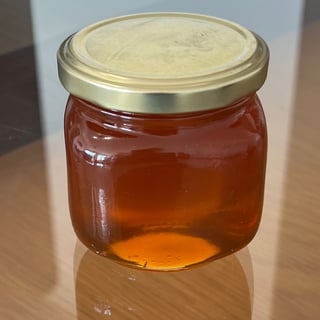
His own honey stood in plain jars on a steel bench, dark, with no label yet. It was made from the summer up to the harvest just finished. He gave us a spoonful, and it was smooth.
Then he opened a second honey. “That not mine,” he said. “It’s my friend.” The friend is a professional beekeeper at Porto, on the Portuguese mainland, with 6,000 hives, and Carlos buys honey from him to sell. This one was also multifloral, and it was thicker and stronger than the first, which tasted more of flowers. It had a caramel and woody flavour that stayed in the mouth.
“In Madeira, I have not many, many honey,” Carlos said. I guessed that the weather was hard on the bees. “No, it’s the fire,” he said. I asked what it kills. “The bees, the forest. Everything.”
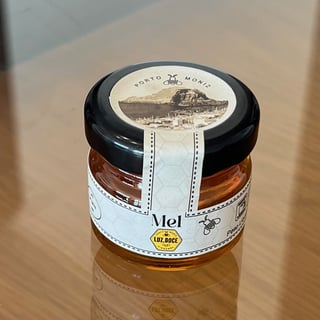
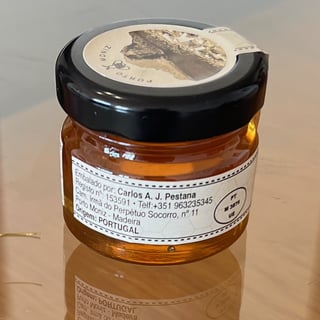
In November 2026 the Porto honey was the one in the labelled jars. The label reads “Mel”, honey, with the Luz.Doce mark, and “Mel de Flores - Multiflor”, flower honey from many flowers, beside the lot number. The back reads “Embalado por: Carlos A. J. Pestana”, which means packed by him, and “Origem: PORTUGAL”.
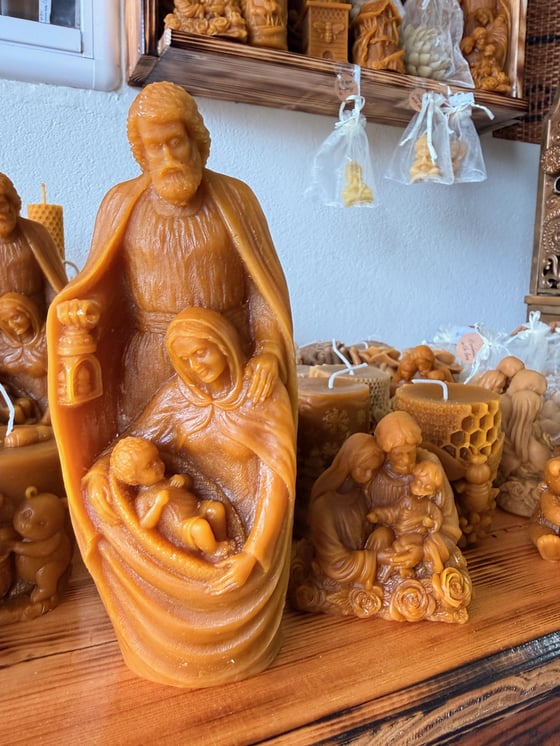
The shelves hold beeswax candles and moulded wax figures, some of them made by Carlos and some not.
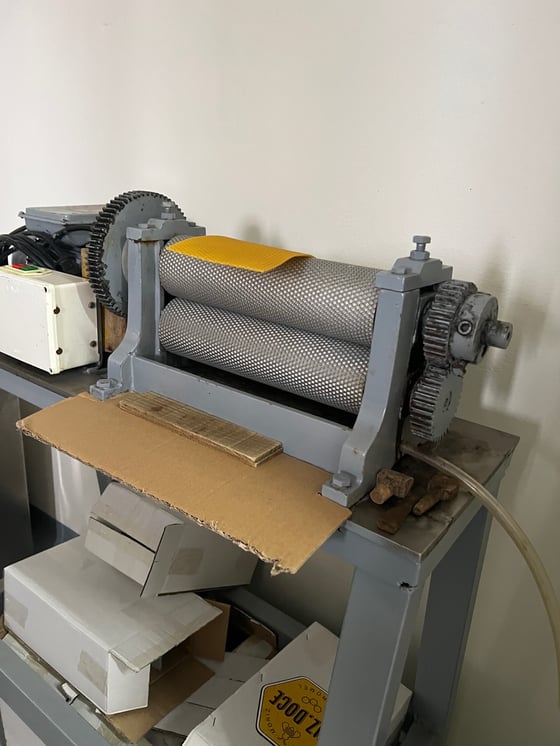
Beside the tanks stands a press with two patterned rollers. On it Carlos makes foundation, the thin sheet of wax stamped with the shape of comb that a beekeeper fixes in a frame for the bees to build on. “I have the machine for that,” he said, and he uses the sheets in his own hives. The regional government’s report says the business is registered to make wax for beekeepers.
A dark cake sat on the table under a glass cover. “My grandmother,” Carlos said of the recipe, and the house’s site says its cakes are made with honey. Isabella tried it. “I like it,” she said. “It’s not too sweet.”
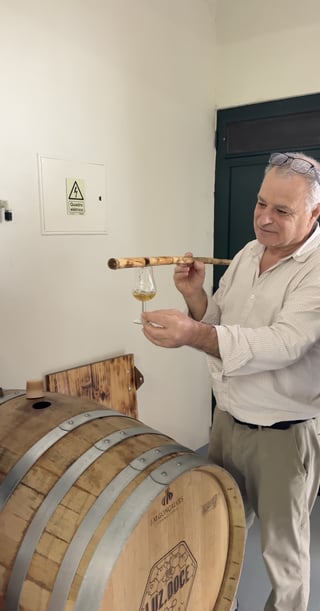
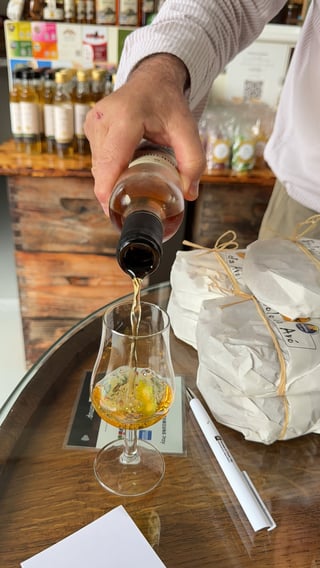
We tasted the one-year mead straight from the barrel. Carlos pulled the bung, lowered a long hollow cane into the barrel and let the mead run from the cane into a glass. It was sweet, but not too sweet, and the alcohol was plain to taste.
The next glass came from a bottle. He cut a strip of peel from a lime, dropped it in the glass and poured the mead over it. The house’s site advises serving it at 10 degrees with lemon peel or mint, and no ice.
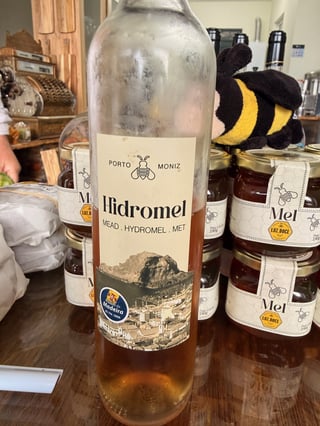
This was the mead of five years. It was less sweet than the one-year mead from the barrel, and I liked the younger one better. Carlos said the barrel mead, at 13.5 percent against the 12.5 on the bottle’s label, was the stronger of the two.
The bottle’s label reads “Hidromel” over the words for mead in English, French and German, above a photograph of Porto Moniz, and it carries the Produto da Madeira seal, the regional government’s mark for products of Madeira.
We took home a small jar of his own honey, which Carlos filled while we waited and which has no label, a 35-gram jar of the Porto honey, and a 5-centilitre bottle of the five-year mead.
In November 2026 the mead house’s own site (Luz.Doce, Porto Moniz – Portuguese translated to English ) gave its hours as ten to seven, every day.
The Madeira honey page gives the road from São Vicente and the rest of the north coast’s honey stops.