
Madeira Honey
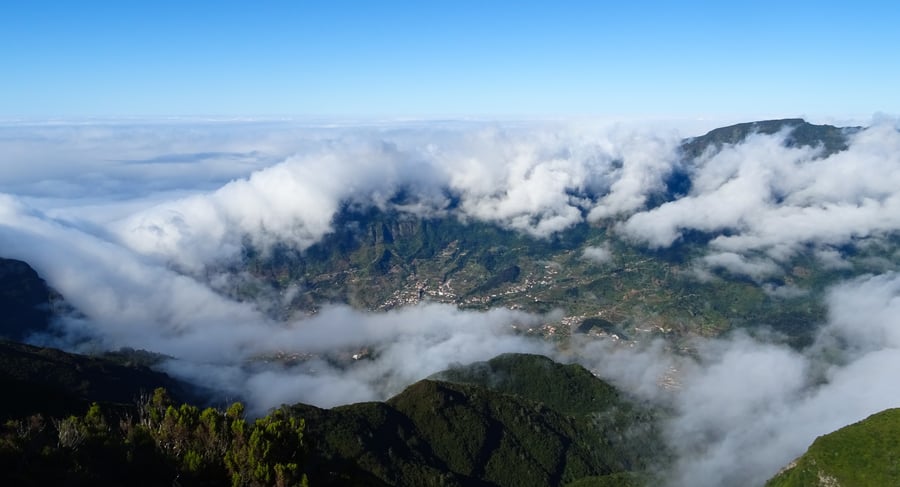
Madeira is 58 kilometres long and 23 wide, a ridge running east to west. Funchal, on the south shore, has about 574 millimetres of rain in a year and almost none from June to August. On the ridge it is about five times that. A gauge under the tree heath at Bica da Cana, fifteen hundred metres up on the rim of the Paul da Serra plateau, averaged nearly three thousand millimetres of rain a year, and the fog that drips from the heath there was measured at about five thousand more. The ridge a few kilometres behind it sits in cloud on more than two hundred days a year, and the valleys falling off its north side hold what UNESCO calls the largest surviving area of a laurel forest that covered much of southern Europe tens of millions of years ago, with trees that were standing before the first settlers came in the 1420s. Two roads join the two sides: the old road over the Encumeada pass climbs through the fog belt and comes down in sun on the far coast, and the expressway tunnels pass under it.
The water is moved from one side to the other by hand-cut channels. From the first quarter of the fifteenth century the settlers cut channels in the volcanic rock to water sugar cane and turn the mills, laying gutters of til, a tree of the laurel forest, where the rock was too hard; later channels were cut along cliff faces by men hanging from ropes. The levadas, as the channels are called, now run to about 2,800 kilometres in public hands and water some forty thousand plots, an average plot about a hundred square metres, and the water still arrives by turn between May and October, delivered to each farmer by a man who walks the channel. Several of the classified walks follow them. The path a visitor walks is a working aqueduct with a man responsible for it.
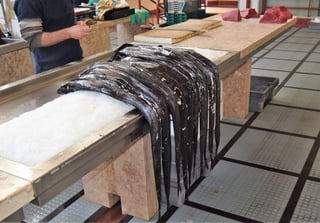
The sugar is still here in other forms. Flemish paintings of the sugar century hang in the sacred art museum on Rua do Bispo, the old customs house on the harbour is now the regional parliament, and cane is still cut in spring for three syrup mills. What Madeirans eat day to day follows the water instead: bananas on the terraces; black scabbardfish, taken on longlines from eight hundred to twelve hundred metres down and fried with banana as the island’s everyday fish plate; beef on a laurel skewer at the taverns of Estreito de Câmara de Lobos, where the dish came in from the parish fairs; a flat bread baked on a basalt stone with sweet potato in the dough. The parish fairs mark the year. Monte holds its pilgrimage on 15 August with an all-night street fair the night before. For nine mornings before Christmas almost every parish holds a mass at about five or six, each one run by a different neighbourhood, with food in the churchyard after, and on the 23rd the Funchal market stays open all night.
It is a trip built on a bus timetable and a weather forecast. Funchal’s average temperature moves about seven degrees across the year, the rain falls from October to March, and the mountains are wetter and colder at every season. The classified trails are booked by time slot and can be closed on a weather alert. Porto Santo, the second island, is about two hours and a quarter away by ferry, nine kilometres of beach and a town, with its own pilgrimage on the same August day.
Food
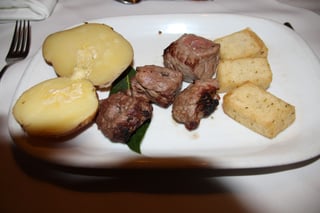
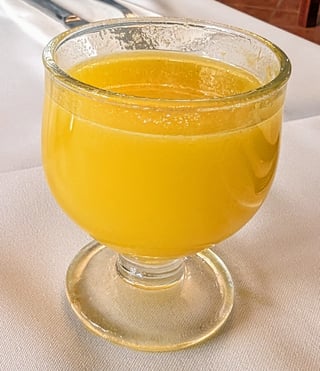
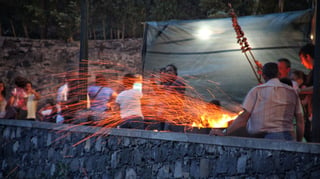
West of Funchal, in the parish of Estreito de Câmara de Lobos, Restaurante Santo António has served the espetada, beef on a skewer, since José Silvestre de Jesus opened it as a tasca, a plain eating house, in 1966. His sons run it, it takes no reservations, it is open every day from noon to eleven, and the skewer comes on laurel wood if you ask. The dish began at the parish fairs, eaten with bread and wine, and a bar put it on a restaurant table in the 1950s. The house order is bolo do caco, a flat bread baked on a basalt stone, with garlic butter; the skewer; fried cubes of maize porridge; passion-fruit pudding; and a poncha, the cane-spirit drink.
The fish hall at eight, limpets in their legal season at Porto Moniz, poncha mixed in front of you at Serra de Água, and the Funchal factory where the syrup called mel is boiled
Mercado dos Lavradores, Funchal -- weekdays from seven; Friday mornings; the fish hall first. At eight the flower sellers in traditional dress are already at their posts, and from the top of the stairs you look down into the fish hall at tuna, black scabbardfish and limpets; Alexandra Prado Coelho wrote in Público that a Madeiran friend of hers shops there on Friday mornings before work. The scabbardfish is taken on deep longlines that fishes a layer eight hundred to twelve hundred metres down and lands two species the auction cannot tell apart; the regional fisheries directorate calls it one of the first fisheries in the world aimed at a deep-water fish. Fried in a crumb coat with banana beside it, it is the island's everyday plate, and a Madeira food guide describes the fish as mild and flaky and the banana soft and caramelised. Filipe Morato Gomes, a Portuguese travel writer who came back after fifteen years, found the market full of foreign visitors with cameras and the fish hall the part less touched by tourist money; in 2021 the city opened an inquiry into three fruit stalls over sugared tasting fruit and prices far above the norm, so ask the price before you taste. The market's own site (Mercado dos Lavradores, Funchal -- Portuguese translated to English ) gives Monday to Friday seven to seven, Saturday seven to two, closed Sunday, with themed fairs on the terrace on Thursdays.
Porto Moniz -- fresh limpets June to October. Limpets picked off the volcanic shore are grilled in the shell with garlic butter and lemon. A regional order of April 2026 closes the season from 1 November to 31 May, for picking and for the sale of fresh limpets taken in it, so a plate of fresh lapas belongs to the summer; the rest of the year, ask whether they are frozen. Restaurante Cachalote (Restaurante Cachalote, Porto Moniz) has stood on the rocks by the lava pools at Porto Moniz since 1969, open every day from ten to seven, with a whale-fishing exhibition in the building.
Serra de Água -- poncha, mixed as you watch. Poncha is cane spirit, citrus and a sweetener stirred together at the moment of drinking with a notched stick of orange or laurel wood. A regional labelling order of 2017 describes two forms in its preamble: the fishermen's, with sugar, and the traditional, in which the sugar is replaced by bee honey; the drink's protected description adds that the honey is usually bee honey and in some cases honey of the laurel forest. At the Taberna da Poncha on the road through Serra de Água, Time Out Madeira reports, the drink is made in front of you, with peanut shells on the floor and business cards on the walls. Which honey a given bar pours, cane or bee, island or mainland, is a question each bar answers for itself.
Fábrica Mel-de-Cana Ribeiro Sêco, Funchal -- Monday to Friday, nine to one and two to six; the cane is cut from late March to early June. For almost six centuries Madeirans called the dark syrup boiled from cane juice mel, honey, and the cake made from it bolo de mel; the producers' own specification records that in the sugar era the syrups were eaten in place of bee honey. When European law reserved the word for the bees' product the producers renamed the syrup mel-de-cana, and since 2006 three certification marks have covered the syrup, the cake and the biscuits; the syrup has been a protected designation of origin in Portugal since 2022. The factory in the São Pedro parish (Fábrica Ribeiro Sêco, Funchal -- Portuguese translated to English ), founded in 1883 according to the specification, sells the syrup and the cake at the door and runs two bakeries in town. Families bake the cake on 8 December so it is right for Christmas; it keeps for several months and is broken by hand. The mill at Calheta runs once a year after Easter, with a tasting room open all year. On a supermarket shelf the syrup sits above the honey, and one organic label reads "sugarcane honey" in English: read the label.
Culture
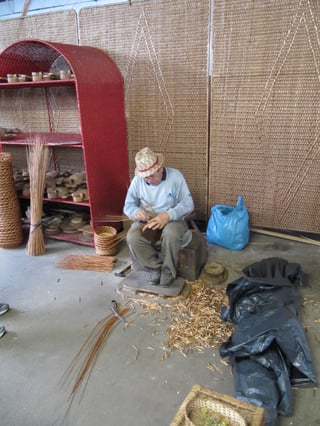
At Monte, on the hill above Funchal, two men run a wicker sledge down the road to Livramento with a passenger sitting in it. The ride has run since the nineteenth century, Monday to Saturday from nine to six, tickets bought on the spot for the same day, and in October 2026 it cost thirty euros for one person and forty for two; on a wet road there are no runs for three. The regional ethnographic museum’s heritage record names the man who now builds the sledges, José Ricardo Vieira, taught by his father, and counts three hundred rods of osier, a willow, and three days of work for a sledge that lasts about three years. The carreiros, the sledge drivers, have their own evening in the Monte novena, the nine evenings of prayer before the feast, on 11 August; the brothers of the confraternity or the carreiros carry the image in the procession on the 15th, and the ride closes on 14 and 15 August.
São Pedro at Ribeira Brava with its boat and sword dance, embroidery paid by the stitch, the Funchal machete that became the ukulele in Hawaii, and two hundred painted doors on Rua de Santa Maria
Ribeira Brava -- São Pedro, 28 and 29 June; the fishermen's boats on the third day. Before the roads, pilgrims came to this feast by coastal boat from the whole island, and the ethnographic museum's record keeps the sequence. On the eve the band goes out to the hamlets for offerings: Fajã da Ribeira and Meia Légua bring the charola, a sphere of fruit and vegetables built on an iron frame with a pumpkin at its base, and Achada and Pico bring a boat with banknotes hung on a branch; everything is auctioned the next day. On the 29th the firemen carry the saint, a boy dressed as São Pedro rides in the little boat, and the sword dance follows, which the museum calls unique in the archipelago; the same record names despiques, sung contests between rival groups in the church square, and the brinquinho, seven cloth dolls with castanets on a cane, as the music of the street fairs. On the third day of the festa, the parish feast, by the museum's record, the fishermen of Câmara de Lobos cross to Ribeira Brava in dozens of boats. Up the valley, the parish of Serra de Água holds its own fair on a late-January weekend (Casa do Povo, Serra de Água -- Portuguese translated to English ), the Mostra Regional do Mel e da Poncha, which the organising Casa do Povo describes as the drink and bee honey brought together, with stands for beekeepers and a talk on setting up an apiary; at Pentecost the same house walks the Holy Spirit insignia down from the Encumeada pass to the parish church behind the municipal band, calling at the bars on the way.
Funchal and the rural parishes -- embroidery paid by the stitch; Camacha for wicker. The regional institute for wine, embroidery and crafts estimates that about three thousand women embroider at home, most of them in the rural parishes, fitting the work around the farm and paid by the number of stitches rather than the hours; the factories that cut and finish the cloth are in Funchal. The trade dates from an exhibition of island industries in 1850 that led to an invitation to London's Great Exhibition the year after, and the institute still checks every finished piece and fixes a seal of guarantee (IVBAM, Funchal -- Portuguese translated to English ), which is the buyer's test. Its embroidery museum on Rua Visconde do Anadia was temporarily closed in October 2026, and the open-workshop week falls in late July. Camacha, in the hills east of Funchal, was the wicker parish; when the regional culture directorate held its heritage meeting there in September 2026 the afternoon visit was to José Pedro Gouveia's workshop, and the Jornal da Madeira's report said both the number of makers and the supply of osier had fallen. Whether a workshop takes visitors is not published.
Funchal -- the machete, the ukulele and the emigrants. In 1879 the sailing ship Ravenscrag reached Honolulu from Madeira with 419 emigrants bound for the sugar plantations, among them two players and three makers of the machete, the small guitar of Funchal's string bands and drawing rooms. The national register of intangible heritage records that the Hawaiian king's interest spread the instrument, modified there and renamed the ukulele, and that the craft of building it (Inventário Nacional do Património Cultural Imaterial, Portugal -- Portuguese translated to English ) is still passed on in family workshops on Madeira; on the island it is also called the braguinha, and it is played at the street fairs and the dawn masses before Christmas. The emigrants are in the calendar too. The Monte festa keeps one of its nine novenas for the parish's emigrants, on 10 August; the Christmas dawn masses are sometimes paid for by emigrants fulfilling a promise; and Funchal's seafront avenue is named for the sea and the Madeiran communities abroad.
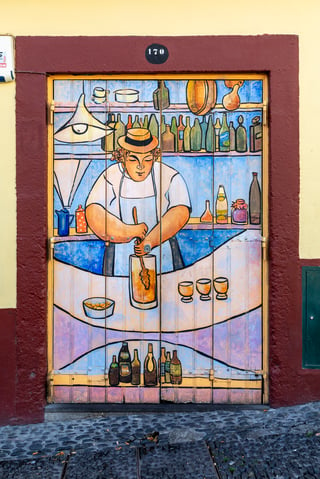
Rua de Santa Maria, Funchal -- about two hundred painted doors, free at any hour; the Flemish altarpieces on Rua do Bispo; MUDAS at Calheta. The city's own page describes the doors as those of abandoned houses and shops in the oldest part of town, about two hundred on Rua de Santa Maria (Visit Funchal, Funchal), with the architect Paulo David and the designer Nini Andrade Silva among the painters; the doors are repainted and the shops behind them change. The Museu de Arte Sacra at Rua do Bispo 21 (Museu de Arte Sacra, Funchal) holds Flemish painting, sculpture and silver of the fifteenth and sixteenth centuries; Monday to Friday ten to half past five, Saturday ten to half past one, ten euros, with public tours on Tuesday and Friday at a quarter past ten by registration. At Calheta on the west coast, MUDAS (MUDAS, Calheta -- Portuguese translated to English ), the contemporary art museum, is a building by Paulo David opened in 2004 and given the Alvar Aalto medal in 2012, holding about four hundred works from the 1960s on, among them Lourdes Castro, an artist of Madeiran origin; Tuesday to Saturday, half past nine to one and two to half past five, ten euros. Churchill painted the bay at Câmara de Lobos in January 1950 from the viewpoint at the entrance to the town, which now carries his name; the regional archive holds the photographs of him at the easel.
Natural History
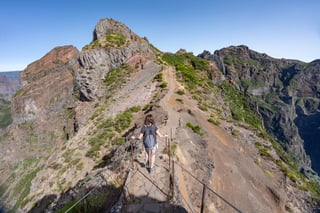
The road from Funchal to Pico do Areeiro climbs out of the city in the dark and on most mornings into cloud; the viewpoint at the top stands above it. Serena, a travel blogger who drove up for sunrise one winter, wrote that three minutes from the car park they thought they were doomed in the fog and two minutes later were above the clouds. From there the classified trail PR1 runs six kilometres along the ridge to Pico Ruivo, the island’s highest point, through tunnels cut in tuff, the soft rock of compacted volcanic ash, that once sheltered cattle and shepherds, up rock stairs, in high heath the whole way. Since 1 May 2026, when it reopened, it is one way beyond the Pedra Rija viewpoint, booked by time slot at 10.50 euros, and the walker comes down the far side and finds their own way back. The ledges above sixteen hundred metres on this ridge are the whole breeding range of Zino’s petrel, a seabird of sixty-five to eighty pairs.
Fanal's old trees in the fog, the dry peninsula at São Lourenço and the groupers off Garajau, the lava pools at Porto Moniz and the shell-sand beach on Porto Santo, and a day at the Desertas with the monk seals
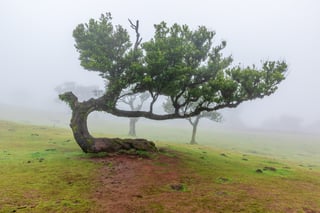
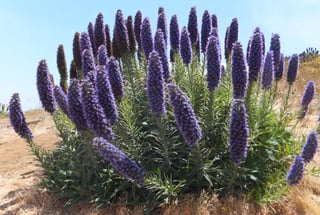
Fanal -- any day the trails are open. UNESCO lists the island's laurel forest as the largest surviving area of a type that once covered much of southern Europe, nine tenths of it believed primary forest and most of it believed never felled, with trees that may be over eight hundred years old and were standing before the island was settled; it fills the valleys that face north. At Fanal, between Ribeira da Janela and the Paul da Serra plateau, centuries-old til trees stand, and two classified trails leave from the forest post, both open in October 2026 on the booked slot at 4.50 euros. The cloud is why the forest is here: on the plateau at Bica da Cana, researchers measured the tree heath catching more water out of fog than fell on it as rain, and the regional forestry institute credits the mosses on the heath with fixing the fog water. The trocaz pigeon, found nowhere else, feeds in the til and was counted at ten to twelve thousand birds in a study of 2023 to 2025, enough that the institute gives farmers on the forest edge netting and scarers against it. Above the forest, from about sixteen hundred and fifty metres, the cover is low shrub and grass, with tree heath only in a few restricted areas and the blue spikes of massaroco, the Pride of Madeira, on the rocks; the heath is a forage plant, and the island's bee honey is sold under the forest's name (UNESCO World Heritage Centre), Mel da Laurissilva.
Ponta de São Lourenço -- a morning's walk; Garajau -- in from the beach. The eastern tip is a dry, open peninsula of grass and rock nine kilometres long, cut by dykes, the walls of harder lava, at the opposite end of the island from the wet valleys. The classified trail (IFCN, Madeira -- Portuguese translated to English ) runs four kilometres each way to the Sardinha quay, 4.50 euros for visitors over twelve in 2026, and stays open during recovery works, with short signed detours from 30 September 2026; north of the Prainha beach the Piedade dunes hold fossil roots three hundred thousand years old, which the forestry institute calls a record unique in Europe, from a time when something larger grew here. East of Funchal, the Garajau reserve was proposed by a group of divers and created in 1986: a partial nature reserve along about six miles of the city's own coast, entered from the Lazareto quay or the Garajau beach, with dusky groupers as the animal people go in to see. West of the city, Cabo Girão is a sea cliff of five hundred and eighty metres, and at its foot the flat ground of Fajã dos Asnos, made by landslides, one of them in 1930, is farmed; the neighbouring Fajã dos Padres runs a cable car down about three hundred metres of cliff, by the farm's own figure, to mangoes, bananas, avocados and the farm's own wine, open ten to six and to half past eight in high summer.
Porto Moniz -- the lava pools, year round; Porto Santo -- nine kilometres of shell sand. The pools at Porto Moniz (Município do Porto Moniz -- Portuguese translated to English ) are basins in basalt filled by the sea, with lifeguards, changing rooms and a bar, open nine to five in winter and nine to seven in summer at three euros in October 2026; the water averages twenty to twenty-one degrees across the year, the municipality says, and the smaller pools beside the Cachalote restaurant are free. On Porto Santo the beach (Geodiversidade da Madeira, Governo Regional -- Portuguese translated to English
) is yellow sand made of broken shell, coral and lime-building algae, washed down from the sandstones that cover a third of the island and stand more than forty metres thick at Fonte da Areia; the regional geodiversity portal reports that the sand is used in sand therapy for bone and muscle complaints, a practice it records without more. At Pico de Ana Ferreira an old quarry shows the island's hard rock set in near-perfect columns.
The Desertas -- a day at sea, by authorisation. Three islands lie twelve nautical miles off the eastern tip, legally protected since 1990 (IFCN, Madeira -- Portuguese translated to English ), created, in the forestry institute's words, from the urgent need to preserve a small colony of the Mediterranean monk seal, which Madeirans call the sea wolf; the conservation project began in 1988 and the islands have had wardens on them since. Visitors land on Deserta Grande with the institute's authorisation, requested through the SIMplifica portal, and thousands come each year on private and tourist boats. One Funchal operator runs the crossing on Wednesdays and Sundays as a nine-hour day at ninety euros in October 2026, with a meal on board and a guided walk ashore. The Selvagens, the other reserve, lie a hundred and sixty-three nautical miles to the south-east and see a few hundred visitors a year; they belong to a longer trip.
Built Heritage
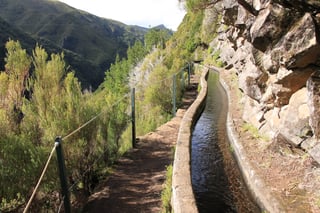
The levadas a visitor walks are working structures. At Rabaçal, on the Paul da Serra plateau in the west, a shuttle runs two kilometres down from the road to the forestry post, five euros down and eight return in October 2026, and from there the classified trail PR6 follows the Levada das 25 Fontes just over four kilometres each way to the springs that give it its name. The state began cutting the Rabaçal levadas in 1835, and this one and the Levada do Risco beside it both end at the hydroelectric plant at Calheta, so the water at the walker’s side is on its way to a turbine and then to the banana terraces of the south-west coast. The island’s tentative World Heritage file records how the turns were once timed by the man who walked the channel, with an hourglass, a watch or a shell.
Funchal's cathedral, customs house and convent from the first sugar century, the forts raised after the 1566 sack and the square built on the rubble of the 2010 flood, the wine lodge and the emperor's tomb at Monte, and the water mill, windmills and sugar ruins of São Jorge and Porto Santo
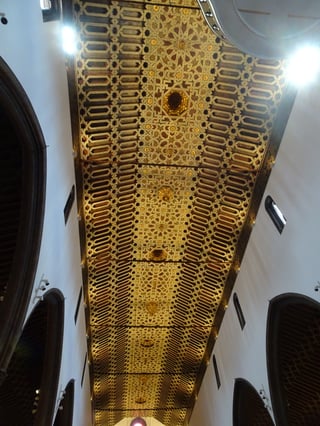
Funchal -- the first sugar century in stone; the cathedral ceiling lit from a quarter to eleven. The cathedral was built between 1493 and 1517, with a portal of stone from Cabo Girão and, over the naves, a ceiling of island cedar in the Moorish-Christian manner, fifteen hundred square metres restored between 2019 and 2021; the parish lights it every day from a quarter to eleven to eleven, by a notice of 2020, and the doors are open weekdays from a quarter past seven to half past six. Two streets away, the Cidade do Açúcar museum (Museus de Funchal, Funchal -- Portuguese translated to English ) is the city's sugar museum on Praça Colombo, open free on weekdays from half past nine to half past five. The old customs house on the harbour is the regional parliament (Assembleia Legislativa da Madeira, Funchal -- Portuguese translated to English
), visited on weekdays by booking and on the third Saturday of the month at eleven from the statue at the east door, registering by the Thursday before. Above the bay, the convent of Santa Clara (Direção Regional da Cultura, Madeira -- Portuguese translated to English
) was built in the 1490s around the chapel that João Gonçalves Zarco, who led the settlement, had made for his family tomb; the tomb was moved out of the chancel, the space around the altar, in 1768 and the captains' graves are in the floor; Tuesday to Saturday, ten to half past twelve and two to five, ten euros; the hours and prices in this section were read in October 2026.
Funchal -- the forts of 1566 and the square of 2010. In 1566 a French corsair force under Bertrand de Montluc sacked the city, and the regional culture directorate records that the attack forced urgent measures: new forts from 1570, then under the Spanish crown the engineer Jerónimo Jorge walled the shore from 1595, finished São Tiago in 1614 and began the fort of São João Baptista on the Pico (Direção Regional da Cultura, Madeira -- Portuguese translated to English ) in 1602, whose cistern cut in the rock was described in 1654 as holding three thousand pipes of water, a pipe being a wine cask. The Pico is open weekdays, ten to half past twelve and two to five, six euros, and looks down on the whole bay; the yellow São Tiago closes the east end of Rua de Santa Maria. The governor's palace of São Lourenço on the seafront has been closed to visitors since August 2025 for roof and ceiling works, with reopening scheduled for the last quarter of 2026 by the Representative of the Republic's own notice. In front of the parliament, the Praça do Povo is a seafront garden opened in November 2014 on about a hundred thousand cubic metres of debris that the flood of 2010 brought down the city's three streams, which now run in rebuilt channels; the government chose to build the square from the rubble rather than cart it away.
Funchal and Monte -- the English wine century, and an emperor. Blandy's wine lodge on Avenida Arriaga (Blandy's Wine Lodge, Funchal -- Portuguese translated to English ) ages its wine in lofts above the street rather than cellars, with a cooperage still working inside and vats of Brazilian satinwood; guided visits run every day, thirty minutes for seventeen euros and forty-five for twenty-three in October 2026. Above the city at Palheiro, the gardens (Palheiro Gardens, Funchal -- Portuguese translated to English
) were laid out by the first Count of Carvalhal, who planted the camellias; open daily nine to five, eleven euros. At Monte, the parish church at 598 metres holds the tomb of Karl, the last emperor of Austria-Hungary, who came to the island in exile in November 1921, moved from Villa Victoria beside Reid's hotel to a borrowed quinta, a country house, at Monte in February 1922, died there on 1 April and was buried in the church (Paróquia de Nossa Senhora do Monte, Funchal -- Portuguese translated to English
) four days later; it is open Monday to Saturday nine to seven and Sunday eight to six.
São Jorge, Porto da Cruz and Porto Santo -- the mills. At Achadinha in São Jorge, on the north coast, a water mill on the Levada do Rei (Município de Santana -- Portuguese translated to English ), restored in 2000, still grinds the parish's maize, and a few metres away a saw driven by the same water is, the municipality says, the only one working in the region; on the shore below stand the ruins of sugar mills from the first years of settlement, an entrance arch among the most significant survivals, in the municipality's words. In the town of Santana the triangular thatched houses beside the council offices are now shops. At Porto da Cruz, the Engenhos do Norte (Visit Madeira, Porto da Cruz -- Portuguese translated to English
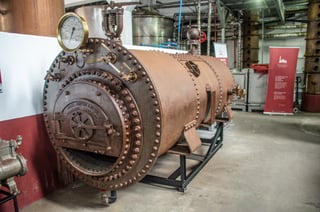
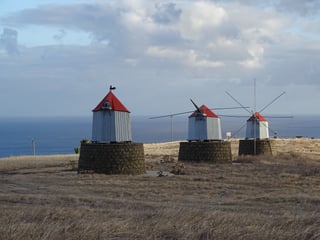
) were built in 1927 with nineteenth-century steam machinery and press cane from March to May for rum, with a tasting room beside the mill; the rest of the year the machines stand still and are shown. Porto Santo had no levadas, and its farmers milled by wind: at Portela, three wooden mills that turn on stone pedestals were restored and returned to their places with their sails in 2023, open-air and free. In Vila Baleira, Casa Colombo (Direção Regional da Cultura, Porto Santo -- Portuguese translated to English
) is the house that tradition names as Columbus's after his marriage to the first captain's daughter, in the culture directorate's own words; Monday to Friday ten to half past twelve and two to half past five, Saturday ten to one, six euros.
I want to dig deeper
Four things here take longer, or take you further. A week on the classified trails bought as one pass, from the ridge walk at dawn to the levada that still turns a mill at São Jorge. Porto Santo, the second island, which can be a day on the beach or a week of it. The cane season from late March to early June, when the four mills press and the cane syrup, the island’s older mel, is boiled in Funchal. And the Christmas fortnight, when almost every parish holds a mass before dawn and the market stays open all night on the 23rd.
A seven-day trail pass and which walks to spend it on, Porto Santo by the morning ship with its own honey and its own August pilgrimage, the cane harvest and the mills that press it, and the Madeiran Christmas from the first dawn mass to the all-night market
The trails on one pass -- any season; book each walk by time slot. Since 1 January 2026 every classified trail is entered on a booked slot, and a visitor can buy them singly at 4.50 euros or as a day of combined walks for nine, three days for 22.50 or seven days for 52.50, all excluding the ridge walk PR1, which costs 10.50 on its own. The forestry institute's table (IFCN, Madeira) gives each trail's length and whether it is open that day, and a week built from it in October 2026 looks like this: the ridge from Pico do Areeiro to Pico Ruivo, six kilometres one way; the Levada das 25 Fontes from Rabaçal, 4.3 kilometres each way, and the Levada do Risco beside it, three; the Vereda do Fanal, 10.8 kilometres from the Paul da Serra plateau down into the old til trees, and the Levada dos Cedros on from Fanal, 7.2; the Levada do Rei, 5.3 kilometres each way from Quebradas to Ribeiro Bonito, the channel that turns the maize mill at Achadinha; the short Balcões path from Ribeiro Frio, a kilometre and a half to a balcony over the central valleys; and the dry peninsula of São Lourenço, four kilometres each way. The Encumeada path from Pico Ruivo was open in October 2026 except for its section between Boca das Torrinhas and the pass. Closures are decided trail by trail, not by the weather alert itself, and a closed trail is refunded or rebooked. Since July 2024 the island's buses run under one network, so most trailheads can be reached without a car, with the ridge road to Areeiro the exception.
Porto Santo -- the ship leaves Funchal at eight. The Lobo Marinho crosses in about two and a quarter hours, out at eight in the morning on most days and back in the evening, at six, seven or eight according to the month, with a Friday evening sailing that returns late; the operator sells a one-day cruise on the same ship, check-in is half an hour before departure, and its monthly tables (Porto Santo Line, Funchal -- Portuguese translated to English ) showed no sailings from 7 January to 5 February 2026, when the twenty-five-minute flight was the only link. The island is eleven kilometres by six, of older volcanic rock than Madeira by the tourism board's account, with a nine-kilometre beach of shell sand along its south side, a cycle path of almost five kilometres beside it, a tourist bus that circles the island in about two hours, and a classified walk up Pico Branco of 2.7 kilometres each way. Vila Baleira has the Columbus house and, two kilometres east at Portela, the restored windmills. On 15 August the island's own pilgrimage climbs to the chapel of Nossa Senhora da Graça, where the ethnographic record has pilgrims singing to a braguinha, an accordion and a guitar at the foot of the slope, and bolo do caco, espetada and grilled chicken at night; the Festival Colombo recreates the navigator's stay with costumed scenes and a market in September. Beekeeping on Porto Santo restarted in 2015, and no shop for its honey was found.
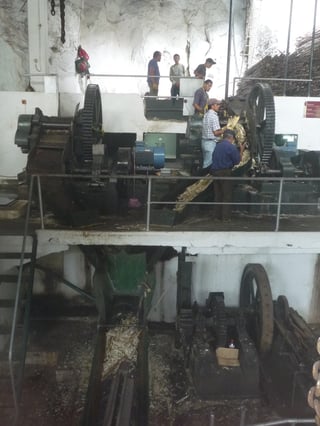
The cane season -- late March to early June; the mills press, the syrup is boiled. The producers' specification has the cane cut with a podoa, a hooked blade from the second half of March on the south coast to the first half of June on the north, and the four mills work to that calendar. The Engenho da Calheta, in the town of Calheta, runs once a year after Easter and keeps its tasting room open the rest of the year; the Engenhos do Norte at Porto da Cruz press from March to May for rum; the Engenho Novo in the Calheta uplands takes visitors by appointment, the visit free and the rum tasting paid at twenty, thirty-five or fifty euros in April 2026; and the Ribeiro Sêco factory in Funchal boils the syrup on weekdays. A Público reporter at the Engenho Novo in late April 2026 found bundles of cane stacked in the street until early June, arriving mostly at weekends because the growers are old, and reported the island's crop down from 11,500 tonnes six years before to 8,500 in 2025, while the mill's director told her the price paid to the farmer had more than doubled since 2021. What the mills call mel is this syrup, the word used on the island for it for nearly six centuries; the bees' honey is found elsewhere on this page.
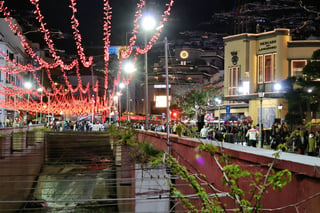
The Christmas fortnight -- 8 December to 6 January; the dawn masses in the nine days before Christmas. Madeirans call Christmas "a Festa", the Catholic news agency Ecclesia wrote in a piece the Jornal da Madeira carried, quoting the writer Graça Alves: the most important moment of the year, the one from which life happens. It begins on 8 December, when families bake the cane-syrup cake so it is ready for the 25th, and the city's lights run from 1 December to 10 January. From 15 to 23 December in most churches, almost every parish on Madeira and Porto Santo holds a mass before dawn, each morning's mass organised by a different neighbourhood; the diocesan paper prints the hours by parish each December, and in 2025 Monte and Camacha began at six, Curral das Freiras at half past five, the cathedral at half past seven. In Câmara de Lobos, Estreito and Quinta Grande the bands still walk the streets in the dark and rockets go up. There is nothing to be invited to: a visitor comes to the church door at the hour, and afterwards, as the tourism board describes it, sandwiches of pork marinated in wine and garlic and homemade liqueurs are shared in the churchyard as the day comes up. On the night of 23 December the Funchal market stays open all night for fruit, flowers and the clay figures for the cribs, the night known on the island as the revéspera, the eve of the eve. The season closes with the singing of the Kings in the municipal garden on 5 January and, on 15 January, Santo Amaro, the day of sweeping out the cupboards.
The Honey of Madeira
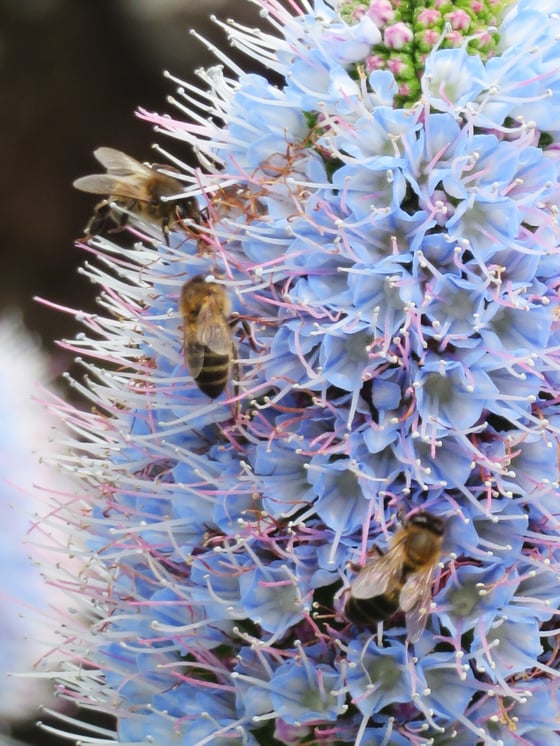
The honey here comes off the same slopes the levadas water. One north-coast honey house, Melaria Flor do Norte at São Vicente, lists what its bees work: heath, the massaroco, the folhado, a flowering tree of the laurel forest, brambles and eucalyptus. The beekeepers sell what they make as one multifloral honey, from many flowers, under many labels, among them the forest’s, as Mel da Laurissilva from Lameiros above São Vicente, and a parish’s, as Mel do Curral das Freiras from the valley where one parishioner remembers the harvest at the end of September. Porto Santo’s beekeepers make their own, and no shop for it was found. The regional government counted 358 registered beekeepers and just under eleven thousand hives in 2025, with a smaller crop that year, which the government put down to temperature swings and longer spells of rain; on Porto Santo, where beekeeping was restarted in 2015 and ten Azorean swarms were bought in 2016, ten beekeepers with thirty-two hives make about half a tonne a year. Geneticists who published a study of the island’s bees in 2006 found a population distinct from the mainland’s, with an African line of descent on the mother’s side. The same January release names a Ponta do Sol beekeeper, André Silva, as the region’s only producer of queens, with more than five hundred hives and twelve to seventeen tonnes of honey a year. No monofloral, a honey from one flower, is sold and no designation exists, so the jar is read by its seal: the Produto da Madeira mark carries the maker’s number in the regional register, a beekeeper’s on the honey and the factory’s on the syrup, and the mark, not the word mel, says which is which. The road below runs from the Funchal shelf to the north coast and back along the south-west.
The Honey Road
One road out of Funchal to the north coast and one back along the south-west, with the city shelf as the start, two honey houses under the laurel forest, a mead maker at the end of the road and a queen breeder's comb sold at a market fruit shop.
Funchal, Monte and Santo António da Serra -- year-round; the hive visit by booking (city gateway)
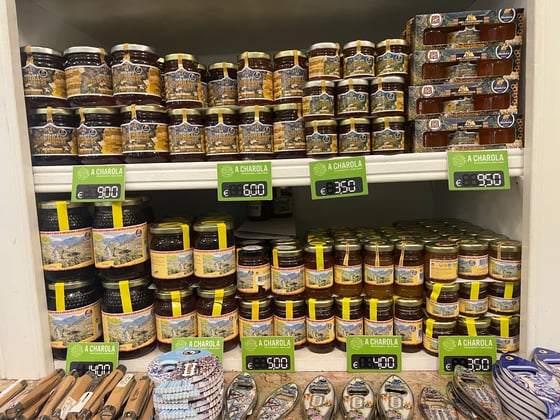
Start on the shelf. Inside the Mercado dos Lavradores, the organic grocer A Charola at unit 15 had nine island honey labels on its back shelf on 24 October 2026, every one with the Produto da Madeira seal, and the mainland SerraMel jars and the Ribeiro Sêco cane syrups beside them, so it is the one place in the city to read the island's honeys side by side; the market opens weekdays seven to seven and Saturday to two. At the Pingo Doce in the Anadia shopping centre, downtown, the cane syrups stand on the syrup shelf and the bee honeys on the one below; in October 2026 the one island honey read in full was Mel da Laurissilva at 6.69 euros the half kilo, lot 1/25, the same jar and lot that A Charola priced at 14 euros eight days later, with a second island jar beside it whose label was read only in part, among mainland and Spanish jars, and one organic cane jar beside it read "sugarcane honey" in English. Above the city at Curral dos Romeiros, on the Levada dos Tornos walk past Monte, João Batista Gouveia's Melaria Flor do Curral lists itself as a shop at the house on Rua Nova; its page did not show its hours when read and it showed at the regional honey fair in January 2026, so phone first. East of the city at Santo António da Serra, ten minutes above Machico, the only bookable hive visit found is four hours with the hosts in protective gear at the hives, then honey, pollen, bread, cheese and cider (Bees experiences, Santo António da Serra), for parties of two to four at 149 euros an adult in October 2026, with the meeting point sent after booking and no season stated on the page.
Serra de Água and São Vicente -- the honey house Monday to Saturday, the museum weekdays; the fair on a late-January weekend
The 340 bus leaves Funchal at nine and climbs through Ribeira Brava to Serra de Água, where the Taberna da Poncha mixes the island's drink in front of you and the Casa do Povo holds the Mostra Regional do Mel e da Poncha on a late-January weekend, beekeepers' stalls and a talks programme called the Jornada do Mel, then over the Encumeada pass and down the north side to São Vicente. At Ginjas, by the business park, the Melaria Flor do Norte (Flor do Norte, São Vicente -- Portuguese translated to English ) sells from its honey house Monday to Friday nine to six and Saturday nine to three: the plain honey in sizes to 1.4 kilos, honey in the comb, and honey with laurel berries, walnuts or cinnamon added, the laurel version being a honey with berries in it and not a laurel honey. At Lameiros, about five hundred metres above the sea, on Estrada da Bica, the Museu do Mel e da Apicultura (Museu do Mel, Lameiros -- Portuguese translated to English
) shows the tools and the process and gives a tasting, the first honey museum in the region by the municipality's account, weekdays nine to half past five on the municipal page of July 2024; the Mel da Laurissilva jar on the Funchal shelf gives Lameiros as its address, and the museum's own site is down, so call before climbing. The lime museum of the Rota da Cal, nearby, was listed as temporarily closed in October 2026, and the Quinta do Barbusano vineyard is open Tuesday to Sunday; lunch is at the Calamar on the avenue, daily noon to half past nine.
Porto Moniz -- daily ten to seven, year round; the government honey house for groups, Tuesday to Thursday
The road west from São Vicente ends at the lava pools, and a street above them the mead house's own site (Luz.Doce, Porto Moniz -- Portuguese translated to English ) is open every day from ten to seven: Carlos Pestana's mead, about a thousand litres a year, his honey, and the bee-honey broas and bolo da avó, honey biscuits and a honey cake, that are the island's only honey baking found, with a tasting at the counter. At Portas da Vila the regional government's own livestock station keeps an apiary and a honey house and shows them to groups of ten to fifty on Tuesday to Thursday mornings and afternoons with two days' notice (Estação Zootécnica da Madeira, Porto Moniz -- Portuguese translated to English
); a couple cannot walk in. Limpets at the Cachalote by the pools in summer, then the 341 back to Funchal through the tunnels in about two and a quarter hours.
Ponta do Sol, Ribeira Brava and Curral das Freiras -- the stockists in shop hours; the valley's harvest at the end of September
On the south-west coast, Quinta das Cercas at Lombada above Ponta do Sol (Quinta das Cercas, Ponta do Sol -- Portuguese translated to English ) breeds queens by its own account, and was founded after one brother watched a swarm settle in a eucalyptus on the way to the hills, and it sells honey in the comb at seven euros the 360 grams in October 2026, not at a farm gate but through its web shop and three shops: the Frutaria Amoraginja in the Ribeira Brava market, Sabor e Companhia on the Estrada V Centenário in Ponta do Sol, and the Pita e Irmãos supermarket on the coast road at Canhas. Inland from Câmara de Lobos, the Curral das Freiras valley has about twenty beekeepers and a brand of its own, Mel do Curral das Freiras, that a mainland web shop stocks and the parish sells on the spot without a shop you can name; a parishioner writing in the regional paper remembered the harvest day at the end of September, the comb carried into a dark storeroom, and the honey eaten on bread, in tea and in poncha. Ask for it in the village, which held its chestnut festival on 31 October and 1 November in 2025.
Getting Here
The island is entered through the airport at Santa Cruz, east of Funchal, and through the Funchal cruise port. The tourism board puts Lisbon at about an hour and a half in the air and the big European cities at three to four, and its arrivals page lists two dozen airlines on the routes (Visit Madeira – Portuguese translated to English ), TAP, easyJet, Ryanair, Jet2, British Airways, Condor, Eurowings and Lufthansa among them. From the terminal the airport bus, SIGA route 500 (SIGA, Governo Regional da Madeira – Portuguese translated to English
), reaches the market in a little over twenty minutes, the seafront in twenty-five and the Lido hotel zone in forty, fifty to its end at Praia Formosa; it runs half-hourly until noon and hourly after, to ten at night, cash only on board, 6.70 euros in October 2026, and not on Christmas Day. Since July 2024 every public bus on both islands has run under the regional SIGA network, three operators on one site: Horários do Funchal in the city, SIGA Rodoeste to the west and the north coast, CAM to the east and Santana. The 340 leaves Funchal at nine for Ribeira Brava, Serra de Água, the Encumeada pass, São Vicente and Porto Moniz, three and a half hours by the old road, and the 341 comes back by the tunnels in about two and a quarter. The tunnels are why the return is faster: the toll-free Via Expresso runs about half its length underground by the concessionaire’s own description, the Encumeada tunnel at 3.1 kilometres and the Cortado at 3.2, and the old pass and cliff roads survive beside them for the drive the tunnels replaced. A hired car puts the west and the north within a day each of Funchal on your own hours, and the tourism board’s transport directory (Visit Madeira – Portuguese translated to English
) lists the hire firms, the taxis and the island’s cable cars. In Funchal itself the centre is walked, and the cable car from the old town (Teleférico do Funchal – Portuguese translated to English
) rises to Monte, sixteen euros up or twenty-two return in October 2026, a quarter to nine to a quarter to six every day but Christmas. Porto Santo is two and a quarter hours by the morning ship or twenty-five minutes by Binter’s flight, and the ship does not sail for about a month from early January. The classified trails are booked by time slot on the regional government’s SIMplifica portal before you set out.
Seasonal Events Not to Miss
Dates are the organisers’ as read in October 2026; confirm each on its own page before travelling.
- Mostra Regional do Mel e da Poncha, Serra de Água – a weekend in late January. The island’s honey fair, held at the Casa do Povo of the mountain parish between Ribeira Brava and the Encumeada pass: beekeepers’ and poncha-makers’ stalls, a talks programme the organiser calls the Jornada do Mel, and, in January 2026, the occasion on which the regional government handed over the sector’s support grants. The tenth ran on 24 and 25 January 2026 and the organiser’s page (Casa do Povo, Serra de Água – Portuguese translated to English
) gives the eleventh as the last weekend of January 2027.
- Carnaval, Funchal – 3 to 14 February 2027. Two weeks across the archipelago, with the allegorical parade through the lower town on 5 and 6 February and the satirical Cortejo Trapalhão on the 9th; the tourism board’s Carnaval page (Visit Madeira – Portuguese translated to English
- Feira Regional da Cana-de-Açúcar, Canhas – a weekend at the end of March. The cane fair in the growing parish above Ponta do Sol, where the Calheta mill, the Ribeiro Sêco factory and a distillery are among the organiser’s collaborators and the prizes go to the growers; it ran on 29 and 30 March in 2025 on the Casa do Povo’s event page (Casa do Povo da Ponta do Sol – Portuguese translated to English
- Festa da Flor, Funchal – 29 April to 30 May 2027. A month of flowers with two allegorical parades through the lower town on 2 and 16 May, the children’s Muro da Esperança on the Saturday morning before the first, and a flower market; everything is free except the seats for the parade, by the tourism board’s own account (Visit Madeira – Portuguese translated to English
- Festival do Atlântico, Funchal and Porto Santo – 4 to 27 June 2027. The international fireworks competition over the bay on the first three Saturdays of June, twenty minutes each from any point on the seafront, with closing shows at the Vila Baleira pier on Porto Santo on 23 June and in Funchal on the 26th; the festival page (Visit Madeira – Portuguese translated to English
- São Pedro, Ribeira Brava – 26 to 29 June. Four days in the town at the mouth of the western valley: the marches on the Sunday night, seven hundred marchers in fourteen groups in 2026 by the regional paper’s count, the boat of São Pedro carried from the Banda d’Além, the Fajã da Ribeira procession with its charola of fruit, beef skewered on laurel over hot stones on the beach, then on the 29th the four o’clock mass and procession and the sword dance on the church forecourt. In 2026 the municipality ran free buses from Funchal and back until five in the morning, and its festival guide (Câmara Municipal da Ribeira Brava – Portuguese translated to English
- Semana do Bordado Madeira, Funchal – the last week of July. The embroidery institute’s open week, 20 to 27 July in 2026 with a closing on 3 August and 28 to 31 July in 2025, with open workshops and World Embroidery Day on the 30th; the institute’s events list (IVBAM, Funchal – Portuguese translated to English
- Nossa Senhora do Monte, Monte – 15 August. Nine evenings of novena from 5 August, one of them the emigrants’ and one the toboggan men’s, the vigil mass at nine on the 14th and then the arraial, the street fair, all night in the churchyard and the two squares, beef skewers and bolo do caco and sung despiques, and on the 15th the pilgrims’ mass at eight, the bishop’s mass at eleven and the procession, pilgrims carrying candles and wax limbs; the parish’s own page (Paróquia de Nossa Senhora do Monte – Portuguese translated to English
- Festa do Vinho – 22 August to 12 September 2027. The harvest festival in the city and the vineyards, with the Wine Lounge on the Praça do Povo and the re-enacted grape harvest at Estreito de Câmara de Lobos in the first fortnight of September; the festival page (Visit Madeira – Portuguese translated to English
- Festival Colombo, Porto Santo – 23 to 26 September 2027. Vila Baleira dressed for the fifteenth century, a market, costumed scenes of Columbus’s stay, three days at the end of the beach season; the festival page (Visit Madeira – Portuguese translated to English
- Senhor dos Milagres, Machico – 8 and 9 October. The town’s memory of the flood of 1803 that part-wrecked the chapel and carried the image out to sea, recovered, as the legend has it, by an American ship and returned to its chapel in 1813: on the 8th the pilgrims arrive at half past seven and torches are handed to the men and the fishermen, at eight the procession, led in 2026 by the bishop, then mass in the parish church; on the 9th the pilgrims’ mass at three and at seven the mass and the procession that carries the image back to its chapel; the parish council’s notice (Junta de Freguesia de Machico – Portuguese translated to English
- Festa da Castanha, Curral das Freiras – the turn of October and November; 31 October and 1 November in 2025. The chestnut festival in the valley inland from Câmara de Lobos, run by the parish Casa do Povo with the municipality’s support, celebrating the chestnut and the valley’s produce, and the valley’s own honey asked for on the spot; the municipal agenda entry (Câmara Municipal de Câmara de Lobos – Portuguese translated to English
- Christmas and New Year – 1 December 2026 to 10 January 2027. The island’s Christmas season, told in full under “I want to dig deeper”: the dawn masses from the 15th, the all-night market on the 23rd, the fireworks over the bay at midnight on the 31st and the singing of the Kings on 5 January; the tourism board’s season page (Visit Madeira – Portuguese translated to English
Where to Buy Honey
Hours and prices are the sellers’ own as read in October 2026. A crop can sell out before the next harvest, so call ahead, or go knowing the jar may not be there.
- Luz.Doce, Porto Moniz – every day, ten to seven. The beekeeper Carlos Pestana’s family business on the Caminho da Irmã do Perpétuo Socorro, a street above the lava pools: his own honey, the mead he makes from it, about a thousand litres a year, and the bee-honey broas and bolo da avó baked in the house, with a tasting at the counter; the producer’s own site (Luz.Doce, Porto Moniz – Portuguese translated to English
- Melaria Flor do Norte, Ginjas, São Vicente – Monday to Friday nine to six, Saturday nine to three. Miguel Vieira’s honey house by the business park on the north coast: the plain honey in jars up to 1.4 kilos, honey in the comb, and honey with laurel berries, walnuts or cinnamon added; the honey house’s contact and hours page (Flor do Norte, São Vicente – Portuguese translated to English
- Quinta das Cercas, Ponta do Sol – through three shops in their own hours. The Lombada queen breeder sells no honey at the gate; its comb honey, seven euros the 360 grams in October 2026, is stocked by the Frutaria Amoraginja on the Rua do Gago in the Ribeira Brava market, by Sabor e Companhia at Estrada V Centenário 16 B in Ponta do Sol, and by the Pita e Irmãos supermarket on the coast road at Canhas, all three named on the producer’s comb-honey page (Quinta das Cercas, Ponta do Sol – Portuguese translated to English
- A Ervanária, Centro Comercial Europa, Funchal – Monday to Saturday, nine to half past seven. The herbalist and health-food shop at Loja 13 of the Europa centre on Rua do Bom Jesus, in the city centre, had João Batista Gouveia’s Flor do Curral 500-gram jar of Curral dos Romeiros honey on its shelf at 7.92 euros on 23 October 2026, lot March 2026, with the Produto da Madeira seal on the lid; the honey house itself, on Rua Nova at Curral dos Romeiros above Monte, is listed as a shop whose hours did not show on its page when read, so phone +351 967 681 783 first; the shop’s contact and hours page (A Ervanária, Funchal – Portuguese translated to English
- A Charola, Loja 15, Mercado dos Lavradores, Funchal – the market’s hours, Monday to Friday seven to seven, Saturday seven to two. The organic grocer at unit 15 inside the market is the one shop found in the city with the island’s honeys side by side: on 24 October 2026 its back shelf held nine island labels, each with the Produto da Madeira seal, among them Mel da Laurissilva at 14 euros the 500 grams, the same jar and lot that the Pingo Doce sold at 6.69 euros eight days earlier, Mel de Abelhas Curral das Freiras in three sizes from three and a half to nine euros, Apireis’s multifloral from São Jorge, Flor do Norte’s plain honey and its laurel and cinnamon versions at ten to twelve euros, a Quinta Pedagógica dos Prazeres jar labelled organic laurel-forest honey at 9.95 euros the 250 grams, and Luz.Doce’s jar at eight, with the mainland SerraMel range and the Ribeiro Sêco cane syrups on the shelves beside; the shop’s own hours were not read, so go in the market’s; the market’s own site (Mercado dos Lavradores, Funchal – Portuguese translated to English
- Bazar O Velhinho, Rua de Santa Maria, Funchal – Monday to Saturday, ten to five. The souvenir shop in the old town opposite the restaurant of the same name lists a 250-gram jar of Curral dos Romeiros honey at six euros, sold out when read in October 2026; the shop’s own location page (Bazar O Velhinho, Funchal – Portuguese translated to English
- Pingo Doce Super Anadia, Funchal – supermarket hours. The downtown supermarket in the Anadia shopping centre, entered from Rua do Ribeirinho, where in October 2026 the one island bee honey in full was Mel da Laurissilva at 6.69 euros the half kilo on the shelf below the cane syrups, among mainland and Spanish jars; read the seal, a Produto da Madeira mark with a beekeeper’s register number; the store’s page (Pingo Doce, Funchal – Portuguese translated to English