New Zealand Manuka Honey
The Story
Manuka honey is New Zealand’s most famous honey, but for most of the settler era it was a weed. Manuka is a hardy native shrub, the first to colonise cleared land, and farmers cut it back to open pasture – by the mid-twentieth century it was targeted for eradication. Beekeepers avoided its honey: thixotropic and jelly-like, it clung to the comb and was hard to extract, and its strong, medicinal flavour earned it the name “scrub honey.” It was also, long before any of this, a Maori taonga – a treasure – used in rongoa, traditional Maori medicine, for colds, fevers and wounds.
What reversed manuka’s fortunes was chemistry, not taste. In 1981, biochemist Peter Molan at the University of Waikato found that manuka honey carries an antibacterial activity most honeys lack – one that does not rely on hydrogen peroxide and survives when the peroxide is stripped away. This non-peroxide activity turned a cleared weed into the world’s most valuable honey, and with the value came the rest: a thicket of competing quality grades, a government-enforced export definition, and a trans-Tasman dispute over the word “manuka” itself.
Manuka is also sold by number, and the numbers are where buyers get lost. A jar may be marked UMF, MGO, NPA or K-Factor, or simply “active,” and they do not all mean the same thing – a bare “active” can mean nothing unique to manuka at all. The grade that matters most is the UMF (Unique Manuka Factor), running from about 5 at the low end to 25 or more: it measures the honey’s strength, and it largely sets the price. To get the most for your money, use the Buying Guide below.
Characteristics
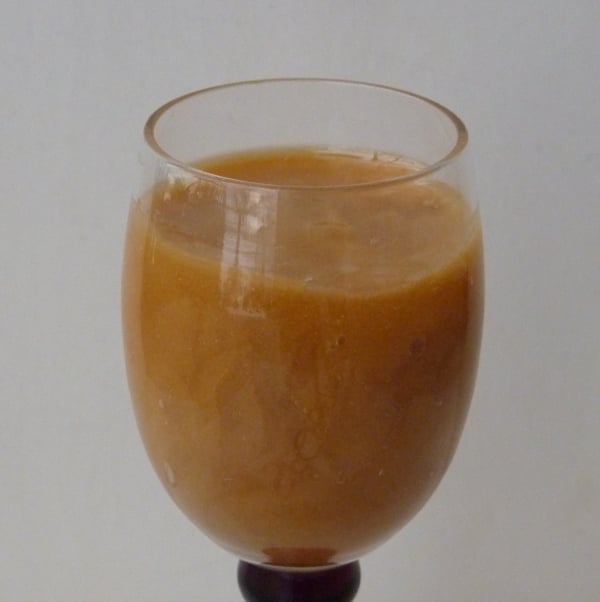
Manuka is a dark honey – cream to tan or brown – with a rich, earthy taste of damp earth, heather, minerals, barley sugar and herbs, a cool menthol lift, and a medium sweetness that closes on a slightly bitter, medicinal note. Its defining physical trait is that it is thixotropic: it sets to a gel at rest and thins when stirred or shaken, which is exactly why early beekeepers found it so hard to spin out of the comb. It is slow to granulate and forms coarse crystals, so it is usually sold creamed, which gives a cool, smooth mouthfeel; it also makes good comb honey.
Click to Display — The Details: botanical origin, sensory profile, pairings, health and what gives it its character
Botanical Name: Manuka (Leptospermum scoparium)
Botanical Family: Myrtaceae
Bee Species:
Manuka honey is made by the western honey bee, Apis mellifera, which is not native to New Zealand. The country’s native bees are solitary and store no harvestable surplus, so there was no honey to gather until honey bees were brought in: Mary Bumby landed the first two hives at Mangungu, in the Hokianga, in 1839, and managed and feral colonies spread from there.
Color:
Dark cream to tan or dark brown.
Flavor Profile:
Rich and earthy – damp earth, heather, minerals, barley sugar and herbs – medium sweet, closing on a slightly bitter, medicinal note.
Tasting Notes:
Medium sweet with a slightly bitter, medicinal aftertaste and a cool, smooth mouthfeel in its creamed form. Thixotropic – gel-like at rest, looser when stirred – slow to granulate, and usually sold creamed.
Aroma:
Earthy and herbaceous, with damp-earth and heather notes and a cool, menthol-like lift.
Defining Compounds:
Manuka’s antibacterial activity comes largely from a single compound, which is why it can be measured and sold by number. That compound is methylglyoxal (MGO); it forms slowly, without any enzyme, from dihydroxyacetone (DHA) in the nectar, and it is what stays active after the hydrogen peroxide most honeys rely on has broken down – the non-peroxide activity (NPA) that Molan first measured.
The result is a crowd of competing grades on the shelf.
UMF, MGO, NPA and the other numbers on the jar
The labels on a manuka jar measure related but different things:
| Label | What it is |
|---|---|
| NPA | Antibacterial strength, measured against phenol |
| MGO | Methylglyoxal, the active compound, in mg/kg |
| UMF | A trademarked four-part test: MGO, leptosperin, DHA, HMF |
| MGS | Molan Gold Standard, an MGO-based grade |
| K-Factor | A monofloral (K16) / multifloral (K12) identity label |
They track together but carry different amounts of information. MGO measures the single active compound; UMF grades that same compound for potency and adds three more checks -- leptosperin for authenticity, DHA for shelf life, and HMF for freshness -- so a UMF number tells you more than an MGO number does. Each UMF grade sets a minimum MGO, so the two rise together and can be read across. MGS is another MGO-based grade, open to any producer; K-Factor marks identity, not strength. Only licensed producers may display the UMF mark, each with a licence number.
New Zealand also enforces a legal definition of what may be sold as manuka at all.
What legally counts as manuka: New Zealand's 2018 export test
Since December 2017, honey exported from New Zealand as manuka must pass a government test set by the Ministry for Primary Industries. It combines five markers -- four chemicals that come from manuka nectar, plus a DNA marker from manuka pollen -- measured in two lab tests. Meeting all five at the higher thresholds makes a honey monofloral manuka; meeting a lower set makes it multifloral manuka; failing makes it not manuka at all.
This is why the kanuka question is settled: the DNA marker is specific to Leptospermum scoparium. The test applies only to honey packed for export, not to honey traded inside New Zealand, and the UMF grade sits on top of it -- the industry mark tests beyond the government floor.
For a buyer, all of this comes down to a few simple rules.
Buying Guide -- how to read a manuka label
The potency numbers line up, because each UMF grade carries a minimum MGO:
| UMF | MGO (mg/kg, minimum) |
|---|---|
| 5+ | 83 |
| 10+ | 261 |
| 15+ | 512 |
| 20+ | 826 |
| 25+ | 1197 |
A few rules follow. Look for the UMF mark with a licence number, or an MGO figure from a named producer -- a bare "Active" or "Total Activity" can mean ordinary peroxide activity, which is not unique to manuka. The key to value is that the grade measures antibacterial strength, not flavour: a high UMF number is not a better-tasting honey, only a more active and more expensive one. So match the grade to the use -- for eating, on toast, in tea or by the spoonful, a low grade (UMF 5 to 10) tastes much the same and costs far less; pay for the higher grades (UMF 15 and up) only where the activity is the point, chiefly on skin or a wound. Then read whether it says monofloral or multifloral: monofloral is predominantly manuka -- the full-strength article -- while multifloral is a manuka blend with other nectars, milder and cheaper. Finally, honey packed in New Zealand is the label to trust: the country allows almost no honey imports and tests every batch it exports as manuka, so a jar sealed there traces back to genuine New Zealand honey -- whereas manuka bottled in another country can be blended with cheaper stock on the way.
Forage Origin:
Manuka honey comes from the nectar of Leptospermum scoparium, a hardy native shrub – prickly-leaved, with small white or occasionally pink flowers – that grows wild across New Zealand from the coast to the low alpine. It is not equally good everywhere: both the region and the plant variety decide how much antibacterial activity the honey carries. The strongest manuka comes from the northern varieties around East Cape and Gisborne – the marquee region, on volcanic soils in a remote, lightly grazed corner of the country – and through Northland, Coromandel, Waikato and the Bay of Plenty; the central and lower North Island and much of the South Island yield gentler, lower-activity honey. In te reo Maori the plant’s name is written with a macron; it is also called kahikatoa, or red manuka.
A close relative, kanuka, was for a long time treated as the same plant.
Kanuka was "manuka" until 1983, and legally is not manuka now
Kanuka (Kunzea ericoides), a softer-leaved, white-flowered shrub, was lumped together with manuka for most of the settler era. It was described in 1832 as Leptospermum ericoides and kept that name until 1983, when the Australian botanist Joy Thompson moved it into the separate genus Kunzea. Honey from the two was sold interchangeably as manuka.
The export definition ended that. New Zealand's manuka test includes a DNA marker specific to Leptospermum scoparium, so kanuka honey no longer qualifies as manuka for export -- it is a related co-source with its own honey, not a second kind of manuka. The taxonomy is still moving: genetic work in 2021 found little separation among the New Zealand Kunzea species and has reopened the question.
Leptospermum is not only a New Zealand plant. L. scoparium is native to both New Zealand and coastal Australia, and the genus is thought to have originated in Australia and reached New Zealand before the last ice age. Australia holds the great majority of the world’s Leptospermum species, and has a manuka industry of its own.
That shared origin is the root of a fight over the name.
Who owns the word "manuka": the trademark rulings
New Zealand's Manuka Honey Appellation Society tried to trademark the name "manuka honey" and reserve it to New Zealand honey. It was refused everywhere -- by New Zealand's own IPONZ in 2023, the UK in 2021, and the EU -- each finding the term descriptive of a type of honey. (The UMF grading mark is a separate, valid trademark, unaffected.) So Australian producers may lawfully call their honey manuka too.
The two sides, stated flat: the Australian Manuka Honey Association holds that "manuka" is descriptive and that the plant is native to both countries; the New Zealand side, through the Manuka Charitable Trust, holds that manuka is a taonga -- a treasure Maori are the guardians of -- and its name a word in te reo, and said the ruling showed the limits of trademark law in protecting indigenous rights.
Pairings:
Manuka’s dark, earthy, faintly medicinal flavour stands up to strong company: sharp aged cheese, sourdough or dark toast, strong black tea, and thick yoghurt or porridge. Because the high grades are expensive and intensely flavoured, they are most often taken by the spoonful or spread thin rather than cooked, with a plainer table honey doing the everyday work. If you are buying it for the activity rather than the taste, keep it off the heat – warming degrades both the aromatics and the antibacterial factor.
Health Uses:
Beyond the traditional Maori uses described above, manuka’s modern reputation rests on its measured antibacterial activity. That activity has been demonstrated in the laboratory and put to use externally: medical-grade manuka is an ingredient in some regulated wound-care dressings. The evidence base is strongest for that topical, wound-care use. Eaten, it is a honey – enjoyed here for its flavour and its place on the New Zealand table.
Origin Story
Manuka was woven into Maori life long before it was a commercial honey. The tree is a taonga, and its bark, leaves, sap and nectar were among the most widely used remedies in rongoa, the traditional healing system – for fevers and colds, and applied to wounds, burns and skin complaints – while its hard wood was worked into tools, weapons and bird spears. Europeans, for their part, brewed a bitter tea from the leaves, which is where the common name “tea tree” comes from; the drink was reputed to guard against scurvy. They thought little of the honey.
That manuka became a premium export at all traces to one laboratory. Peter Molan, a biochemist at the University of Waikato, built his career on the honey after he and Kerry Simpson identified its unusual antibacterial activity in 1981. Appointed MBE in 1995, he founded the university’s Honey Research Unit the same year and made it the reference laboratory for the science of manuka’s activity. He retired in 2014 and died in 2015; the unit continues without him.
Cultural Context
Manuka carries two cultural stories at once. For Maori it is a taonga, held under kaitiakitanga – guardianship – and long central to rongoa, the traditional healing knowledge; that standing is what made the fight over the name more than a commercial one. For New Zealand more broadly it has become a national symbol, one of its most recognisable exports and, abroad, a shorthand for its clean-green image.
Harvest & Forage
Manuka flowers for only two to six weeks a year, and an individual flower may be open just five days – in the North Island from about November to January, later in the cooler South Island. Beekeepers move hives into remote manuka country for that brief window and take them out again when it closes. Everything turns on the weather at flowering: rain, wind or cold nights over those few weeks can cut a season’s crop sharply, and yields swing from about 15 to 50 kilograms a hive. How active the honey turns out is partly beyond anyone’s control – the DHA in the nectar, the precursor that becomes MGO, varies more from one plant to the next than from one place to another, and climate variability is now shifting the timing of the bloom.
Beekeeping Context
New Zealand is the world’s main source of manuka honey, though how much it makes swings sharply with the weather – national honey output has run from about 12,000 tonnes in a wet year to over 20,000 in a good one, most of its value in manuka. The honey drove a boom: chasing manuka’s prices, the country’s registered beehives roughly tripled in a decade, to a peak of about 918,000 in 2019. It did not hold. Producer prices fell, an oversupply of honey built up in sheds around the country, and hive numbers dropped by more than 40 per cent – to around 534,000 by 2024 – as beekeepers left the industry. The 2018 export definition and the UMF mark grew out of the boom’s other problem: for years far more honey was sold worldwide as manuka than New Zealand could possibly produce, and both exist to mark the genuine article.
Regional Variants
- Leptospermum scoparium – East Cape manuka, New Zealand, East Cape and Gisborne – the marquee origin, on remote volcanic soils; the northern varieties here and through Northland, Waikato and Coromandel yield consistently the highest-activity (high-UMF) manuka, outranking the gentler southern manuka of the central North Island and East Coast.
Festivals and Fairs
- World Manuka Honey Day – global, 3 November each year – a promotional day run by the UMF Honey Association to raise the profile of certified New Zealand manuka honey.
Certifications
- UMF (Unique Manuka Factor) – the industry’s trademarked four-factor quality mark (potency, authenticity, shelf life, freshness), administered by the UMF Honey Association and displayed only by licensed producers.