Dandelion Honey
The Story
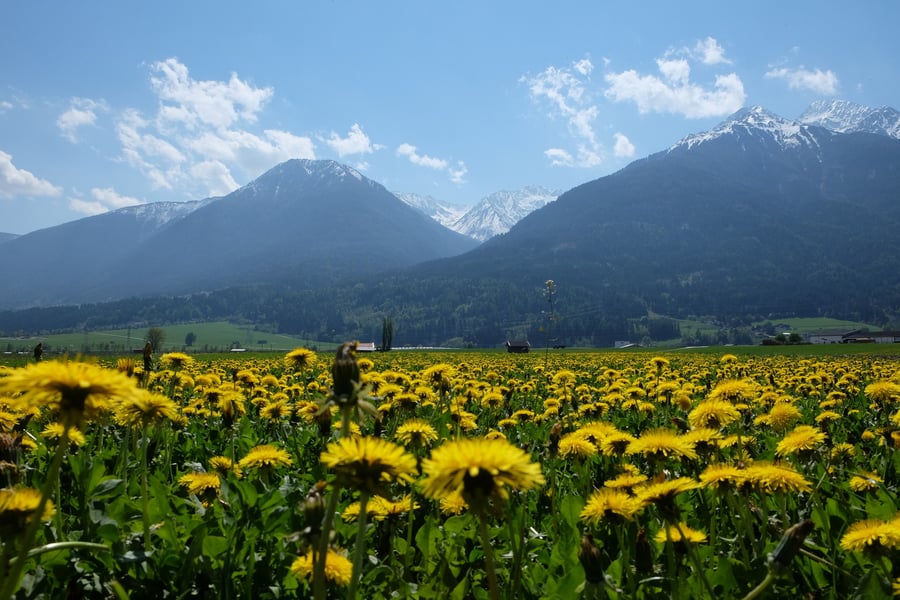
The first nectar of the northern spring makes a bright yellow honey that sets almost as fast as it is taken. In 1884 A. I. Root, who published America’s standard beekeeping cyclopaedia, wrote that he really could not say much in praise of it. What came out of his own hives was “so dark colored and strong, that we with difficulty gave it away”. Root then added the caveat that the modern standards for this honey exist to catch: the honey may not have been dandelion, because the shellbark hickory flowers at about the same time.
By 1920 the same book said the opposite. Its dandelion article, written now by the entomologist John H. Lovell, reported surplus crops across North America, listed the honey in the floras of five European countries, and printed Root himself on the plant: one of God’s greatest and most precious gifts.
Very little of the flow becomes honey a buyer sees. It lasts one or two weeks, and it arrives while the colony still has brood rearing to do and every other spring flower to compete with, so most of what the bees bring in never reaches a super. Four bodies in four languages call dandelion the first honey of the year, and being first is also why so little of it reaches a jar under its own name.
The honey is made from Spain and Italy to Hokkaido and Central Otago, wherever old grassland flowers before the arable does. Most of what is sold under the name is not pure, which is how two beekeepers can disagree about it and both be describing what they have.
Characteristics
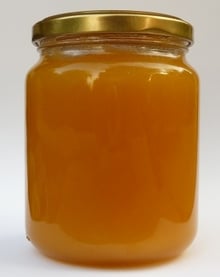
Liquid, the honey is amber with yellow highlights; set, it is cream to yellow, and set with very small crystals a faint yellow that two registers compare to egg custard. Four official texts in four countries give the same colour. The aroma is strong, pungent and animal. In the mouth the fine crystal is refreshing, like fondant, and the persistence runs to the top of the scale.
Glucose leaves solution in honey at about 32 g per 100 g, and measured dandelion honey carries 38.0 to 39.1 g across four European datasets, with water at 16 to 17 g per 100 g, the band of greatest crystallisation tendency. In the German national varietal dataset it has the lowest fructose of any blossom honey charted and the second-highest glucose after rape, so it cannot stay liquid. Left alone the crystal can come too firm and marbled, which is why two European regions have written rules about stirring it, and above about 30 C the fine crystal melts.
Click to Display — The Details: botanical origin, sensory profile, pairings, health and what gives it its character
Botanical Name: Dandelion (Taraxacum officinale agg.)
Botanical Family: Asteraceae
Bee Species:
Western honey bee (Apis mellifera). The European honey directive defines honey as the product of Apis mellifera bees, which is the definition every varietal standard for this honey is written under.
Color:
Bright yellow: amber with yellow highlights while liquid, cream to yellow once set, and duller or pinkish beige where willow, rape or fruit blossom got in
Flavor Profile:
Little to normally sweet, normally acid, barely bitter, astringent and very persistent; refreshing where the crystal is fine
Tasting Notes:
The nose and the mouth do not match, and the mouth is the finer. Four registers in three countries record it independently. The nose is pungent, acetic and animal: the Italian characterisation of 1995 gave it four words, intense, pungent, ammoniacal and persistent, and the national observatory’s sheet prints the word qualified, almost ammoniacal. The mouth is chamomile infusion, fresh spices, marzipan and a boiled sweet flavoured with essential oils; the 2026 Italian competition register names the animal note as valerian.
In the European register’s scored table dandelion takes the maximum for odour intensity, aroma intensity, persistence and rate of crystallisation, and it is the only one of the fifteen main European unifloral honeys whose odour carries a single descriptor. That descriptor is “spoiled”, which is a defined family on the harmonised aroma wheel and not a verdict: one of seven families, its reference standards cabbage, damp floorcloth, cheese, perspiration and vinegar, while defects are defined separately as fermentation off-odours and foreign taints such as smoke. Rape and eucalyptus carry the same placement.
Character is proportional to purity, and that is what the registers disagree about. The Italian, Swiss, German and Belgian panels describe the honey at its purest and call it pungent to the point of divisiveness. The Polish beekeepers’ association says its own dandelion honey is rarely pure and describes it as mild. On the claim that the aroma repels people meeting it for the first time, the site’s own editor wrote in 2010: “(not my experience)”.
Aroma:
Strong and very characteristic: pungent, sharp, persistent, and animal – the byre, cheese rind, vinegar, wet wool
Defining Compounds:
The compound that stands out in this honey is myricetin. In a comparison of 460 samples across eleven Italian honey types, fifteen dandelion honeys carried 100.1 mg of it per kg, three times the next highest figure, which was chestnut at 33.6, while five of the seven compounds the study measured were not detected in dandelion at all, which is why the authors name myricetin for Taraxacum honey. They set their own limit in the same paper: a metabolic profile cannot represent, alone, the distinctive element for a honey’s botanical origin.
The laboratory marker for a jar of this honey comes from a different plant. The authors who first reported them found nitriles in relatively high amounts in Taraxacum-labelled honey, and propose the co-flowering Brassicaceae as their origin rather than the dandelion. The same thing happens in an Italian study of apple-dandelion honeys, whose most intense compound is benzaldehyde, which the study’s own later analysis correlates with the rose family, that is with the apple beside the dandelion.
The honey’s enzyme readings sit close to a legal limit. The European register notes that in some Italian samples the diastase value fell under the honey directive’s limit of 8; the Italian characterisation of 1995 measured diastase at 9.5 and the 2000 national sheet 13.7, and the 1995 authors asked for the regulation to take account of the honeys that are naturally low in enzymes, naming acacia, dandelion, strawberry tree and heather.
Forage Origin: 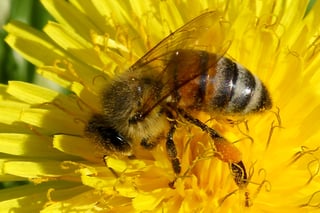
The bees take nectar. The International Honey Commission’s sheet calls the dandelion one of the earliest nectar sources of the year, and the European bee-forage survey gives it both nectar and pollen with a melliferous value of 200 kg a hectare, against 840 for goldenrod. The nectar is about half sugar, mainly glucose and fructose with less sucrose, which is the front end of the fast set. Dandelion is one of only two Asteraceae among the fifteen main European unifloral honeys; the other is the sunflower. Bees cannot live on dandelion alone: caged bees fed nothing but its pollen could not rear brood.
The flower is a single head on a hollow stem 15 to 35 cm tall, carrying one to two hundred ligulate florets whose corollas unite at the base into a short tube that holds the nectar. A head opens on two or three successive days, and closes or stays closed when the weather is cold or wet, which is the mechanism under every producer’s “it depends on the weather”.
The plant is not a species but an aggregate: about 2,800 species in some 60 sections worldwide and 1,900 in 35 for Europe, of which the honey plant is Taraxacum sect. Taraxacum, generally known as the Taraxacum officinale group. Most of the genus is apomictic, and both standards that define this honey say in their own words that the name covers a group. Producers label the flower rather than the species.
This is a plant of managed grassland rather than wild country – manured meadow, grassed orchard and vineyard, disturbed ground, and clearings in deciduous woodland, from sea level to 1,700 m. It is native to Eurasia and naturalised through the temperate and boreal world, and in North America it counts as both native and introduced, having spread there before agriculture did. A national standards body states where the honey is made most often and at the highest purity: in the areas of most pronounced central European character, Switzerland, Germany, France and Austria. Most of it is sold where it is made.
The meadow is going out of use and the plant with it. Italy’s Piedmont producers’ association describes the dandelion as a species of old permanent meadow with a soured turf, and as one retreating because permanent and grazed meadow is disappearing.
Neither Codex nor the European honey directive sets a pollen percentage for dandelion honey; both require only that the honey come wholly or mainly from the named source and that its taste, chemistry and pollen all agree. Where a number exists a different body set it each time: Croatian regulation at 20 per cent; the German beekeepers’ federation at 10 per cent, in the same cell as its own note that the pollen is strongly under-represented; and 5 per cent inside two EU geographical indications and the Slovenian beekeepers’ scheme, each for its own dandelion type. Italy’s national sheet sets none and says outright that melissopalynological analysis is of little diagnostic value here, identity resting on the sensory and physico-chemical readings instead. The reason is in the pollen: measured across 114 authenticated samples the dandelion share averaged 17.2 per cent, and the 5 per cent that circulates as a threshold is the bottom of that distribution’s confidence range rather than a minimum. An analyst cannot name the species from the pollen either, because Taraxacum type is a pollen type with at least the sow-thistles inside it.
Four yellow composites of the same meadows could be taken for a dandelion, and the season separates them: hawkbit is a summer and autumn plant, coltsfoot flowers from February, and hawksbeard overlaps the dandelion in season and in orange pollen colour. Cat’s-ear, the fourth, matters most, because in Chile the name covers it: the one house that identifies a plant on its own miel de diente de león names Hypochaeris radicata, while a Chilean pollen study of Patagonian pasture honeys finds Taraxacum officinale among the dominant introduced pollens.
The plant’s other uses put it on the table without the bees: young leaves eaten raw or cooked, the root dried, roasted and ground as the coffee substitute of the second world war, the buds pickled as a caper substitute, and wine, jam and tea from the leaves and flowers.
Pairings:
It is a table honey, eaten as it is, and both Italian registers attach the same condition to saying so: for those who like the taste. The 2026 competition guide adds that it can be eaten just as it comes, and Slow Food’s Ark of Taste entry calls it an excellent table honey. A honey that is astringent and very persistent does not disappear into a dish, which is what the registers mean by a table honey.
Cheese is the pairing the Italian bodies document, and they give reasons. The national beekeepers’ union puts dandelion on aged cow, sheep and goat cheeses that carry animal notes of their own, naming medium-aged goat, and observes that crystallisation helps rather than hinders: the crystals bring freshness to the combination and lighten its aromatic intensity. The Grana Padano consortium pairs miele di tarassaco with Grana Padano Riserva and says why, which is that the honey’s animal component harmonises with the cheese’s vegetal and dried-fruit notes. The sources disagree about how aged the cheese should be; they agree that it needs enough character to stand up to the honey, and none of them sends it to fresh mild cheese. One technique goes with all of them: honey goes onto cheese at the table and not before, since its osmotic pressure draws the cheese’s salty liquid out within minutes.
The register’s own pairing line goes further than cheese: the honey can accompany bitter vegetables, or be the base of a sweet and hot sauce for boiled meat.
Everything else follows from the texture: bread and butter at breakfast, tea and infusions, and yoghurt, because a honey that sets creamy spreads and dissolves. The 1923 cyclopaedia had reached the same place: although it does not possess a fine flavour, it is used as a breakfast honey. The site’s own editor, in 2010: “A creamy, buttery texture suits an application on toast and this combination makes a fine morning treat. I preferred it slightly liquefied with gentle heating and ended up eating it straight out of the jar.”
Health Uses:
Where this honey has been measured in the laboratory it sits in the middle of the range for its own country’s honeys. A Polish set gave total phenolics of 45.4 and 63.0 mg gallic acid equivalent per 100 g, against 87 to 180 for buckwheat and 110 to 190 for heather. An Italian comparison of eleven types put dandelion sixth of eleven on simple phenols and fifth on flavonoids, inside the paper’s intermediate group. Both measurements were made on extracts in the laboratory, not in animals or people.
The traditional reputation attached to this plant belongs to its leaves. Dandelion leaf and root have long been used as a depurative, a remedy taken to clear the system, and for complaints of the liver and gall bladder, and the 1923 cyclopaedia records the roots as reputed of medicinal value in cases of disordered liver. Italy’s national beekeepers’ union states the correction plainly: those are properties wrongly attributed to the honey as well. The bee does not make an extract of the root.
Origin Story
The honey arrives late in the beekeeping manuals, and the plant arrives before it. In 1827 Edward Bevan quotes a Mr Isaac, whose bees rejoice at sunflowers, hollyhocks, Spanish broom “and even the dandelion, which embellishes the garden of the sluggard”. In 1899 Frank Benton, writing for the United States Department of Agriculture, graded the plants in his regional honey calendars by typeface – “An effort has been made to indicate by the type the relative importance of the plants” – and set the dandelion in the middle rank, above the red maple, alder, elm and willow of the same weeks and below white clover, linden, buckwheat and alfalfa.
Frank Pellett, in the standard American honey-plant reference of 1920, gave the honey a judgement and the reason it is rarely a crop: dark and strong, mostly consumed for brood rearing, and blooming so early that surplus is unusual. The Root cyclopaedia had meanwhile printed the other side of the argument inside its own pages: in the 1891 edition, alongside the publisher’s hostile verdict, G. M. Doolittle of Borodino, New York rated the flow low where he kept bees and then wrote that dandelion honey, after it is a year or two old, “is just splendid”. The 1920s article supplies the mechanism that reconciles them: newly gathered, the honey carries the strong odour and flavour of the flower, and when fully ripened it has an agreeable taste, though people used to a mild honey might think it too strong.
That article reverses the verdict by reporting crops rather than opinions: about ten pounds a colony in the supers one season in central Illinois, hive after hive filled in Vermont, thirty to forty pounds in the super on many Ontario and Quebec farms, and, from a colony on scales at the Experiment Farm in Ottawa, a gain of nine pounds twelve ounces in the twenty-four hours of 29 May 1916, mainly from dandelion. Lovell judged the plant to be spreading rapidly and expected it to matter more to bee culture every year.
There is no datable first record of the honey; there is a sequence. The plant is a concession in the manuals of the 1820s and ranked by a federal calendar in 1899; the honey is described as a honey between 1920 and 1923; in at least one European producing region it has been sold under its own name for as long as that trade remembers, on a Piedmontese firm’s account to the regional producers’ association; it takes a full sheet in the Italian national register of unifloral honeys in 2000 and a sheet of its own in the European register in 2004. Bodies now judge it as a class. Italy’s national honey competition has a standing tarassaco category, which took the competition’s top award in 2026 – an award its own rules grant only where eight different beekeepers entered the class. Valle d’Aosta lists dandelion among six categories. France’s Concours Général Agricole carries a pissenlit section inside Miels de cru, its class for single-flower honeys.
In Poland the identification problem is stated by a named authority. Dariusz Teper, who has analysed honey pollen in Poland for twenty years, says that varietal dandelion honeys do not exist in Poland, and that in many years of testing honeys the dandelion pollen content passed 10 per cent in only a few cases. His mechanism is general where his verdict is Polish: the plant’s theoretical honey yield does not exceed 20 kg a hectare while its pollen yield reaches more than 200, so dandelion pollen in a May honey proves the bees visited the plant rather than that they filled the super from it. That is why the thresholds for this honey are low or absent everywhere.
The sugar figures older references give for this honey are averages from Browne’s 1908 study for the United States Department of Agriculture: 35.64 per cent dextrose and 41.50 per cent levulose, printed again in the 1923 cyclopaedia. Dextrose is glucose and levulose fructose, so those averages put fructose above glucose, the reverse of the German state laboratory’s current reference values for the honey.
Cultural Context
In most of the languages this honey is sold in, the same words name something else: a syrup boiled from the flowers with sugar, which contains no honey at all. The name is shared with dandelion syrup across the European languages and in Chinese, and several trades have had to invent a marker to say which they mean. The Tyrolean Chamber of Agriculture’s labelling sheet instructs producers to write Löwenzahnsirup, dandelion syrup, rather than Löwenzahnhonig, dandelion honey, because honey is always a product of bees. Macedonian, Albanian and Romanian separate the two by preposition alone, and in Polish the syrup has a name of its own, so the honey’s name is unambiguous there.
Where the honey is not named for the flower it is named for the season: May honey in the Russian-language trade, miel de printemps in Quebec, spring honey in Denmark. Each is a lawful seasonal name for a mixed spring crop.
The plant itself is old enough in English to have collected names. The 1923 cyclopaedia lists lion’s tooth, blowball, yellow gowan and priest’s crown beside the one that stuck.
Harvest & Forage
This is the first flow of the year wherever it is worked, and it is short: one to two weeks, so a single fortnight’s weather decides the crop. Flowering runs mainly February to May in Italy, and in Switzerland from April to May in the lowlands and into June higher up.
Three things limit the crop, and they limit different things. The colony’s own consumption limits how much is taken. The co-flow limits how pure it is. Ripening time limits whether it can be separated at all.
The colony first. The European sheet states it plainly: this is one of the earlier nectar sources, not always exploited by colonies, which are frequently not developed enough to gather it for honey production. The Italian national sheet adds what then happens, which is that a colony too weak to work the flow leaves the nectar to mix into the crops that follow.
The co-flow next. Dandelion pollen in the jar is often lower than that of the species flowering with it – the willows, the plums and pears, and above all the crucifers, which a pollen atlas for this honey records as often present in dominant percentages. Producers name oilseed rape as the single thing that decides whether a monofloral crop is possible at all: a Lithuanian beekeeper says what turns yellow in his district every spring is dandelions and not rape.
The aroma is strong enough to work in the other direction. A German state food-control laboratory records that a rape honey carrying dandelion loses its varietal name, because the lesser flow’s intense aroma covers the main flow’s delicate one very quickly.
Ripening is the third limit, and it is one authority’s finding. Dariusz Teper told a 2021 conference that even once bees begin bringing dandelion nectar in, before it ripens in the hive they add nectar from the other plants flowering at the same time; that a migratory apiary has a chance of a pure crop and a stationary one almost none; and that to take it pure a beekeeper would have to pull the combs with the honey still unripe and then drive off the excess water.
Taken that early, the honey often carries a high water content, which the Italian sheet says is not compatible with long keeping and the Italian producers’ union says the beekeeper corrects. The measured figure is 16 to 17 g per 100 g, high for a honey rather than high absolutely.
How often the crop comes at all is measured in one country. Italy’s Osservatorio Nazionale Miele separates tarassaco in its crop reports, and the run of years it has published is mostly failure: zeroed by bad weather in 2019, zero in the Valle d’Aosta, Piedmont, Lombardy and Friuli tables in 2023, and in 2024 the little that was taken left with the bees as stores. The same body puts tarassaco in the band of Italian unifloral honeys actually observed in 0.1 to 0.5 per cent of samples analysed. A full bloom and no honey are entirely compatible: cold blocks flight and nectar flow rather than flowering.
The ceiling, when it is reached, is about one super: a Russian beekeeping journal’s 2006 figures give 12 kg to a strong colony, with scale gains of up to 1.5 kg a day. What produces a good year is a cold spring that draws the flowering out, which is the reason one Quebec operator gave for a 2019 average of 55 lb a hive against a normal of about 40.
Where the crop cannot be taken pure there are two lawful answers. The European Commission’s own note on the honey directive allows a name carrying two flowers where both are significant, and the example it prints is fruit and dandelion honeys. In Germany the beekeepers’ federation provides a double name for honeys of particularly strong aroma, naming lime, heather and dandelion in its December 2021 edition and requiring a forage share of at least 30 per cent, so a German jar may lawfully read “Frühjahrsblüte mit Löwenzahnhonig”, spring blossom with dandelion honey.
Beekeeping Context
The flow’s value to a beekeeper is often the colony rather than the crop. Italy’s national honey observatory, summing up the 2025 season, recorded that the beekeepers who had set hives aside for dandelion took no crop at all and only built their colonies up for the acacia flow that follows.
Where a crop is taken, it is usually taken by moving: the observatory’s reports return again and again to repeated moves. The decision runs the other way too, and it is a management decision rather than a crop failure – professionals abandon the flow and migrate out of the region when it looks poor, and where a thin flow is worked the honey is sold as spring multifloral or left to the bees. Most of the crop therefore reaches a buyer inside a spring honey rather than under its own name. Denmark is the clearest case: the crop exists and is understood there, and four separate producers name the dandelion as a source of their spring honey rather than as a honey of its own.
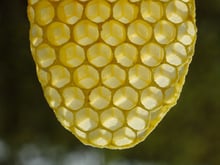
The flow has one use that has nothing to do with eating the honey. Comb built while bees are working dandelion comes out a light yellow, with even older comb turning yellowish. The 1923 cyclopaedia records the colour, and a Russian beekeeping journal in 2006 records beekeepers acting on it, always trying to get several combs drawn inside the one or two weeks of the flow for the sake of the colour.
Because the honey sets fast and can set too firm, the standard answer is to stir it. The German beekeepers’ federation describes the practice: a honey is stirred regularly for days or weeks, some kinds several times a day, which makes it fine and creamy. The Walloon protected indication calls it cristallisation dirigée, directed crystallisation, and presents it as a regional skill developed because buyers were not satisfied with honey left to crystallise on its own.
Source Regions
See all 24 countries
- Italy, Piedmont to Friuli – Taraxacum officinale: dandelion honey (Miele di tarassaco), a northern mountain-meadow spring crop and a named type in the Belluno designation.
- France, Jura to Limousin – Taraxacum officinale: dandelion honey (miel de pissenlit), a May honey off grassland plateaux, sold by the beekeeper who harvested it.
- Germany, Allgäu and the Black Forest – Taraxacum officinale: dandelion honey (Löwenzahnhonig), taken where permanent grassland replaces arable, with its own national varietal label.
- Austria, Styria and Vorarlberg – Taraxacum officinale: dandelion honey (Löwenzahnhonig), which one Alpine apiary calls its only pure spring varietal, taken every few years.
- Sweden, Småland and the west coast – Taraxacum officinale: dandelion honey (maskroshonung), a recognised national varietal and often the first surplus of the year.
- Norway, Trøndelag and Rogaland – Taraxacum officinale: dandelion honey (løvetannhonning), a May honey the bees take almost exclusively, sold unheated by the farm.
- Finland, Lapland and Ostrobothnia – Taraxacum officinale: dandelion honey (voikukkahunaja), one of the national association’s named varietals and often nearly pure in early summer.
- Poland, Podlasie and Roztocze – Taraxacum officinale: dandelion honey (miód mniszkowy), a May crop released as its own line by beekeeping holdings.
- Czechia, Český les – Taraxacum officinale: dandelion honey (pampeliškový med), a meadow honey off the border uplands and one of the country’s domestic varietals.
- Slovakia – Taraxacum officinale: dandelion honey (púpavový med), which one beekeeper makes where set-aside left fields uncultivated and dandelion came up thick.
- Hungary – Taraxacum officinale: dandelion honey (pitypang méz), sold by the producer with the country of origin printed on the label.
- Romania, eastern Carpathians – Taraxacum officinale: dandelion honey (miere de păpădie), a submontane Harghita crop that does not come every year.
- Lithuania, Zarasai – Taraxacum officinale: dandelion honey (kiaulpienių medus), the first honey of spring from a district that yellows with dandelions rather than rape.
- Latvia – Taraxacum officinale: dandelion honey (pieneņu medus), harvested in April and May under the beekeepers’ association’s harvested-in-Latvia mark.
- Russia, Altai Krai and Pskov – Taraxacum officinale: dandelion honey (одуванчиковый мёд, oduvanchikovyy myod), extracted with willow and caragana and usually sold as May honey.
- Belarus – Taraxacum officinale: dandelion honey (одуванчиковый мёд, oduvanchikovyy myod), a May line in the national honey shops, extracted as the frames ripen.
- Turkey – Taraxacum officinale: dandelion honey (karahindiba balı), named by Turkish palynologists among the unifloral honeys produced and sold there.
- China, Xinjiang and Hubei – Taraxacum species: dandelion honey (蒲公英蜜, pugongying mi), sold as medicinal-herb honey where Chinese practice counts dandelion an auxiliary nectar plant.
- Japan, Hokkaido – several Taraxacum species worked together: dandelion honey (たんぽぽ蜜, tanpopo mitsu), taken by a handful of migratory houses on northern pasture.
- United Kingdom, Devon and Somerset – Taraxacum officinale: dandelion honey, an early-spring crop off old-fashioned farmland, named on the bee farm’s own jars.
- United States, Minnesota – Taraxacum officinale: dandelion honey, the first single-source harvest of the year, made in small quantities depending on the spring.
- Canada, Manitoba to British Columbia – Taraxacum officinale: dandelion honey (miel de pissenlit), a spring surplus one shop calls a strong-hive crop, certified in Quebec.
- New Zealand, Central Otago – Taraxacum officinale: dandelion honey, from the hills and valleys around Ettrick, with the district printed on the jar.
- Spain, Aragon and the Iberian interior – Taraxacum officinale: dandelion honey (miel de diente de león), one house’s limited edition under a Spanish origin band.
Translations
- Miele di tarassaco – Italian
- Miel de pissenlit – French; miel de dent-de-lion in French-speaking Switzerland
- Löwenzahnhonig – German
- Paardenbloemhoning – Dutch
- Mælkebøttehonning – Danish
- Maskroshonung – Swedish
- Løvetannhonning – Norwegian
- Voikukkahunaja – Finnish
- Võilillemesi – Estonian
- Miód mniszkowy – Polish; the jar form is MIÓD MNISZEK LEKARSKI
- Pampeliškový med – Czech; also pravý pampeliškový med (true dandelion honey)
- Púpavový med – Slovak
- Pitypang méz – Hungarian
- Regratov med – Slovenian
- Med od maslačka – Croatian, Bosnian and Serbian
- Miere de păpădie – Romanian
- мед од глуварче (med od gluvarche) – Macedonian
- Mjaltë nga luleradhiqe – Albanian
- Пчелен мед от глухарче (pchelen med ot gluharche) – Bulgarian
- Kiaulpienių medus – Lithuanian
- Pieneņu medus – Latvian
- Одуванчиковый мёд (oduvanchikovyy myod) – Russian
- Karahindiba balı – Turkish
- 蒲公英蜜 (pugongying mi) – Chinese in the trade and the literature; 蒲公英蜂蜜 (pugongying fengmi) on retail packaging
- たんぽぽ蜜 (tanpopo mitsu) – Japanese, written in hiragana or katakana and never in Chinese characters
- 민들레꿀 (mindeulle-kkul) – Korean, on import listings
- Miel de diente de león – Spanish
Festivals and Fairs
Concorso mieli della Valle d’Aosta – Châtillon, Valle d’Aosta, Italy (Sunday 25 October 2026): the region’s official honey competition, judged in six categories with dandelion among them, whose prizes are handed out at the Sagra del miele e dei suoi derivati on the same day. (Italian translated to English
)
Concorso Tre Gocce d’Oro - Grandi Mieli d’Italia – Castel San Pietro Terme, Bologna, Italy (the third weekend of September): the national honey competition, whose prizes are handed out at the beekeeping events held in the town, with a tarassaco class among them. A Tre Gocce d’Oro is awarded in a class only where eight different beekeepers entered it. (Italian translated to English
Certifications
 Miele delle Dolomiti Bellunesi DOP, tarassaco typology – Dandelion is one of the types named in this Italian protected designation, registered in 2011 and now running to eight, whose specification requires more than 5 per cent Taraxacum pollen for the type and, for every type, water no higher than 18 per cent and HMF, the marker of heating and age, no higher than 10 mg/kg at bottling. It also mandates a queen excluder between brood nest and first super, harvest in successive phases in step with the successive flowerings so that the types stay apart, filtration that lets every pollen grain through so the botanical origin can be verified, and heating never above 40 C. Hives stay inside the province of Belluno. (Italian translated to English
  Slow Food Ark of Taste: Dandelion honey – Lists a Piedmontese dandelion honey from the Saluzzo area and the upper Cuneo country among products at risk, and calls it an excellent table honey. The Ark is a catalogue rather than a designation: it carries no specification, no register, no controls and no label, and this entry is not a Slow Food Presidium.
 Miel wallon PGI – Registered on 12 February 2025, this Belgian protected geographical indication names miel de pissenlit as one of nine monofloral types and writes it a full annex: more than 5 per cent dandelion pollen, colour yellow, odours woody and animal, astringency in the mouth, electrical conductivity 0.35 to 0.70 mS/cm and a fructose-to-glucose ratio between 0.80 and 1.20. Binding on the whole denomination: at least 95 per cent of crystals no larger than 0.20 mm, a honey spreadable with no fluidity at all, and a label reading exactly “miel de pissenlit” or “pissenlit”. (French translated to English
 Marque Nationale Lëtzebuerger Hunneg (AOP), Luxembourg – The national mark defines Luxembourg honey as a multifloral honey reflecting the wild and agricultural flora of the Grand Duchy. Its specification mentions the dandelion once, in the list of pollens and aromas that make up that multifloral character, and gives it no variety of its own.
Deutscher Imkerbund Sortenhonige, Germany – The German beekeepers’ federation lists Löwenzahn among the varietal honeys made from the nectar of one forage plant. Its Merkblatt 3.4, in the December 2021 edition, asks for at least 10 per cent dandelion pollen, with the federation’s own note that the pollen is strongly under-represented, electrical conductivity between 0.30 and 0.65 mS/cm and a fructose-to-glucose ratio no higher than 1.00. This is a trade body’s specification governing its own trademark jar rather than a food code: the German food code does not name this honey at all. (German translated to English
 Esprit parc national, France – The French national parks’ own brand is carried by a miel de pissenlit made in the Écrins, one of the honeys the park marks; its rules require the hives to stand inside the park during the flow, wild or heritage flora, low-temperature extraction and no added sugar.
- Aliments du Québec – The Quebec origin programme certifies a miel de pissenlits, and it is the clearest case of what a dandelion honey’s marks usually are: no designation of dandelion honey exists anywhere, so the marks these honeys carry are general origin and quality marks that any honey of the place may carry.