The Chestnut Festival and a Bottle of Honey at Curral das Freiras, Madeira
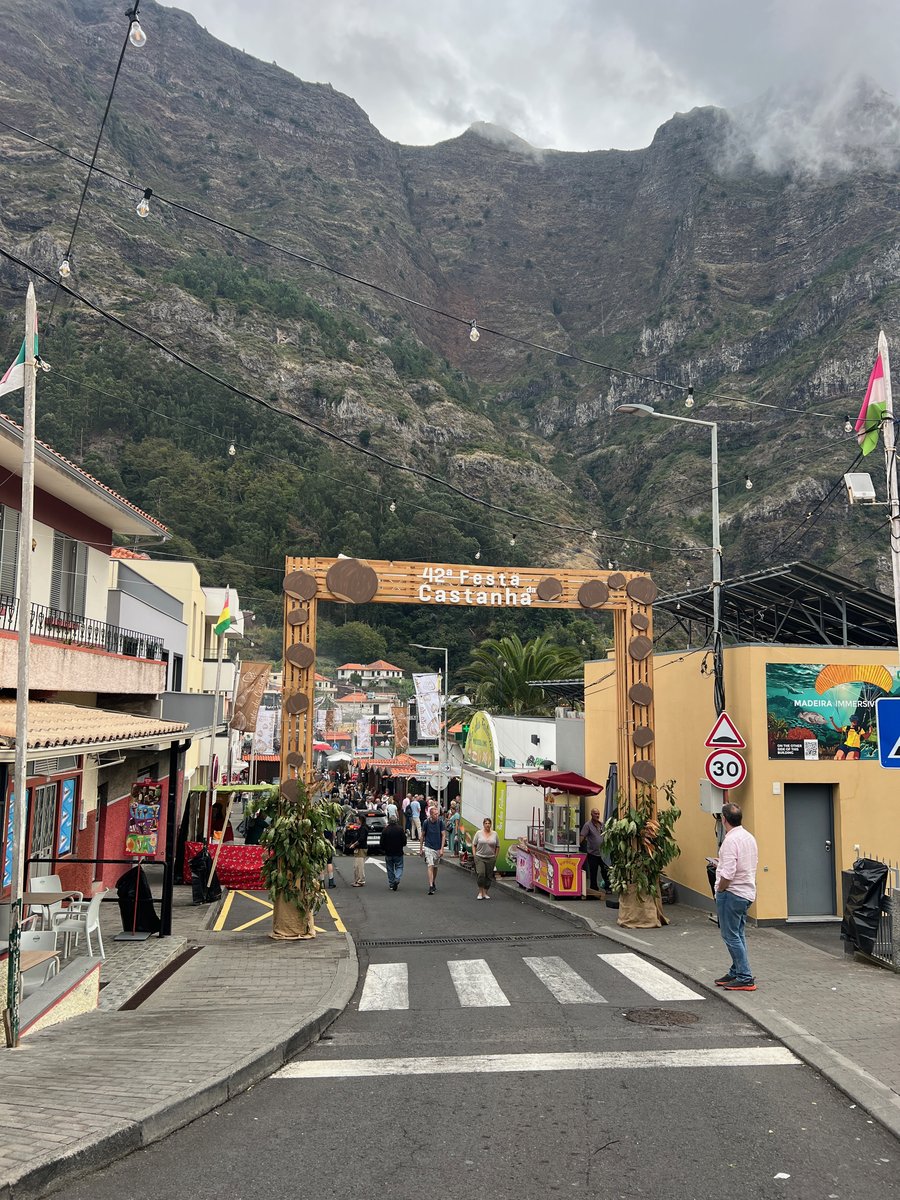
Curral das Freiras is a village at the bottom of a deep valley in the middle of Madeira. On the last day of October 2026 we took the bus there from Funchal, the island’s capital, for the Festa da Castanha (chestnut festival).
It was a Saturday, the first of the festival’s two days, in the forty-second year it has been held.
Rock walls stand on every side of the village, and that day cloud covered their tops.
I had come for the festival, and I hoped to find chestnut honey there as well.
We reached the village at half past twelve, and people were already cooking and selling at the stalls. A regional daily had given the opening as two in the afternoon.
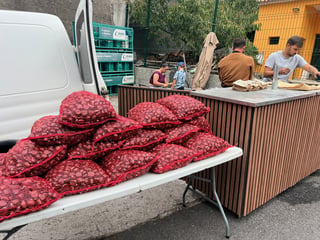
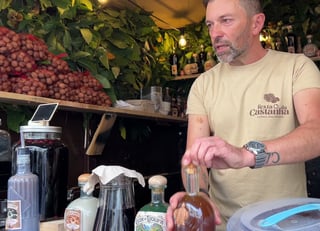
Chestnuts in red net sacks were stacked on a table by the road. At a wooden stall that carried the festival’s own name, net sacks of walnuts lay along a shelf at the back, and at the counter a man in a Festa da Castanha shirt stood behind a row of liqueur bottles and a chestnut cake under a plastic cover. “All our products are homemade,” he said.
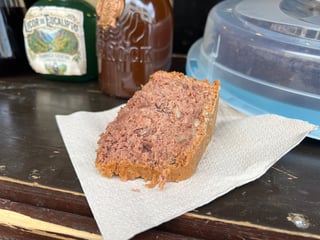
The cake has no wheat flour in it. “We get the chestnuts, we boil them, we peel them, we boil them, we peel them again, we grind them into flour and then we make the cake,” he said. They had baked it the day before. I cannot eat gluten, so this was a cake I could eat, and I had a slice. It was pinkish brown inside.
He uncorked a bottle of a brown rum he makes with the fruit of the bay tree, “a little seed” that “looks like an olive”. “This is just as a digestive,” he said. “You cannot have a full glass of this.”
I asked if he had any honey. “I haven’t got any honey,” he said.
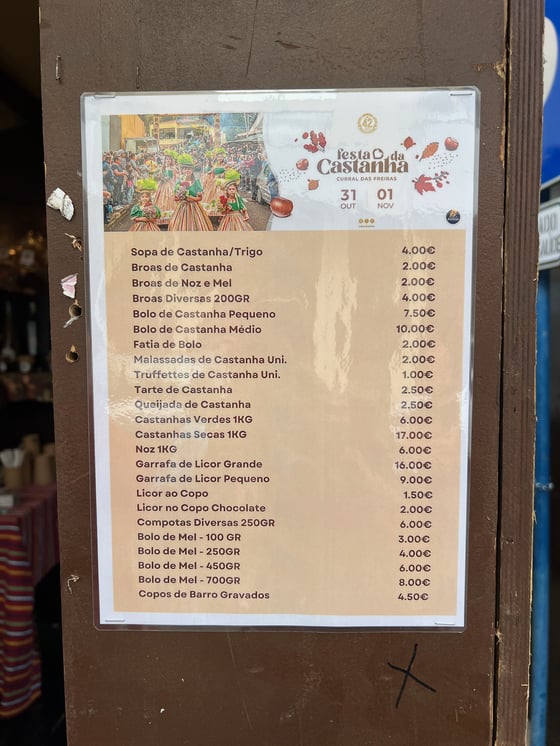
The Casa do Povo, the parish community house that runs the festival, posted its prices on a board. That day chestnut soup was 4 euros, a slice of cake 2 euros and fresh chestnuts 6 euros a kilo.
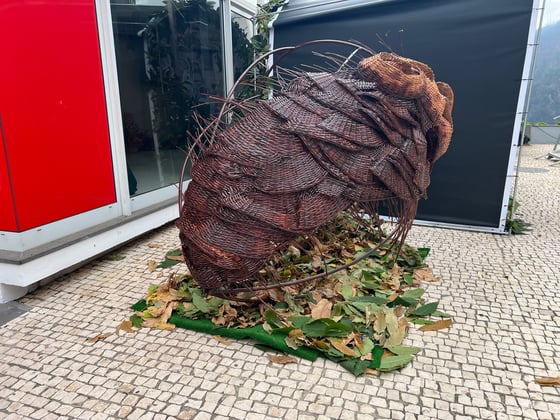
In the square a chestnut woven in wicker, half out of its spiny husk, lay on a bed of leaves.
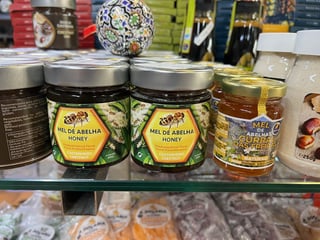
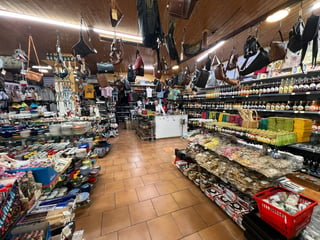
The honey was indoors, in the souvenir shop beside the Vale das Freiras restaurant, across the street from the church, to its north. Its price stickers read Licoraria Vale das Freiras. On a glass shelf there, beside chestnut jam and chestnut flour, stood jars of dark honey with a green label.
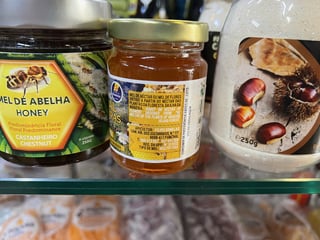
The label reads “Mel de Abelha” (bee honey), and under it “Predominância Floral” and “Castanheiro”, which the label gives in English as “Floral Predominance” and “Chestnut”. The claim is that the bees made the honey mostly from the flowers of the chestnut tree. The 250-gram jar was 8.50 euros.
Next to it stood a smaller jar of light amber honey, Mel de Abelhas Curral das Freiras, the valley’s own label. Its back label says the honey comes from the nectar of the plants of Madeira’s forest, gives the type as multiflora, honey from many kinds of flower, and names the beekeeper, Filipe Ornelas. The jar carries the Produto da Madeira seal, the regional government’s mark for products of Madeira. The 100-millilitre jar was 4.50 euros.
We did not buy the chestnut honey that day.
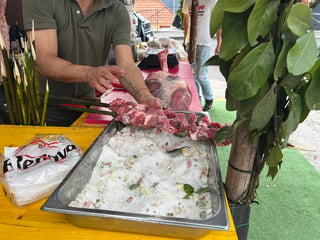
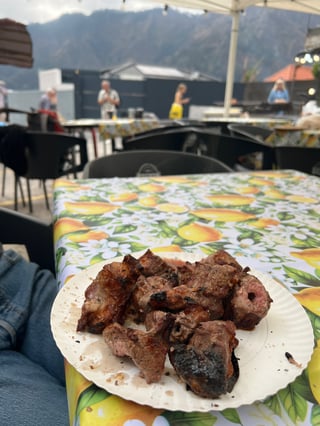
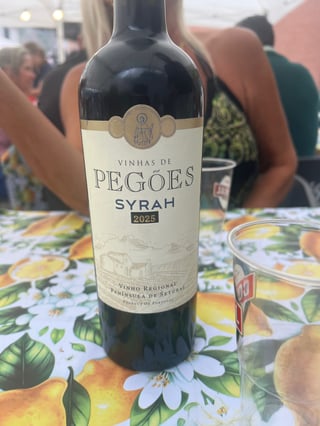
We were sidetracked. We ate with Alex, who lives in Funchal, and his partner. Lunch was espetada, beef on a skewer of bay laurel cooked over an open fire, washed down with a Pegões Syrah, a red wine from the Setúbal peninsula on the Portuguese mainland.
At the stalls that sell espetada, men cut the beef from hanging quarters and thread it on the green sticks, with a tray of coarse salt and bay leaves beside the cutting board.
Alex told us where to buy local honey: from Americo, who owns a bar just north of the village.
In the afternoon a troupe of drummers played along the main street between the stalls, with the crowd behind them.
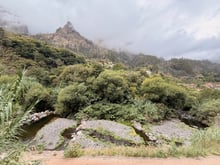
We took the road north from the festival on foot. It crosses the river on a bridge, and the slopes on the far side were steep rock and scrub, with cloud on the ridge above them. Then it rained hard, and we took a bus for the last kilometre.
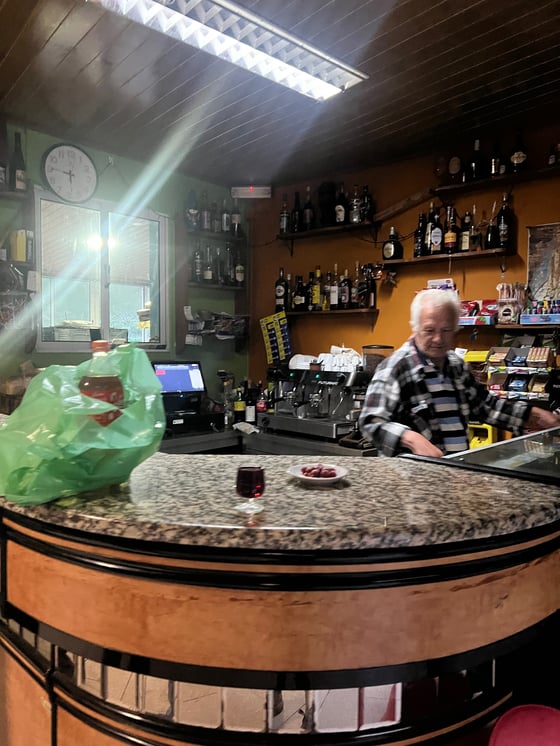
Bar Viera is a very small local bar: one room, a curved granite counter, bottles on shelves against an orange wall and a clock above the window. The man behind the counter was the owner. “My name is Americo,” he said.
He brought us the bottle of honey in a green plastic bag. It was a one-litre soft-drink bottle, reused and filled with honey, with no honey label on it, and it cost 15 euros. “Wow, that’s a lot of honey,” I said.
Americo keeps bees himself, “just a few, not many”, and a friend of his has a hundred hives. The honey in the bottle had been taken from the hives “two months ago”, he said, which puts the harvest at about the end of August. “Summer, mainly summer.”
“You can do it two times a year if you have very warm weather,” he said. In the north of the island the beekeepers usually harvest once a year, he said, and in the south they can harvest twice.
I asked what plants the bees had worked. Trees, he said. I asked if he meant eucalyptus, and he said yes: “all the flowers from the trees, in the summer.” In winter there are few flowers. “We have to feed them with some syrup,” he said.
My friend Isabella gets sick on buses, and she asked him for ginger. Americo set a dish of small dark frozen fruit on the counter. It was ginja, the sour cherry that Americo steeps in alcohol to make the liqueur of the same name. “It’s a kind of berry,” he said. “It’s like a cherry fruit.”
He went to see whether his wife had any ginger root, and he poured me a glass of the liqueur. I asked if he made it, and he does. “We put some alcohol in it,” he said. I ordered one.
I asked where he had learned his English. He farmed in Rhodesia, the country that is now Zimbabwe, from 1973 to 1978, and he learned the language on Jersey, the island between England and France.
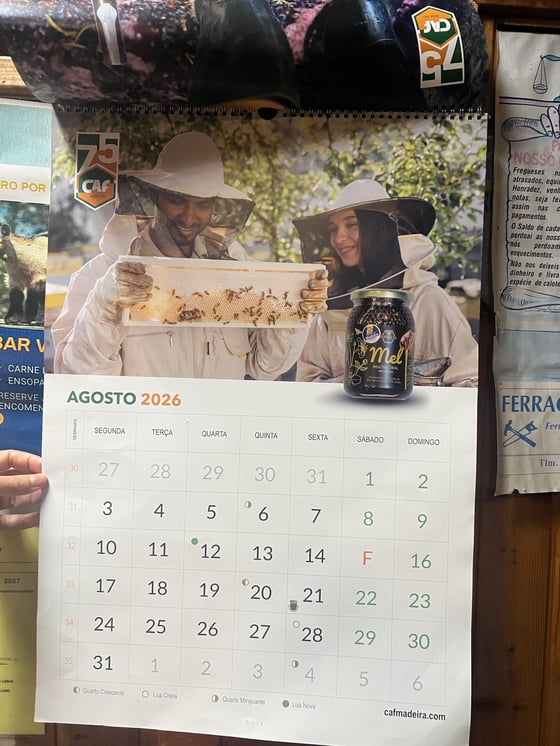
On the wall hung the 2026 calendar of the Cooperativa Agrícola do Funchal, the Funchal farmers’ cooperative. Its August page shows two beekeepers holding a frame of comb, and a jar of honey from São Jorge, on the north coast.
The bus we expected did not arrive at its stop near the bar, and we ordered a taxi for the ride back to Funchal.
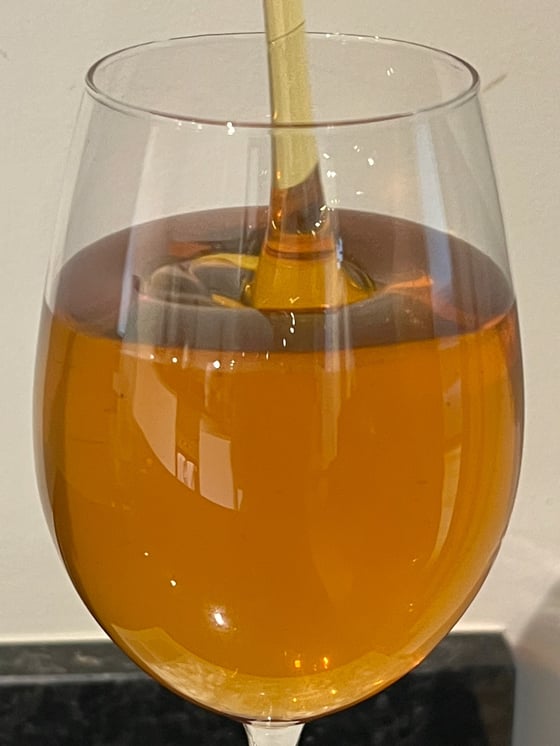
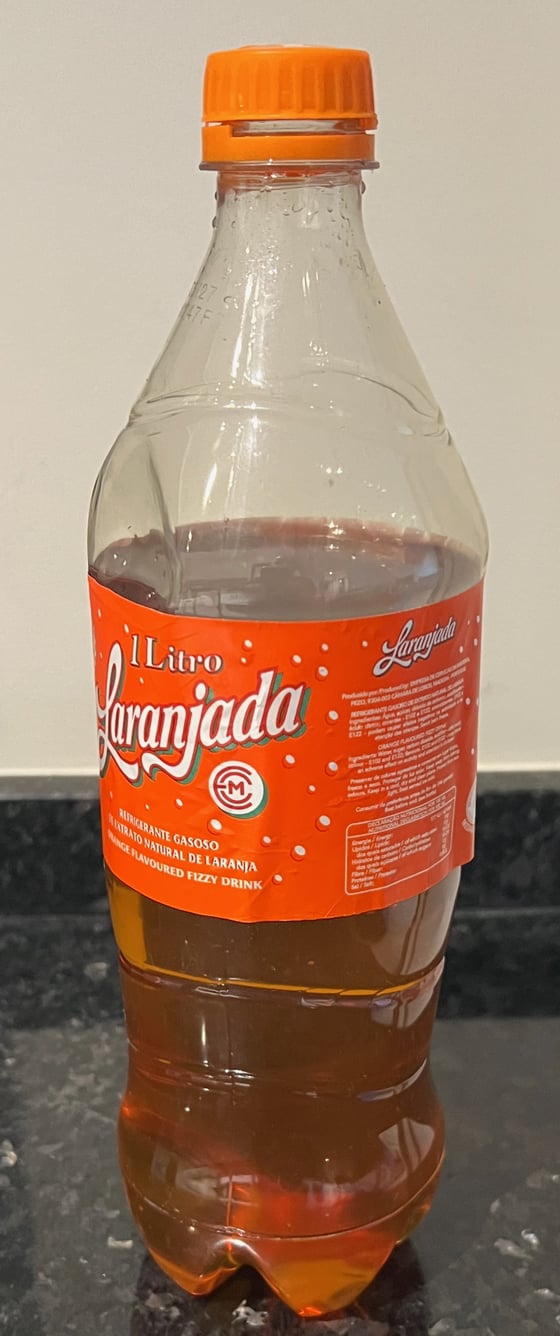
The next day I poured some of the honey from the bottle into a glass. It is clear and light amber. It is immediately sweet on the tongue and settles to a drier, full mouth. It is thick, and the aftertaste is quick and slightly tangy.
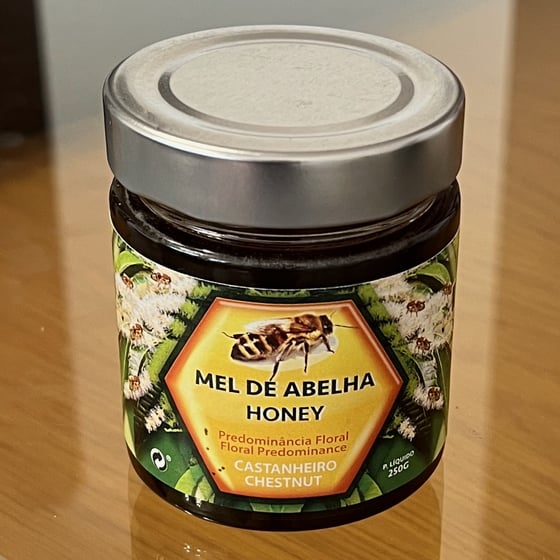
On 23 November we went back to Curral das Freiras and bought a jar of the chestnut honey.
The chestnut honey is supplied by various small local beekeepers when they have it. When we asked the saleswoman where it comes from, she said that the jar and its label are used by a local group of small independent beekeepers, who bottle the honey. The volume is too low, and the trees too widely spread, to support one beekeeping company.
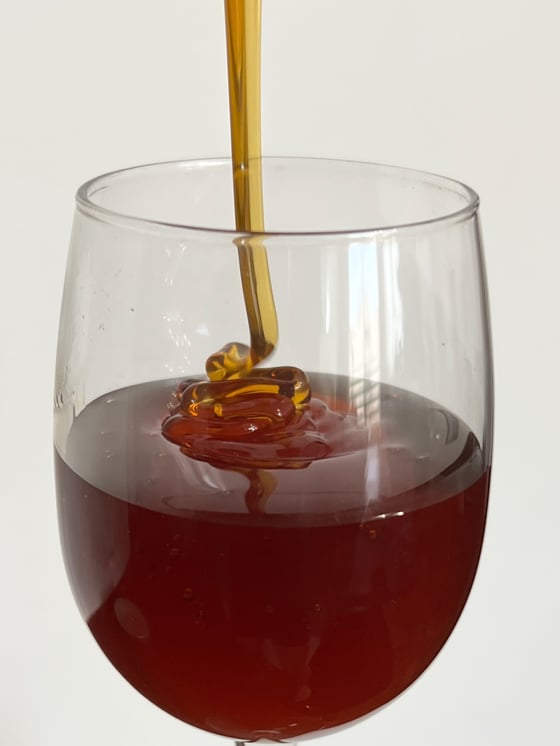
Poured into a glass, the chestnut honey is dark reddish brown, and it folds on itself as it lands. It is thick, sweet and warm, and it tastes of caramel.
We overheard people talking about a walk down to the village from the hotel at Eira do Serrado, a viewpoint high above the valley. They called it a popular walk and a good one, with great views.
The Madeira honey page has the valley’s honey among the island’s others, and the places to buy them.