Top End Bush Honey
The Story
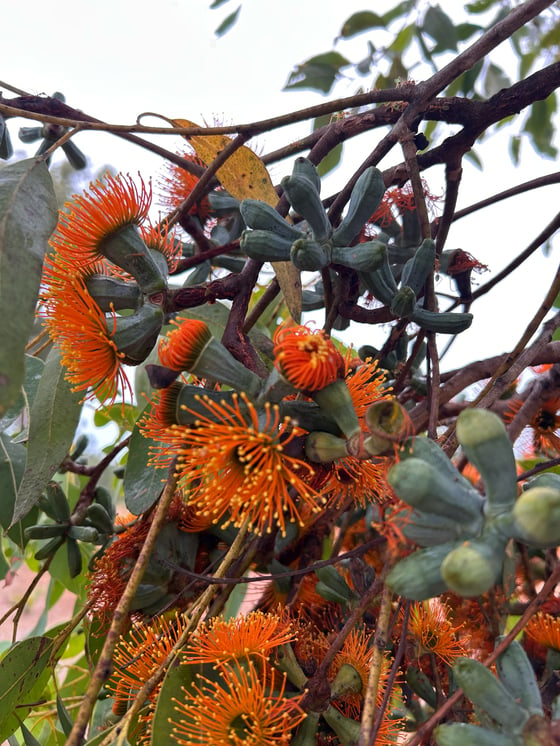
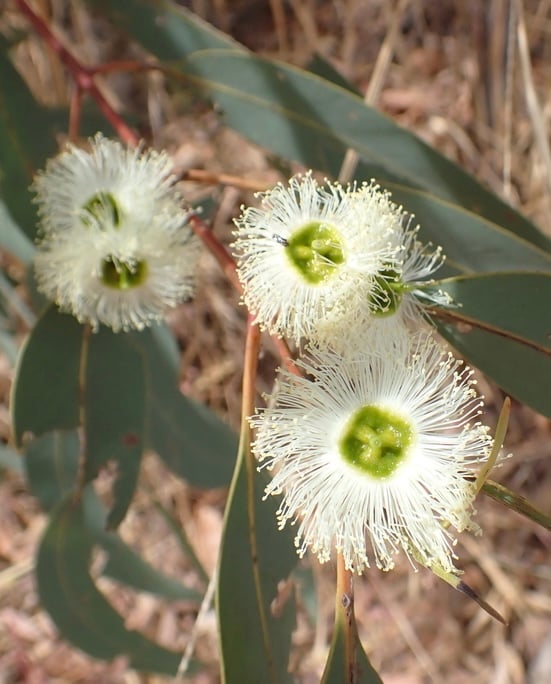
In the seasonal calendar that Kunwinjku Traditional Owners documented with CSIRO at Gunbalanya, the cool-weather time is marked by flowering: when the woollybutt and the stringybark come into flower and the native bees are busy, it is the time to collect Mankung – sugarbag, the honey of the stingless bees. The Yolŋu rangers of the Arafura Swamp, a large inland wetland in central Arnhem Land, state it in their own plan: the flowering of these forests feeds the sugarbag bees, and is celebrated in song and ceremony. When scientists mapped the Northern Territory’s nectar in 2000, the result matched the calendars – nectar availability across the Territory peaks in the dry season, in the same woollybutt and stringybark forests. That dry-season flowering is the honey flow of the Top End, and it was named long before it was mapped. The bees in the box hives around Darwin and Katherine today work the same flow, and what comes out of them is a dark, full honey – almost caramel, its largest producer says – made through seasons unlike anywhere else in Australian beekeeping: a wet season of flooding rain and strong winds, a cool dry season when the forests flower, and the build-up between them. One Katherine apiary bottles each season’s honey separately. The jar is new; the flow is not.
Characteristics
Top End bush honey is a dark, full-flavoured multifloral, sold raw, unfiltered and hand-extracted by its producers. It is a blend by nature rather than by choice: the bees work whatever is in flower through the monsoon year, so the honey’s composition moves through the year – eucalypt-forest nectar in the dry, paperbark country in the wet – and the producers treat that movement as the product, one bottling each season rather than one uniform jar. The character claimed for it across producers is consistent: dark, almost caramel, and stronger than the pale supermarket standard.
Click to Display — The Details: sensory profile, and its regional identity
Bee Species:
The European honey bee (Apis mellifera), in managed hives around Darwin and Katherine. The Northern Territory’s bees are free of the varroa mite, and the whole Territory is a declared protected area for honey bees under its Livestock Act. The older honey of the same forests belongs to the native stingless bees, whose sugarbag the same flowering feeds; their story is told on the Sugarbag Honey page.
Color:
dark amber
Flavor Profile:
full and dark, with a caramel character; the flavour shifts with the season of harvest
Tasting Notes:
The recorded descriptions are the producers’. Beescreek, the largest operation, describes its honey as dark, distinctly full and almost caramel flavoured, and attributes the intensity to hives kept in natural bush rather than on crops. Uniquely Territory states that each of the three Top End seasons produces its own flavour, and bottles them separately – a wet season jar, a dry season jar and a build-up jar. No independent sensory analysis has been published; the seasonal differences are the producers’ account of their own harvests.
Forage Origin:
The forage is the monsoon woodland of the Top End, and it changes with the seasons.
Dry season: the flow’s centre. The savanna forests that cover most of the Top End are co-dominated by two trees, the Darwin woollybutt (Eucalyptus miniata), which opens orange flowers from about May, and the Darwin stringybark (Eucalyptus tetrodonta), which follows it by some weeks with white flowers. The Territory’s nectar mapping found that nectar availability across the whole jurisdiction peaks in the dry season in exactly these forests, and the flowering study behind it records the dry season as the peak reproductive period for most woody species in these savannas.
Wet season: the eucalypt forests carry little nectar, and the rich sources narrow to the paperbark country – the Melaleuca swamp and riverside forests, which the nectar maps describe as rich but spatially restricted. Beescreek names paperbark among its forage alongside the tropical eucalypts and bloodwoods.
Build-up: the transition. A Darwin-region phenology study places the year’s second flowering peak in October and November, between the dry and the wet, and the Katherine producer marks the build-up as the start of its busy season.
Flowering in these forests varies widely from year to year – the phenology record shows large swings in flowering intensity for the woollybutt, the stringybark and the long-fruited bloodwood – which is one reason the honey is a seasonal blend rather than a varietal. A buyer should also know the name: “bush honey” on an Australian label means wild-flora honey generally, and is sold from many regions. What sets this one apart is stated on this page: monsoon flora that no southern bush honey contains, and a flavour the producers track jar by jar through three seasons.
Origin Story
Hive beekeeping is young in the Top End and its documented record is thin and recent. In 2014 the Territory government counted about six professional beekeepers in the Top End, kept sentinel hives at Darwin’s port as early warning for the varroa mite, and saw an export opportunity in what it called the cleanest bee population in the country. The cautionary chapter is documented too: Humpty Doo Apiaries, the rural Darwin operation of Tas Festing, grew from 40 hives to 250 and then closed around 2016 after repeated bushfires destroyed its production – ten years earlier, its owner said, 40 hives had yielded more honey than 250 did at the end. The current producers are newer: Beescreek grew from one backyard hive into Darwin’s main honey and pollination operation; Nambula has worked the Katherine river country since 1989; and Territory Bees, the Indigenous-owned company behind Uniquely Territory Honey, was founded in Katherine in 2024 and built its range directly on the three Top End seasons.
Cultural Context
The trees this honey comes from are deeply documented in the cultures of their country, and the record is published by the communities themselves. In the Kunwinjku seasons calendar documented with CSIRO at Gunbalanya, the cool-time flowering of Mandjalen (the woollybutt) and Manbordokorr (the stringybark) means the native bees are busy and it is a good time to collect Mankung – sugarbag. In Kakadu, Bininj, Kakadu’s Aboriginal people, read flowering woollybutt in Yekke as the signal to start patch burning to clean the Country. The Yolŋu rangers of the Arafura Swamp record that the stringybark, Gardayka, is Dhuwa moiety and the woollybutt, Badarr, is Yirritja; that the flowering of these forests is most important to the sugarbag bees and is celebrated in song and ceremony; and that burning Country the right way – early and cool – protects the flowering the bees depend on. The same two trees are the material of two of Australia’s most recognised art forms: sheets of stringybark, cut after the rains when the sap rises, are the canvas of Arnhem Land bark painting, and yiḏaki – didgeridoos – are cut from woollybutt and stringybark trunks hollowed by termites. The jarred bush honey on this page is a settler-era craft, and no claim on that inheritance is made for it here. The bees behind it work the same flowering the calendars name; that is the whole of the connection, and it is enough.
Harvest & Forage
The producers harvest to the Top End’s own calendar. Uniquely Territory bottles the wet season, the dry season and the build-up as separate honeys and describes the build-up, from October, as the start of the busy season; its dry season work includes pollinating a local watermelon farm. Year-to-year variation is the defining constraint, and it is documented at both ends: in 2020, after two failed wet seasons in a row, one Katherine commercial keeper’s honey production stopped entirely and Beescreek trucked hives 200 kilometres from home to find flowering country; in the 2025-26 wet, Beescreek lost 96 hives to the rains and reported production down by half. Fire is part of the same system – late dry-season fires reduce flowering and seed production in the dominant eucalypts, and repeated bushfires ended the Top End’s largest early apiary. A jar of a given season, from a given year, may simply not exist the next.
Beekeeping Context
Top End beekeepers work to a calendar used nowhere else in Australian beekeeping. Beescreek states the frame plainly: two disparate seasons, dry and cool for one half of the year, extreme heat, humidity and rain for the other, and a beekeeping process widely different from the southern states’. Colony management centres on bringing hives through the wet with enough stores, then working the dry-season flowering and the build-up flow. The industry is small – about ten commercial operators hold two-thirds of the Territory’s roughly 3,000 hives – and it works varroa-free, inside a Territory-wide declared protected area for honey bees, with registrations more than doubled since 2018.
Named Producers
- BEESCREEK HONEY – Darwin rural. The Top End’s main honey and pollination operation; dark raw bush honey, hand-extracted, sold through grocers and delis across Darwin and by refill at its Winnellie shed. beescreekhoney.com.au
- UNIQUELY TERRITORY HONEY (Territory Bees Pty Ltd) – Katherine. 100% Indigenous owned and operated; bottles a separate honey for each Top End season – wet, dry and build-up; stocked across Darwin and Katherine, including Aboriginal Bush Traders and the Nitmiluk Gorge cafe. territoryhoney.com.au
- NAMBULA – Katherine. Aboriginal-owned apiary working the Big Rivers blossom country since 1989; reaches Darwin and Alice Springs through stockists.