
Maritimes Honey
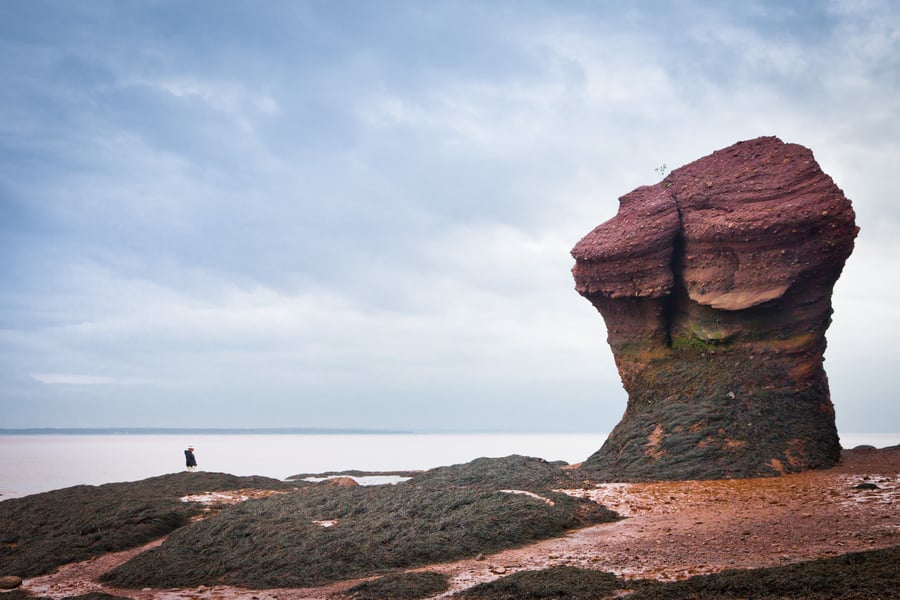
Three provinces make up the Maritimes – Nova Scotia, New Brunswick and Prince Edward Island – on Canada’s Atlantic edge between Quebec and the island of Newfoundland. By Canadian measure they are small. Halifax is the hub, and nothing on this page is more than five hours’ drive from it: Charlottetown is three and a half hours away, Sydney on Cape Breton about five, and Moncton an hour from the bridge to the island. Water separates the provinces. The Bay of Fundy lies between New Brunswick and Nova Scotia and has the highest tides ever recorded, and the whole bay fills and empties twice a day. The Northumberland Strait freezes in winter, and the 12.9-kilometre Confederation Bridge across it is, in the operator’s words, “the longest in the world crossing ice-covered water.”
The trip is built around crossings. You drive onto Prince Edward Island over the bridge and pay nothing; the toll is collected only on the way off, and the same rule holds for the ferry from Wood Islands to Nova Scotia, so a loop that enters by bridge and leaves by boat pays once. The Digby ferry crosses the Bay of Fundy to Saint John in about two and a quarter hours, so you can drive out along one Fundy shore and back along the other. New Brunswick’s river ferries are free, and the underwater cable ferry those boats use was invented on the Kennebecasis in 1903. At St. Andrews you drive to Ministers Island across the sea floor on a gravel bar; reviewers describe a queue of cars waiting for the water to clear and advise allowing three and a half hours to get back before it covers again. At Hopewell Rocks admission is valid for two consecutive days, so you can walk the ocean floor among the sea stacks one afternoon and come back the next morning to see the same shore under water.
Five peoples settled these coasts, and each is still here to be met. The Mi’kmaq, Wolastoqiyik and Peskotomuhkati signed treaties with the Crown between 1725 and 1779 that gave up no land and remain in force. French settlers dyked the Fundy marshes from the 1630s, were deported in 1755 and came back to the poorer coastal land; New Brunswick is now Canada’s only officially bilingual province. Loyalists, Black and white, landed by the tens of thousands in 1783, and Highland Scots came from 1773. On a given day this is what you meet: at Caraquet on 15 August the Acadie Nouvelle reported “an hour of crowd, din, costumes and bright colours” in the street; Tourism Nova Scotia calls the West Mabou Saturday square dance “the biggest (and some say best) dance on the island” and notes that it “runs all year long”; at the Black Loyalist Heritage Centre in Birchtown, reviewers describe being handed a card with the name of a real 1783 arrival to follow through the exhibits, with a guide who is himself a descendant of the settlement.
Most of what is open here is open from June to September, with two fixed dates to plan around: 15 August for the Acadian national day, and the second week of October, when Celtic Colours holds concerts in thirty-six Cape Breton communities. Winter has its own calendar: the South Shore lobster season peaks in February, smelt shacks stand on the frozen rivers of New Brunswick from January, and the sugar camps open in March. Honey comes to market on the same Saturdays as everything else, at the Halifax Seaport, Fredericton’s Boyce market, Dieppe and Charlottetown, and the honey most often sold under a flower’s name is wild blueberry blossom, made in the few weeks each spring when the wild blueberry fields are in flower.
Food
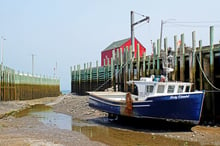
At Hall’s Harbour Lobster Pound on the Fundy shore, half an hour from Wolfville, you choose your lobster from the tank in the gift shop, it is cooked on the spot, and you eat it on the deck while the harbour drains twelve metres and fills again. On Prince Edward Island the oyster bar at Valley Pearl in Tyne Valley is upstairs from the processing plant, and the Malpeque Oyster Barn stands on the wharf of the bay the oyster is named for. At Richard’s on Covehead wharf, Bon Appetit reports “a perpetual hour-long queue” for the lobster roll.
The lobster suppers, the oyster wharves and the Acadian kitchens
New Glasgow Lobster Suppers has served the same meal since June 24, 1958: a plated lobster with chowder, mussels, rolls, salad and dessert, with seconds of everything but the lobster, in a room that seats several hundred above the River Clyde, 25 minutes from Charlottetown. A reviewer on the restaurant's own site describes it as "stuck in time (in a good way)" with "a line out the door" even off-peak, and says the four-course, one-pound lobster dinner came to about $40 a head. Fisherman's Wharf at North Rustico is the buffet-style rival and opens for lunch; Cardigan Lobster Suppers, with its 1888 pub over the marina, is the eastern option. Both run roughly late June to autumn.
The Malpeque Oyster Barn, a family fish market on the wharf that added a restaurant, serves the bay's oysters raw and pan-fried in a room of eight tables; reviewers advise booking, because walk-ins have driven out and found it closed. At Valley Pearl in Tyne Valley the oysters are tonged wild from small dories, the bar upstairs sells them at a dollar each, and the "Get Shucked" tour, by appointment July to September, puts you in the dory to tong your own before you eat them. Carr's at Stanley Bridge, ten minutes from Cavendish, keeps a shucker working in the dining room over its own beds on the Stanley River, Tuesday to Sunday, May to October.
Poutine rapee, a dumpling of grated and mashed potato around salt pork, is sold take-out only at Chez Memere in Moncton on Thursday to Saturday until it runs out, and daily at Le P'tit Coin Acadien in Bouctouche; the Dieppe market's Mets Acadien stall sells fricot, rapee and fish cakes on Saturdays and is gone by late morning. Ployes, the Madawaska buckwheat pancake cooked on one side only and eaten with butter, molasses or cretons, are at Frank's Bar and Grill in Edmundston and the Saturday market there, according to Tourisme Edmundston. On the Acadian Peninsula, La Terrasse a Steve sits on the Miscou wharf with a sand floor, no fryer and the lobster boats unloading beside the tables; a travel writer calls it "what a lobster restaurant should be -- non-pretentious, simple, shack-like", and Tourism New Brunswick's own eating guide to the peninsula ends with chicken fricot and sugar pie at the Village historique acadien in Bertrand.
Alma, the village at the gate of Fundy National Park, has three stops within a few hundred metres: Collins Lobster Shop, Kelly's Bake Shop for the sticky bun, which is a soft dinner roll with a brown-sugar glaze baked on and which reviewers now split on since the shop changed hands, and Tipsy Tails, where the chowder biscuit is baked with dulse. Across the bay Digby calls itself the scallop capital of the world, and Tourism Nova Scotia puts its fleet among the largest in the world; reviewers eat the scallops pan-fried at the Fundy Restaurant and the Crow's Nest on Water Street.
The Halifax donair, the Cape Breton chowder question, Tidal Bay and the potato kitchen
Halifax's official food, by a 2015 council vote, is the donair: spiced ground beef shaved from a spit into a pita with tomato and onion and a sweet sauce of evaporated milk, sugar, vinegar and garlic. The Canadian Encyclopedia credits Peter Gamoulakos, a Greek immigrant who could not get the ingredients for a gyro in Bedford in the early 1970s and built the dish from what the Lebanese bakery and the butcher had; his King of Donair on Quinpool Road still trades. Johnny K's on Pizza Corner, which leads most older lists, has closed. Lunenburg keeps a German plate from its first settlers: Solomon Gundy, which is pickled herring, and blueberry grunt, dumplings steamed on stewed berries, both on the town's food tour.
Cape Breton has a chowder argument, and it comes down to potato or no potato. Charlene's Family Restaurant, now at 9816 Highway 105 in Whycocomagh after a 2023 move that the older listings have not caught up with, makes it from seven seafoods with no potato in a thin milk broth, year-round; a reviewer who had "been eating seafood chowder for better than 40 years" called it the best bowl of their life. The Red Shoe in Mabou, open late May to mid-October with music seven nights, makes the potato kind. The road snack is the oatcake, sweeter and thinner than the Scottish one: Highwheeler in Baddeck sandwiches two around peanut butter and dips them in chocolate, and Aucoin Bakery in Chéticamp has made the soft Acadian version for three generations.
Tidal Bay is Nova Scotia's only wine appellation. Every wine that carries the name is made from Nova Scotia grapes and must pass a blind tasting panel each vintage before it can be labelled, so a winery has to pass again every year. It is a light, aromatic white made for the shellfish above, and the Wolfville wineries that make it, Benjamin Bridge, Lightfoot and Wolfville and Luckett among them, are served by a hop-on double-decker bus from the town in season.
Prince Edward Island potatoes have a museum of their own at O'Leary, and the Country Kitchen inside it, open daily from mid-May to mid-October, serves hand-cut fries, potato-bread grilled cheese and potato fudge, and sells seaweed pie, an angel-food cake set with Irish moss under berry sauce, which the museum says is now the only place you can get it; the cafe at Miminegash that invented it closed in 2012. In New Brunswick the spring vegetable is the fiddlehead, picked on the river islands at Tide Head from mid-May for about three weeks and sold by foragers at Fredericton's Boyce market; boil them ten to fifteen minutes, never eat them raw. Saint John City Market, in an 1876 hall with a ceiling built like an upturned ship's hull, calls itself Canada's oldest continuously operating farmers' market, and its stalls now run from Syrian shawarma to Korean bibimbap to a bag of dulse.
Culture

On any Sunday of the year, including January, the Celtic Music Interpretive Centre at Judique on the west coast of Cape Breton runs a ceilidh from two to five for ten dollars, and on Mondays from August to mid-October the Doryman pub in Chéticamp, forty minutes up the same road, puts on “Autour de l’Acadie” for free: twenty songs that follow the Acadians from Chéticamp to Louisiana and back, with an old-Acadian-word contest run from the stage. The music, the dances and the festivals run for the people who live here, and a visitor is let in.
Celtic Cape Breton: the ceilidhs, the Gaelic village and Celtic Colours
Judique's centre also runs lunchtime ceilidhs Monday to Friday in season with no cover, and the Baddeck Gathering puts a fiddler and a step dancer in the parish hall every night from mid-June to mid-October for twenty dollars cash, oatcakes included. The West Mabou Family Square Dance runs every Saturday of the year from nine, and the sets are taught to newcomers before the night starts. The Red Shoe in Mabou, the Rankin family's pub, has music seven nights from late May to mid-October.
Celtic Colours runs October 9 to 17 in 2026, its thirtieth year: 52 concerts in 36 communities across the island, plus square dances, milling frolics and sessions in the days between, and a Festival Club at the Gaelic College at St. Ann's that starts at eleven each night after the concerts let out. The 2026 theme is languages, and the opening concert at Port Hawkesbury carries Mi'kmaw, Gaelic, French, Irish, Welsh and Manx.
Highland Village at Iona, on a hill over the Bras d'Or, calls itself North America's only living-history museum of Gaelic language and culture; you walk it in order from a 1770s Hebridean blackhouse to a 1920s farmhouse, with costumed interpreters spinning, weaving and cooking at the hearth, open June 1 to October 17, daily 10 to 4:30. There are ceilidhs on Tuesday and Thursday afternoons in July and August. The museum states that for 2026 there are no farm animals on site, so the Clydesdale in the older reviews is not there this year. The Antigonish Highland Games, held since 1863 and, by the town's account, the longest-running Highland Games outside Scotland, fill the week of July 5 to 12 in 2026 with heavy events, massed pipe bands, a kilted run and a closing ceilidh.
Acadie: Caraquet, Clare, Chéticamp and the rug makers
The Festival acadien de Caraquet -- French translated to English
-- runs August 2
to 15 in 2026, and everything on August 15 is free: a line-dance
workshop at three, the anthem Ave Maris Stella at 5:50, and the
Tintamarre at 5:55, an hour of noise in the street for which a pot and a
spoon are the accepted entry. The Village historique acadien at
Bertrand, open June 4 to September 26, is forty houses moved in from
across the peninsula, staffed in costume, covering 1770 to 1950; a
French-speaking reviewer says they spent five hours there and did not
see it all. Clare's Festival acadien on the Nova Scotia French shore,
founded in 1955 and in its 71st year, ends with a called-dance evening, a
veillee de danse callee.
Chéticamp on the Cabot Trail is Acadian, not Scottish. Les Trois Pignons holds the hooked rugs of Elizabeth LeFort, with live hooking demonstrations, and the Centre de la Mi-Carême at Grand-Étang interprets the masked mid-Lent carnival the village has kept since 1785. Flora's, the sixty-year rug shop that most guides still name, has closed; Flora's Boutique in the village centre sells the Chéticamp-style rugs now.
The Mi'kmaq, the Wolastoqiyik, and Black Nova Scotia
Eskasoni Cultural Journeys on Goat Island in the Bras d'Or, in what the community describes as the largest Mi'kmaq community in the world, runs guided walks at 10 and 1, Monday to Friday, May to October: a 2.4-kilometre trail of village stations with a smudging ceremony, drumming, basketry and four-cents cake baked over an open fire, ending with luskinigan bread and tea. Membertou Heritage Park in Sydney is open year-round. On Prince Edward Island, Lennox Island in Malpeque Bay was bought for its people in 1870 for 400 pounds, and the band calls it the first reserve in Canada owned by its people; the cultural centre there has been open since 1973. In New Brunswick, Wolastoq Adventures, wholly Indigenous-owned, runs a one-hour Traditional Experience boat tour on the Wolastoq at Fredericton with stories, language and drum, May to September; one TripAdvisor party drove ninety minutes to find no tour, so book and reconfirm.
Halifax razed Africville, the Black community on the Bedford Basin, between 1964 and 1970 and apologised in 2010. The Africville Museum, a replica of the community's church on the site, became in 2024, in the Canadian Encyclopedia's words, Canada's first UNESCO Place of History and Memory linked to enslavement and the slave trade; from September 8 2026 it opens Monday to Friday 10 to 4. The Black Loyalist Heritage Centre at Birchtown, near Shelburne, stands where 3,500 Black Loyalists landed in 1783 and built what Tourism Nova Scotia and the heritage centre call the largest free Black settlement in British North America; its collection was added to UNESCO's Canada Memory of the World register in 2026, and its own visit page lists weekday hours only. The Black Cultural Centre at Cherry Brook, outside Dartmouth, is open Monday to Friday.
The Peace and Friendship Treaties, and why they are still in the news
Between 1725 and 1779 the British Crown signed a series of treaties with the Mi'kmaq, the Wolastoqiyik and the Peskotomuhkati. Unlike the later numbered treaties of the Canadian west, they surrendered no land; they ended hostilities and promised trade and protection. Nova Scotia keeps the original documents at the provincial archives in Halifax and states that they "are still in effect today". Section 35 of the 1982 Constitution protects them, and the Supreme Court of Canada affirmed the 1760-61 treaties in the Marshall decision of 1999, which found a right to fish, hunt and gather for a moderate livelihood. Thirty-five First Nations in the three provinces and the Gaspé hold that right.
Since September 2020 the Sipekne'katik First Nation has run its own lobster fishery from the Saulnierville wharf in Clare, Nova Scotia, in late summer and autumn, and in July 2026 the Nova Scotia Supreme Court struck out a commercial-industry lawsuit against it, ruling that treaty rights must be settled by negotiation between First Nations and the federal government, not litigation. Six Wolastoqey nations filed a title claim in 2021 to the watershed of the Wolastoq, the Saint John River, on the basis that the treaties never ceded it; in May 2026 the Supreme Court of Canada declined to hear an appeal, and the claim continues against the Crown. In Halifax, the statue of the city's founder Edward Cornwallis, who issued a bounty on Mi'kmaq scalps in 1749, came down in 2018, and the park opposite the railway station was renamed Peace and Friendship Park in 2021. Every October 1 is Treaty Day, with the Mi'kmaq flag raised at Grand Parade in Halifax at 1:30 pm.
The galleries: a Dali on the floor, Maud Lewis's house and Nocturne
The Beaverbrook Art Gallery in Fredericton, across from the legislature, holds Salvador Dali's Santiago El Grande, four metres tall, and the regional tourism office states that "visitors are often found lying on the floor in front of" it; admission is $14, and from June 19 to November 29, 2026 the same chapel room also holds Andres Serrano's Piss Christ, which the gallery itself calls one of the most controversial artworks of the twentieth century. The Art Gallery of Nova Scotia in Halifax has Maud Lewis's painted house, the one-room home she covered in flowers and birds over thirty years, on permanent display since 1998 and refreshed with paintings from private collections; her home town of Yarmouth shows a further collection at Land's End to September 20, 2026. Nocturne, Halifax's free art-at-night festival, runs October 15 to 18 in 2026 with the main night on Saturday the 17th from six to midnight, when galleries open late and installations fill the streets of Halifax and Dartmouth. In Charlottetown the Confederation Centre stages Anne of Green Gables, the musical, from August 8 to September 5, 2026, and its gallery is open daily with Thursday evenings by donation.
Natural History
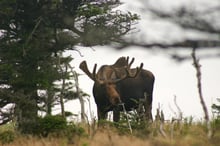
The Skyline Trail on the Cabot Trail is a level boardwalk out to a headland above the Gulf of St. Lawrence, and the reason to walk it at the end of the day is the moose: Parks Canada released eighteen from Alberta in 1947 and 1948, and with no significant natural predators the herd on the plateau is now, in the park’s own word, hyperabundant, so a moose on the Skyline at dusk is a common sight rather than a lucky one. From June 26 to October 25, 2026 the trail’s parking must be reserved in advance and paid for.
The Fundy tide: rafting the bore, the fossil cliffs and the sandpipers
An hour from Halifax, five operators run rubber rafts up the Shubenacadie River on the incoming tide, which reverses the river and throws up standing waves that Tourism Nova Scotia puts at up to four metres; the trips run from May or June to the end of September or October, the departure time moves with the tide each day, and the finale is sliding down the red mud banks. One operator, the Tidal Bore Rafting Resort at Urbania, is the river's only Indigenous-owned company. If you would rather watch than ride, Bore Park in downtown Moncton has amphitheatre seating over the Petitcodiac, where the bore arrives twice a day as a single wave a half to one metre high; the 1968 causeway had shrunk it to a ripple, the gates were opened in 2010, and a bridge replaced the causeway in 2021.
At Joggins on the Cumberland shore, 14.7 kilometres of cliff hold what UNESCO calls the most complete fossil record of the Coal Age, 300 million years old, with upright trees in the rock and the earliest known reptile found inside one of them in 1859. Each tide erodes the cliff and exposes new fossils, which is why collecting is prohibited; the beach is free and the Fossil Centre runs guided walks of thirty and ninety minutes, May 1 to October 18 in 2026. Burntcoat Head, where the record tides were measured, is a free municipal park open mid-May to mid-October with a walk onto the ocean floor at low water.
Around the middle of August the mudflats at Johnson's Mills, near Dorchester in New Brunswick, hold migrating sandpipers in the numbers that make the murmurations worth the drive. The Nature Conservancy's interpretive centre there is open daily in July and August, and the show is the roost at high tide, two hours either side, when the flocks turn together over the water; the beach is closed at that hour so the birds can rest. Cape Split, near Wolfville, is the other free place to watch the tide: a 13-kilometre return walk to a headland where the whole Minas Basin tide runs through a gap in the rock, and Nova Scotia Parks asks that you plan four to six daylight hours and stay off the shore.
Whirlpools, seals, dunes and an inland sea
At the western edge of the Fundy Isles, Old Sow off Deer Island is what NOAA, the United States ocean service, calls the Western Hemisphere's largest whirlpool, a spinning ring more than 75 metres across formed where the incoming tide is squeezed through a narrow passage; it is best seen about three hours before high water from Deer Island Point Park, reached by the free provincial ferry from Letete. Watch it from the bluff, not a kayak. On the Northumberland shore, Kouchibouguac National Park, an hour north of Moncton, runs a Voyageur canoe in July and August, eight or nine paddlers and an interpreter in a replica fur-trade canoe, down the river to the outer dunes to see the tern colony and a sandbar of grey seals; the lagoons behind the dunes are shallow and warm, and the Kellys Beach boardwalk crosses marsh, lagoon and dune to a long white beach.
Prince Edward Island's north shore is sand. At Greenwich, in the national park past St. Peter's Bay, a trail of about five kilometres crosses old fields, a floating boardwalk over Bowley Pond and a climb onto parabolic dunes that Parks Canada states are very rare in North America, then drops to six kilometres of near-empty beach; the interpretation centre is open from late May to early September. The island has no RASC-designated dark-sky site, so the national park beaches at Cavendish and Greenwich are where people go for stars. Sections of beach close from May to August for nesting piping plovers, and the fall colour peaks in mid-October and lasts a week or two.
Cape Breton's Bras d'Or is a salt-water lake with three openings to the Atlantic, a UNESCO biosphere since 2011, and its own association records more than thirty degrees of latitude, Arctic to sub-tropical, across distances of less than ten kilometres inside it. Highland Village and Eskasoni both stand on its shore. Sable Island, 290 kilometres off Halifax, with its wild horses and what Parks Canada calls the world's largest breeding colony of grey seals, can be visited only with Parks Canada permission on a licensed flight; the 2026 flights are sold out except for one November date, and the operator reports that a fifth to a third of trips are cancelled for weather. Two closures matter for 2026: Cape Enrage on the New Brunswick Fundy shore is closed for the year, and the suspension bridge over the Big Salmon River on the Fundy Trail Parkway is closed all season, though the parkway and Walton Glen Gorge are open.
Built Heritage
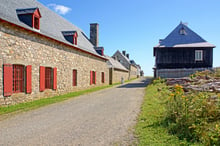
At the Fortress of Louisbourg, forty minutes from Sydney, you can spend the night inside the walls: Parks Canada lets out a period house and, for less, the guardhouse or the prison, and in the morning the streets fill with the routines of the 1740s, bread from the King’s Bakery, the garrison clock, a cannon at noon, sheep driven home through the lanes. The site is, in Parks Canada’s own words, the largest historic reconstruction in North America, a quarter of the original French town rebuilt in the 1960s and 70s by laid-off coal miners. Peak season with everyone in costume is July 1 to September 11, the site is open daily to October 31, and from November to mid-May it is free on weekdays as a self-guided walk through the quiet streets with the buildings shut.
Lunenburg, Grand Pré, Port-Royal and the forts
[Old Town Lunenburg](https://whc.unesco.org/en/list/741/) is a UNESCO World Heritage Site because, in UNESCO's words, it is "the best surviving example of a planned British colonial settlement in North America", laid out in 1753 on a grid drawn up in London and still walked on that grid today, and the surnames on the doors are the anglicised names of the 1,453 "foreign Protestants" the British government settled there that year, recruited from southwestern Germany, Switzerland and the Montbeliard district of France. Bluenose II, the province's sailing ambassador, is based on the town wharf from June to the end of September and takes two-hour public harbour cruises at 9:30 and 1:30 on most days it is in port, with free open decks between them; the 2026 schedule has the schooner away in Boston in mid-July and in Halifax in mid-September, so check the dates before you drive down.
Grand Pré, near Wolfville, is the other World Heritage landscape: 1,300 hectares of farmland the Acadians walled off from the Minas Basin tides in the 1680s, and it is still farmed, three centuries on, by the successors of the New Englanders who were given it after 1755. The deportation order was read in the parish church that stood roughly where the 1922 Memorial Church now stands; the visitor centre is open May 15 to October 12, the grounds all year, and the Deportation Cross stands three kilometres away at Horton Landing, the actual embarkation point, where it was moved in 2005. Port-Royal across the province is the reconstructed 1605 Habitation, which Parks Canada calls one of the earliest European settlements in North America, and Fort Anne beside it was Canada's first administered national historic site in 1917; both are open May 15 to October 11.
Fort Beauséjour at Aulac, on the ridge where the Nova Scotia and New Brunswick line still runs down the marsh, is where Parks Canada says the deportation began, in August 1755 before Grand Pré; in 2026 it is open only Thursday to Monday, June 20 to September 7, a change from earlier daily seasons. The Halifax Citadel fires its noon gun every day, a habit Parks Canada dates to at least 1856, and the 78th Highlanders in Mackenzie tartan change the sentries hourly through the summer; the full programme runs May 7 to October 31 and the grounds are open year-round.
Hartland, Pier 21, Saint Croix and the 2026 museum closures
The Hartland Covered Bridge crosses the Saint John River for 390 metres, and Parks Canada's designation text calls it "by far the longest covered bridge extant in the world"; it opened uncovered in 1901, lost two spans to an ice jam in 1920 and was covered by 1922, and you can still drive it one lane at a time or walk the covered sidewalk added in the 1940s, free at any hour. Pier 21 on the Halifax waterfront, the last standing ocean immigration terminal in Canada by the museum's own claim, took in about a million immigrants between 1928 and 1971; the reason to give it a morning is the family history centre, where researchers will look up your own family's arrival record while you wait. Admission is $19.
Saint Croix Island, in the river that became the Canada-United States border, is where the French wintered in 1604, a year before Port-Royal, and lost 35 of 79 men to scurvy; Parks Canada calls it the first capital of Acadie. The island itself is closed, but the Canadian viewpoint at Bayside, ten minutes north of St. Andrews, has a looped trail and panels and is open June 1 to October 16, free. Kings Landing, twenty minutes west of Fredericton, is a living-history village of nineteenth-century New Brunswick, open daily June 6 to October 12 with reduced admission this year while infrastructure work limits access.
Two things a traveler must know for 2026. Province House in Charlottetown, where the 1864 conference that led to Confederation was held, is closed for the whole summer; Parks Canada expects it to reopen in the fall of 2026, but the date has already slipped once, so check its page rather than plan on it. And on February 24, 2026 Nova Scotia closed twelve of its twenty-eight provincial museum sites for good, among them Ross-Thomson House in Shelburne, Perkins House in Liverpool, Prescott House near Wolfville, the Sutherland Steam Mill and the Fisherman's Life Museum, along with most provincial visitor information centres; the province says the savings will help six sites move to community operation, and which of them will was unresolved when this page was written. New Brunswick is handing ten of its provincial heritage places to other operators the same year. Every site, price and producer named on this page was checked on its own website in September 2026; for any other provincial museum in either province, check before you drive, because the map apps have not caught up.
I want to dig deeper
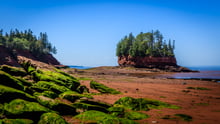
Dinner is served at a table on the bare sea floor at Burntcoat Head, and cleared before the water comes back. A choir of coal miners sings in the theatre above the Glace Bay mine they worked, after a tour underground with a retired miner. A boat from Grand Manan lands fifteen people a day on an island Canada and the United States both claim, to sit six feet from puffins. And a New Brunswick winter runs from smelt shacks on the ice to a sugar camp in March. Each is dated and priced below, and each has a catch worth knowing before you book.
Dinner on the ocean floor, the miners' choir underground, the puffin landing, and a New Brunswick winter
Dining on the Ocean Floor -- five public dates a summer, sold out months ahead. Burntcoat Head Park at Noel, an hour from Halifax, is the exact site where the highest tides ever recorded were measured, and on five days each summer the caterer Food Fantastique sets a table for about fourteen people on the bare sea floor. The day runs from 11:30 to 5:30: sparkling wine and a walk for wild edibles, a seafood boil for lunch, a guided walk on the ocean floor as the tide bottoms out, then a three-course dinner at the table on the seabed with Nova Scotia wine pairings, and a campfire with Mi'kmaw storytelling as the water returns to cover the place you ate. The last 2026 date is September 6, with a rain date the day after, at $725 a person before tax and tip; the 2026 season sold out early, so watch the operator's site for 2027 dates and for cancellations. Wear rubber boots. The operator's event page with dates and tickets. (Food Fantastique, Burntcoat Head Park, Noel)
The Men of the Deeps at the Glace Bay mine -- selected Wednesdays, June to mid-September. The Men of the Deeps are, by their own description, North America's only coal miners' chorus; every member has worked at least two years in or around a coal mine, and in 2026, their sixtieth year, the home shows are at the Cape Breton Miners' Museum theatre in Glace Bay at 7 pm on nine Wednesdays between June 10 and September 16, not every week, so check the list. They enter in total darkness by the lamps on their helmets and close with Rita MacNeil's Working Man; a review from their Ontario tour reads "there wasn't a dry eye in the house". Come early for the museum's underground tour of the Ocean Deeps Colliery, a 1930s room-and-pillar mine that runs out under the sea, led by a retired miner in a ceiling that starts at five foot six, $25 with the virtual tour, tours ending at 4 pm. The sixtieth-anniversary gala is at the Savoy Theatre in Glace Bay on November 1, 2026, followed by a Maritime tour. The choir's 2026 show list. (The Men of the Deeps, Glace Bay)
The Machias Seal Island puffin landing -- June 25 to July 31, tickets from March 18, landing not guaranteed. Twenty kilometres off Grand Manan, a ten-hectare treeless island holds what the federal bird sanctuary page calls one of the most southerly Atlantic puffin colonies, and press coverage of the boundary calls it the only land Canada and the United States still dispute: Canadian Coast Guard keepers rotate through the 1832 lighthouse every 28 days to hold the claim, and one boat from each country is permitted to land visitors in nesting season. On the Canadian side that boat is Sea Watch Tours from Grand Manan, $300 a person to go ashore, $220 to circle in the skiff: a five-and-a-half-hour trip, twenty aboard, fifteen allowed to land each day, an hour in enclosed blinds with the puffins three to six feet away, and a transfer from the boat to a sixteen-foot skiff over seaweed-covered rock. The operator states outright that landings are not guaranteed. A 7 am departure means a night on Grand Manan first, and the afternoon trip returns at 6:30 with the last ferry at 7:15 twenty minutes away, so plan to sleep on the island either way; 2026 tickets went on sale at 10 am on March 18 and sold out fast. The puffin tour page with prices and the landing rules. (Sea Watch Tours, Grand Manan)
A New Brunswick winter -- smelt shacks from January 1, sugar camps from early March. New Brunswick's winter runs in a fixed order: ice fishing, then a festival, then the sugar camps. Ice fishing opens January 1 on more than 150 designated waters and villages of shacks stand on the Miramichi, Grand Lake, Shediac Bay and the Kennebecasis until March 31; heated rental huts with kitchens and bait are now offered, and the community smelt fry, a fundraiser dinner of fried smelt and dessert, is the thing to look for in local calendars. Fredericton's FROSTival fills three weekends in late January and early February with a free night skate at Officers' Square, the Shivering Songs festival in downtown rooms, and $45 three-course menus at more than thirty restaurants; the 2027 dates are January 21 to February 7. Then the sugar camps open. Trites Family Sugar Bush at Stilesville outside Moncton, tapping since 1900, runs Saturday pancake breakfasts from 8 am and $3 taffy on the snow from early March to mid-April, cash only, a fifteen-minute walk in from the church parking lot in rubber boots; Dumfries Maples near Fredericton serves pancakes in a cedar cookhouse until its season closes around April 19. On Tourism New Brunswick's current count the province makes more than a million gallons of maple syrup a year, third in the world after Quebec and Vermont. The province's own guide to sugar camps and where to eat maple. (Tourism New Brunswick)
The Honey of the Maritimes
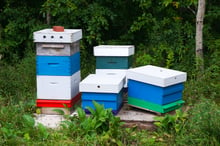
The honey here comes out of the same short season as everything else on this page. The hives go out in May, the wild blueberry fields flower in June, the clover and goldenrod and aster follow through the summer, and by September the extractors are running and the jars are on the Saturday tables. Most of it is sold as wildflower honey, which on Prince Edward Island means the whole island’s bloom in one jar. The flower most often named on a jar here is wild blueberry blossom, and it is on the label because of what the bees are hired to do. Wild blueberries set almost no fruit without insects, so the growers pay beekeepers to truck hives onto the low blueberry fields, the barrens, for the two or three weeks of bloom, then take them away again. In 2025 about four in five Nova Scotia colonies went out to the blueberry fields, and New Brunswick brought in three times more hives for the bloom than it keeps of its own. The honey the bees make in those weeks is bottled under the blueberry’s name in all three provinces. New Brunswick’s north also bottles a buckwheat honey from the same fields that supply the ploye. Beyond the jar there is mead, from a Prince Edward Island honey winery with a tour bus, and honey ale from a Dieppe brewery that names the apiary on the can. None of this is old; there was one full-time beekeeper in New Brunswick within living memory, the region’s one annual honey festival started in 2016, and the trade is being built now at farm gates, markets and a handful of places that will put you in a suit and open a hive. The road below goes to those places, in the order you would drive it.
The Honey Road
Halifax to the Annapolis Valley, across the Bay of Fundy by ferry, along the New Brunswick corridor to the bridge, and round Prince Edward Island: hive visits June to September, extraction from late July, and in winter only the Saturday markets and one farm store.
Halifax and the Hants shore -- June to September for the hive, September 26 for the festival (market, festival and hive tour). Start at the Halifax Seaport Farmers' Market on Saturday morning, 8 to 2, where the Halifax Honey Company is on the vendor roster and the market sits beside Pier 21. Then take Highway 101 and Highway 14 an hour out to Greenfield Hives in Hants County, the only bookable suit-up open-hive tour found on mainland Nova Scotia: an hour and a half with beekeeper Duncan, a frame of live bees in your hands and a photo, $100, booked on the operator's own calendar and dependent on weather and the bees. Twenty minutes north on the Avon at Avondale, the Avon River Heritage Centre holds the Honey Harvest Festival on September 26, 2026, its eleventh year; about twenty-seven stalls came in 2025, beekeepers and farmers and artisans among them, with a demonstration hive to find the queen in and a honey menu in the cafe. Between the two, Uniacke Estate at Mount Uniacke is an 1813 house with a tea room on the old post road. Greenfield's tour booking page (Greenfield Hives and Honey, Hants County). The festival page (Avon River Heritage Centre, Avondale).
The Annapolis Valley -- any day of the year at Greenwich, fall for the extraction (farm store and extraction). Cosman and Whidden's farm store at 9925 Highway 1 in Greenwich, off Exit 11, is open seven days a week all year, and with more than two thousand colonies they are the valley's big beekeeper; the store sells their own honey and beeswax, and Noggins Corner farm market is next door for lunch and, from mid-September, apples. Twenty minutes west at Woodville, Foote Family Farm keeps two hundred hives, sells honey from a warm refill station if you bring your own jar, and lets you watch the fall extraction in the farm store, Monday to Saturday 9 to 5 in season. Grand Pré and the Wolfville wineries are on the same road, and Hall's Harbour on the Fundy shore is the detour for lobster. Sunny Acres, which bottles wild blueberry blossom honey liquid, creamed and hot, is not on this road but on the Northumberland shore at Brule, a farm store open Monday to Saturday 10 to 7; reach it from the Truro end if you are heading for Cape Breton. Cosman and Whidden's farm page (Cosman and Whidden Honey, Greenwich). Foote Family Farm (Woodville). Sunny Acres' farm store and jars (Sunny Acres Honey, Brule).
Across the bay and along the corridor -- ferry from Digby, then Saint John, Sussex and Dieppe (honey shops, brewery and market). Drive down the valley to Digby, eat scallops on the waterfront, and take the Fundy Rose to Saint John, about two and a quarter hours. Saint John's City Market has honey on its shelves but no named stall; the honey detour is west, to BrettLynn Farms' new shop at 48 King Street in St. Andrews, where the Ritter family took over in 2025 and hand-bottle in the shop, also at the Thursday farmers' market. East on Route 1 at Sussex, the mural town, Maritime Bee at 60 Maple Avenue keeps what it calls the widest shelf of local raw honeys in southern New Brunswick; hours are not published, so phone first. At Dieppe, CAVOK Brewing's taproom at 250 Dieppe Boulevard opens at noon daily and pours Léger Corner, a honey blonde ale whose malt bill lists the honey as Atlantic Gold from Lockhart Apiaries, and the Dieppe market on Saturday has the Acadian food stall. Then Route 15 to Shediac and Route 16 to the bridge, with the Cape Jourimain Nature Centre and its tower over the bridge as the last stop on the mainland. BrettLynn's shop page (BrettLynn Farms, St. Andrews). Maritime Bee's store addresses (Sussex and Summerside). The Léger Corner ale page (CAVOK Brewing, Dieppe).
The Prince Edward Island loop -- Saturday for the market, June to early fall for the Meadmobile (market, honey winery and farm gates). Begin at the Charlottetown Farmers' Market, which since its Belvedere Avenue building burned on Christmas Day 2025 has run at 614 North River Road, Saturdays 9 to 2, smaller than before; Canoe Cove Honey has a stall there every Saturday and is otherwise in food shops around the island, not at its farm. Twenty-five minutes north at Wheatley River, Island Honey Wine Company runs the Meadmobile, a guided tour by bus through the fields, orchards and vines where its honey wine begins, June through early fall, limited spots, booked on its site. New Glasgow is ten minutes on, with the Preserve Company's restaurant open daily 8:30 to 8 and the lobster suppers from 4. Cymbria Apiaries sells its jars at the Cymbria Campground shop at 729 Grand Pere Point Road near Rustico from late May to early September, 9 to 7, with tours by appointment and the Blue Mussel Cafe on the Rustico harbour for lunch. Route 6 then runs through the national park dunes to Covehead wharf and Richard's lobster roll. Finish on the south shore at Canoe Cove on Route 19, where Honeydew Apiaries keeps an honour-system stand at the roadside at 6718 Route 19 for its creamed blueberry honey, with Argyle Shore's red cliffs and Victoria-by-the-Sea fifteen minutes west. Summerside's Saturday market, 9 to 1 all year in the Holman Building, has Mark Thrasher Honey and a second Maritime Bee store on First Street. The market's current location (Charlottetown Farmers' Market). Canoe Cove Honey's stockists and stall (Canoe Cove Honey). The Meadmobile booking page (Island Honey Wine Company, Wheatley River). Cymbria's campground shop and season (Cymbria Apiaries, Rustico). The Summerside market's vendor list (Explore Summerside).
Two outliers -- Charlo in the north, June to August by reservation (hive tour); Cape Breton without a hive (shelf honey). Four hours north of Moncton, at Charlo on the Chaleur coast, the Miellerie Charlo Honeyhouse is the one place found in New Brunswick that will put a veil and gloves on you, walk you into the bee yard to lift frames out of a working hive, and then sit you down to extract your own honey and take it home. It is open from the beginning of June to the end of August, by reservation only. The other option, for anyone who would rather stay behind glass, is the exploration centre: observation hives sealed behind safety glass, and a camera inside a hive playing on two wall screens. The shop sells the region's blueberry, buckwheat and wildflower honeys, and the tours run in English and French. Cape Breton has no bookable open-hive tour, checked twice in 2026, so the honey there is on the shelf: Cornect's whiskey-infused honey sold only at Glenora Distillery in Mabou on the Ceilidh Trail, Island Folk Cider House in Sydney with its Easy Beezy cider made with Coast Honey from Isle Madame, open Tuesday to Sunday, and the Sydney Public Market on the waterfront campus on Saturdays in summer. The Cape Breton Farmers' Market, the long-time Saturday home of the island's beekeepers, left its Keltic Drive building in 2026 and had no new home at the time of writing. Charlo's visit page with both tour options (Miellerie Charlo Honeyhouse, Charlo). Island Folk's cider list (Island Folk Cider House, Sydney).
Getting Here
Fly into Halifax for Nova Scotia and the whole region, or Moncton for New Brunswick and the island, which is an hour from the bridge; Charlottetown and Saint John have smaller airports. You need a car. Halifax to Wolfville is about an hour and a quarter, to Lunenburg a little more, to Charlottetown three and a half hours by the bridge or two hours to Caribou plus the 75-minute Wood Islands ferry, and to Sydney about five. The Confederation Bridge is open around the clock with no reservation, and the $20 toll is collected only on leaving Prince Edward Island, as is the ferry fare, so a loop through the island pays once. The bridge’s toll page (Confederation Bridge). The Fundy Rose sails Digby to Saint John year-round, about two and a quarter hours, up to twice a day in season, and reservations are advised; the ferry’s schedule and fares (Bay Ferries). New Brunswick’s river ferries are free. Maritime Bus is the only intercity coach, seven days a week across all three provinces, workable but slow; its fares and schedules (Maritime Bus). VIA Rail’s Ocean runs Montreal to Halifax through Moncton three days a week each way, overnight, and is often late.
Seasonal Events Not to Miss
- FROSTival, Fredericton – three weekends from late January: a free night skate at Officers’ Square, the Shivering Songs festival in downtown rooms, and $45 three-course menus across the city; 2027 dates January 21 to February 7. The festival’s own site (Fredericton Capital Region Tourism).
- Nova Scotia Lobster Crawl, the South Shore – all of February, when the South Shore lobster season is at its peak: a lobster roll-off, chowder showdowns, and Lucy the Lobster’s forecast at Cape Sable Island on February 2. The Crawl’s event list (South Shore Tourism Cooperative).
- Annapolis Valley Apple Blossom Festival, Kentville and the valley towns – the last weekend of May, at blossom time: two parades, fireworks and orchard tours; 2027 dates May 25 to 30. The festival site (Apple Blossom Festival).
- Antigonish Highland Games, Antigonish – the week of the second Sunday of July, held since 1863 and, by the town’s account, the longest-running Highland Games outside Scotland: heavy events, massed pipe bands, a kilted run and a closing ceilidh. The games schedule (Antigonish Highland Society).
- Tyne Valley Oyster Festival, Tyne Valley – the first weekend of August: the Canadian oyster-shucking championship on the Friday night with all the raw oysters you can eat on the gate ticket, fried oyster suppers, and what the festival calls the island’s largest rural parade. The festival site (Tyne Valley Oyster Festival).
- Festival acadien de Caraquet, Caraquet – the first two weeks of
August, ending on the Acadian national day, August 15, when everything
is free and the Tintamarre fills the street with noise at 5:55 pm.
The festival programme – French translated to English
(Festival acadien de Caraquet).
- PEI International Shellfish Festival, Charlottetown – the third weekend of September: chef challenges, the international oyster-shucking championship, and what it calls Atlantic Canada’s largest kitchen party under the tent; 2026 dates September 17 to 20. The festival site (PEI International Shellfish Festival).
- Honey Harvest Festival, Avondale – the last Saturday of September since 2016, in its eleventh year: a one-day market of beekeepers, meadmakers, artisans and food vendors on the Newport Landing waterfront, with a demonstration hive to pick the queen out of. The Maritime Honey Festival that ran at Fredericton in 2017 and 2018 has not come back, which leaves this one; 2026 date September 26. The festival page (Avon River Heritage Centre).
- Celtic Colours International Festival, across Cape Breton – nine days from the Friday of Thanksgiving weekend in October: dozens of concerts in halls across the island and a Festival Club at the Gaelic College each night at eleven; 2026 dates October 9 to 17, 2027 October 8 to 16. The festival’s schedule and map (Celtic Colours International Festival).
- Nocturne: Art at Night, Halifax and Dartmouth – the third weekend of October, free, with the main night on the Saturday from six to midnight; 2026 main night October 17. The festival site (Nocturne Art at Night Society).
Where to Buy Honey
- Halifax Seaport Farmers’ Market, 961 Marginal Road, Halifax, Saturdays 8 to 2 and Sundays 10 to 2 – the Halifax Honey Company is on the vendor roster. The market’s vendor list (Halifax Seaport Farmers’ Market).
- Cosman and Whidden Honey, 9925 Highway 1, Greenwich, near Wolfville – farm store open seven days a week, year-round; their own honey and beeswax from more than two thousand colonies. The farm’s page with directions (Cosman and Whidden Honey).
- Foote Family Farm, 1972 Woodville Road, Woodville – Monday to Saturday 9 to 5 in season; honey from a warm refill station for your own jar, and the fall extraction to watch. The farm’s page (Foote Family Farm).
- Sunny Acres Honey, 1017 Brule Shore Road, Brule – farm store Monday to Saturday 10 to 7; wild blueberry blossom liquid and creamed, blueberry hot honey, wildflower and raspberry blossom. The farm store and online shop (Sunny Acres Honey).
- Fredericton Boyce Farmers Market, 665 George Street, Saturdays 7 to 1 – Whalen Apiaries, more than 400 hives, every week inside the market. The market’s page for the stall (Fredericton Boyce Farmers Market).
- BrettLynn Farms, 48 King Street, St. Andrews – hand-bottled in the shop by the Ritter family since 2025, also at the Thursday farmers' market. The shop’s page (BrettLynn Farms).
- Maritime Bee, 60 Maple Avenue, Sussex, and 228 First Street, Summerside – a shelf of local raw honeys from many producers; hours are not published, so phone first. The store addresses (Maritime Bee and Agriculture Supplies).
- Miellerie Charlo Honeyhouse, 280 Craig Road, Charlo – shop and tours June to August by reservation; blueberry, buckwheat and wildflower honeys. The honeyhouse’s visit page (Charlo Honey).
- Charlottetown Farmers’ Market, 614 North River Road, Saturdays 9 to 2 – Canoe Cove Honey every Saturday, and its wildflower and creamed honeys in food shops around the island. Canoe Cove’s stockist map (Canoe Cove Honey).
- Cymbria Apiaries, Cymbria Campground shop, 729 Grand Pere Point Road, near Rustico – late May to early September, 9 to 7; also at Gallant’s Country Food Market in Rustico. The campground’s honey and camp store (Cymbria Apiaries).
- PEI Bees, 63 MacKinnon Court, Mermaid, six minutes from the Hillsborough bridge – raw honey direct from the farm by phone, 902-628-5451. The farm’s page (PEI Bees).
- Summerside Farmers’ Market, Holman Building, 250 Water Street, Saturdays 9 to 1 year-round – Mark Thrasher Honey. The market’s vendor list (Explore Summerside).
- Glenora Distillery, Mabou – sells Cornect’s whiskey-infused honey at the distillery shop. The distillery’s site (Glenora Distillery).