Canada Honey
Jump to Regional Travel and Honey Pages
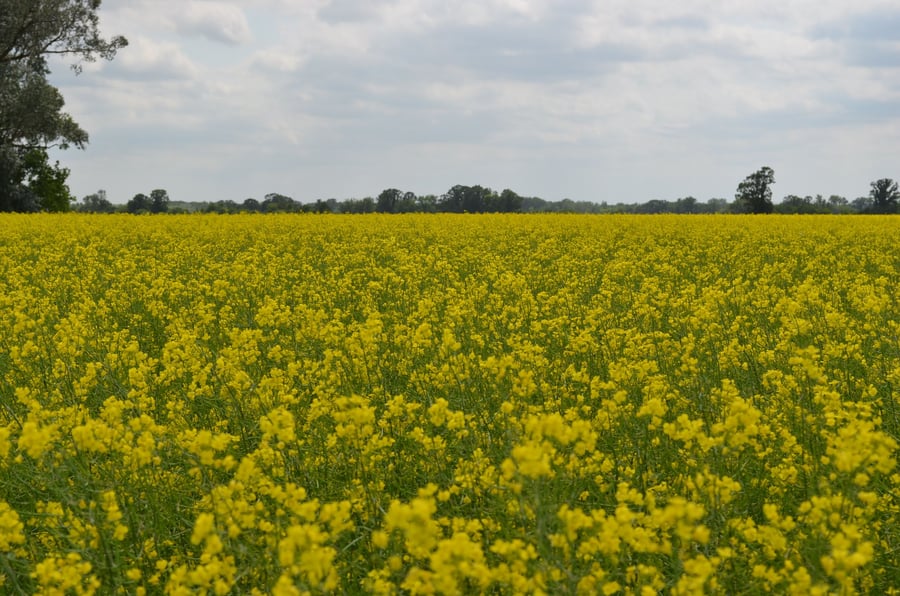
Most of Canada’s honey is one pale honey, made in the few weeks from late June when canola and the clovers flower together across Alberta, Saskatchewan and Manitoba. The three prairie provinces have made most of the national crop every year since 1963, and about four-fifths of it in every year this century. The honey sets hard within weeks of extraction. It reaches the buyer creamed, or liquid under the words white or clover: one Saskatchewan beekeeper tries to pack sweet clover and alfalfa rather than canola, because they are milder and spread without being creamed. What leaves the country goes almost wholly to the United States and Japan, in drums, graded by colour.
The rest of the country’s honey is named for a flower or a field. Ontario and Quebec bottle basswood, buckwheat and goldenrod from the hardwood belt and the old grain country, and Quebec sells its spring, summer and autumn harvests as separate jars. British Columbia and Yukon beekeepers move hives up to burned and logged slopes in midsummer for fireweed. In the Maritimes and around Lac-Saint-Jean in Quebec the jar is blueberry blossom, from the June pollination of the wild-blueberry barrens. Buckwheat and basswood are the historic ones, judged by name at Toronto’s exhibition in 1909.
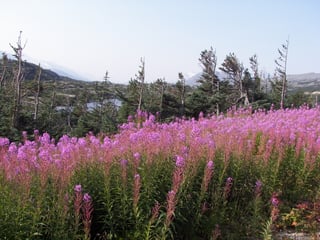
Honey is made to the edge of the country: in the Yukon and the Northwest Territories from fireweed and wild flowers, in a flow of a few weeks, and on the island of Newfoundland, where honey bees were first recorded in 1929 and which restricted bee imports from 1980, nine years before the varroa mite reached Canada. The island’s bees are untreated and its honey sells out by winter.
The honey is bought where it is made: at farm gates, some with bulk tanks to fill your own jar, at Saturday markets from Halifax to Winnipeg, and in a few city honey shops in Vancouver and Toronto, named below. Its show bench runs from fall fairs, where an Ontario jar goes on to district and provincial judging, to the Royal Agricultural Winter Fair in Toronto each November, where honey is judged by colour class. Abroad, Japan buys it by name: in 2026 a Tokyo honey specialist sells creamed Canadian white clover.
The honeys below are the ones Canada is known by, each for a different reason: one made on the prairie by the tonne, two the east has judged by name since 1909, one that follows fire up a mountainside, and one the June pollination leaves behind.
Tap or click a region to explore its honey. Map data: Natural Earth via martynafford/natural-earth-geojson (CC0).
Honeys Canada Is Known By
- Clover and Canola Honey – the crop over half the country’s colonies work each summer: a pale honey that sets fine enough to spread, and one Japanese specialists stock as Canadian white clover.
- Buckwheat Honey – the dark honey of eastern Canada’s old grain country, judged in classes of its own at Toronto’s exhibition by 1909 and still sold by name from Quebec to Manitoba.
- Fireweed Honey – the first plant to cover a burned or logged mountainside; British Columbia and Yukon beekeepers still truck hives to those slopes for the few midsummer weeks it flowers.
- Basswood Honey (Miel de tilleul) – the linden of eastern Canada’s hardwood forests, in flower about two weeks in midsummer; it had its own class at Toronto’s 1909 exhibition and Ontario and Quebec bottle it yet.
- Wild Blueberry Blossom Honey (Miel de bleuetière) – honey off hives placed in the barrens to pollinate the crop: New Brunswick keeps 10,615 colonies and had 30,342 more trucked in for the 2025 bloom.
History and Tradition
Canada’s honeys are made on very different ground, and each ground has its own few weeks. On the prairie the summer is short and the sown crops bloom at once, so a colony makes its whole crop between late June and mid-August; Manitoba Agriculture puts a typical colony’s take at 77 kilograms in those six weeks. In Ontario and Quebec the hardwood forest gives basswood for about two weeks in midsummer and the old fields give goldenrod into September. In British Columbia the valleys dry out in July and hives are moved into the mountains, where fireweed covers burned and logged ground for several years after a fire. In the east the sandy barrens where wild blueberry grows are worked by rented hives in June.
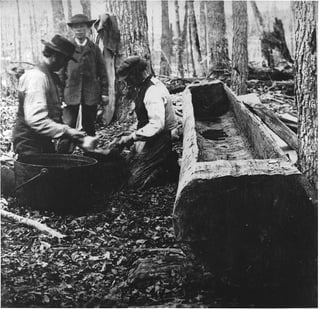
There was no honey bee here before the settlers; the country’s older sweeteners were maple sap in the east and birch sap in the north. The black bee of western Europe was in North America by the 1620s and, a federal bulletin wrote in 1923, “has now spread all over Canada”: swarms reached the Quebec City region about 1805, two hives arrived at Victoria by ship in May 1858, and the experimental farm at Brandon, Manitoba, kept bees from 1889. For its first century Canadian honey was an eastern honey. In 1924, the first year Statistics Canada counted the crop, Ontario made two-thirds of it and Quebec a quarter, from white clover, sweet clover, basswood and buckwheat; an Ontario co-operative formed the year before was shipping it to England by the carload, and a federal booklet sold it abroad as “light in colour and delicately flavoured”.
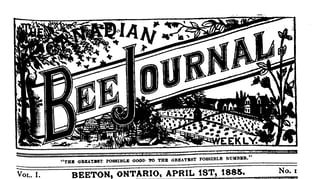
Commercial beekeeping in Canada began at a village renamed Beeton in 1874, and its founder later lined the streets with basswood.
David Allanson Jones set two colonies on a farm near Clarksville, north of Toronto, in 1870, and by 1880 was taking 70,000 pounds of honey from 400 colonies. The village was renamed Beeton for his bees in 1874. He brought breeding stock from Cyprus and Palestine and mated his queens in isolation on islands in Georgian Bay, was the first president of the Ontario Beekeepers' Association from 1880, and founded the Canadian Bee Journal as a weekly in 1885; the whole run is digitised at Canadiana. After his factory burned in 1893, foul brood, the bacterial disease of bee larvae, took his hives and he went bankrupt. He spent his last years on the village itself, and had its streets planted with the trees bees like: soft maple, basswood and elm.
Sweet clover and white clover “came to us like any other wild weed”, a Manitoba beekeeper wrote in the Canadian Bee Journal in 1912, and said he could fairly label his honey pure white clover; by 1934 the Dominion Apiarist called the plant practically the only source of surplus honey, “a veritable paradise for the beekeeper”. The prairie provinces made five per cent of Canada’s honey in 1924 and a third by 1936; in 1945 they out-produced Ontario, and this century they have made about four-fifths of the crop. A second flow joined the clovers: rapeseed was in the hive by 1960, the rapeseed bred for a food oil at Saskatoon and Winnipeg was named canola in 1978, and its acreage rose from 1.4 million in 1965 to 23 million in 2026. The honey off that ground is white or water white, and sets fast.
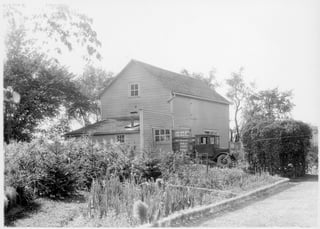
Canada graded honey for export by colour from the mid-1930s, and the beekeepers’ co-operatives of the three prairie provinces, Manitoba’s from 1938 and Alberta’s from 1940, pooled their members’ drums by colour and, in the 1970s, sold them under one name, Bee Maid. Rapeseed honey set so quickly that by 1972 packers were keeping it out of liquid packs. Prairie honey had been sold granulated since the 1920s, and creamed at scale from a plant at Bassano, Alberta, setting a seventh of Canada’s honey by 1969, by the method Elton Dyce of the Ontario Agricultural College patented in 1935: honey heated, cooled to 14 degrees and seeded with fine crystals so that it sets smooth enough to spread. Creamed became the prairie form, and Japan its named market.
Canola nectar is about half glucose and half fructose, and a honey of that make-up sets within weeks.
Nectar from canola carries glucose and fructose in roughly equal measure and almost no sucrose, a Guelph study of twenty-five varieties found in 1991, and a Manitoba field study of hybrid nectar in 1998 measured the same. Glucose is the sugar that crystallises, so a honey whose glucose outweighs its water by more than about two to one sets in weeks; the International Honey Commission's rapeseed sheet and the crystallisation tables Eva Crane compiled put canola, the sweet clovers, the true clovers and alfalfa all among the rapid setters. The beekeepers knew it first: a British Columbia agriculture department note reprinted in the apiculturists' 1960 proceedings called rapeseed "very attractive to honey bees" and its honey quick-granulating, and in 1985 Manitoba beekeepers reported far more granulation in the comb than usual, laid to cool weather and canola.
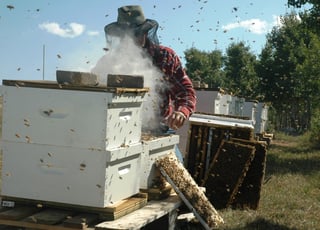
Since the 1960s the bees have also been paid for pollination. Hive rental to blueberry growers from the mid-1960s made beekeeping in New Brunswick a living, the Tantramar Heritage Trust records, and the barrens draw hives from across the east each June: New Brunswick brings in about three times its own colonies for the bloom, and some 30,000 hives go onto the 30,000 hectares of wild blueberry around Lac-Saint-Jean each June. On the prairie the hybrid seed canola fields of southern Alberta take tens of thousands of colonies. In British Columbia three-quarters of all colonies were on pollination contracts in 2024. Agriculture and Agri-Food Canada valued the pollination in 2021 at $3.18 billion a year, $7 billion with hybrid canola seed; the honey crop was worth $241 million in 2025. Blueberry blossom honey exists because of the hire, and British Columbia is a pollination province first.
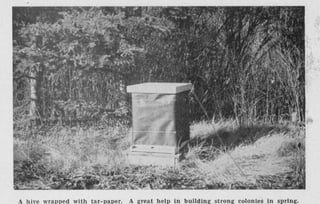
The winter is the other limit, and everywhere the harder one: a colony lives until spring on the honey it has stored. For most of the twentieth century prairie beekeepers did not keep colonies through it: they killed them each autumn and restarted each April with package bees from the southern United States. Packages let honey be made farther north than a colony could be wintered, and canola honey, which sets in the comb, makes poor winter stores. The turn back to wintering began in the 1970s as package prices climbed; in 1987 Canada closed the border to American packages over two mites, and it is still closed, the CFIA ruling again in August 2025; keeping colonies alive through winter became the rule, and today a fifth of Canada’s colonies winter indoors. Losses have averaged 28 per cent since 2007 and reached 45 per cent in 2022, when the crop was the smallest in over a decade; in 2025 Canada counted a record 854,653 colonies.
In 2024 Canada imported 300,000 queens, and fewer than one beekeeper in ten breeds their own.
The kill-and-restart system is in print: a Saskatchewan apiculturist's 1998 manual still carries a section on using calcium cyanide to kill colonies, the practice the 1987 closure ended. Since then the bees that replace winter losses have come by air. In 2024 Canada imported 300,000 queens, 84 per cent of them from the United States. A 2021 survey found that fewer than a tenth of Canadian beekeepers breed queens, and that when passenger flights stopped in 2020 the year's package imports fell by two-thirds. Breeding a bee that winters here is the answer: the Saskatraz programme began in 2004 at an isolated Saskatchewan apiary, selecting colonies for mite tolerance and wintering without chemical miticides, and the apiary was named for its isolation.
Quality and Standards
Canadian honey is labelled in grades and colours, and the two are separate declarations. Under the Safe Food for Canadians Regulations, the grade – Canada No. 1, No. 2 or No. 3 – is a quality statement: No. 1 requires moisture at 17.8 per cent or less, cleanliness through a fine sieve, minimum enzyme activity, and a flavour free of taint. The colour class – White, Golden, Amber or Dark on consumer jars, a six-class scale from Extra White for the bulk trade – is legally a description of “hue or shade,” read in liquid form on a honey classifier or Pfund grader, the trade’s colour-measuring instruments, and it does not affect the grade: a dark honey can be Canada No. 1. Graded domestic honey is marked “Product of Canada” or “Canadian Honey”; a mixture must say so on its face – “A Blend of Canadian and (source) Honey.” The colour grading is old: export honey has been graded since 1935 and the domestic market’s since 1939.
Authenticity is tested by laboratory chemistry. Since 2018-19 the Canadian Food Inspection Agency has run targeted surveillance on honey using two laboratory methods – stable isotope ratio analysis for cane and corn sugars, and nuclear magnetic resonance for the wider field of added syrups. The first cycle found over a fifth of targeted samples adulterated – every one of them imported; all domestic samples passed – and blocked some 12,800 kilograms of fake honey at the border, with over 83,000 kilograms stopped the following year. The testing is risk-targeted rather than random, so those figures describe the surveillance, not the marketplace – the agency itself is careful on the point.
The border has bee-health law of its own. Packages of live bees from the United States have been barred since 1987 under the Health of Animals Regulations, a closure upheld by risk assessments in 2003 and 2014; American queens, individually inspectable, are allowed. Approved package sources are New Zealand, Australia, Chile and Italy. A federal consultation on reopening the package border closed in early 2025, and on 6 August 2025 the CFIA ruled that the restriction stays: four hazards, Africanized bees, American foulbrood (a bacterial disease of the brood), the small hive beetle and the varroa mite, remain above acceptable risk.
Canada guarantees origin voluntarily: Aliments du Québec labelling (at least 85 per cent Quebec ingredients, processed and packed in Quebec, verified product by product), organic certification through accredited agencies – and the federal grade marks, which are the main declaration on a Canadian jar. No Canadian honey carries a geographical indication or reserved appellation; Quebec’s register of protected designations lists nine products, none of them a honey.
Specialty Retailers
- Miels d’Anicet (Ferme-Neuve, Quebec; first family hive 1978). Raw seasonal honeys from wild Hautes-Laurentides forage, a queen-breeding operation, a farm restaurant, and Miel: l’art des abeilles, written with Anne-Virginie Schmidt. Boutique open daily year-round as published in August 2026; check before travelling.
- Intermiel (Mirabel, Quebec; founded 1976). Guided tours seven days a week in summer as published in August 2026, hive openings, a meadery and distillery – fifty years running and more than 115,000 visitors a year. Check before travelling.
- Miels Liaison (Quebec). A beekeeper-curator presenting Quebec micro-terroir honeys the way wine is presented – aromas, intensities, honey-and-cheese pairings – with partner beekeepers completing the range.
- Main Street Honey Shoppe (Vancouver; two shops). Thirty-plus honeys on Main Street and at the North Vancouver Shipyards when the range was read in August 2026, unpasteurized and BC-leaning; New Zealand’s True Honey Co. lists the Main Street shop among its Canadian stockists, the one honey shop on a list of pharmacies and health-food stores.
- Ontario Honey House (Toronto). A Corso Italia shop stocking honey from 32 independent Ontario beekeepers, by its own count in December 2025 – the province’s varietal range in one room, with classes alongside and apitherapy, hive products used as treatments.
- Planet Bee Honey Farm (Vernon, British Columbia; founded 1997, on Bella Vista Road since 2003). Raw honeys from fireweed to dandelion and knapweed blossom, tasted free, with observation hives and garden tours in the Okanagan; open all year as published in August 2026.
- Wendell Estate Honey (Roblin, Manitoba). A family operation keeping bees since the 1930s on the Saskatchewan-Manitoba border bottling estate raw prairie honey – World Beekeeping Awards gold at Montreal 2019.
- BeeMaid Honey (Winnipeg and Spruce Grove). The beekeeper-owned prairie co-operative that packs, tests and exports much of the western crop for the beekeepers who own it.
Competition Record
- World Beekeeping Awards, Apimondia Montreal 2019 – gold, soft-set honey: Wendell Estate Honey (Roblin, Manitoba, from family hives on the Saskatchewan-Manitoba border), at the congress where 45 per cent of entries failed laboratory testing; the same producer took bronze in 2023.
- American Honey Show 2024 – Best of Show, Honey: Amanda and Jeff Lee of Honey Bee Zen Apiaries / Swan Valley Honey (Creston, British Columbia), with a creamed honey that also took first in Class L; the same entry list gives them first in Class A, Water White, the palest colour class judged. The producer says these were the first wins by Canadians in the show’s history; the ABF’s results do not say so.
- Royal Agricultural Winter Fair 2024 – Professional Grand Champion Liquid Honey and Premier Exhibitor: Beamish Honey (Barrie, Ontario); Amateur Grand Champion Liquid Honey: Steven Coyle (Kitchener, Ontario).
- Royal Agricultural Winter Fair 2025 – Beamish Honey repeated as Grand Champion; the Lorna Robinson Trophy for white honey went to M & N Honey of Gillam, Manitoba, at the fifty-sixth parallel.
- London International Honey Awards – Three Foragers Bee Co. (Saskatchewan): Platinum 2022 for its white honey and Gold 2026 for a multifloral honey; Dr. Bee (British Columbia): Gold in 2022, 2023 and 2025 for ‘Ice Honey’, a multifloral the producer describes as northern Alberta wildflower.
- Coupe des Nations (Quebec City; held since 2000, its 26th edition in 2026) – a national wine, spirits and terroir-products competition with a mead class: in 2026 Grand Or medals went to Intermiel (Mirabel) and to Miel Nature (Beauharnois), whose Chouchou Qc was the top-scoring mead and whose Coupe golds run back to 2005.
Festivals and Events
- Le Printemps des vins et spiritueux de miel du Québec – across Quebec, ten days in late May (22 to 31 May in 2026, the fourth edition). The province’s meaderies open their doors, with tastings at the SAQ and honey alcohols on restaurant menus, run by the Association des producteurs d’hydromels et d’alcools de miel du Québec: honey drunk rather than eaten, from dry hydromel to honey spirits.
Illustrative Links
- Statistical overview of the Canadian honey and bee industry, 2025 – Agriculture and Agri-Food Canada’s annual statistical reference: colonies, beekeepers, production, trade and pollination value. (Agriculture and Agri-Food Canada)
- The Canadian beekeeping industry in overview – The national association’s own portrait of the industry: who keeps bees where, what the seasons allow, and what pollination is worth. (Canadian Honey Council)
- Honey authenticity requirements in Canada – How the federal agency tests honey for added sugars, and what importers and sellers must prove. (Canadian Food Inspection Agency)
- The Canadian Bee Journal, digitized from 1885 – The full run of D.A. Jones’s weekly, readable page by page from volume one. (Canadiana)
- The Honey Bee Research Centre at the University of Guelph – Apiculture research and teaching at the Ontario Agricultural College since 1894: courses, public tours and a honey shop whose sales fund bee-health science. (University of Guelph)
- The Royal’s honey, beeswax and mead competition – Honey judging at the Royal Agricultural Winter Fair, founded in 1922, each November in Toronto. (Royal Agricultural Winter Fair)
- The Bee King of Beeton in the Dictionary of Canadian Biography – The scholarly life of D.A. Jones: the hives, the queens, the journal, and the town that took his bees’ name. (Dictionary of Canadian Biography)
- Eva Crane’s Canadian bee journey, 1966 – The historian of beekeeping tours package-era Canada: the prairie system, Quebec bee cellars, and the Peace River El Dorado. (PDF, Eva Crane Trust – Bee World, 1966)
See also
Further Reading
- Bee Time: Lessons from the Hive – Mark L. Winston (Harvard University Press, 2014): The Canadian apiculture scientist’s meditation on bees and people.
- Revery: A Year of Bees – Jenna Butler (Wolsak & Wynn, 2020): A year of beekeeping on an off-grid boreal Alberta farm – the cold-country beekeeping life firsthand.
- Miel: l’art des abeilles, l’or de la ruche – Anicet Desrochers and Anne-Virginie Schmidt (Éditions de l’Homme, 2013): a honey-gastronomy book in French, from the Hautes-Laurentides queen breeder and his partner.
Sources
110 Sources - Click here to display
- Statistics Canada. Production and value of honey, Table 32-10-0353-01 (2025 crop year, released December 2025). statcan.gc.ca
- Statistics Canada (2026). Principal field crop areas, seeded acreage release. statcan.gc.ca
- Agriculture and Agri-Food Canada (2026). Statistical Overview of the Canadian Honey and Bee Industry, 2025. agriculture.canada.ca
- Manitoba Agriculture (2026). Apiary: beekeeping in Manitoba, apiary program page. gov.mb.ca
- British Columbia Ministry of Agriculture (2015). Apiculture Bulletin 101, Beekeeping in British Columbia, updated August 2015. gov.bc.ca
- British Columbia Ministry of Agriculture and Food (2025). Beekeeping production and market estimates, 2024. gov.bc.ca
- Government of Newfoundland and Labrador (2026). Apiculture: honey bee health and import requirements. gov.nl.ca
- Government of Newfoundland and Labrador (2025). Farm Guide, honey listings and interesting facts. gov.nl.ca
- Government of the Northwest Territories, Industry, Tourism and Investment (2017). Project Made Possible: Beehives Come to Norman Wells, 22 August 2017.
- Government of Saskatchewan (2005). Province Funding Bee Research, news release, 7 February 2005. saskatchewan.ca
- United States Customs and Border Protection (2026). Import statistics, honey, by Canadian province, January to July 2026.
- Canadian Food Inspection Agency (2026). Canadian Grade Compendium, Volume 6: Honey, incorporated by reference under the Safe Food for Canadians Regulations. inspection.canada.ca
- Canadian Food Inspection Agency (2026). Labelling requirements for honey, Safe Food for Canadians Regulations section 276. inspection.canada.ca
- Canadian Food Inspection Agency (2019). Enhanced honey authenticity surveillance, 2018-2019. inspection.canada.ca
- Government of Canada (2019). Government of Canada prevents nearly 12,800 kg of adulterated honey from entering the Canadian market, news release, July 2019. canada.ca
- Government of Canada (2020). Government of Canada protects Canadians against food fraud in honey and other products, news release, December 2020. canada.ca
- Canadian Food Inspection Agency (2026). Health of Animals Regulations, honey bee package import prohibition, with the 2003 and 2014 risk assessments. inspection.canada.ca
- Canadian Food Inspection Agency (2025). Risk mitigation options for the importation of honey bee packages from the United States, closed consultation, issued 7 November 2024, modified 7 August 2025. inspection.canada.ca
- Canadian Food Inspection Agency (2025). Notice to Industry, decision on risk management related to the importation of honey bee packages from the United States, 6 August 2025. inspection.canada.ca
- Canadian Food Inspection Agency (2024). Statement, The Government of Canada welcomes the Paradis Honey Ltd. v. Canada Federal Court decision, 2 December 2024: permitted sources of honey bee packages and queens. canada.ca
- Canadian Association of Professional Apiculturists (2022). Statement on Honey Bee Wintering Losses in Canada, 2021-2022. capabees.com
- Canadian Association of Professional Apiculturists (2025). Annual colony loss report, 2025. capabees.com
- Canadian Association of Professional Apiculturists (1960). Proceedings of the annual meeting. capabees.com
- Canadian Association of Professional Apiculturists (1972). Proceedings of the annual meeting. capabees.com
- Canadian Association of Professional Apiculturists (1975). Proceedings of the annual meeting: British Columbia Apiary Branch report. capabees.com
- Canadian Association of Professional Apiculturists (1978). Proceedings of the annual meeting: British Columbia Ministry of Agriculture, Apiculture Branch, projects 1977/78. capabees.com
- Canadian Association of Professional Apiculturists (1982). Proceedings of the annual meeting: Alberta and Prince Edward Island apiculturists' reports. capabees.com
- Canadian Association of Professional Apiculturists (1985). Proceedings of the annual meeting. capabees.com
- Atlantic Tech Transfer Team for Apiculture (2026). Review of the New Brunswick Beekeepers' Association Annual General Meeting 2026, March 2026. atttabuzz.com
- Crane, E. (1966). A Canadian Bee Journey. Bee World, 47. Eva Crane Trust archive. evacranetrust.org
- Crane, E. (1980). Apiculture. In *Perspectives in World Agriculture* (pp. 261-294). Commonwealth Agricultural Bureaux.
- Canadian Honey Council (2019). Hivelights, Fall 2019, Apimondia Montreal 2019 president's report. honeycouncil.ca
- Dominion Department of Agriculture (1924). Canadian Fruit, Vegetables and Honey. https://doi.org/10.5962/bhl.title.58343
- Gooderham, C.B. (1923). Bees and How to Keep Them. Dominion Department of Agriculture, Bulletin 33, New Series. publications.gc.ca
- Gooderham, C.B. (1926). Wintering Bees in Canada. Dominion Department of Agriculture, Bulletin 74, New Series. publications.gc.ca
- Gooderham, C.B. (1934). Bees and How to Keep Them. Dominion Department of Agriculture, Bulletin 169, New Series.
- Dominion Department of Agriculture, Division of Bees (1931-1933). Progress report of the Dominion Apiarist. publications.gc.ca
- Dominion Department of Agriculture, Division of Bees (1934-1936). Progress report of the Dominion Apiarist. publications.gc.ca
- British Columbia Department of Agriculture (1921). *Fifteenth Annual Report of the Department of Agriculture for the Year 1920*, reports of the Inspectors of Apiaries. Sessional Papers of the Province of British Columbia. https://doi.org/10.14288/1.0226032
- Skeoch, A. (1994). Jones, David Allanson. Dictionary of Canadian Biography, vol. 13 (1901-1910). biographi.ca
- Société du patrimoine des Beaucerons (2021). L'apiculture en Beauce: histoire d'une exploitation marginale, 20 May 2021, citing Forget and Turcotte, Histoire de l'apiculture québécoise 1608-1966. spbbeauce.ca
- Canadian Bee Journal (1885 onward). Digitized run, Canadiana.
- The Canadian Bee Journal (1909). Vol. 17, no. 9, September 1909: Canadian National Exhibition prize list, honey exhibit report and the Buckwheat Honey Crop Report of 8 September 1909. Canadiana, oocihm.8_04191_530.
- Gunn, G. G. (1912). Bee Keeping on the Prairies. *The Canadian Bee Journal*, 20(6), 177-179. https://www.canadiana.ca/view/oocihm.8_04191_562
- Ontario Beekeepers' Association (1880). Constitution. Canadiana.
- Ontario Beekeepers' Association (2022). A note from Gard Otis re winter losses, July 2022. ontariobee.com
- Ingenium, Canada Science and Technology Museum (2026). Dominion Honey Classifier, F.W. Jones and Son, artifact 2002.0127.001. collection.ingenium.ca
- Ingenium (2026). Bees: A Honey of an Idea, bilingual virtual exhibition. bees.ingenium.ca
- University of Guelph Honey Bee Research Centre (2026). About us and tour information. hbrc.ca
- Brandon Research Station (1986). Brandon Research Station 1886-1986: a centennial history. Agriculture Canada.
- Szabo, T.I., and Nelson, D.L. (1986). Beekeeping in Western Canada. Agriculture Canada Publication 1542/E, revised 1981, reprinted 1986. publications.gc.ca
- Gruszka, J. (Ed.) (1998). Beekeeping in Western Canada. Alberta Agriculture, Food and Rural Development, Edmonton.
- Moeller, F. E. (1977). *Overwintering of Honey Bee Colonies*. Production Research Report No. 169. Agricultural Research Service, United States Department of Agriculture.
- Dyce, E.J. (1935). United States Patent 1,987,893, filed 26 March 1931, granted 15 January 1935.
- Galt Museum and Archives (2021). How Sweet it is: Beekeeping in Southwestern Alberta, by Aimee Benoit; Early Beekeepers in Southern Alberta, Lethbridge. galtmuseum.com
- Kevan, P.G., Lee, H., and Shuel, R.W. (1991). Sugar ratios in nectars of varieties of canola (Brassica napus). *Journal of Apicultural Research*, 30(2), 99-102.
- Pernal, S. F., and Currie, R. W. (1998). Nectar quality in open-pollinated, pol CMS hybrid, and dominant SI hybrid oilseed summer rape. *Canadian Journal of Plant Science*, 78, 79-89. https://doi.org/10.4141/P97-071
- Manikis, I., and Thrasyvoulou, A. (2001). The relation of physicochemical characteristics of honey and the crystallization sensitive parameters. *Apiacta*, 36, 106-112.
- Persano Oddo, L., and Piro, R. (2004). Main European unifloral honeys: descriptive sheets. *Apidologie*, 35(Suppl. 1), S38-S81.
- United States Department of Agriculture, Forest Service (1990). Silvics of North America, Volume 2, Tilia americana. fs.usda.gov
- Cornell University, College of Agriculture and Life Sciences (2026). Beekeeping calendar for the Northeast. cals.cornell.edu
- McAfee, A. (2020). Chasing Fireweed. *American Bee Journal*, May 2020.
- Up Here (2020). Chasing Fireweed Honey, by Kaylee Maddison, November/December 2020.
- Ovinge, L.P., and Hoover, S.E. (2018). Comparing honey bee colony management for hybrid canola seed pollination and honey production. *Journal of Economic Entomology*, 111(4). https://doi.org/10.1093/jee/toy155
- Levesque, M., McCune, F., Fournier, V., and Giovenazzo, P. (2025). Historical agroeconomic analysis of the relationship between commercial pollinator use and Vaccinium angustifolium (Ericales: Ericaceae) yield in Quebec, Canada (2015-2021). *Journal of Economic Entomology*, 118(6), 3052-3065. https://doi.org/10.1093/jee/toaf242
- Bixby, M., Polinsky, M., Scarlett, R., Higo, H., Common, J., Hoover, S., Foster, L., Zayed, A., Cunningham, M., and Guarna, M. (2021). Impacts of COVID-19 on Canadian beekeeping: survey results and a profitability analysis. *Journal of Economic Entomology*, 114(6), 2245-2254.
- Tantramar Heritage Trust (2021). The White Fence, no. 95: Philip Bishop, Bee King of the Maritimes, Sackville. tantramarheritage.ca
- Hicks, B.J. (2014). The History and Present Status of Honey Bee Keeping in Newfoundland and Labrador. *The Osprey*, 45(3), 11-14.
- Kevan, P.G. (2015). Beekeeping. *The Canadian Encyclopedia*. Historica Canada. Original article published 2006.
- Werner, L. H. (2022). Maple Syrup Industry. *The Canadian Encyclopedia*. Historica Canada. Original article published 2006.
- Golebiowski, L. (2024). Season of the Birch: Continuing Practices of Woodland Cree First Nation. *RETROactive*, Alberta Historic Places, Government of Alberta, 19 June 2024.
- Oertel, E. (1980). History of beekeeping in the United States. In *Beekeeping in the United States*, Agriculture Handbook 335. United States Department of Agriculture.
- Robertson, A. J. (2010). The Saskatraz Project: A Review (2004-2009). Saskatchewan Beekeepers' Association Honey Bee Breeding Program, Meadow Ridge Enterprises, Saskatoon.
- CBC News (2026). Beekeepers push for 'buy Canadian' movement as U.S. honey tariffs block top export market, by Nadeer Hashmi, Edmonton, 6 September 2026. cbc.ca
- Institut de la statistique du Québec (2026). Portrait de l'apiculture au Québec en 2024. statistique.quebec.ca
- Conseil des appellations réservées et des termes valorisants (2026). Liste des produits sous appellation réservée, May 2026. cartv.gouv.qc.ca
- Royal Agricultural Winter Fair, Toronto (2026). Honey, Beeswax and Mead competition results. royalfair.org
- American Beekeeping Federation (2024). 2024 American Honey Show Winners. *ABF Quarterly*, 82(1), 10.
- Coupe des Nations (2026). Compétition nationale de vins, alcools et produits du terroir, Québec: Gagnants, Lauréats 2026 and Prix spéciaux 2025. coupedesnations.com
- Miel Nature (2026). Distinctions, producer site, Beauharnois, Québec.
- Ontario Association of Agricultural Societies (2026). Liquid Honey Competition, Pure, Ontario #1, White: rules for 2026 fairs and 2027 convention.
- London International Honey Awards (2022, 2023, 2025, 2026). Quality Awards results by year. honeyawards.com
- Canola Council of Canada (2026). History of canola. canolacouncil.org
- Les Apiculteurs et Apicultrices du Québec (2026). Entreprises apicoles d'ici, member directory and product categories; Étiquetage du miel. apiculteursduquebec.com
- Aliments du Québec (2026). Foire aux questions, the criteria of the mark. alimentsduquebec.com
- Miels d'Anicet (2026). Producer site and boutique information, Ferme-Neuve, Quebec. mielsdanicet.com
- Intermiel (2026). Producer site and visit information, Mirabel, Quebec. intermiel.com
- Miels Liaison (2026). Producer site, Quebec. miels-liaison.ca
- Main Street Honey Shoppe (2026). Retailer site, Vancouver. mainstreethoney.com
- The True Honey Co. (2026). Stockists, New Zealand.
- Ontario Honey House (2026). Retailer site, Toronto: How we're building Bees Are Life. ontariohoneyhouse.ca
- Planet Bee Honey Farm (2026). Producer site, Vernon, British Columbia: Origins; Visit our farm. planetbee.com
- Wendell Estate Honey (2026). Producer site, Roblin, Manitoba. wendellestate.ca
- BeeMaid Honey (2026). Co-operative site and company history, Winnipeg and Spruce Grove. beemaid.com
- Pedersen Apiaries (2022). Frequently asked questions, Cut Knife, Saskatchewan.
- Greidanus Honey Mill (2026). Farm gate hours and August fill days, High River.
- Nixon Honey Farm (2026). August farm sales, Red Deer County. nixonhoney.ca
- Clovermead Apiaries (2026). Honey shop range and refillery tank cards, Aylmer, Ontario. clovermead.com
- Gees Bees Honey Company (2026). Linden, buckwheat and fall wildflower honey product pages, Ottawa. geesbees.ca
- Huckleberry Hives (2026). Raw basswood honey product page, Ontario. huckleberryhives.ca
- Miel de la Garde (2026). Tilleul, sarrasin and verge d'or honey pages, Prévost, Québec. mieldelagarde.com
- Miel Picard (2026). Miel de bleuetière and honey range, Normandin, Quebec. mielpicard.com
- Sunny Acres Honey (2026). Wild blueberry blossom honey and farm store, Brule Shore, Nova Scotia. sunnyacreshoney.com
- Miellerie Charlo Honeyhouse (2026). Honey range and visits, Charlo, New Brunswick. charlohoney.com
- Adelaide's Newfoundland Honey (2026). Farm sales and honey information, Goulds.
- Pollen Nation Farm (2026). Farm, tours and the Newfoundland Honeybee Festival, Little Rapids. pollennationfarm.ca
- HACCI 1912 (2026). Canadian white clover honey product listing, Tokyo. hacci1912.com
- Halifax Seaport Farmers' Market (2026). Market days and vendor roster, Pavilion 23, Halifax. halifaxfarmersmarket.com
- Le Marché St. Norbert Farmers' Market (2026). Market days and hours, Winnipeg.
- Association des producteurs d'hydromels et d'alcools de miel du Québec (2026). Le Printemps des Vins et Spiritueux de miel du Québec, fourth edition, 22-31 May 2026. mielaboire.ca