
Newfoundland Honey
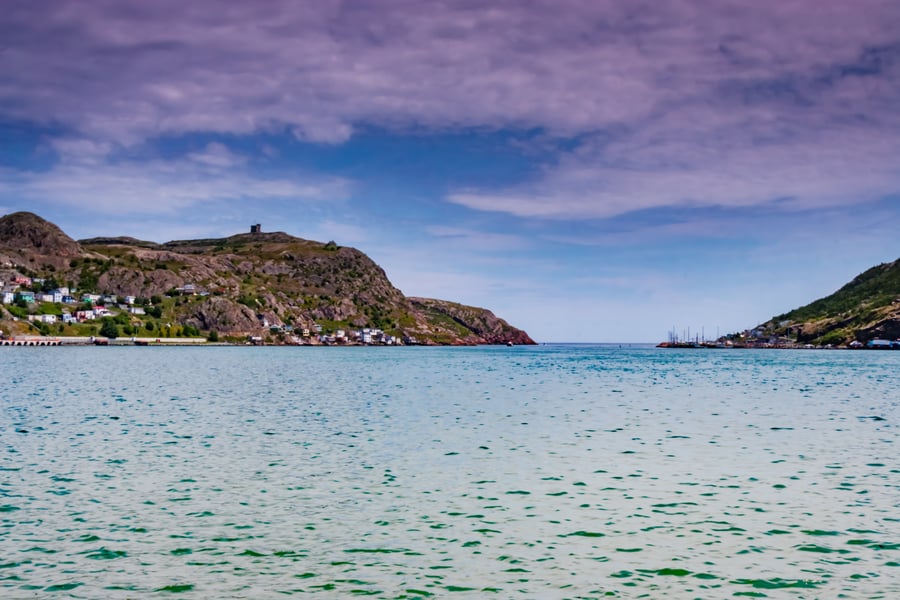
Within living memory, Newfoundland was a country. It had its own currency, its own stamps, its own national anthem, and its own regiment in the First World War. The war debt helped bankrupt it: in 1934 it handed its self-government back to Britain, and in 1948 it voted on its future twice – the second time, 78,323 to 71,334, to join Canada. It became the tenth province at one minute to midnight on March 31, 1949, with the ferry to the mainland written into the Terms of Union. The anthem is still sung. The old pink-white-and-green flag still flies on Water Street, over shops selling “Republic of Newfoundland” shirts for a republic that never existed.
Europeans had been coming for four and a half centuries by then – John Cabot made landfall in 1497 – but Newfoundlanders lived from the sea, not the land. The island is rock, bog and boreal forest, bigger than Ireland, and the drive from the western ferry to St. John’s runs 905 kilometres; the province itself compares it to driving Paris to Berlin. People lived in outports facing the water, and everything else came by boat: flour, tea, and molasses by the cask – the island’s sweetener, taken in trade for salt cod.
Many people still arrive by sea – seven hours from North Sydney to Port aux Basques on the ferry the constitution requires, or the summer overnight boat to Argentia. Flights land at St. John’s for the east and Deer Lake for the west, and the two ends make different trips. On the Avalon you can fire the noon gun on Signal Hill yourself, walk streets of painted row houses rebuilt after the 1892 fire, and take a boat out to a quarter-million pairs of puffins at Witless Bay. In the west you walk on the earth’s exposed mantle at the Tablelands and ride a boat between the six-hundred-metre walls of a landlocked fjord. Icebergs drift past the northern headlands in late May and June. From a wharf on the Burin Peninsula, a ninety-minute ferry puts you in France – Saint-Pierre, with euros and French law. A bar on George Street will swear you in as an honorary Newfoundlander with a shot of rum and a cod to kiss; a Twillingate garage show hands you an instrument; and stay anywhere long enough and an invitation to Sunday Jiggs dinner tends to follow.
Judge Prowse’s 1896 history of the island – six hundred and sixty-seven pages – records the molasses trade in detail and no beekeeping at all. The first recorded hives went up at Harbour Grace in 1929, kept by a man just home from Alberta, who took two hundred pounds of honey from a single colony in his first summer.
Food
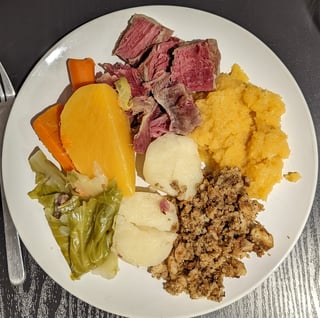
The meal to look for is Jiggs dinner, the Sunday boiled dinner: salt beef from a bucket, cabbage, turnip and potato in one pot, pease pudding and a raisin duff steaming in cloth bags alongside. It is a home meal first, and being asked to one is the best way to eat it. Failing an invitation, O’Reilly’s on George Street serves it Friday through Sunday, and the Port de Grave Peninsula Heritage Society serves a turkey version every Sunday in season. Most of the rest of the traditional table came off ships or out of the bogs.
Pan-fried cod tongues in Petty Harbour, fries with dressing and gravy, and spring's seal flipper trucks
Eat your way along the traditional counters of St. John's: toutons -- fried bread dough under molasses -- at the Classic Cafe, and cod tongues with scrunchions at Chafe's Landing in Petty Harbour. Order the tongues pan-fried; reviewers warn off the deep-fried version. Ches's and the Duke of Duckworth have competed on fish and chips for decades; order yours "with dressing and gravy," the dressing seasoned with summer savoury grown commercially at one St. John's farm.
Moose reaches restaurant menus through a licence system: a hunter may sell an animal to a kitchen holding a wild-meat service licence, prepared meals only. The Jackladder on Route 430 near Deer Lake sells moose burgers under one. In spring, seal flipper arrives: year-round at Bidgood's supermarket in the Goulds, from Taylor's truck on Harbour Drive in the days before Good Friday, and at Wesley United's church flipper dinner, held for about fifty years, thirty dollars a plate.
In summer you can catch the meal yourself. The recreational cod fishery requires no licence, five fish a day, and named operators cook the catch: Fishing for Success in Petty Harbour, a non-profit, takes you handlining from dories -- a Newfoundlander who went out with them wrote that "it stirred something deep -- pure nostalgia, pride, and connection to our roots." The Daily Catch on the Northern Peninsula fries yours at its own restaurant. Season dates change each year; check the federal fishery notice.
The boil-up -- a kettle boiled over a fire on a beach or in the woods, with bread, tea and whatever the day brought -- is a living habit, and two operators will seat you at one: Wildera's foraging walks on the Irish Loop end at a fire with mussels and fish cakes, and Bonavista Adventure Tours cooks capelin, cod cheeks and moose over a beach fire at sunset.
Bakeapples at two hundred dollars a gallon, the 1924 factory that ran out of jam, and a seaweed gin
Bakeapples -- cloudberries, one amber berry per plant -- ripen in the bogs in August and are sold in jars and buckets from roadside trucks, lately at one to two hundred dollars a gallon. The "gallon" is often a reused salt-beef bucket that holds fourteen cups, so locals buy by the pound. Partridgeberries follow after first frost. At Dark Tickle in St. Lunaire-Griquet, near the Viking site, a third-generation firm makes berry preserves while you watch and keeps a boardwalk you can follow through its own berry bog.
Purity Factories has made the island's hard bread, Jam Jams and Peppermint Nobs on the same St. John's site since 1924. In 2025 it stopped making jam: a drought summer left too few berries to buy. Production is expected back in fall 2026.
Raymonds, the St. John's restaurant that led national lists, closed; its chefs now run Portage and The Merchant Tavern on Water Street, and Terre at the harbourfront. In Bonavista, the Boreal Diner buys cod directly from the boats under a 2015 law that first allowed it.
Quidi Vidi Brewery makes its Iceberg Beer with water harvested from icebergs. The Newfoundland Distillery Co. at Clarke's Beach makes a seaweed gin -- a double gold at the San Francisco World Spirits Competition -- and an aquavit with every ingredient grown on the island: Cormack barley, Mount Scio savoury, honey from a Grand Falls-Windsor bee farm. Port Rexton Brewing's taproom stands a short walk from the Skerwink Trail loop.
Culture
If you wake in St. John’s on the first Wednesday of August, check before breakfast whether the city has the day off: the holiday holds only if the weather committee, meeting beside Quidi Vidi Lake at 5:30 that morning, rules that the rowing can go ahead. Then join the tens of thousands at the lakeside. The Royal St. John’s Regatta – first recorded races 1816, and widely described as the oldest continuing organized sporting event in North America – runs fixed-seat shell races past the game booths all day. If the wind is wrong, the holiday moves to the next suitable day; locals call the night-before gamble “Regatta Roulette.” The rest of the year keeps its own fixed dates.
Folk Night since 1976, forget-me-nots on July 1, mummers in December, and a powwow that welcomes everyone
About ten dollars at the door gets you into Folk Night at the Ship Pub, down Solomon's Lane off Duckworth Street -- run every Wednesday since 1976, the city's longest continuously running live music event, with one Wednesday a month given to an open traditional session of twenty or more players.
July 1 is a double day here. The morning is Memorial Day: a parade and ceremony at the National War Memorial at 10:45, blue forget-me-nots worn as the poppy is worn in November, and the Ode to Newfoundland sung -- the anniversary of Beaumont-Hamel, 1916, when the Newfoundland Regiment was destroyed in a morning. Since 2024 the memorial holds the province's own Tomb of the Unknown Soldier, a soldier repatriated from Beaumont-Hamel. Canada Day begins at noon.
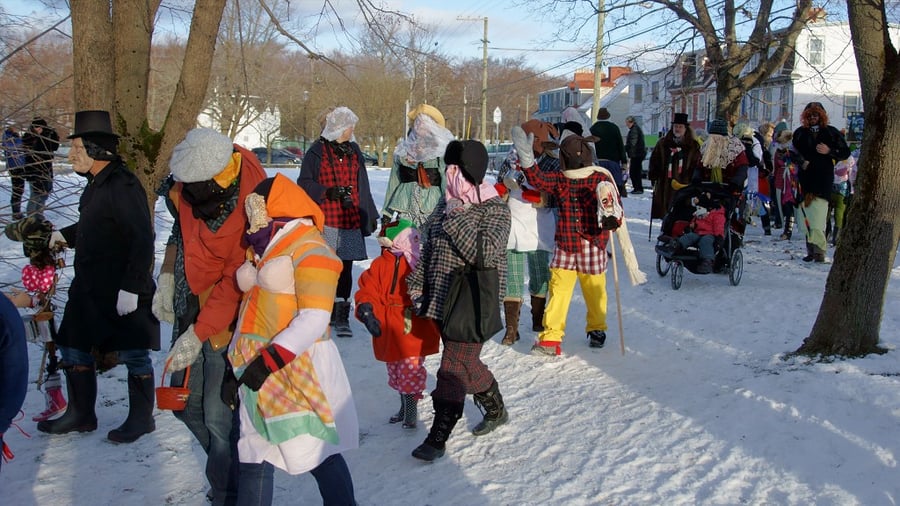
December holds two dates. The Mummers Festival ends with a parade -- typically the second Saturday, from Bowring Park -- and you can march in it: costume bins at the gates let you rig up a disguise on the spot; house-visiting mummers traditionally begin Boxing Day. Tibb's Eve, December 23, is the first drink of the season by south-coast custom that spread provincewide, and the pubs treat it as one of the biggest nights of the year.
Miawpukek First Nation at Conne River holds its Mawio'mi the first weekend of July -- about 2,500 people, dancers and drummers, explicitly open to all, alcohol-free, with camping on the grounds. At Boyd's Cove, on the road to Twillingate, the Beothuk Interpretation Centre ends in a wooded trail to the housepits, past Gerald Squires' bronze of Shanawdithit; in the Spirit Garden, you can tie a shell or feather to a tree.
A boat builder you can watch, knitters' names on the tags, a night in a resettled outport, and a 66-metre tapestry
At the Wooden Boat Museum in Winterton, master builder Jerome Canning works in an open shed, June through September; you can walk in, watch, and ask questions -- or build. Children assemble a full-size dory for $25, a one-day planking workshop runs $100 -- Canning says almost everyone gets a plank on the boat by the end -- a week building a 16-foot Winterton Rodney runs $900, and a 12-week winter course runs with the Marine Institute. A Newfoundlander quoted by the museum gives the why: "You keep songs alive, stories alive. Why not keep boats alive?"
In St. John's, the Quidi Vidi Artisan Studios put ten working craft studios over the harbour wharf, open daily in season. NONIA, at 286 Water Street since 1958, has sold hand-knits since 1920 -- the sales once paid outport nurses' salaries -- and each garment carries the name and community of the woman who knit it. Trigger mitts, the part-glove part-mitten of the fishery, survive because two knitters spent forty years collecting old mittens and charting every stitch into the Saltwater Knits books.
Between 1954 and 1975, government programs moved roughly 30,000 people out of some 300 small communities; houses were floated across the bays behind boats. Woody Island Resort in Placentia Bay puts you overnight in one of those communities -- boat over, traditional meals, a kitchen party, and a second-day run past the other resettled islands -- from $259 a person. The Random Passage site at New Bonaventure, a recreated 1800s outport built for the television series, reopened for its 25th year in 2026.
In Conche, at the end of Route 434 on the French Shore, about a dozen local women stitched the French Shore Tapestry: 66 metres of embroidered narrative in the style of the Bayeux Tapestry, roughly 20,000 hours of work, running from prehistory through the French fishery to the 1992 moratorium. Reviewers call it a hidden treasure, and at least one drove fifty kilometres in to find the centre closed on a day the website said open -- call ahead. On the Port au Port Peninsula, the island's three francophone communities hold their festivals each August.
Natural History
Stand on the cobble beach at St. Vincent’s on the southern Avalon and humpback whales feed within ten metres of you: the seabed drops away that steeply from the shore. The season is late June through August, set by the capelin roll – small silver fish beach themselves to spawn in their millions, and whales, cod and seabirds follow them in. You need no boat; you park, walk down, and watch. Most of what is remarkable in the island’s natural history comes the same way – close, seasonal, and reachable on foot.
Gannets at arm's length, two million invisible storm-petrels, and four moose that became a hundred thousand
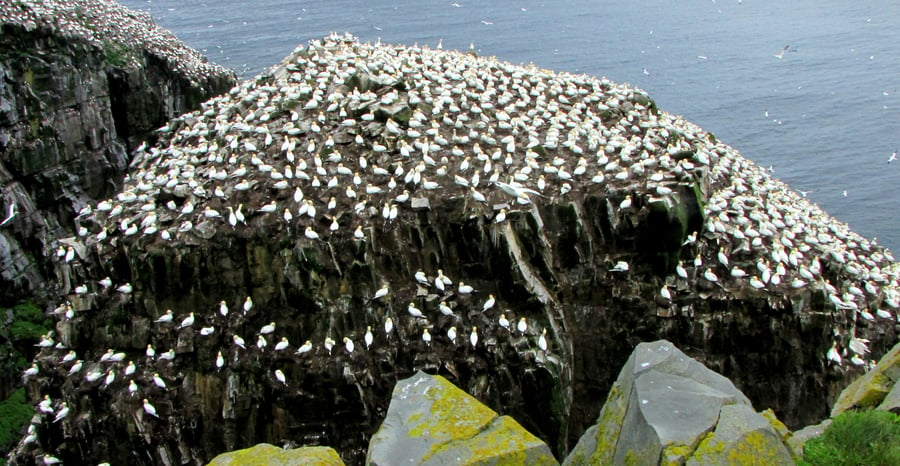
At Cape St. Mary's, three hours from St. John's, the road ends at an interpretive centre and a one-kilometre cliff path puts you a few metres from Bird Rock: a sea stack solid with about 30,000 northern gannets from April to September, close enough that the frequent fog does not close the view. It is the most easily reached large seabird colony in North America, per the province.
Baccalieu Island holds the world's largest colony of Leach's storm-petrels -- about two million pairs, per the published surveys -- and come by day, you see almost none of them: the birds fly to and from their burrows in darkness. The island is a closed ecological reserve, viewed across the tickle from Bay de Verde. Funk Island, farther north, held the great auk's largest colony until the bird was hunted to extinction by 1844; landings are limited to permitted science, and the story is told instead at the Marine Interpretation Centre on Fogo Island, with a bronze auk at Joe Batt's Point facing the empty rock.
The island's land-mammal list is short: fourteen native species, no snakes, no raccoons, no skunks, no porcupines. Moose are not on the native list -- four animals brought from New Brunswick in 1904 grew into a population above one hundred thousand, among the densest anywhere. On Gros Morne's Bakers Brook Trail, a fenced plot shows what the forest does without them: trees inside the fence, grass outside.
The island's wolf was gone by about 1930. The top-predator role sat empty until 1985, when coyotes crossed the winter sea ice from the mainland; the same ice occasionally lands a polar bear on the Northern Peninsula in spring.
The official boundary of a geological period, Welsh trilobites, and the town where trains were stopped by smell
On the shore ten kilometres north of Rocky Harbour, Green Point carries the world's official boundary between the Cambrian and Ordovician periods, ratified in 2000: deep-ocean seabeds tipped on end, so that a walk along the platform takes you across about thirty million years of rock. Visitors say it looks like an average cliff until you reach the bottom of the stairs. With Mistaken Point -- 565-million-year-old fossils of the first large animals, visited by guided tour only, twelve places, twice a day -- and Fortune Head on the Burin Peninsula, the island holds three of the world's reference points for the beginning of animal life.
At Manuels River, twenty minutes from St. John's, the shale carries giant mid-Cambrian trilobites of the same species found in Wales -- evidence that the Avalon Peninsula was once part of a small continent on the far side of a vanished ocean. Geologists named that continent Avalonia, after the peninsula.
By Environment Canada's thirty-year comparison, St. John's is the foggiest, windiest, cloudiest, wettest and snowiest major city in Canada -- and has the third-mildest winter after Victoria and Vancouver. At Wreckhouse, near Port aux Basques, gales funnelled off the Long Range Mountains reach 200 km/h and flip transport trucks; the railway once employed a local farmer, Lauchie MacDougall, to smell the wind and stop the trains, and after the railway ignored him around 1950, twenty-two cars blew off the track.
The provincial flower is the purple pitcher plant, a carnivorous bog dweller that Queen Victoria chose for the Newfoundland penny. Coastal thickets of wind-pruned spruce and fir are called tuckamore. Terra Nova National Park has been a Dark-Sky Preserve since 2018, with viewing areas and loaner star kits; the aurora, though, appears on the island only in strong storms -- Labrador is the aurora country.
Built Heritage
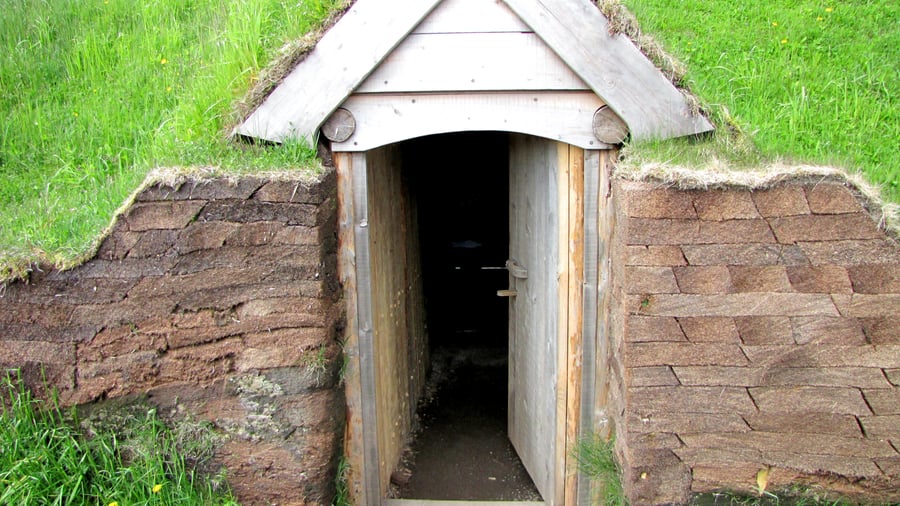
At the island’s northern tip you walk a boardwalk across a bog to the only known Viking site in North America: L’Anse aux Meadows, the sod outlines of the halls a Norse crew raised around the year 1000, with a reconstructed camp staffed in character from June to early October – ask the smith a question and you get an answer from the year 1000. It has been a World Heritage Site since 1978. The rest of the island’s built record gathers on the eastern bays, where the colonies, forts and cables landed.
A 1610 dig you can join, the French capital that predates Louisbourg, and the room where Europe first spoke to America
Cupids, on Conception Bay, is the first English settlement in what became Canada -- founded by John Guy in August 1610 -- and its site is an active dig, excavated every summer since 1995; the tour includes that week's finds. At Ferryland, the 1621 Colony of Avalon runs the fuller program: archaeologists on site from late June to mid-August pulling about three thousand artifacts a week, a public conservation lab above the visitor centre, a working seventeenth-century kitchen, and a Dig for a Day program that puts a trowel in your hand. At the 1870 Ferryland lighthouse on the same headland, you pre-order a picnic online and eat it on the grass -- reviewers describe homemade bread and carrot cake with a pod of seals playing a hundred feet offshore; July and August sell out.
Placentia was Plaisance, capital of French Newfoundland from 1662 to 1713. The fort on Castle Hill was never captured -- France lost the town by treaty, and its colonists left to build Louisbourg. Fifteen minutes away at Ship Harbour, a roadside monument marks the bay where Churchill and Roosevelt, meeting aboard warships in August 1941, drafted the Atlantic Charter.
At Heart's Content in 1866, the first permanently successful transatlantic telegraph cable came ashore from the Great Eastern, and messages between Europe and America went from the speed of a ship to minutes. The cable station operated until 1965; its equipment room stands as it was left, and the site is on Canada's UNESCO tentative list together with its Irish landing point.
At Cape Race, at the end of twenty kilometres of gravel on the southern Avalon, a 1907 concrete lighthouse -- still staffed -- carries one of the world's last operating hyper-radial lenses. Its Marconi station was the first land station to receive and respond to Titanic's distress call in April 1912; a replica wireless station stands beside the light.
An iron mine under the sea, the last train in 1988, and the airport town that took in 6,600 passengers
On Bell Island, a twenty-minute ferry from Portugal Cove, the No. 2 Mine tour walks you underground into workings that run out beneath Conception Bay -- a submarine iron mine, worked from 1895 to 1949 on this shaft; reviewers consistently name the local guides, many from mining families, as the experience. In 1942, German U-boats twice attacked the anchorage, sinking four ore carriers and killing 69 seamen; one torpedo missed its ship and struck the loading pier. It is one of the few places in North America that German forces directly attacked in the Second World War; the memorial at Lance Cove carries the names.
The Newfoundland Railway ran the longest narrow-gauge system in North America, 906 miles at its peak; the cross-island passenger train took twenty-three hours and was called the Newfie Bullet. The last train ran on September 30, 1988. The railbed is now the T'Railway, an 883-kilometre linear park, and the Railway Coastal Museum in the 1903 St. John's terminal stands at Mile Zero of the Trans-Canada Trail.
Gander exists because aircraft crossing the Atlantic once needed a runway at the edge of it: built from 1936, it was the largest airport in the world by 1940, and its Ferry Command staged some ten thousand warplanes to Europe. The 1959 International Lounge -- opened by Queen Elizabeth II, kept intact through the jet age -- was designated a heritage structure in 2026 and is open to the public, free.
On September 11, 2001, thirty-eight airliners landed at Gander and about 6,600 passengers stayed for days in a town of under ten thousand. Striking school-bus drivers left their picket line to drive them; schools, church halls and legion halls became dormitories; pharmacies filled prescriptions from thirty countries. The story became the musical Come From Away, which now plays summers in Gander itself, and sections of World Trade Center steel stand at the town's aviation museum and in neighbouring Appleton's peace park.
I want to dig deeper
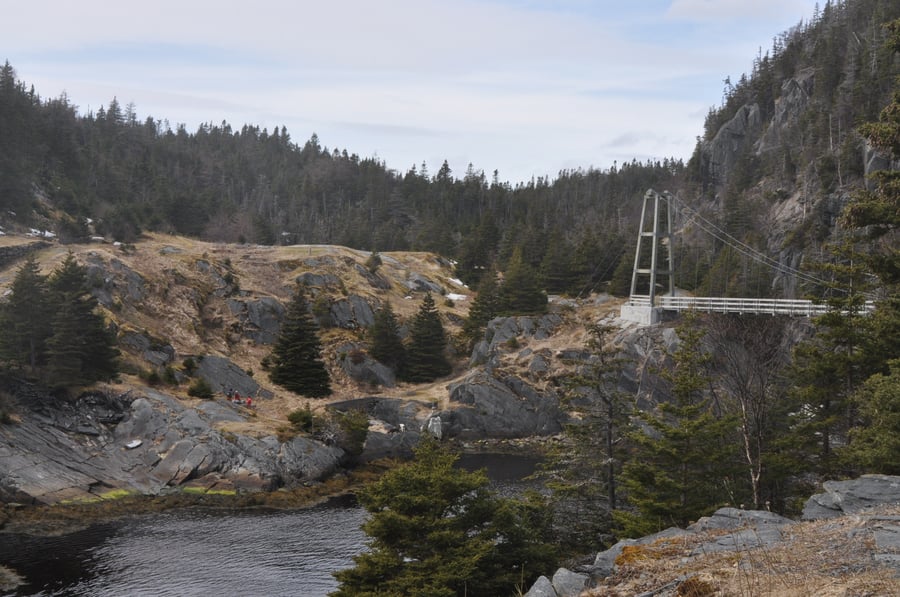
The island is big enough that committing to one deep route beats sampling everything. Four repay the time: the Viking Trail up the Northern Peninsula, the ferry to Fogo Island, the walking paths south of St. John’s, and a boat to France.
The Viking Trail, Fogo Island, the East Coast Trail, and a ferry to France
The Viking Trail -- icebergs late May to June; sites June
to early October
Route 430 runs from Deer Lake past Gros Morne to the island's tip,
433 kilometres. At the top: the Norse site at L'Anse aux Meadows;
Dark Tickle's wild-berry workshop and bog boardwalk at St.
Lunaire-Griquet; and iceberg and seabird boats out of St. Anthony,
where the Iceberg Festival opens the first Friday of June -- book
the boat early in your stay to leave a weather day, and reviewers
vouch for the guides ("They promised us icebergs and they
delivered"). Detour to Conche for the French Shore Tapestry. For
the night, Quirpon Lighthouse Inn puts you on an otherwise
uninhabited island in the iceberg lane -- boat transfer and all
meals included, about $500 a night. One guest: "icebergs floating
by... it was all amazing"; others say the rooms do not match the
price. The setting is the draw.
Fogo Island -- ferry from Farewell, 45 to 75
minutes
Eleven communities on an island off the northeast coast. You reach
the four off-grid artist studios -- Long, Squish, Tower, Bridge --
on foot by coastal trail, and can see them from outside
year-round. The Punt Premises at Joe Batt's Arm interprets the
inshore fishery in a restored 1800s merchant site; Tilting, at the
east end, is a National Historic Site as a whole Irish outport
landscape, still lived in. Brimstone Head is kept, in local telling,
as one of the four corners of the flat earth. The Inn runs about
$2,000 a night with a three-night minimum, all meals included and
every surplus returned to the community trust -- or you can
experience the Inn for the price of a supper: non-guests book the
5:30 seating three days ahead.
The East Coast Trail -- the Spout runs strongest in
spring and fall
Three hundred and thirty-six kilometres of coastal path in
twenty-five sections, every trailhead within ninety minutes of St.
John's, free, no permits. Guides recommend you start with Stiles
Cove: constant cliff views, coves, a lighthouse, moderate ground.
La Manche crosses a fifty-metre suspension bridge at the site of a
fishing village destroyed by a 1966 storm. The Spout -- a waterspout
driven by a river meeting the sea through shaped rock -- is the hard
one: sixteen kilometres one way, no water sources, no phone signal,
and a column that weakens in high summer when the river runs low.
One hiker's verdict on the round trip from Bay Bulls: "fantastic
but just as tough as described."
Saint-Pierre et Miquelon -- a ferry to France from
Fortune
Ninety minutes across from the Burin Peninsula, and you step off
the ferry in France outright: euros, French law, its own time zone
thirty minutes ahead. Canadian citizens travel on government photo
ID. Shops close from noon to two; the bakeries open early. The
abandoned fishing village on Île aux Marins is a short boat hop; on
Miquelon, a twelve-kilometre sand isthmus carries free-roaming
horses and a seal lagoon. Prohibition built the town's fortunes --
the last house sided in whisky-crate wood still stands, and the
Hotel Robert keeps a straw hat said to be Al Capone's. Stage the
trip through Grand Bank's Provincial Seamen's Museum and the
Fortune Head geology centre by the ferry dock.
The Honey of Newfoundland
The honey follows from everything above. Bees came to this island only in 1929, after four centuries of molasses; since 1980 the law has kept new bees out, and the diseases that changed beekeeping everywhere else never arrived. The provincial government calls the situation unparalleled globally. The result is about twenty commercial operations and six to seven hundred colonies – hives that need no treatments, worked through a season that runs from willow bloom in April to asters at the end of October. The honey is sold as wildflower across the island, with a fireweed crop from Adelaide’s in the Goulds, and it is scarce: the island’s whole crop is smaller than a single mid-size mainland operation’s. You buy it at farm gates and Saturday markets, and the official farm guide lists one producer’s season as running to January “or when we are sold out.” Nova Scotia accepts live bees from nowhere in Canada except this island. The Honey Road below follows the crop from the capital to the west coast.
The Honey Road
One road, east gateway to west. The stops run along the Trans-Canada Highway and its branches; what else lies on the road is noted where it falls.
St. John's and the Goulds -- hikes June 1 to October 15;
market Saturdays year-round
Start at the St. John's Farmers' Market on Freshwater Road,
Saturdays 9 to 4, where Adelaide's Newfoundland Honey and Baccalieu
Trail Honey Bees sell; downtown, Birdie at 258 Water Street carries
Four Cousins honey from the Bonavista Peninsula. In the Goulds,
twenty minutes out, Adelaide's runs the Honey Bee Hike on its
ten-acre reserve: they suit you up, walk you in on boreal trails,
open a hive, and you taste honey straight from the comb -- $95,
eight people at most, book ahead.
Farm-gate sales run September to January or until sold out. Petty
Harbour and Cape Spear sit on the same headland for your
afternoon.
Bonavista Peninsula and Terra Nova -- summer
At Port Rexton, by the Skerwink Trail, the Newfoundland Hive and
Honey Company sells honey, bee pollen and propolis. Clarenville's
Saturday market, June to November, carries Four Cousins through the
Three Mile Ridge stand. At Port Blandford, at the edge of Terra Nova
National Park, the Bearded Beekeeper keeps an honour-system farm
stand -- jars on a shelf, cash in a box. Trinity and the Random
Passage site fill the hours between.
Grand Falls-Windsor -- store year-round; bee tours in
summer
Tuck's Bee Better Farm at 267 Grenfell Heights runs a store and cafe
and public bee tours, and has applied for a 2,042-hectare Crown
forage zone to be kept free of pesticides, aiming to produce
medicinal-grade honey. Its honey goes into the Newfoundland
Distillery's aquavit and onto shelves in St. John's. Gander, forty
minutes east, holds the free 1959 International Lounge.
Cormack and Little Rapids -- tours daily from June
1
Near Deer Lake, Cormack Bee Company suits you up twice a day,
11 and 2, fifty dollars, and keeps a glass observation hive in its
craft shop; its honey reaches stores in Gander and Grand
Falls-Windsor. Twenty minutes on, at Little Rapids in the Humber
Valley, Pollen Nation Farm -- Mi'kmaw-owned -- runs bee tours from
$40 to a $180 fireside chef's table, serves lunch at its Beestro
cafe, and hosts the island's only honey festival each August. Gros
Morne's Tablelands are forty minutes further. Bad weather moves any
of these tours indoors to observation hives.
Getting Here
Fly into St. John’s for the east of the island or Deer Lake for the west; Gander and Grand Falls-Windsor sit mid-island on the Trans-Canada Highway. By sea, Marine Atlantic sails North Sydney to Port aux Basques year-round, about seven hours, and North Sydney to Argentia – near the Avalon – overnight, about sixteen hours, mid-June to early October. Arrive at the terminal an hour before sailing. The cross-island drive is 905 kilometres; plan it over two days, and watch for moose at dusk. The Fogo Island ferry leaves from Farewell, north of Gander; the Saint-Pierre ferry leaves from Fortune, about three hours down Route 210 from the highway.
Seasonal Events Not to Miss
- The Iceberg Festival, St. Anthony and the tip of the Viking Trail – ten days from the first Friday of June, timed to the peak of the iceberg season: boat tours, seafood, kitchen parties across six communities.
- Miawpukek Mawio’mi, Conne River – the first weekend of July: the island’s largest powwow, dancers, drummers and feasts, explicitly open to all.
- The Royal St. John’s Regatta, Quidi Vidi Lake – the first Wednesday of August, weather permitting, with the city holiday decided that morning by the lake.
- The NL Honeybee Festival, Pollen Nation Farm, Little Rapids – each August: the island’s only honey festival, at the Mi’kmaw-owned farm in the Humber Valley.
- Roots, Rants and Roars, Elliston – the third weekend of September: a clifftop food hike with chef stations among the town’s 130-odd root cellars, and an eight-course feast under the tent.
- The Mummers Parade, St. John’s – typically the second Saturday of December, from Bowring Park; costume bins at the gates outfit anyone who wants to march.
Where to Buy Honey
- St. John’s Farmers’ Market, 245 Freshwater Road, Saturdays 9 to 4 year-round – Adelaide’s Newfoundland Honey and Baccalieu Trail Honey Bees.
- Adelaide’s farm gate, the Goulds – Saturdays, September to January or until sold out; raw wildflower, artisan fireweed and fireweed comb.
- Birdie, 258 Water Street, St. John’s – Four Cousins honey from the Bonavista Peninsula; The Seed Company by E.W. Gaze, Kings Road, carries Tuck’s; The Natural Vibe, Water Street, carries the Bearded Beekeeper’s.
- Bee MA Honey, Conception Bay South – raw honey in one-pound and half-pound jars and limited-batch honeycomb, direct and through local shops.
- The Bearded Beekeeper’s honour stand, Port Blandford – jars on a shelf, cash in a box, at the edge of Terra Nova National Park.
- Tuck’s Bee Better Farm, 267 Grenfell Heights, Grand Falls-Windsor – store and cafe, year-round.
- Cormack Bee Company, Cormack – shop June to September, Tuesday to Sunday; also stocked at the Newfoundland Tea Company in Gander and Marks Market in Wooddale.
- Pollen Nation Farm, Little Rapids – gift shop with the once-a-year forest honey, May to October; the NLC carries Merfolk Mead’s Blue Ambrosia, made partly with Port Blandford honey, in five stores including Gander.