Photo: Xemenendura, Wikimedia Commons (cropped) | CC BY-SA 4.0
Holm-oak honeydew honey
Jars of miel de mielada de encina (holm-oak honeydew honey) from the Sierras de Ávila, in La Torre, Ávila, Spain.
Photo: Oleg Kosterin, iNaturalist | CC BY 4.0
Persian oak woodland, Lorestan
Open Persian oak (Quercus brantii) woodland on the slopes above Abkot, near Borujerd, in the Zagros of Lorestan, May 2017.
In the oak forests of the northern Zagros, the range that runs down
western Iran into Kurdish Iraq, a sugar appears on the leaves in late spring. Aphids feeding on the
Persian and Aleppo oaks leave it behind, and people gather it. Farmers
bring it in from the trees in sticky blocks, and in the town of Penjwen,
near Sulaymaniyah, confectioners boil it down for hours, then beat in
egg white and walnuts. The sweet is the manna of heaven (منّ السماء,
man al-sama), and it has been made in the north of Iraq and Iran for
centuries. Twana Abala, who inherited the trade from his family in
Penjwen, says the sugar rains on the oaks like flour.
Across the border, in Iranian Kurdistan, beekeepers sell the honey of
the same Persian oak forests as oak honey (عسل بلوط, asal-e balut), and
their trade describes it as a honeydew honey. Honey made from what insects leave on
a tree, rather than from flowers, is
honeydew honey.
The same thing happens wherever bees have oaks and a hot, still summer.
From the holm-oak hills of western Spain to the Hungarian oak forests of
the Balkans, and in scattered years as far north as Thuringia and
Poland, beekeepers take a honey that is very dark, often nearly black,
with a malty depth of caramel and dried fruit. It is sold as melata di
quercia, miel de roble, meşe balı and a dozen other names. The oaks
yield it in some summers and not in others.
Characteristics
A very dark honey, near black in many jars. Most oak honeydew honeys stay liquid a long time: the
Spanish Liébana designation records a very low tendency to crystallise
and the Turkish Kırklareli register a honey that does not set easily,
while Italy’s national sheet describes honeys that set fairly quickly.
The aroma is moderate rather than strong, of caramel, dried fruit, malt
and wood. The taste is medium sweet with a malty depth, a salty edge in
Spanish jars and a slightly sour, bitter finish in Bulgarian ones. It is
thick, low in water and rich in minerals.
Click to Display — The Details: honeydew source, sensory profile, pairings, health and what gives it its character
Honeydew Sources:
Primary: Giant oak aphid (Lachnus roboris). Host: Deciduous oaks: sessile, pedunculate, downy and Hungarian oak (Quercus petraea, Q. robur, Q. pubescens, Q. frainetto)
Primary: Common oak aphid (Tuberculatus annulatus). Host: Pedunculate and sessile oak (Quercus robur, Q. petraea)
Secondary: An aphid of shoot tips and leaf midribs, tended by ants (Thelaxes dryophila). Host: Oaks (Quercus spp.), in Italy
Secondary: Oak scale, a scale insect (Kermes quercus). Host: Pedunculate oak and other oaks (Quercus robur, Quercus spp.), in Italy
Supporting: An aphid of evergreen oaks (Lachnus iliciphilus). Host: Holm, cork and kermes oak (Quercus ilex, Q. suber, Q. coccifera), in Italy
Supporting: Common oak aphid (Tuberculatus annulatus). Host: Hungarian oak (Quercus frainetto), in Bulgaria's Strandzha
Supporting: An aphid of twigs and branches (Lachnus pallipes). Host: Hartwiss oak (Quercus hartwissiana), in Bulgaria's Strandzha
Supporting: A leaf aphid (Tuberculatus querceus). Host: Hungarian oak (Quercus frainetto), in Bulgaria's Strandzha
Supporting: A bark scale insect (Stigmacoccus asper). Host: Andean oak (Quercus humboldtii), in Boyacá and Santander, Colombia
Supporting: Sap-sucking insects (Hemiptera), species unnamed; aphids in producers' accounts. Host: Pyrenean oak and holm oak (Quercus pyrenaica, Q. ilex subsp. rotundifolia), in Spain and Portugal
Supporting: Aphids (Aphididae), species unnamed. Host: Hungarian oak (Quercus frainetto), in Croatia's Požega basin
Background: Common oak aphid and an oak aphid of the Zagros (Tuberculatus annulatus, Thelaxes suberi). Host: Persian, Aleppo and Lebanon oak (Quercus brantii, Q. infectoria, Q. libani), in the Zagros of Iran and Iraq
Nectar Contributors:
Background: Heather, named in the Spanish Liébana designation as nectar in its oak honeydew honey (Erica spp.)
Background: Bramble, named in the Spanish Liébana designation beside the heather (Rubus spp.)
Background: Flower nectar from what blooms in the oak woods, varying by site and unmeasured (Multiple species, undocumented)
Bee Species:
The western honey bee, Apis mellifera, everywhere this honey is made.
The Slavonski med specification ties its seven honeys, the oak honeydew
among them, to the native grey bee of the Pannonian plain, Apis
mellifera carnica. In Colombia the oak’s honeydew is gathered by
Africanised bees descended from Apis mellifera scutellata (Chamorro and
colleagues, 2013).
Color:
Very dark amber to near black, with a greenish tint in some liquid honeys; light brown or grey once set; holm-oak honeydew a shade lighter and redder
Flavor Profile:
Medium sweet and malty, with caramel and dried fruit; a salty edge in Spanish jars, a slightly sour and bitter finish in Bulgarian ones
Tasting Notes:
Caramel, malt and dried fruit lead in every official description read
for this page, Italian, Bulgarian and Spanish alike, and the aroma is
of medium or low intensity rather than the strong resinous nose of a fir
honeydew. What differs is the finish. The Liébana designation in Spain
describes clear salty components that damp the sweetness; the Strandzha
designation in Bulgaria a slightly sour and bitter aftertaste; the
Kırklareli register in Turkey compares the taste to pekmez (grape molasses). Colombian beekeepers told the entomologists
who identified their honeydew’s insect that the honey was dark with an
intense caramel flavour.
Aroma:
Moderate rather than strong: caramel, dried fruit, malt, brewer’s yeast and wood
Defining Compounds:
Minerals first, and potassium among them: from about 1,600 mg/kg in the
Strandzha specification to 5,600 in the Kırklareli register. The
minerals are what the honey’s electrical conductivity measures, and the
figure is how a laboratory confirms a honeydew honey: 0.8 to 1.4
millisiemens per centimetre (mS/cm) across the designations and
studies, above the 0.8 floor the Villuercas-Ibores designation sets for
its honeydew honey. The Kırklareli register’s mean of 0.84 sits at the
bottom of that range, with some batches below it, so conductivity alone
does not settle a Kırklareli jar.
Phenolic compounds, the family that gives tea and red wine their
astringency, run higher in deciduous-oak honeydew than in holm-oak honeydew, and so does the antioxidant activity they carry; the
deciduous-oak honeys measured darker, which is the difference a buyer
sees between the two jars on a shelf.
The honeydew sugars are regional rather than a rule. Strandzha honey
carries four to eleven percent
melezitose
with erlose, a smaller sugar of the same insect-made kind, and its
specification lists quercitol, an oak sugar alcohol, and kestose,
another small sugar, as marks a laboratory can test for; Spanish oak
honeydews measure under one percent melezitose, and the 2019 study warns
that these sugars are a poor way to tell honeydew honeys apart. The low
ratio of glucose to water in the Spanish honeys, 1.4 to 1.6, is what the
same study expects to make them slow to set.
Forage Origin:
The oaks are everywhere and the honey is not. Sessile and pedunculate
oak, the two common oaks of Europe, grow from Scandinavia to Iberia, and
the downy oak across the whole of the centre and south; yet the honey
is sold from Mediterranean and sub-Mediterranean pockets: the
Pyrenean-oak and holm-oak woods of western Iberia, the central and
southern Apennines, the mountain forests of Greece, the Hungarian oak
forests of the Balkans and Turkish Thrace, and beyond Europe the Persian
oak of the Zagros and the Andean oak of Colombia. Italy’s national
descriptive sheet calls it an occasional crop, locally not negligible.
Further north it comes rarely, in single jars and single years, from
Thuringia, Slovakia and Poland.
Photo: Petruss, Wikimedia Commons | CC BY-SA 3.0
Andean oak
Leaves and an acorn of the Andean oak (Quercus humboldtii), Boyacá, Colombia, October 2012.
Several insects make it, on different parts of the tree and at
different times. The giant oak aphid feeds on twigs and small branches,
and in southern Europe also on sweet chestnut; the common oak aphid on
the undersides of the leaves; Thelaxes dryophila, an aphid tended by
ants, on shoot tips and leaf midribs. The oak scale, Kermes quercus, is
a scale insect
of the bark, and in May its adult females produce honeydew in such
quantity that it coats the tree and dribbles down the trunk. Italy’s
sheet gives the calendar: the scale from April to June, the aphids from
May into September, the common oak aphid in June and July. In Bulgaria’s
Strandzha the first honeydew cells appear in the comb from about the
middle of May. In Colombia the insect is a bark scale that sits under
the bark of the Andean oak and lets its honeydew fall in drops through
a hollow waxy filament; the beekeepers of Boyacá and Santander had sold
the honey as oak honey for years before the entomologists found the
insect.
Photo: Kian Hayles-Cotton, iNaturalist | CC0 1.0Giant oak aphidsA colony of large aphids, identified by the observer as the giant oak aphid (Lachnus roboris), on an oak twig and acorn cups, Devon, England, September 2025.
Photo: S. Rae, Wikimedia Commons | CC BY 2.0Common oak aphidsCommon oak aphids (Tuberculatus annulatus) on the underside of an oak leaf, with a glistening drop beside them, Saltoun Forest, Scotland, June 2014.
Photo: Alexis_lsu, iNaturalist | CC0 1.0Thelaxes dryophila on an oak shootA colony of the oak aphid Thelaxes dryophila along a pedunculate oak shoot, La Frette, France, May 2023.
The flow is a summer one, and heat brings it on. The Kırklareli register
gives air above 30 C with mild nights; the Çanakkale register 30 to 35 C
by day and dew on the ground; a beekeeper in the Sierra de Gata, in
western Spain, gives a window of 30 C by day and 14 at night. Wind and
cold end it in every source that speaks of it, and rain washes it off
for a time. The designations’ texts differ on whether the flow needs
dry weather or damp.
Photo: SteveM4560, iNaturalist | CC BY 4.0
Hungarian oak acorns
Acorns and a leaf of a Hungarian oak (Quercus frainetto), collected near Primorsko on the northern edge of Strandzha, Bulgaria, September 2024.
In Croatia’s Požega basin, in Turkey and in Iberia, beekeepers, three
registered designations and some researchers describe a second source
beside the insects: a sap that seeps from the acorns as the tree sheds
its surplus in a heavy crop. The Croatian specification calls it
medenje žira (acorn honeying). The same Hungarian oak carries aphid
honeydew in Bulgaria’s Strandzha, and the Montesinho beekeepers who
report the acorn sap on their own oaks call it a hypothesis that
research has not confirmed.
Nectar comes in with the honeydew where something is flowering. The
Liébana designation in Cantabria writes heather and bramble nectar into
its oak honeydew honey; at Kırklareli and in Strandzha the flow is kept
apart from the nectar plants, and elsewhere whatever blooms in the woods
comes in unmeasured.
Most of these honeys carry the honeydew in their name, melata, miellat,
manov, spadziowy, but an oak name alone does not always mean honeydew:
some sellers in Iran and the Balkans describe their oak honey as nectar.
In Umbria, honeydew that once came mostly from oak now comes partly from
the planthopper behind
Metcalfa honeydew honey,
and a DNA study of Italian honeys found Metcalfa the only sap-sucking
insect in one Lombardy honey sold as oak honeydew.
Chestnut honey
from the same woods can be hard to tell from it, since the giant oak
aphid feeds on both trees.
Pairings:
Producers’ suggestions: an Italian producer of melata di quercia pairs
it with robust aged cheeses, pecorino, parmigiano and caciocavallo, and
a Spanish producer of miel de encina puts it on a cheese board; the
Italian also suggests it in desserts, the Spaniard in sauces for meat.
Origin Story
Etching by J. Richardson the elder, 1739; Wellcome Collection | Public Domain Mark
Theophrastus
Theophrastus, in an etching of the ancient bust by Jonathan Richardson, 1739.
People noticed the oak’s sweetness long before anyone knew an insect
made it. Theophrastus, around 300 BC, recorded a honey-like juice that
settles on the oak more than on other trees and concluded that it came
from the air; he also described a hairy ball on the oak, a
gall,
covered in spring with a juice like honey to touch and taste. Virgil,
two and a half centuries later, had the hard oaks sweating dewy honey in
the golden age, which is poetry and not a record.
Photo: Michelle W., iNaturalist | CC BY 4.0
Live-oak galls
Live-oak galls covered in a sticky liquid the observer likened to honeydew, Texas, September 2023.
The gall was a real honey source once. In the drought of 1917 and 1918,
Frank Pellett wrote in American Honey Plants, there was little else for
the bees in many parts of Texas and “the live oak saved the bees from
starvation”: George Schmidt of Crystal City took an average of 25 pounds
a colony from the live oak balls on the Nueces River in 1917, dark,
heavy honey of good flavour, and the flow lasted until frost. Pellett
names no insect. The galls of some oak wasps secrete a sugar of their
own, the Edinburgh researchers who study them write, which the oak
itself never does.
In Europe the honey was known to beekeepers long before a register
named it. Barbier’s 1963 study of lavender beekeeping in the south-east
of France found oak honeydew the contaminant that most disturbed the
acidity of lavandin honey, the honey of the hybrid lavender grown for
oil. In Croatia’s Požega basin the beekeepers had
for several decades pointed to a specifically dark honeydew from the
Hungarian oak, which reaches the north-western edge of its range on the
slopes of Krndija, before they brought in scientists in 2003 and saw it
registered in 2018 as the seventh kind of the Slavonski med
PDO.
Bulgaria registered the Strandzha
honeydew’s protected name in the EU in 2019. Turkey registered
Kırklareli’s oak honey in 2021 and Çanakkale’s in 2026.
Cultural Context
Photo: aziz1005, Wikimedia Commons | CC BY-SA 3.0
Man al-sama
The manna sweet of Iraq, man al-sama (منّ السماء), floured on a tray.
In the Zagros the oak’s sweetness is a people’s harvest as much as a
bees’ one: the manna comes off the trees in blocks of four to ten
kilograms, the confectioners of Penjwen boil it for about eight hours,
until it has lost half its volume, and the sweet is sold as a candy and
taken as a folk remedy.
In Lebanon the oak honey is one of three the Lebanese Army’s magazine
counts as the country’s own: its June 2025 article on Lebanese honey
lists lemon-blossom honey, the thistle or mountain honey, and the
black oak honey known as honeydew honey, the one honey of the three it
says does not crystallise.
One Alicante
beekeeping family calls its holm-oak honey miel de hierro (iron honey), a
family’s name for it and not a measurement.
Harvest & Forage
The flow runs from June to early September, with July and August the
core nearly everywhere; the Iberian flow comes latest, from mid-August
into September, and Italy’s insect calendar opens in April with the oak
scale. By country: Italy takes the honey in July and August; in Spain
the Pyrenean-oak and holm-oak flow of the west comes from mid-August on;
Portugal June and July in the Serra da Malcata, July and August at
Montesinho; Croatia July and August; Bulgaria June to August; Turkey a
flow from late July with the harvest in late August and early September
at Kırklareli and a July to August take at Çanakkale; Poland late June
to late July.
The insects run ahead of and across the flow. The oak scale gives
honeydew in spring, its adult females secreting in May, before the aphid
summer; Thelaxes dryophila runs longest, May to September; the Kırklareli
flow, once it starts, lasts sometimes one week and sometimes two.
Where the honey has a designation the hives stand in or beside the oak
forest through the flow; elsewhere beekeepers move them in for it.
Keeping the oak honey pure is a matter of timing: at Kırklareli no honey
already gathered is left in the upper frames, so the
supers
go on empty for the flow, and the Strandzha specification notes that no
abundant nectar plant, neither robinia nor lime, flowers in the massif
while the honeydew runs. Set Strandzha honey is re-liquefied at no more
than 42 C.
The crop swings from year to year and in many years there is none. In
2022 the provincial agriculture director at Kırklareli put the
province’s oak honey at 150 to 200 tonnes, double the year before, after
a year the weather had cut. No source gives a reliable interval between
oak years: Italy’s sheet says only that production is not regular, and
the figures producers offer, every three or four years in the Požega
basin, once in eight to ten in Slovakia, a first crop in forty years in
Poland, are each one beekeeper’s experience of one place.
Beekeeping Context
Photo: Rotadefterim, Wikimedia Commons | CC BY-SA 4.0
Weaving basket hives
A man and a child weaving sepet kovan (wicker basket hives) in an orchard, Turkey, June 2022.
Beekeepers make this honey two ways. In the forests that carry a
designation they stay put: Strandzha’s apiaries stand in the oak
forests, mainly stationary, with the colonies kept within the area the
year round, and the massif’s hollow-log and trunk hives, dating from the
end of the nineteenth century, still hold bees; at Kırklareli the hives
are kept in place too, modern
Langstroth
boxes beside traditional conical basket hives, 50 to 70 centimetres tall
and 40 across, and the Çanakkale hives spend the autumn on heather
ground before moving to sheltered south slopes for the winter. Elsewhere
it is migratory: Spanish beekeepers truck their colonies from the eastern
provinces of Castellón and Alicante to the oak woods of Castilla y León,
Burgos and León for the summer flow, and a Moldovan beekeeping family
moves its hives among six places in a season in search of forage.
In Colombia the oak’s honeydew is as important as flower nectar in the
study zones of Boyacá and Santander: in some places and seasons it
makes a honeydew honey, in others a blend. In Iranian
Kurdistan a seller describes its oak honey as the product of
traditional basket hives placed in the Sardasht forests.
Source Regions
See all 18 countries
Italy, central and southern Apennines – Quercus: oak honeydew honey (miele di melata di quercia), an occasional crop, locally significant from the Marche to Basilicata.
Spain, Cantabria to Extremadura – Quercus pyrenaica, Q. ilex: oak honeydew honey (miel de roble; miel de encina), from Pyrenean-oak woods and holm-oak dehesa.
Portugal, Serra da Malcata, Montesinho, Alentejo – Quercus pyrenaica, Q. rotundifolia: oak honeydew honey (mel de carvalho; melada de azinheira), taken June to August.
France, Auvergne and the Sologne – Quercus: oak honeydew honey (miel de miellat de chêne); the dominant honeydew in Sologne forest honey’s June cut.
Germany, Thuringia – Quercus: oak honey (Eichenhonig), a honeydew honey sold under the German honey mark in the years the oaks yield it.
Slovakia – Quercus robur, Q. petraea: oak honeydew honey (medovicový med (dub)), from pedunculate and sessile oak stands, in the years they yield it.
Poland – Quercus: oak honeydew honey (miód dębowy spadziowy), a rare crop in Poland, gathered from late June to late July.
Bulgaria, Strandzha – Quercus petraea, Q. frainetto: oak honeydew honey (Странджански манов мед, Strandzhanski manov med), an EU-protected honey gathered June to August.
Croatia, Požega basin (Kutjevo) – Quercus frainetto: Hungarian-oak honeydew honey (medun hrasta sladuna), one of the seven kinds of the Slavonski med PDO.
Turkey, Kırklareli and Çanakkale – Quercus frainetto, Q. robur, Q. cerris, Q. petraea: oak honey (meşe balı), under two registered designations of origin.
Greece, the Pindus and other mountain oak forests – Quercus frainetto, Q. pubescens, Q. cerris: oak honey (Μέλι βελανιδιάς, meli velanidias), a forest honeydew honey.
Romania – Quercus: oak honeydew honey (miere de mană de stejar), sold by a Romanian apiary from the country’s oak forests.
Moldova – Quercus: oak honeydew honey (miere de mană de stejar), a beekeeping family’s own harvest sold at Chișinău’s farmers’ market in 2025.
Iran, Zagros (Kurdistan, Lorestan) – Quercus brantii: oak honey (عسل بلوط, asal-e balut), from Persian oak forests, some of it from traditional basket hives.
Lebanon, northern mountains – Quercus: oak honeydew honey (عسل السنديان, asal al-sindiyan), the black honey the Lebanese Army’s magazine counts among the country’s three honeys.
United States, California – Quercus: oak honeydew honey, sold raw from the Central Coast; one seller credits aphids on the oak leaves.
Morocco, the Gharb (Sidi Yahya El Gharb) – Quercus: oak honey (عسل البلوط, asal al-ballut), a dark honey sold through the country’s cooperative marketplace.
Colombia, Boyacá and Santander – Quercus humboldtii: oak honeydew honey (mielato de roble), from a scale insect on Andean oak at 2,400 to 2,800 metres.
Regional Variants
Photo: TodorBozhinov, Wikimedia Commons | CC BY-SA 4.0
Hungarian oak in Strandzha
An old Hungarian oak in a fenced meadow at Zabernovo, in Bulgaria's Strandzha, May.
Strandzha oak honeydew honey (Странджански манов мед, Strandzhanski manov med) – Quercus petraea, Q. frainetto – Bulgaria, Strandzha: Beekeeping in Strandzha is old enough that hollow-log hives from the end of the nineteenth century still stand with bees in them, and the honey the protected designation of origin covers is the one those forests yield in June, July and August, when oak honeydew is the colonies’ main forage. The protected name carries no oak word; manov (манов) is the Bulgarian for honeydew. The specification names the aphids on the sessile and Hungarian oaks, and beside them a sweet liquid from the acorns, listing the acorn weevil and acorn moth, neither of them a sap-sucking insect, among the honeydew’s producers with the aphids. The apiaries in the oak forests are mainly stationary and the colonies must stay within the area all year; the specification notes that no abundant nectar plant flowers during the flow, and that the massif’s spring and summer fogs keep the drops on the leaves. The honey runs brown to black with a greenish tint, turning light brown or grey once it sets, with an aroma of baked fruit and caramel and a slightly sour, bitter aftertaste. Its conductivity, the measure of its minerals, must exceed 0.95 mS/cm, and it carries high melezitose, four to eleven percent, with erlose and the oak sugar alcohol quercitol, the marks a laboratory checks a jar against before it carries the name.
Požega Hungarian-oak honeydew honey (Medun hrasta sladuna) – Quercus frainetto – Croatia, Požega basin (Kutjevo, Krndija): For several decades the beekeepers of the Požega basin pointed to a specifically dark honeydew honey from the Hungarian oak, which on the south slopes of Krndija reaches the north-western limit of its range; in 2003 they brought in scientists from Croatia and elsewhere in Europe, and in 2018 the honey was registered as the seventh kind of the Slavonski med PDO. The specification describes it as extremely dark, almost black, medium sweet and smelling of forest honey, with honeydew elements and sweet chestnut pollen under the microscope. The specification, and the basin’s beekeepers, say that in a heavy acorn year the tree sheds its surplus acorns and a sweet, clear sap seeps along the acorn’s skin, often foaming, for a few days per acorn and up to two months across the tree, in July and August, on dry, still, hot days; they call it medenje žira (acorn honeying), and a 2008 conference abstract from the Zagreb researchers reported that tissue examination found no sap-sucking insect behind it. The same specification defines its honeys as coming from nectar, from secretions of living plant parts or from insect excretions; a 2010 chemical study of the basin’s honey mentions sap-sucking insects beside the acorn secretion, and a Kutjevo producer credits aphids. The honey comes in some years and not in others, and no reliable interval is recorded.
Kırklareli oak honey (Kırklareli Meşe Balı) – Quercus frainetto, Q. robur – Turkey, Kırklareli province: The oak honey of Kırklareli, in Turkish Thrace, is a dark, viscous, flowing honeydew honey that does not crystallise easily, lower in moisture than blossom honeys, told by a colour shifting toward red and a taste its register compares to pekmez (grape molasses). Turkey registered it as designation of origin No. 674 in February 2021, the older of its two oak-honey registrations, covering five districts of the province. The flow starts only toward late July or early August and lasts one week or two; in a windy, rainy season it shrinks or vanishes. Beekeepers keep their hives in place, in Langstroth boxes and in conical basket hives half a metre and more tall, and put empty supers on for the flow so the oak honey is taken pure, in late August and early September. The register names no insect: its own account is that the tree’s sap leaves the acorns through secretory hairs on the fruit.
Çanakkale oak honey (Çanakkale Meşe Balı) – Quercus cerris, Q. frainetto, Q. petraea – Turkey, Çanakkale province, Kaz Dağları: On the slopes of Kaz Dağları, the ancient Mount Ida, the oaks are a different set from Kırklareli’s, Turkey oak first, and the honey is taken earlier, in July and August, when day temperatures of 30 to 35 C and dew on the ground bring on what the register describes as a dark secretion on the acorns or the leaves; like Kırklareli’s register, it names no insect. The honey is close to black, and its register fixes a conductivity of about 1.2 mS/cm and a high potassium content as the figures a jar must meet to carry the name. Turkey registered it as designation of origin No. 1856 in May 2026, protected from November 2023, in the name of the Çanakkale beekeepers’ union, which packs the honey and issues the labels its producers sell under; the hives spend the autumn on heather ground before moving to sheltered south slopes for the winter.
Photo: Luis Fernández García, Wikimedia Commons | CC BY-SA 4.0
Pyrenean oaks in Extremadura
Pyrenean oaks (Quercus pyrenaica) above bracken at Losar de la Vera, Cáceres, July 2015.
Holm-oak honeydew honey (miel de encina; mel d’alzina; mel de azinheira) – Quercus ilex, Q. rotundifolia – Spain and Portugal, western Iberia: The evergreen holm oak of the dehesa (the open oak pasture of western Iberia) gives a honeydew honey sold under its own name in Spanish, Catalan and Portuguese. A 2019 comparison of Spanish oak honeydews found the holm-oak honeys lighter and redder than those of the deciduous Pyrenean oak, 120 against 142 on the Pfund colour scale, on which a higher number is darker, lower in phenols and antioxidant activity, with less of the simple sugars and more maltose, and the two groups separated cleanly when the samples were grouped by their measurements. The flow comes late, from mid-August on by the beekeepers’ account, and one Alicante producer moves its hives into the holm-oak woods of Burgos and León for it. Two Spanish designations admit the honey: Liébana’s honeydew honey is defined as coming from oak and holm-oak honeydew with the nectar of heathers and bramble, and Villuercas-Ibores names the holm oak in the flora of its honeydew honey, taken in September and October. Its sellers often say it comes from the acorns; the 2019 study repeats that it arises from secretions during acorn formation without naming an insect, and the beekeepers of Montesinho call the same idea a hypothesis research has not confirmed.
Translations
See all 19 Translations
Miele di melata di quercia – Italian
Miel de roble – Spanish
Miel de encina – Spanish, holm oak
Mielato de roble – Spanish, Colombia
Mel de carvalho – Portuguese
Mel d’alzina – Catalan, holm oak
Miel de miellat de chêne – French
Eichenhonig – German
Medovicový med (dub) – Slovak
Miód dębowy spadziowy – Polish
Странджански манов мед (Strandzhanski manov med) – Bulgarian, the protected name
Дъбов манов мед (Dabov manov med) – Bulgarian
Medun hrasta sladuna – Croatian
Meşe balı – Turkish
Μέλι βελανιδιάς (meli velanidias) – Greek
Miere de mană de stejar – Romanian
عسل بلوط (asal-e balut) – Persian
عسل السنديان (asal al-sindiyan) – Arabic, Lebanon
عسل البلوط (asal al-ballut) – Arabic, Morocco
Festivals and Fairs
Festival of Strandzha Manov Med – Tsarevo, Bulgaria (August; the 2026 festival ran to 10 August): the town’s festival of the Strandzha PDO honeydew honey and bee pollen. (Bulgarian translated to English )
Certifications
Strandzhanski manov med PDO – Registered in March 2019 as the EU protected designation of origin for the honeydew honey of the Strandzha massif’s oak forests, taken June to August from stationary apiaries, with a conductivity floor of 0.95 mS/cm and packing in the area in jars of no more than 1,500 g.
Slavonski med PDO – Registered in January 2018 for the honeys of Slavonia; its seventh kind, Medun hrasta sladuna, is the Hungarian-oak honeydew honey of the Požega basin, defined with a conductivity of at least 0.8 mS/cm. (Croatian translated to English )
Kırklareli Meşe Balı, designation of origin No. 674 – Turkey’s registered designation of origin of February 2021 for the oak honeydew honey of Kırklareli province’s oak forests, harvested late August to early September from stationary hives. (Turkish translated to English )
Çanakkale Meşe Balı, designation of origin No. 1856 – Turkey’s designation of origin registered in May 2026, protected from November 2023, for the oak honey of four districts on Kaz Dağları, packed and labelled by the Çanakkale beekeepers’ union. (Turkish translated to English )
Miel de Liébana DOP – Registered in March 2016; the Cantabrian designation whose honeydew honey is defined as coming from oak and holm-oak honeydew with the nectar of heathers and bramble, very dark, salty-edged and slow to crystallise. (Spanish translated to English )
Miel Villuercas-Ibores DOP – Registered in January 2017; the Extremaduran designation whose honeydew honey comes from the secretions of the genus Quercus, with Pyrenean oak, holm oak and cork oak in its flora list, gathered in September and October within 27 municipalities of south-east Cáceres.
Mel de Galicia IGP – Registered in July 2007; the Galician protected geographical indication whose types today include a honeydew honey made from the secretions of oaks, mostly Pyrenean oak, in the interior districts of Ourense and southern Lugo. (Galician translated to English )
Miel de Asturias IGP – Registered in May 2025; the Asturian protected geographical indication, whose oak honey is defined in the published text as oak honeydew honey, very dark amber with black-brown tones, a clear malty component and clear savoury notes.

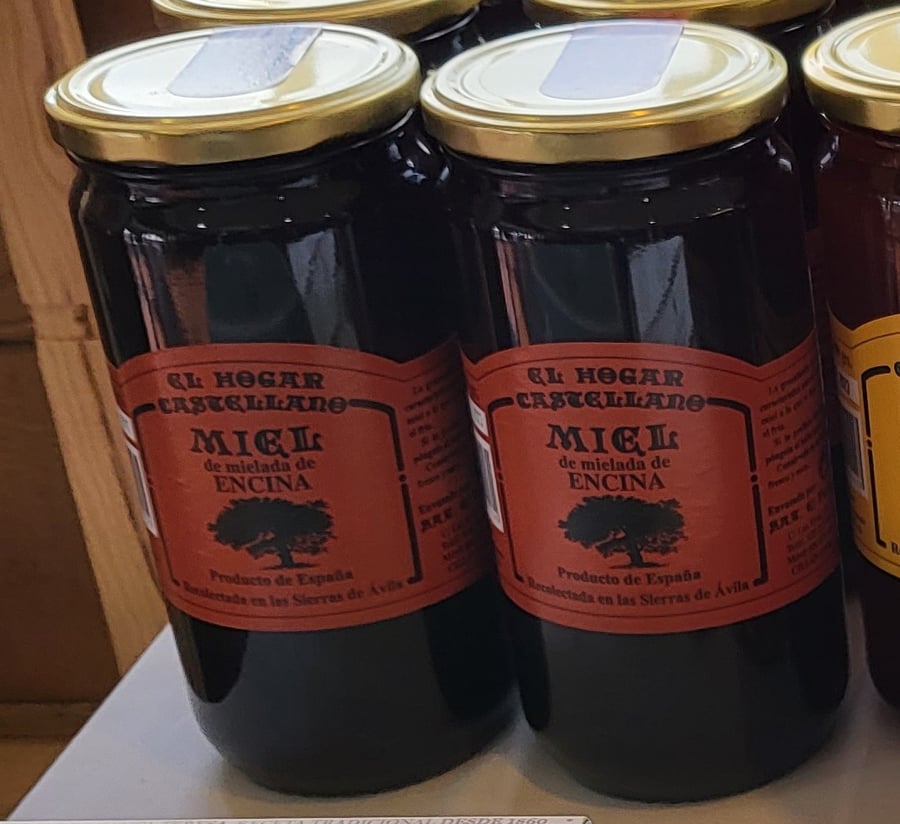
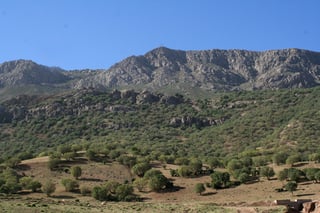
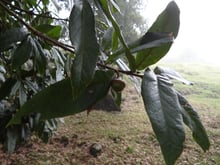
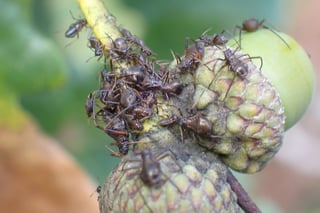
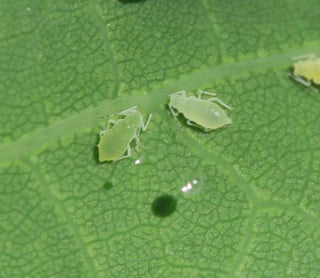
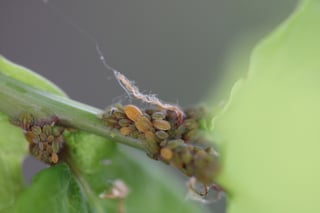
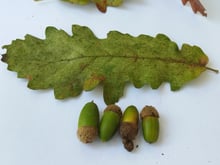

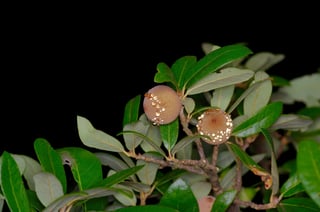
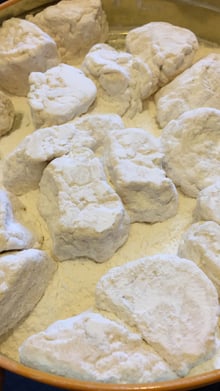
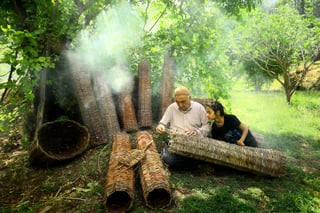
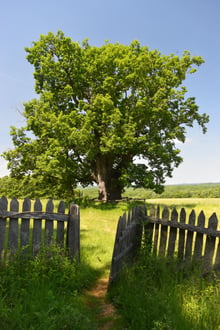 Photo: TodorBozhinov, Wikimedia Commons | CC BY-SA 4.0Hungarian oak in StrandzhaAn old Hungarian oak in a fenced meadow at Zabernovo, in Bulgaria's Strandzha, May.
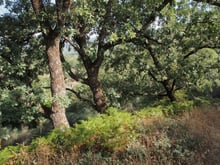 Photo: Luis Fernández García, Wikimedia Commons | CC BY-SA 4.0Pyrenean oaks in ExtremaduraPyrenean oaks (Quercus pyrenaica) above bracken at Losar de la Vera, Cáceres, July 2015.
)
 Strandzhanski manov med PDO – Registered in March 2019 as the EU protected designation of origin for the honeydew honey of the Strandzha massif’s oak forests, taken June to August from stationary apiaries, with a conductivity floor of 0.95 mS/cm and packing in the area in jars of no more than 1,500 g.
 Kırklareli Meşe Balı, designation of origin No. 674 – Turkey’s registered designation of origin of February 2021 for the oak honeydew honey of Kırklareli province’s oak forests, harvested late August to early September from stationary hives. (Turkish translated to English
  Mel de Galicia IGP – Registered in July 2007; the Galician protected geographical indication whose types today include a honeydew honey made from the secretions of oaks, mostly Pyrenean oak, in the interior districts of Ourense and southern Lugo. (Galician translated to English