Photo: Naoneisig, Wikimedia Commons | Public domain
Sweet chestnut in flower
The male catkins of the sweet chestnut, Castanea sativa, which carry the tree's nectar.
On the eastern slope of Etna, at Sant’Alfio, grows the Castagno dei Cento
Cavalli, the chestnut of a hundred horses. Sicilian legend tells of a queen
caught in a storm with a hundred knights, all of whom sheltered beneath its
branches; which queen, the tellings disagree. Patrick Brydone, touring
Sicily, measured it at 204 feet round in his book of 1773. His guides
assured him its five trunks had once been one tree, and a local canon who
dug round them found them joined in a single root. On 29 March 2026 Guinness
World Records measured 52.4 m around its three trunks, the greatest
circumference of any living tree with several trunks. Chestnut honey is made
on the same slopes.
Jean-Pierre Houël, via Wikimedia Commons | Public domain
The Castagno dei Cento Cavalli
Jean-Pierre Houël's gouache of the chestnut of a hundred horses on Etna, painted between 1776 and 1779.
The sweet chestnut is better known for its nut, and the nut has been a
staple for as long as anyone has written about it. Around 400 BC Xenophon
found the Mossynoecians of the Black Sea coast keeping stores of what his
translator reads as chestnuts on their upper floors, eaten boiled and baked
into loaves. In the Cévennes, the designation text still calls the tree
l’arbre à pain, the bread tree. It spread across Italy between the third and
seventh centuries, the historian Paolo Squatriti argues, because it asked
little labour and cropped dependably. Europe’s chestnut forests now cover
more than 2.5 million hectares on the European forest atlas’s figures.
What the bees take from the tree is the nectar of its male
catkins,
and what they make of it is a honey Europe’s own registers describe
differently from one end of its range to the other: barely sweet and
strongly bitter to the Alpine, Apennine and Slovenian panels, predominantly
sweet to the Iberian Atlantic ones, and astringent with a long finish to
all of them.
Its buyers divide over it in the same way, and in Italy, the national
beekeepers’ union records, many beekeepers once moved their hives to avoid
making it.
It is made in chestnut forest, from Portugal and Galicia to the Caucasus
and the Caspian, and in planted chestnut in Chile and Australia.
Characteristics
Photo: HoneyTraveler | CC BY-SA 4.0
Chestnut honey
Chestnut honey in a tasting glass, photographed for HoneyTraveler on 15 May 2010.
The two European registers that publish a mean colour agree at about 88 and
89 mm on the
Pfund scale,
dark for a blossom honey, short of dark amber. The registers’ own word for
the odour is
phenolic.
It stays liquid because it carries about half again as much fructose as
glucose; the registers rate crystallisation slow to very slow with no figure
in months, and it sets coarse and patchy. Batches rich in chestnut
honeydew are darker, drier, less pungent and less bitter than
nectar-dominant ones, on the Italian national sheet’s probable reading, so
colour is an unreliable guide to strength.
Click to Display — The Details: botanical origin, sensory profile, pairings, health and what gives it its character
Botanical Name: Sweet chestnut (Castanea sativa)
Botanical Family: Fagaceae
Bee Species:
Western honey bee (Apis mellifera). Several chestnut designations also fix
a local subspecies, the Corsican appellation the Corsican dark bee and the
Croatian specification the grey bee, though no source says the bee makes
the honey different.
Color:
Amber to dark amber with a reddish tone; the Italian register adds a greenish cast in the liquid honey, and brown when it sets
Flavor Profile:
Astringent, with a long bitter finish; the registers divide on the sweetness, predominant on the Iberian Atlantic ones and weak on the Alpine and Apennine ones
Tasting Notes:
The registers do not agree about the sweetness. Galicia’s protected
indication calls the predominant taste sweet and Málaga’s designation sweet
with bitter and astringent notes, while the International Honey
Commission’s panel, the Italian national sheet and the Slovenian scheme
have it barely sweet and strongly to extremely bitter.
What the texts agree on is the order and the finish. Two Italian bodies
describe the same arc: pungent or sweet at the first approach, then
increasingly bitter, and it is the bitterness that stays. The Italian
national characterisation sheet names what persists, the bitter component;
the registered tasters’ sheet adds the astringency beside it.
Astringency is a mouthfeel rather than a taste, and tannic is the
registers’ own word for it.
Angelo Bertelli, writing for the Italian national beekeepers’ union,
observes that crystallisation lightens a honey’s aromatic intensity, so a
set jar eats lighter than a liquid one.
Aroma:
Strong and very characteristic: woody, warm and phenolic, pungent, acrid and green
Defining Compounds:
Kynurenic acid
is what makes this honey bitter, measured in it by three laboratories at
the same order of magnitude: 340 to 650 mg per kg in the Spanish and
Italian study that first identified the quinoline alkaloids, the
nitrogen-bearing compound class kynurenic acid belongs to, as markers of
chestnut honey, a mean of 682 mg per kg in a Slovenian method paper, and,
in samples whose chestnut pollen ran above 75 percent, 68 to 1,893 mg per
kg in north-western Spain, the 2026 Spanish study that gives the
bitterness threshold at 78 mg per kg.
The same study rules out the wider claim. Bell heather honey is as bitter
and holds only traces of the compound, so this is what makes chestnut
honey bitter rather than what makes honey bitter. Its absence is also what
tells the two apart, and the paper exists because a chestnut honey meeting
every parameter for its
monofloral
is commonly taken on the palate for
heather honey,
which makes selling it as chestnut honey unworkable.
The compound arrives already made: it was measured in chestnut floral
nectar collected by bees, and it is most abundant in the male flowers, the
only ones that secrete nectar.
The aroma has a marker of its own.
2-aminoacetophenone
runs at 154 to 544 parts per billion in chestnut honeys against an odour
threshold of 0.2 ppb in water, which on those two figures is roughly a
thousandfold over the threshold. Its describers give its odour as
animal-floral and faintly like tobacco leaf on Arctander’s account, report
a vegetable note from their own sniffing, and call it suspected to
contribute to the aroma rather than established.
No measurement of tannin in this honey is tied to its bitterness: the
tannin and astringency literature on the sweet chestnut is about the nut,
the shell and the tree’s own tannin crop.
Forage Origin:
Photo: Sascha Nunheim, iNaturalist | CC BY 4.0
A honey bee on a chestnut catkin
A honey bee working the male catkins of a sweet chestnut in Berlin.
The bees work the catkin. In Castanea sativa only the male flowers secrete
nectar, on the disc at the base of the
filaments,
and the female flowers
are rewardless; the same catkins carry the pollen. The tree flowers male,
then female, then male again, and the first male phase carries an
estimated 97 percent of the overall rewards, pollen and nectar together,
so a beekeeper chasing a chestnut crop is chasing the first phase.
The chestnut gives two substances, and the second is its own honeydew,
produced on the tree by sap-sucking insects. Two designations write both
into the honey’s own name: the Alsace geographical indication defines its
variety as chestnut honey from chestnut nectar and-or chestnut honeydew,
and the Corsican appellation requires its honeys to come from nectars
and-or honeydews. In central Europe the honeydew is sold under a honeydew
name of its own, in Slovakia and in Poland, and a 2025 comparative study
characterises chestnut honeydew honey as a type in its own right, while
most producing countries sell it inside the chestnut honey.
Castanea pollen is strongly over-represented in its own honey, so the rule
of thumb that a dominant pollen is 45 percent of the spectrum cannot be
used for it. The International Honey Commission records that many
laboratories require at least 90 percent, with more than 100,000 pollen
grains per 10 g, before accepting the honey as unifloral, the registers'
word for a monofloral, and on data collected between 1990 and 2002 its own
measured mean for authentic European chestnut honey is 94.5 percent. That
figure is reachable because the stands are nearly pure: in about 90 percent
of Europe’s chestnut forests the tree is pure or dominant. A pollen
percentage is not a nectar share and cannot be converted into one.
The tree is a warm-temperate deciduous species reaching 30 to 35 m, and the
honey comes from a band of its range rather than the whole of it: the
European reference sheet puts that band between 500 and 1,000 m, and
Portugal’s national apiculture programme puts its own chestnut production
between 700 and 1,200 m. The chestnut is insect-pollinated, at least 94
percent of its flowers on a pollinator-exclusion experiment published in
2022 from fieldwork of 2020 and 2021, and honey bees take nectar and pollen
from the catkins.
Away from the hive it is a nut and a timber crop: the bur holds three to
seven nuts, eaten roasted, candied, boiled, dried or as flour, and the
wood is used outdoors for its natural
tannin
content. That tannin is the timber’s and the nut’s, not the honey’s.
Other plants carry the name and none of them is a chestnut. The horse
chestnut is Aesculus hippocastanum, of the Sapindaceae, the soapberry
family – not a Castanea, not a member of Fagaceae, the beech family, and
not in the same order – and its nut is inedible; the Aesculus honeys are
honeys of their own, as HoneyTraveler’s
Japanese horse chestnut honey
and Karuizawa marronnier honey
pages show. German speakers use Kastanie for the horse chestnut, so the
sweet chestnut takes Edelkastanie, and the German food code heads its entry
Kastanienhonig-Edelkastanienhonig. The American chinquapins,
Castanea pumila and Castanea ozarkensis, are Castanea and not namesakes.
Castanea mollissima, the Chinese chestnut, is worked for honey in China.
The one characterised Chinese sample, made in Hainan by the Asian honey
bee, Apis cerana cerana,
measured 0.34 mS per cm and 53 mm Pfund, far below the 0.8 mS per cm that
defines chestnut honey elsewhere, and the paper reports no pollen analysis
to settle whether the sample is a chestnut honey at all. Korea and Japan
make their chestnut honey from a third species, Castanea crenata.
Pairings:
What the honey is eaten with, across its range, is fat on bread. The
Italian registered tasters’ sheet puts it best of all plain, on bread,
possibly with butter; the Piedmont producers’ association says bread,
butter and chestnut honey is where the honey gives its best; and in the
mountains behind Málaga the beekeepers’ association records toast with
olive oil and a pour of chestnut honey.
The same sheet names the cheeses and the meat: to be tried with ricotta,
alongside Parmigiano Reggiano, and in dishes based on pork. Beyond that
the pairing literature does not agree – the national rural-sociology
institute sends this honey to fresh cheeses, stracchino and ricotta, the
national beekeepers’ union to aged sheep’s and goat’s cheeses, a French
trade fair to blue – and the one measured trial put it last, 88 untrained Andalusian
consumers ranking fresh goat cheese with chestnut honey worst of nine
pairings, from one honey and one crop.
Every source agrees on the handling. The honey is strong enough to lead
the plate, it is used in small amounts, and it is served beside the cheese
rather than poured over it, since a light cheese disappears under it. Two
Italian institutions state the rule that follows: this honey flavours
rather than sweetens. HoneyTraveler’s own
guide to pairing food with honey
makes it the best choice for charcuterie with blue cheese and bitter
greens.
As an ingredient it goes into savoury work as readily as sweet. The
Corsican appellation’s own booklet carries a roast veal recipe whose sauce
is caramelised with the honey and a few coffee beans, and a Turkish trial
in 2023 filled dark chocolate with it at 7 percent and found that the
bitterness came through and that consumers liked it.
Health Uses:
No health claim for honey or hive products is authorised in France, and the
French consumer-protection regulator’s honey enquiry quotes a chestnut
honey’s own label copy as an example of the offence.
What has been measured is a compound. A 2024 review of kynurenic acid’s
biology records that, with the exception of chestnut honey, the compound
exists at relatively low levels in natural foodstuffs, and that most honeys
are nearer 1 mg per kg. The review calls the compound a
potential
nutraceutical,
describes its positive actions as observed in rodents, and writes of
properties attributed to it and believed of it rather than established.
Chestnut honey has been tested
in vitro
against reference bacterial strains in a study of honey from Mount Etna.
None of it is a clinical finding.
Origin Story
The Italian national beekeepers’ union records that the honey struggled to
establish itself in buyers’ tastes for its dark colour and its strong
bitter aroma, that from the 1980s it began to have a market of its own,
and that before then many beekeepers practised a transumanza di fuga, a
migration of escape, to avoid producing it.
Pliny ranked honey by how little it tasted of trees, and Richard Keyser,
reviewing Paolo Squatriti’s study of the early medieval Italian chestnut,
records that classical writers treated the chestnut as a lowly fruit.
Photo: Moreau.henri, Wikimedia Commons | CC BY-SA 4.0
A chestnut-trunk hive from Lozère
A traditional Lozère hive, a hollowed chestnut trunk capped with a stone slab, in the museum at Le Faouët.
In the chestnut economies the same tree supplied the hive. In the Cévennes
the hives were ruchers troncs (hives cut from chestnut trunks), also called
bruscs, taken from the knotty butt that was useless for framing timber, and in
north-western Spain they were hollowed from oak or chestnut. The design
lasted because it opened from the top, so the honey could be taken without
destroying the colony, and it ended when framed hives and successive
harvests following the flows gave several times as much, at which point,
in the designation file’s own words, beekeeping became a viable economic
activity.
The Italian groves fell out of use from the first decades of the twentieth
century as people left the mountains, and two introduced fungal diseases
followed, ink disease and chestnut blight; the union records that many of
the groves were renaturalised into mixed woodland of greater natural value.
Where the chestnut gall wasp took hold it cut the honey: the Corsican
appellation body reports that its chestnut-grove production fell by half
between 2012 and 2014, and in 2015, after a wasp brought from Japan had
been released from 2011, that the position seemed to be improving.
The United States made this honey and no longer sells it: no jar of
American chestnut honey could be found on sale under a chestnut name, and
what the American shelf carries is imported. The American chestnut secretes
nectar, measured beside the European chestnut’s in a common garden, but
Pellett found no authoritative record of a surplus crop from it, and on the
USDA’s own definition it was a minor honey plant. The American Castanea
that did make a surplus was the chinquapin, and Pellett reported in 1920
that beekeepers in some places took good crops of it but fed them back to
the bees in place of better grades: dark and strong with a bitter taste,
the colour of molasses, which is the profile the European registers give.
The profile follows the genus rather than the place. Chestnut blight,
carried from east Asia, took the American chestnut; no source says what
ended the chinquapin crops. Restoration is not bringing the honey back: the
American
Chestnut Foundation discontinued its transgenic Darling 58 line in December
2023, and the foundation working on the Ozark chinquapin says bees cannot
yield that honey until the trees are more numerous.
The threat the Italian records now name is heat. A 2024 study of Italian
honey yields for the 2015 to 2022 crops found that temperatures above
23.5 C cut chestnut yields in the north-west, through both bee activity and
the timing of the bloom, and the national observatory put the irregularity
of the 2025 season down to early June heat waves – while a French national
production estimate for the same year reported the gypsy moth, Lymantria
dispar, badly damaging Corsica’s chestnuts, the maquis and the oaks. No
global body separates this honey in its statistics; the varietal figures
that exist are national, and France’s give chestnut 9.1 percent of its
honey volume by flow in 2024.
Cultural Context
The Osservatorio Nazionale Miele’s own use line makes this honey two
things at once: a table honey for palates that dislike flat or over-sweet
tastes, and a honey whose bitter taste and strong aroma suit it to
seasoning and flavouring.
In Italy the trade that the beekeepers’ union records once moved its hives
away from the flow now works it. In
the 2025 season the observatory’s surveyed businesses put 46 percent of
their hives on the chestnut crop, against 34 percent on lime, and the same
report names chestnut among the honeys least in demand, with unsold stocks
from the 2024 crop.
Where chestnut honey comes mixed with lime, one Italian house sells the
blend under the coined name castiglio.
Buyers divide, and a producers’ association says so in terms – this is a
honey that splits consumers into those who love it and those who avoid it.
The trade judges it in its own shows: chestnut is a named class at Italy’s
Tre Gocce d’Oro competition, in its 46th edition in 2026, and eleven
chestnut medals were awarded at the ninth Concours des miels de France,
judged in February 2026 on the 2025 crop. At Biarritz the Basque farming
fair Lurrama runs a competition for chestnut honey alone with the Erle
Beltza black-bee association, in two classes for honey in which chestnut
dominates.
Harvest & Forage
A chestnut crop is made in eight to ten days. Hives recorded continuously
at two apiaries in the French Pyrenees over the 2010 and 2011 crops gained
about 15 kg a colony in that window, and from the peak of flowering the
colonies began to lose or hold weight, consumption exceeding what came in.
Everything else about harvesting this honey follows from a window that
short: the supers, the boxes the crop goes into, on and empty beforehand,
and the move out afterwards.
The bloom runs from about early June to mid-July across Europe, later with
latitude and altitude. A date of first flowering is not a date of harvest.
One year in two brings a large fall in flowering from factors inside the
tree even when conditions are favourable, which the Pyrenean thesis takes
from Taffin’s account of floral induction. Heat and drought account for
other failures, the European atlas recording the chestnut’s high
sensitivity to summer droughts.
The two flows that come in with the chestnut across its range are
lime
and bramble. The market shows it: French producers sell jars named miel de
châtaignier ronce and Italian ones sell miele di castagno-tiglio. The
chestnut flow follows the
acacia
flow in the same European circuit.
What keeps a crop clean is mostly the forest round the hives, and a honey
that misses the mark is sold accordingly: the Basque quality regulation
provides for a flower or thousand-flower honey with chestnut predominating,
and the German food code’s worked compound name is Waldhonig mit
Edelkastanienhonig, forest honey with chestnut honey.
European law has never put a figure on mainly and the Codex standard leaves
the same gap in the same words, so the minimums that national regulators
and appellation bodies have set differ in value and in kind: most a share
of the counted pollen, from 70 to 90 percent, where Portugal’s 70 percent
for chestnut stands against a 45 percent general rule; one an absolute
grain count; and in Corsica and Georgia no percentage at all, Corsica
requiring a pollen spectrum that matches its chestnut-grove plant
association with a tasting examination, Georgia placing the hives where the
species grows and testing each batch. Italy adds a voluntary national
standard of its own, UNI 11376:2010, which defines the sensory,
physico-chemical and microscopic characteristics of unifloral chestnut
honey.
The one place chestnut honey is named in European food law is a floor.
Annex II of the honey directive sets the
electrical conductivity
at not more than 0.8 mS per cm for honeys not listed, and not less than
0.8 for honeydew and chestnut honey. Chestnut is the one blossom honey the
law files with the honeydews, and it must reach the threshold the others
must stay under. Japan’s labelling code answers the same problem the other
way, exempting the chestnut (クリ, kuri) from its conductivity standard.
The honey also comes in wet, water at 17.5 g per 100 g with a band of 15.2
to 19.8, and one appellation wrote that into its rule: the Corsican
requires water below 18 percent except for chestnut-grove honeys, for
which the figure is below 19. Four other instruments go the other way, to
18.5, 18 and 17 percent.
Beekeeping Context
Chestnut is a stop on a migratory circuit: the Pyrenean thesis, citing
Bounous’s account of 2005, calls it a key honey in
transhumance
circuits at 15 to 20 kg a hive in regular conditions. Not every beekeeper
moves: some leave the hives in the chestnut forest, where bramble, heather
and honeydew follow the flow.
What the flow does to a colony pulls two ways at once, and the beekeepers
in one survey report both outcomes: a good population and a fine pollen
crop after it, and colonies that have to be restarted because the brood
nest fills with stores and leaves the queen nowhere to lay. The same
survey calls it a very short flow for a great deal of work, in which bees
die.
The botanists who settled the pollination question add the year’s context:
the chestnut is a major pollen and nectar resource for wild insects and
for honey bees at a critical period, when such resources are getting
scarce.
Source Regions
See all 29 countries
Italy – Castanea sativa: chestnut honey (Miele di castagno), a staple monofloral from the Alpine belt to Calabria and both islands.
France – Castanea sativa: chestnut honey (Miel de châtaignier), produced from the Cévennes and Ardèche to Corsica, where the appellation jar prints Châtaigneraie instead.
Spain – Castanea sativa: chestnut honey (Miel de castaño), from the Atlantic north-west and the chestnut sierras; seven Spanish quality instruments name it.
Portugal, Trás-os-Montes – Castanea sativa: chestnut honey (Mel de castanheiro), one of three monoflorals the national apiculture programme calls most representative, from the northern serras.
Belgium, Namur – Castanea sativa: chestnut honey (Miel de châtaignier), a two-hive harvest beside the chestnut wood at Oignies, dated 30 August 2024.
Switzerland, Ticino – Castanea sativa: chestnut honey (Castagno), which the canton’s agri-food competence centre calls the Ticinese honey par excellence.
Germany – Castanea sativa: chestnut honey (Edelkastanienhonig), a rarity in its producers’ own words, from the Palatinate forest and Baden-Württemberg.
Austria, Styria – Castanea sativa: chestnut honey (Kastanienhonig), harvested in the chestnut woods around Voitsberg by beekeepers selling their own crop.
Hungary – Castanea sativa: chestnut honey (Gesztenyeméz), a standard producer varietal sold with Hungarian origin lines; unambiguous jars print szelídgesztenye méz.
Slovakia, Tribeč – Castanea sativa: chestnut honey (Gaštanový med), harvested below Gýmeš at the foot of the range and sold as a single-varietal Slovak honey.
Slovenia – Castanea sativa: chestnut honey (Kostanjev med), a named type of both the Slovenski med PGI and the Kraški med PDO, produced nationwide.
Croatia – Castanea sativa: chestnut honey (Kestenov med), from the Banovina chestnut forests, where the national ordinance sets chestnut at 85 percent of the pollen.
Bosnia and Herzegovina – Castanea sativa: chestnut honey (Kestenov med), from Kostajnica and the Cazinska Krajina, where beekeepers’ associations have sought protected names.
Montenegro, Crmnica – Castanea sativa: chestnut honey (Kestenov med), from the chestnut forests above Lake Skadar, sold direct by beekeepers rather than packaged.
Kosovo – Castanea sativa: chestnut honey (Mjaltë gështenje), from the Gollak hills, Sharr and Rugova, sold mostly direct by family apiaries.
Albania – Castanea sativa: chestnut honey (Mjaltë gështenje), the country’s commonest monofloral in the one national pollen survey, harvested from Tropojë to Gjirokastër.
North Macedonia – Castanea sativa: chestnut honey (Костенов мед, kostenov med), produced by a beekeeping house on the Pčinja that migrates to the Maleševo uplands.
Bulgaria, Belasitsa – Castanea sativa: chestnut honey (Кестенов мед, kestenov med), a small crop the trade places only on Belasitsa, Ograzhden and Berkovitsa.
Romania, Maramureș – Castanea sativa: chestnut honey (Miere de castan comestibil), gathered in the Baia Mare chestnut reserves about one year in two.
Greece – Castanea sativa: chestnut honey (Μέλι καστανιάς, meli kastanias), one of eight honeys Greek law identifies, from Mount Chelmos and Pelion to Lesvos.
Turkey, the Black Sea coast – Castanea sativa: chestnut honey (Kestane balı), a supermarket staple from Kastamonu to Rize with nine registered geographical indications.
Russia, Sochi – Castanea sativa: chestnut honey (Каштановый мёд, kashtanovyy myod), from a relict forest a seller puts at fifty kilometres’ radius, and from Adygea.
Georgia, western Georgia – Castanea sativa: chestnut honey (წაბლის თაფლი, tsablis tapli), a Guria producer’s main flow, and one kind of the Machakhela geographical indication.
Armenia – Castanea sativa: chestnut honey (Շագանակի մեղր, shaganaki meghr), from wild chestnut forest, sold in Yerevan; the jar does not settle its origin.
Azerbaijan, Sheki-Zaqatala – Castanea sativa: chestnut honey (Şabalıd balı), gathered in the north-western forests and sold at the ministry’s annual beekeeping fair.
Iran, Gilan – Castanea sativa: chestnut honey (عسل شاه بلوط, asal-e shah-balut), from the Caspian forests, and not obtained every year according to its sellers.
Chile, Ñuble – Castanea sativa: chestnut honey (Miel de castaño), a small crop from planted chestnut in the south-central valleys, sold by its beekeepers.
Australia – Castanea sativa: chestnut honey (Chestnut), a rare crop from north-east Victoria and Nannup; producers say the trees seldom yield nectar.
United Kingdom, Kent – Castanea sativa: chestnut honey (Kent Sweet Chestnut Honey), a polyfloral with a high chestnut share from Kentish hives, not a monofloral.
Regional Variants
Photo: Kim Hyun-tae, iNaturalist | CC BY 4.0
Chestnut in flower, South Korea
A chestnut, Castanea crenata, in full flower at Seosan, South Chungcheong, in June 2019.
Korean chestnut honey (밤꿀, bam-kkul) – Castanea crenata – South Korea, Chungnam and the southern provinces: Korea’s honey comes from another chestnut species, in mid-June, and the crop is small: the national agricultural research body records that if any other flower is open while the chestnut blooms the bees will not work it; Buyeo and Gongju alone hold more than half the area. The honey is one of three kinds named in South Korea’s honey grading scheme, in force since 27 December 2023, which counts no pollen and grades on eight items, among them the fructose to glucose ratio. Its grade-1 floor of 1.45 for that ratio is the figure the German food code sets as its minimum for Edelkastanienhonig: one country grades with the instrument the other defines with. The marker compound is the same kynurenic acid, measured across the 2016 crop at 192 to 589 mg per kg by district, inside the published European range, so it does not separate the two honeys. Korea calls it medicine honey (약꿀, yak-kkul), taken by the spoon rather than cooked with. In 2023 the cooperative’s chairman said the dark, bitter honey was very hard to sell; by 2026 a trade paper reported it premium and short, with 308 drums bought by late July against a national crop of 6,960 in 2022.
Photo: Timur Kalininsky, iNaturalist | CC BY 4.0
Japanese chestnut in flower
Japanese chestnut, Castanea crenata, in flower at Sendai, Miyagi, at the end of June 2021.
Japanese chestnut honey (栗はちみつ, kuri hachimitsu) – Castanea crenata – Japan, from Hokkaido to Osaka: in Japan the chestnut is outranked as a honey tree by the horse chestnut. The Japan Beekeeping Association ranks nectar plants in three classes: the chestnut (クリ, kuri) sits in the second, while the Japanese horse chestnut (トチノキ, tochinoki) is in the first, named with the Japanese linden as the country’s representative mountain nectar source. The chestnut flowers in the East Asian rainy season (梅雨, tsuyu), and a beekeeper in Semboku, Akita, who puts his hives beside the orchards each June says the bees cannot get out to it and the comb holds no honey after rain. Japan’s honey labelling code, amended in September 2020, exempts the chestnut from its conductivity standard as the eighth of eight named nectar sources, while the beekeeping association’s own 2003 outline sets the same limit with no exception. No Japanese geographical indication for it was found, and no chestnut class at the national competition was found either. The research body responsible reported in 2022 that the chestnut harvest had fallen for more than thirty years, to about 30 percent of its peak. What it has is local: Tadami Town in Fukushima certifies one beekeeper’s chestnut and horse chestnut honeys, and Osaka’s prefectural competition judges a chestnut class. In October, the Yamada Bee Company’s programme reports, that household simmers chestnuts with the inner skin on (渋皮煮, shibukawani), finished with its own honey.
Translations
See all 27 Translations
Miele di castagno – Italian
Mele di castagnu – Corsican
Miel de châtaignier – French; miel de châtaigneraie, the chestnut grove, is the varietal name the Corsican appellation prints
Gaztainondo eztia – Basque
Miel de castaño – Spanish
Mel de castiñeiro – Galician
Mel de castanyer – Catalan
Mel de castanheiro – Portuguese
Edelkastanienhonig – German; Kastanienhonig in Austria
Kastanjehoning (tamme kastanje) – Dutch
Gesztenyeméz – Hungarian; szelídgesztenye méz
Gaštanový med – Slovak
Kaštanový med – Czech, a name the honey is sold under
Miód kasztanowy – Polish, a name the honey is sold under
Kostanjev med – Slovenian
Kestenov med – Croatian, Bosnian, Montenegrin and Serbian
Костенов мед (kostenov med) – Macedonian
Mjaltë gështenje – Albanian
Кестенов мед (kestenov med) – Bulgarian; чист пчелен мед от питомен кестен (chist pchelen med ot pitomen kesten)
Miere de castan comestibil – Romanian; miere de castan dulce
Μέλι καστανιάς (meli kastanias) – Greek; Καστανόμελο (kastanomelo) in one word
Kestane balı – Turkish
Каштановый мёд (kashtanovyy myod) – Russian
წაბლის თაფლი (tsablis tapli) – Georgian
Շագանակի մեղր (shaganaki meghr) – Armenian
Şabalıd balı – Azerbaijani
عسل شاه بلوط (asal-e shah-balut) – Persian
Festivals and Fairs
Festa delle Castagne e del Miele di Castagno – Valle di Soffumbergo, Faedis, Udine, Italy (three weekends in October; 45th edition in 2026): the chestnut harvest and the chestnut honey share the festival’s title, with the local honey at the stands and a teaching workshop on bees and honey. (Italian translated to English )
Dani meda - Zlatna pčela – Topusko, Sisak-Moslavina, Croatia (February; 25th edition in 2026): the oldest honey event in Croatia on the municipal tourist board’s account, held inside the Banovina chestnut-honey country, and its judging of 133 samples opens with a chestnut class. (Croatian translated to English )
Certifications
Slow Food Ark of Taste: Chestnut Honey, Kosovo – Lists the honey of the Deçan and Junik area, collected from wild sweet chestnut at about 4 to 6 kg a hive and eaten at breakfast or taken in tea in place of sugar.
Slow Food Ark of Taste: Şile chestnut honey, Turkey – Lists the honey of Şile on the Black Sea coast, where the bees work the chestnut forests through June and production began in the village of Yeniköy in the 1960s.
Miele della Lunigiana DOP and Miele delle Dolomiti Bellunesi DOP – Two of Italy’s three honey protected designations of origin carry a chestnut typology. The Tuscan one defines it by the flowering and requires more than 100,000 chestnut pollen grains per 10 g rather than a percentage; the Venetian one requires more than 90 percent Castanea sativa, and both cap water at 18 percent. (Italian translated to English )
Miel de Galicia / Mel de Galicia PGI, Miel de Asturias PGI, DOP Miel de Granada, DOP Miel de Tenerife, DOP Miel Villuercas-Ibores, DOP Miel de Málaga and the Basque Label Vasco de Calidad Alimentaria – Seven Spanish instruments name a chestnut honey, and their pollen minimums run from 70 to 90 percent. Galicia counts the genus, Castanea sp.; the other six name the species. The Basque regulation of 1993 sets the highest pollen minimum of the seven, 90 percent, with at least 100,000 grains per 10 g and a conductivity floor of 1.0 mS per cm. The general regional seal stands for the entry as a whole, which names two protected geographical indications, four protected designations of origin and a national quality label.
AOP Miel de Corse - Mele di Corsica – The Corsican appellation’s six varietal names include Châtaigneraie, and it sets no pollen percentage at all: it requires a pollen spectrum matching the chestnut-grove plant association, with a tasting examination, bees of the Corsican dark-bee ecotype, and water below 19 percent for chestnut-grove honeys where the general limit is 18. The Miel d’Alsace and Miel des Cévennes geographical indications also name chestnut as a variety. (French translated to English )
Banski kestenov med, Croatia – A protected designation of origin in the national registration procedure, applied for by the Pčelarska udruga Petrinja. It defines the honey as made by grey bees from sweet chestnut nectar in the Banovina, and its 85 percent is taken of nectar-plant pollen after the wind-pollinated species are struck out. No seal is shown while the designation is unregistered. (Croatian translated to English )
Kestenov med Cazinske krajine, Bosnia and Herzegovina – The beekeepers’ association Kesten of Cazin and the regional press report an appellation of origin registered in the international Lisbon system in late September 2018, after a fifteen-year effort, with the association’s own declaration at 85 percent chestnut pollen, and no registration number is published in either account. (Bosnian translated to English )
Slovenski med PGI and Kraški med PDO – Two of Slovenia’s three protected honeys name a chestnut type. The national scheme requires more than 86 percent chestnut pollen with conductivity at or above 0.9 mS per cm and water below 18.6 percent, and seals each lid with a tear-evident strip carrying a QR code. The general regional seal stands for the entry as a whole, which names both a protected geographical indication and a protected designation of origin.
Arhavi Kestane Balı and eight further Turkish geographical indications – Chestnut honey is Turkey’s most-designated honey: eight of the 29 registered Turkish honey indications in the 2024 state register are chestnut honeys and a ninth was added in August 2026. Seven of the nine are appellations of origin, which require every stage inside the named district; Yalova’s is a mark of provenance, which requires only one, and the register table states no type for the ninth. The national floor of 70 percent Castanea pollen comes from Turkish food law rather than from any one of them. (Turkish translated to English )
Machakhela honey, Georgia – Registered in Georgia in March 2016 as a geographical indication covering four kinds of honey, chestnut among them, across five villages of the Machakhela valley. It sets no pollen percentage and no analytical figure: hives are placed where the species sought is found and each batch is tested in the laboratory and by tasting. (PDF)
regio.garantie, Ticino through alpinavera – The Swiss regional mark requires a non-composite product such as a jar of honey to come wholly from the named region, with at least two thirds of the value added arising there, certified by an independent body. It says nothing about the honey’s botanical origin. (German translated to English )

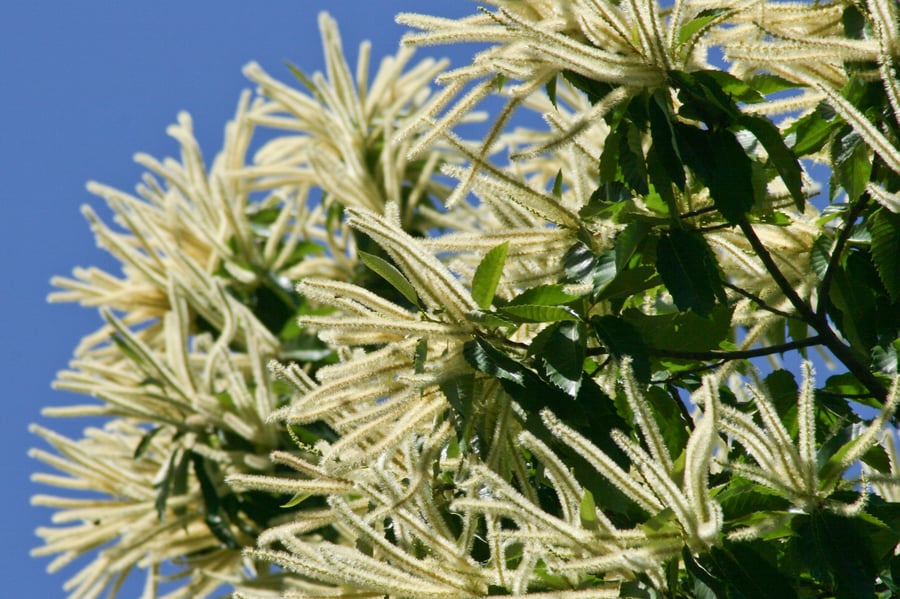
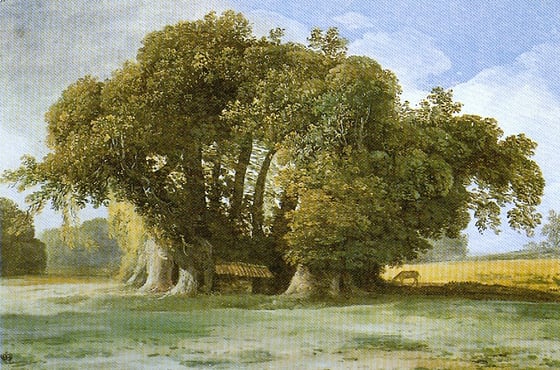
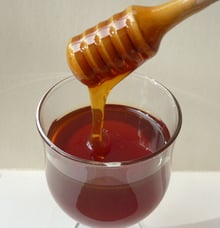
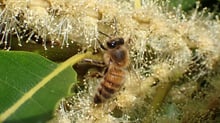
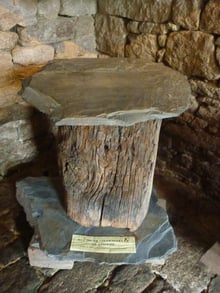
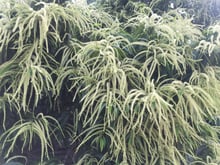 Photo: Kim Hyun-tae, iNaturalist | CC BY 4.0Chestnut in flower, South KoreaA chestnut, Castanea crenata, in full flower at Seosan, South Chungcheong, in June 2019.
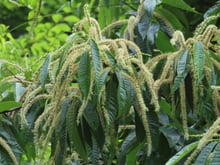 Photo: Timur Kalininsky, iNaturalist | CC BY 4.0Japanese chestnut in flowerJapanese chestnut, Castanea crenata, in flower at Sendai, Miyagi, at the end of June 2021.
)
 Slow Food Ark of Taste: Chestnut Honey, Kosovo – Lists the honey of the Deçan and Junik area, collected from wild sweet chestnut at about 4 to 6 kg a hive and eaten at breakfast or taken in tea in place of sugar.
 Miele della Lunigiana DOP and Miele delle Dolomiti Bellunesi DOP – Two of Italy’s three honey protected designations of origin carry a chestnut typology. The Tuscan one defines it by the flowering and requires more than 100,000 chestnut pollen grains per 10 g rather than a percentage; the Venetian one requires more than 90 percent Castanea sativa, and both cap water at 18 percent. (Italian translated to English
  Miel de Galicia / Mel de Galicia PGI, Miel de Asturias PGI, DOP Miel de Granada, DOP Miel de Tenerife, DOP Miel Villuercas-Ibores, DOP Miel de Málaga and the Basque Label Vasco de Calidad Alimentaria – Seven Spanish instruments name a chestnut honey, and their pollen minimums run from 70 to 90 percent. Galicia counts the genus, Castanea sp.; the other six name the species. The Basque regulation of 1993 sets the highest pollen minimum of the seven, 90 percent, with at least 100,000 grains per 10 g and a conductivity floor of 1.0 mS per cm. The general regional seal stands for the entry as a whole, which names two protected geographical indications, four protected designations of origin and a national quality label.