
Sarsaparilla Honey
The Story
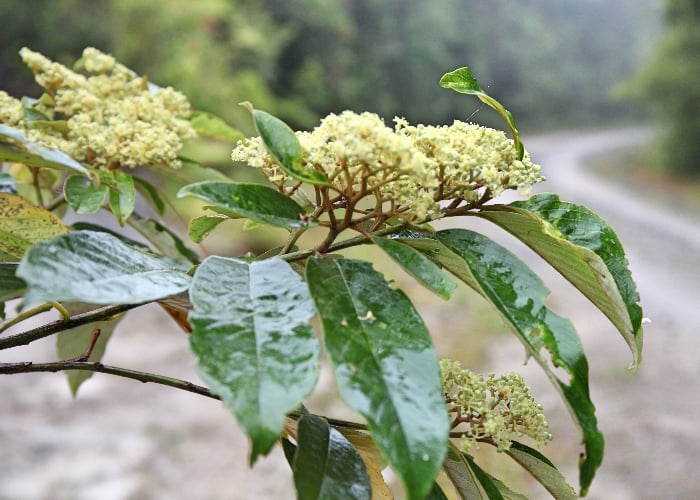
In the Wet Tropics behind Cairns, the sarsaparilla tree carries a major nectar and pollen flow – but a good one comes only every second or third year. The honey, light amber and mild, is a rainforest crop tied to a tree that flowers heavily on its own schedule, not the beekeeper’s.
The tree is Alphitonia petriei, a fast-growing pioneer of the upland rainforest edge known across north Queensland as sarsaparilla, pink ash, or white ash. The name has nothing to do with true sarsaparilla or the root used in old soft drinks: it comes from the scent of the crushed leaves and bark, a sharp wintergreen-and-liniment smell that reminded early observers of sarsaparilla cordial. When it blooms, from spring into the wet season, the crown fills with dense panicles of small cream flowers, and in a strong year it becomes the principal forage tree of the rainforest for kilometres around.
For the bees and the beekeeper, that schedule is the whole story. In a flowering year the tree carries colonies well; in the years between, the flow falls away and the honey is simply not there. This is a honey you meet at a Cairns market stall when the season has delivered, named for the tree the bees were working – not a jar you can count on finding any given winter.
Characteristics
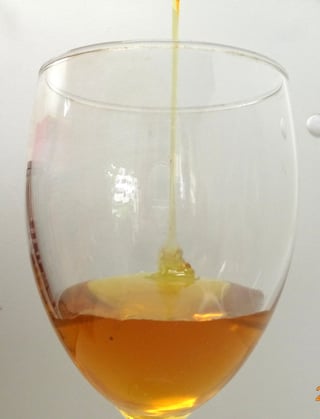
Sarsaparilla honey is light amber, mild, and of moderate density – an unfussy rainforest honey rather than a bold one. The aroma is light and faintly resinous, in keeping with a tree whose foliage carries methyl salicylate, though that wintergreen note belongs to the leaves and bark and does not pass into the nectar. On the palate it is gently sweet and clean, with the “fair” flavour Blake and Roff record for it: pleasant and unchallenging.
It is a honey defined as much by when it appears as by how it tastes – the product of a heavy but irregular bloom – and by the upland Wet Tropics forest that produces it.
Click to Display — The Details: botanical origin, sensory profile, and its regional identity
Botanical Name: Sarsaparilla / Pink Ash (Alphitonia petriei)
Botanical Family: Rhamnaceae
Bee Species:
Western honey bee (Apis mellifera), the managed bee of all commercial north Queensland honey production. On sarsaparilla, beekeepers note a particular pattern: colonies build well while the tree is in flow, drawing strongly on its abundant nectar and pollen, but tend to dwindle quickly if they are shifted to a site with poor pollen supplies afterward. The tree is valued as much for the pollen that sustains the brood as for the nectar that becomes honey.
Color:
light amber
Flavor Profile:
mild, fair, gently sweet
Tasting Notes:
A mild, approachable honey of moderate density. The flavour is gentle rather than assertive – Blake and Roff rate it “fair,” placing it among the lighter, everyday table honeys of the region rather than the strong, dark rainforest types. Light amber in the jar, it sits closer to a clean blossom honey than to the caramel-heavy brush box or the medicinal jelly bush also harvested in the same forests.
Aroma:
light, faintly resinous
Forage Origin:
The bees collect nectar and pollen from the sarsaparilla tree, Alphitonia petriei (Rhamnaceae), a pioneer rainforest tree of eastern and northern Australia. In Far North Queensland it grows most thickly in the upland Wet Tropics between roughly 800 and 1200 metres, colonising rainforest margins, clearings, and the edges of new roads, where it can come to dominate the regrowth. In a strong flowering year it is, in the words of the standard Queensland honey-flora reference, “probably the principal rainforest bee-forage plant” of the region.
Flowering runs from spring into the wet season – roughly September to March – when the crown fills with dense panicles of small cream to pale-green flowers. The tree carries a fleshy nectary and yields both nectar and pollen abundantly, but it does so generously only every second or third year rather than every season.
The common name needs care. “Sarsaparilla” here is the tree Alphitonia petriei, not the true sarsaparilla (Smilax) of the old root-beer flavouring, and not the southern native vines also called sarsaparilla – the purple-flowered Hardenbergia violacea or sweet sarsaparilla, Smilax glyciphylla. The name comes only from the smell of the crushed leaves and bark, which carry methyl salicylate and give off a wintergreen-and-liniment scent likened to sarsaparilla cordial. The same tree is just as often called pink ash or white ash, and its saponin-rich leaves lather in water, earning it the further name soap tree. The wider genus carries the honey name only in north Queensland; south of the Wet Tropics the tree thins to scattered, low-elevation stands and no sarsaparilla honey is produced from it.
Origin Story
Alphitonia petriei was described in 1925 from collections made around the Johnstone and Barron Rivers, in the rainforests inland from Cairns and Kuranda that remain its heartland. It belongs to a forest long held as Country by the rainforest Aboriginal peoples of the Wet Tropics, who used the tree itself – its strongly scented leaves and bark – as a medicinal liniment, one of many uses drawn from the rainforest pharmacopoeia. That connection is to the plant rather than to its honey, and it sits in the background of a honey whose documented story is a recent and commercial one: the working knowledge of north Queensland beekeepers, who learned to read the tree’s irregular flowering and to follow it when a good year came. Honey House Kuranda, the region’s oldest honey house, lists sarsaparilla among its named single-origin rainforest honeys – a sign the name has settled into the regional market rather than belonging to any one stall.
Harvest & Forage
The defining fact of this honey is its rhythm. Alphitonia petriei produces a good supply of nectar and pollen only every second or third year; in the years between, there is no sarsaparilla crop to speak of. Beekeepers who want it must watch the upland forests and move to the flow when the trees come into heavy bloom, somewhere across the September-to-March flowering window.
Two further constraints shape the harvest. First, pollen supply: bees build strongly on sarsaparilla while it flows, but the reference note is explicit that they dwindle quickly if shifted afterward to a site poor in pollen, so the tree is best worked as part of a sequence that keeps brood fed. Second, the tropics themselves: in the humid north, honey must be left until the frames are almost fully capped – 90 percent or more – because honey drawn too early ferments quickly in the heat and damp. The result is a honey harvested in small, weather-dependent quantities, and one whose supply in any given year is genuinely uncertain.
Beekeeping Context
Sarsaparilla honey is a product of north Queensland’s rainforest and rainforest-edge apiaries – the same Wet Tropics country around the Atherton Tablelands, Kuranda, and the ranges behind Cairns that yields brush box, jelly bush, and mixed rainforest honeys. It is gathered by commercial and small-scale beekeepers running managed European hives, typically moved to the flow when the sarsaparilla trees bloom heavily and worked alongside the other forest sources flowering through the same season. Because the tree is the principal rainforest forage plant in a good year, a sarsaparilla flow can anchor a season; because that good year comes only intermittently, no operation depends on it alone.
Named Producers
Daniel’s 100% Pure FNQ Honey – Cairns. A Far North Queensland beekeeper of around fifty years running roughly 400 hives, who sites his hives by area to produce distinct single-source honeys and extracts and bottles them himself. Sells direct under his own label at Rusty’s Markets in central Cairns (Grafton Street, Friday to Sunday); no online ordering.