Blueberry Honey (Miel de bleuet)
The Story
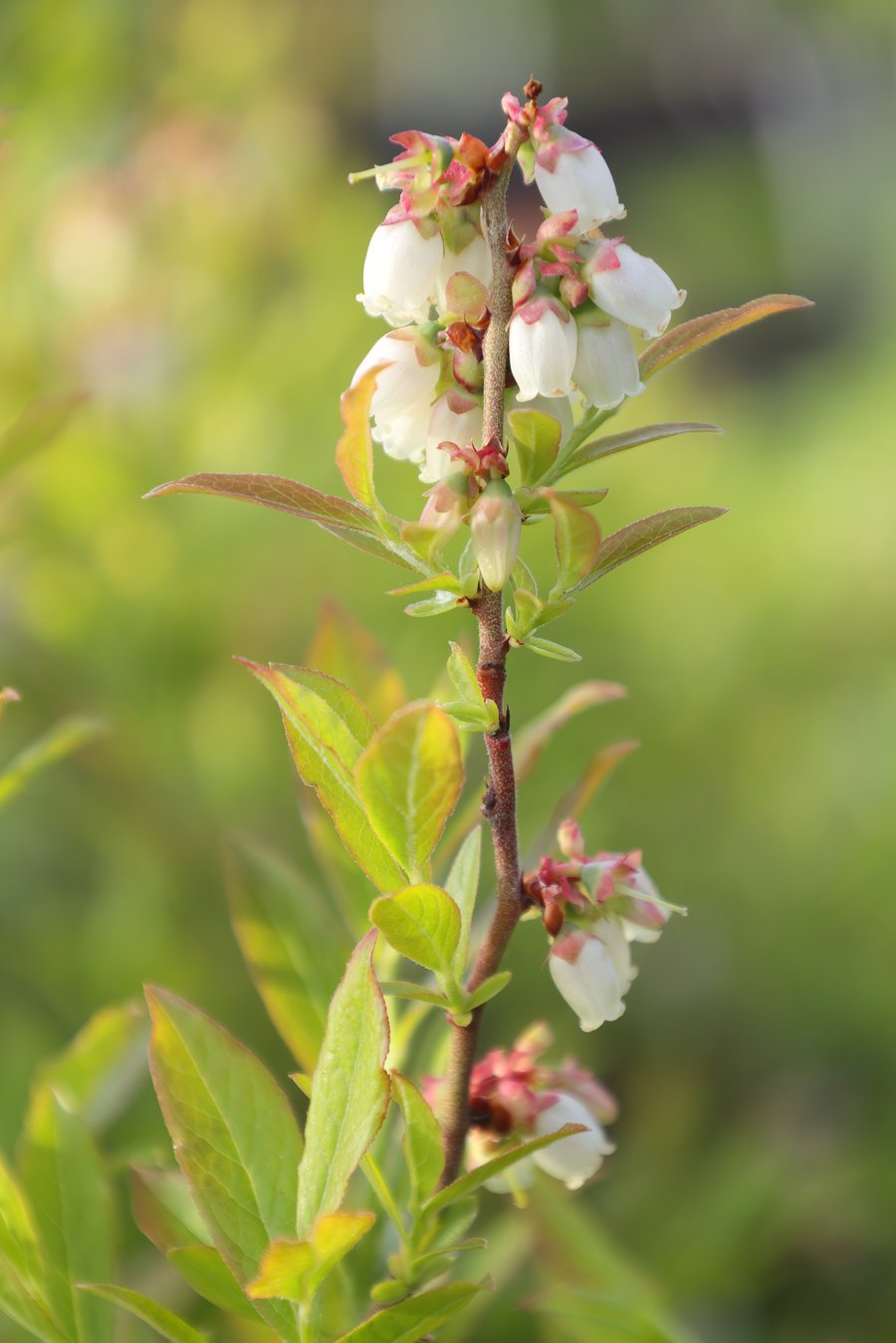
The wild lowbush blueberry of Saguenay-Lac-Saint-Jean produces two crops from the same low plant: the berries picked in August, and this honey, taken from its white bell-shaped June flowers. The two share what the plant makes – its sugars and its vitamin B3 (niacin) – and they taste nothing alike, because honey comes from nectar, and nectar carries neither the fruit’s flavour nor its scent. The jar is amber, lightly fruity, with a slightly tart finish. Growers rent the hives for the fruit: blueberry flowers need insect visits to set fruit, so about 29,000 colonies arrive each June, trucked in by night from across the province. The honey is what a hive gathers in the three weeks of the contract – seven to nine kilos, about a quarter of what a Quebec hive averages over a full season, which is why the jar is scarce and dated to June. To enjoy both crops at once, serve one with the other.
Characteristics
An amber honey, pale to dark depending on the year and the site. The scent is where the fruit shows: mildly fruity on opening, while the taste is honey first – sweet, lightly fruity, with a small tart edge at the finish and a round, buttery feel. It carries none of the berry’s own flavour, and producers in Quebec, British Columbia and Maine state that plainly on their own pages. Left in the cupboard it sets naturally within a few months to a spreadable grain, the fast-setting habit of Quebec’s glucose-rich honeys.
Click to Display — The Details: botanical origin, sensory profile, and its regional identity
Nectar Contributors:
- Primary: Wild lowbush blueberry (Vaccinium angustifolium)
- Secondary: Velvetleaf blueberry (Vaccinium myrtilloides)
Bee Species:
Western honey bee (Apis mellifera). Managed bumblebees and leafcutter bees also work the same fields for pollination, but neither produces a harvestable honey.
Color:
Pale amber to dark amber, varying by year and site
Flavor Profile:
Fruity but subtle, honey-sweet, with a slightly tart finish
Tasting Notes:
Melissa Girard, one of three Canadians certified on Italy’s national register of honey sensory experts, places it at the warm end of Quebec’s range: caramel, cooked fruit, gingerbread – “plus chaud, plus rond, plus caramel” – against the lighter summer honeys.
Aroma:
Mild and lightly fruity – the fruit shows more in the scent than in the taste
Defining Compounds:
Vitamin B3 (niacin). The berry and the honey get it from the same plant: the fruit is an excellent source of the vitamin, and the honey is identified in the laboratory by its B3 content – the published authenticity marker for Canadian blueberry honey, one that survives filtration, creaming and pasteurization. On the sugar side the honey is glucose-rich, which is why the jar sets fast.
Forage Origin:
Primary: wild lowbush blueberry (bleuet nain, Vaccinium angustifolium, Ericaceae). A shin-high shrub of acid, sandy, well-drained ground, native to northeastern North America. It is never planted: the plant spreads by rhizome, and a commercial blueberry field is wild stock the grower encourages – forest cleared, soil left alone, stands pruned to the ground every second year so the following year’s stems flower heavily. The flowers open in June, white and urn-shaped, and the bloom in any one field runs about twenty days. The flower cannot set fruit with its own pollen; the pollen is too heavy and sticky for wind to move; and the anthers release it only when the flower is vibrated, which bumblebees do and honey bees cannot. A honey bee visits for the nectar, and that nectar is this honey.
Secondary: velvetleaf blueberry (airelle fausse-myrtille, Vaccinium myrtilloides). The second species of the commercial fields, told apart by its downy stems. Its flowers open about eight days behind the first species, which stretches the bloom across the weeks the hives stand in the fields.
Pairings:
To enjoy the plant’s two crops at once, serve one with the other: the honey over fresh blueberries, or both over yogurt or pancakes. The pairing already exists in made form on regional shelves – candies of honey and blueberry from a Dolbeau-Mistassini farm that produces both, and a blueberry honey wine (hydromel) made in Alma. The infused cousin, miel au bleuet, is honey with fruit added: one word apart on the label, a different product in the jar.
Origin Story
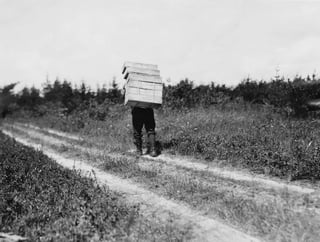
On 19 May 1870 a land-clearing fire that started at Saint-Felicien burned the west side of Lac Saint-Jean in a day – about 3,800 square kilometres. The blueberry was already in the soil; the fire revealed it, and within a few years the region spoke of a “manne bleue”. The longtime president of the growers’ syndicate states the correction to the popular story plainly: the plant was always there, and a burn only clears its competition for two or three years. The commercial fields came a century later. The province began leasing land for communal blueberry fields in 1961, sixteen existed by 1966, and today about 100,000 acres are managed in Quebec, most of them on the sandy plain around the lake.
Beekeepers followed the fields. Honey bee pollination of the Lac’s blueberries was already a research subject at Laval in 1973, and the rental system industrialized from the early 2000s, when the colonies offered for the service across Quebec rose from 20,000 toward 54,000. The honey took its name from the practice. By 2003 the province’s biggest packer was explaining on television that nothing is added to it: the bees are simply trucked to the blueberry fields, and the result is “never 100 percent pure, but predominantly blueberry”. The name on the jar describes where the hive stood in June.
Cultural Context
The blueberry is the region’s identity fruit. The people of Saguenay-Lac-Saint-Jean are called les Bleuets – a nickname outsiders coined and the region adopted – and Dolbeau-Mistassini, which calls itself the world capital of the wild blueberry, has held the Festival du Bleuet every August since 1961. In the language of the Pekuakamiulnuatsh of Mashteuiatsh, on the lake’s shore, the berry is minish, “little fruits like pearls”, gathered by families for their own tables and as income. The honey is the recent arrival in this culture: it dates from the rental hives, and it is sold beside the fruit today, at farm stands around the lake and at the Grand Marche de Quebec, where a Lac blueberry producer’s kiosk carries its own honey.
Harvest & Forage
What ends up in the jar is set by the contract window. Hives enter the fields when about a fifth of the flowers are open and stay about three weeks, and whatever else blooms within flight range in June enters the same combs – one Lac producer’s own label says the honey holds mainly blueberry nectar and that of the June forest flowers. No rule fixes a minimum: Quebec’s beekeepers' association states that no pollen-percentage standard stands behind a floral name, and pollen analysis under-reports blueberry besides – honey produced deliberately on the crop failed pollen confirmation in five of eight reference lots at the Deschambault research station, which is why researchers turned to a chemical marker instead. Extraction comes at the end of June; some houses bottle the harvest under its own name, others fold it into a spring or summer honey.
Beekeeping Context
The hives move at night. Colonies are loaded after dusk, when the day’s foragers are back inside, and unloaded before dawn – Saint-Hyacinthe to Albanel is a six-hour run. In 2024 Quebec growers rented 29,407 colonies for blueberry pollination at an average of $200.55 each; blueberry and cranberry together take 93.5 percent of all colonies rented in the province, and rentals earn Quebec beekeeping more than a third of its total value. Only about 1,500 of the roughly 35,000 hives the Lac needs are local. The rest arrive from the south, many on a circuit that begins in the Monteregie apple orchards and ends in the cranberry farms of the Centre-du-Quebec. The honey is a small part of the deal: Raphael Vacher of Les Miels Raphael in Alma, president of the beekeepers’ association, harvests “tres peu” of it – it sells for more, he says, but the rental fee is what pays – and the weeks in the fields cost the colonies, so beekeepers move their hives to more varied bloom the day the contract ends. Researchers at Universite Laval documented the nutritional deficiency behind that practice.
Named Producers
- Miel des Ruisseaux – Alma, Lac-Saint-Jean-Est. About 600 colonies; miel de bleuet from a 110 ml jar to a 3 kg pail; the Economusee de l’apiculteur, with guided visits, tastings and an observation hive since 2015, and a permanent stall at the Grand Marche de Quebec.
- Miel Picard – Normandin, on the upper Lac. Family production since 1929; miel de bleuetiere in 250 g and 1 kg, with a label that says plainly what is inside: mainly blueberry nectar and the June forest flowers beside it.
- Miel Boreal – La Dore. Raw, unpasteurized and unfiltered; miel de bleuet is the first of its three yearly harvests, taken at the end of June, in formats from 160 g to 3 kg.
- Le Miel d’Emilie – Saint-Sylvestre, Lotbiniere. A Beauce-area producer whose hives travel to the Lac each June; its 1 kg miel de bleuetiere is graded Canada No. 1, certified Aliments du Quebec, kosher pareve, and stocked in Metro groceries.
- Intermiel – Mirabel, Basses-Laurentides. About 5,500 hives rented to blueberry and cranberry growers; miel de bleuet from 150 g to 3 kg is the most expensive honey in its standard liquid line.
- Miel Dubreuil – Saint-Dominique, Monteregie. Founded 1930; its miel de bleuetiere is, in its own words, strictly produced in the blueberry fields of Saguenay-Lac-Saint-Jean.
Source Regions
- Canada, Nova Scotia - Vaccinium angustifolium: Wild blueberry blossom honey: the Atlantic pole of lowbush production; Sunny Acres bottles it liquid and creamed, and Van Dyk’s of Caledonia runs 600 acres of wild blueberries with its own hives.
- Canada, New Brunswick - Vaccinium angustifolium: Wild blueberry blossom honey: about 18,000 acres of barrens pollinated largely by imported colonies; Trueman Blueberry Farms keeps its own bees and takes the honey crop for its farm store.
- Canada, Prince Edward Island - Vaccinium angustifolium: Blueberry honey: Canoe Cove Honey bottles blueberry as one of its two honeys for Island markets.
- Canada, British Columbia - Vaccinium corymbosum: Blueberry blossom honey: from the Fraser Valley’s cultivated highbush fields rather than wild barrens – a different plant and system; Honeyview Farm sells it graded Canada No. 1.
- United States, Maine - Vaccinium angustifolium: Wild blueberry honey: the Downeast barrens carry nearly all US wild production and draw tens of thousands of hives each May; Swan’s Honey of Albion has supplied the growers’ bees for generations.
Translations
- Miel de bleuet – French: the standard Quebec retail name
- Miel de bleuetiere – French: honey of the bleuetiere, the blueberry field; producers using this form name Saguenay-Lac-Saint-Jean as the place of harvest
- Miel de fleurs de bleuet – French: the blossom-first form of the same name
- Bleuet – in France the same word names the cornflower (Centaurea cyanus), a different plant and a different honey; one Quebec shop’s own English toggle mistranslates its jar as cornflower honey
Festivals and Fairs
- Festival du Bleuet, Dolbeau-Mistassini – late July into early August since 1961: the festival of the plant’s other crop, in the town that calls itself the world capital of the wild blueberry, with the giant blueberry pie at its centre.
Certifications
- Aliments du Quebec – provenance certification carried on individual producers’ blueberry honeys (Le Miel d’Emilie, Miel Gaudreau); it certifies Quebec origin, not floral content.