
Spruce Honeydew Honey
The Story
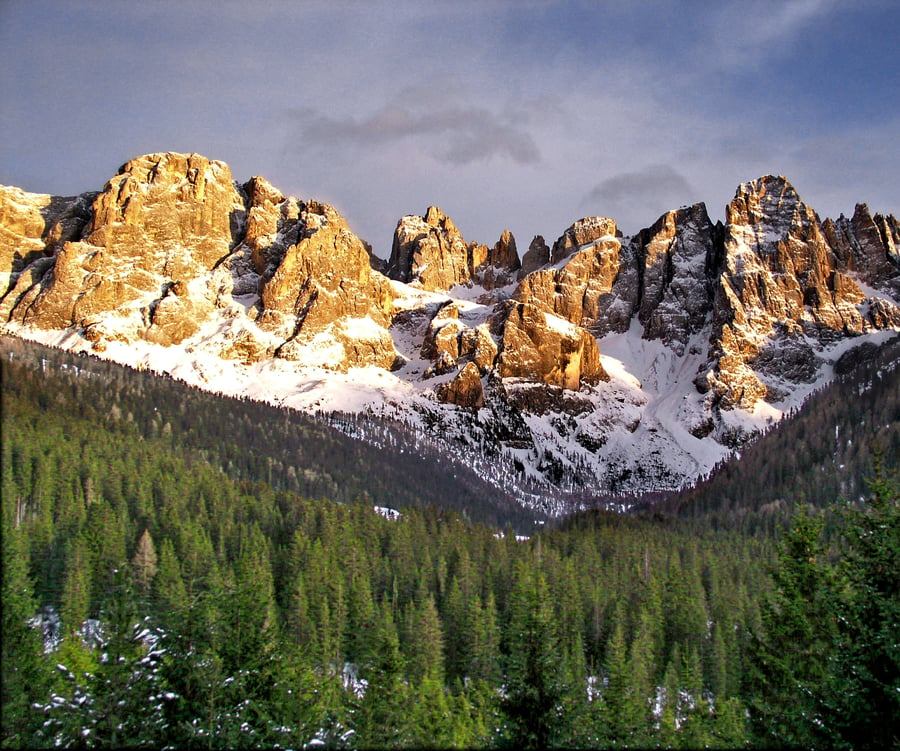
In the Paneveggio forest, at the head of the Val di Fiemme in the Dolomites of Trentino, Norway spruce stands on 86 percent of the woodland, and a few of its slow-grown trees give the resonance wood for the soundboards of violins and pianos. Tradition in the valley has it that Antonio Stradivari came to Paneveggio in 1719 to choose his own boards, and instrument makers still come for trunks. The same spruce carries colonies of aphids and of scale insects, which give off a sugary liquid that the bees gather in place of nectar, and from it the valley’s beekeepers make a red-brown honeydew honey. In 2017 a national honey award went to a Fiemme spruce honeydew, and the Trentino news site il Dolomiti wrote that the valley’s famous spruce, the one that gives the sound boxes of string instruments, now stood out in food as well.
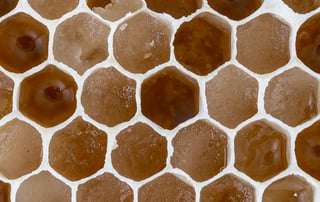
Spruce honey of the same kind is sold under a spruce word, or with the beekeeper naming the spruce, in the mountains of six countries, Germany, Austria, Italy, Slovenia, Slovakia and Poland, and it is a honey the beekeeper has to forecast, because the flow comes in some years and not others and lasts only weeks when it comes. One tree can also give two honeys: in most years a thick, malty honey that stays liquid a long time, and in a hot, dry year one that sets hard in the comb before it can be taken, which beekeepers call cement honey. What honeydew honey is, and how it differs from the honey of flowers, is told on its own page.
Characteristics
Spruce honeydew honey is red-brown and clear, sometimes dark amber with reddish glints, with a malty, spicy taste carrying a sourish note and a smell of resin, damp wood and conifer bark. It is very viscous and stringy on the spoon. Ordinary spruce honey stays liquid a long time and sets slowly or only partly in the jar: Slovenia’s sheet calls it always clear and slow to crystallise. Germany’s guideline allows it to run from viscous to crystalline. Some flows carry so much melezitose, a sugar the aphids make, that the honey sets in the comb within days: the cement honey of hot, dry years, chiefly from the large black spruce bark aphid; what reaches the jar sets within weeks, and the Bavarian bee institute advises creaming it.
Click to Display — The Details: honeydew source, sensory profile, pairings, health and what gives it its character
Honeydew Sources:
- Primary: Cinara pilicornis, the red-brown spruce bark aphid of the new shoots. Host: Norway spruce (Picea abies)
- Secondary: Physokermes hemicryphus and P. piceae, the spruce bud scale insects. Host: Norway spruce (Picea abies)
- Secondary: Cinara piceae, the large black spruce bark aphid of the trunk, the cement-honey insect. Host: Norway spruce (Picea abies)
- Supporting: Cinara costata, the mealy spruce bark aphid of older twigs. Host: Norway spruce (Picea abies)
- Background: Other spruce bark aphids (Cinara spp.). Host: Norway spruce (Picea abies)
Nectar Contributors:
- Background: Flower nectar of forest clearings and edges, such as raspberry, blackberry or lime, varying by site and year (Rubus spp., Tilia spp. and others, unmeasured)
Bee Species:
The western honey bee, Apis mellifera, in every country where this honey is made. A Slovenian beekeepers’ society notes that only the native Carniolan bee, Apis mellifera carnica, may be kept in Slovenia, and describes it as a good worker of the fir and spruce flows.
Color:
Red-brown and clear, with a shine on the surface; Italian descriptions run from light to dark amber, sometimes with reddish glints
Flavor Profile:
Malty and spicy with a sourish edge, moderately sweet, resinous
Tasting Notes:
Very viscous and stringy: Slovenia’s specification says it sticks to the tongue and the palate. Italy’s national union of beekeepers’ associations describes a honey of medium intensity, not very sweet and persistent, milder than fir honeydew. The aroma moves from resin and bark toward herbal sweets, roasted coffee, dried fruit and figs in the Slovenian sheet; the Italian panel’s words include condensed milk, malt, panna cotta, caramel, smoky and faintly balsamic, and tasters from Italy’s honey-sensory association who learned the honey in the Val di Fiemme noted pastry, balsam and damp woodland.
Aroma:
Resin, damp wood, caramel and malt, with notes of spruce-tip syrup, conifer bark and dried apricot
Defining Compounds:
Its character in the laboratory is set more by the insect than by the tree: the three-part sugars melezitose and erlose are made by the insects or the bees, not the plant. In spruce honey from aphid honeydew melezitose is the leading three-part sugar; in honey from the bud scale insects erlose runs significantly higher, a difference the researchers read only from the whole profile of sugars, amino acids and minerals together; and these larger sugars reach up to a tenth of the fir and spruce honeys tested from Baden-Württemberg. In the honeydew itself the large black aphid Cinara piceae gave about half of its sugars as melezitose and Cinara pilicornis about a third in a 2020 study, and a 2022 study found the share rising with heat; a honey carrying more than about 10 to 12 percent melezitose crystallises in the comb and is hard to extract, by the Swiss federal research station’s threshold for melezitose honey. Minerals, read as electrical conductivity, mark it as a honeydew honey: Germany’s guidelines ask spruce honey for at least 0.80 millisiemens per centimetre and Slovenia’s 2025 specification sets its spruce honey at 0.9 or more, and a honey under its country’s floor is not what that country’s sheet calls spruce honey.
Forage Origin:
This honey is sold as Fichtenhonig (spruce honey) in Germany, melata di abete rosso (spruce honeydew) in Italy, smrekov med (spruce honey) in Slovenia, smreková medovica (spruce honeydew) in Slovakia and miód spadziowy iglasty świerkowy (conifer honeydew honey, spruce) in Poland, while in Austria it is sold inside Waldhonig (forest honey), the name Austria’s food code lists as a synonym of honeydew honey, with some beekeepers naming the spruce. Wherever it is made, spruce honey means a honeydew honey: in Germany’s honey guidelines, in Slovenia’s protected specification and in the Italian, Slovak and Polish names, which carry the honeydew word. The German word also goes on a ‘false’ Fichtenhonig made at home from blossom honey steeped with spruce shoots, and Greek fir honey was on sale in Denmark and the Netherlands under spruce words in October 2026. A German jar may carry both tree names together, Fichten- und Tannenhonig (spruce and fir honey), where both flows were gathered in the same season from the same place, and in Italy and Switzerland abete and Tanne, the one word for fir, cover spruce as well, which is why the Silver Fir Honeydew Honey page tells the two trees’ honeys apart.
Spruce here is Norway spruce, Picea abies, the tree of the Alps and the central European uplands, native from the Balkan mountains to Scandinavia and east to the Urals and planted far outside that range since the eighteenth century as what the European forest genetic resources programme calls the most used conifer in plantation forestry; its timber goes to building, paper and the soundboards of pianos and violins. Rottanne in German and abete rosso in Italian both mean red fir, but it is a spruce, and spruce and fir carry different insects and give different honeys.
Seven insects on spruce give the honeydew, five bark aphids and two bud scale insects, and each feeds in its own place on the tree. The red-brown bark aphid Cinara pilicornis, which the Hohenheim researcher Gerhard Liebig called by far the most important producer on spruce, feeds in colonies on the new shoots; the large black Cinara piceae sits on the trunk and the thick inner branches; Cinara costata feeds on slow-growing twigs and, the southern German observers say, gives no flow of its own in their area; and the two bud scale insects, Physokermes hemicryphus and Physokermes piceae, which differ to the eye only in size, sit in the whorls at the base of the shoots, in young, dense stands and, in outbreak years, on older spruce. The aphid colonies are founded by stem mothers, the females that hatch from the overwintered eggs, and their winged daughters or granddaughters make a dispersal flight of a week or two, during or just after which the flow can start; the bud scale insects pass one generation a year, their young wintering at the tips of the shoots and spreading over the tree as crawlers, the mobile young, in high summer, so the number that spread in one summer decides their flow the next.
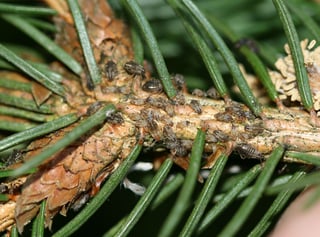
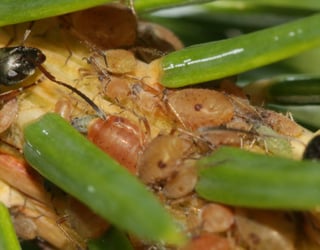
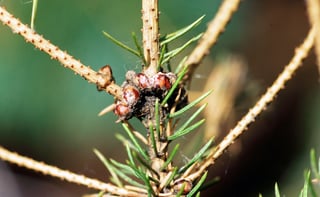
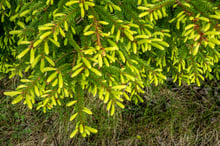
As a rule the aphids multiply only while the spruce is putting out its new shoots, and on spruce, Liebig wrote, they keep to that almost as a law. Once the flush is over the sap loses its food value and the colonies collapse: the insects pull out and walk down toward the trunk, Cinara pilicornis first and Cinara piceae last, and the collapse takes one to four weeks from its start to its end, sooner in summer heat. If every producer joins in, a spruce flow can run for more than six weeks; one species alone gives two or three. Rain does not wash the aphids off the tree, as many beekeepers conclude; it grounds the bees and rinses the honeydew from the needles. Wasps eat no bark aphids, Liebig wrote, and the spruce collapse comes well before their numbers peak; the aphids’ true enemies, parasitic wasps and predatory beetles and bugs, accompany the collapse and in some years take part in it. What makes an aphid year, by the forecasters’ rule, is a warm November followed by a cold March, a warm April and a cold May and June, probably because the tree’s reserves build in autumn and are mobilised while cold snaps stall the flush; a very cold November almost always means a failed year, drought can do what cold does, and the observers now add a wet autumn to the list. The bud scale insects need a dry summer the year before, when their crawlers spread.
Which insect dominates a flow decides what comes out of it. The aphids make melezitose out of concentrated sap, and spruce, whose shallow roots leave it short of water in drought, may concentrate its sap, the researchers suggest; the bud scale insects make little of it even on the same trees. The large black aphid Cinara piceae makes the most and Cinara pilicornis less. While the other aphids’ honeydew comes in alongside, the forest honey can still be extracted; when the pilicornis failed in 2024 in the observers’ southern German area, probably after April and May rain, the large black aphid’s honeydew set the crop in the comb. In Germany it may not be labelled Melezitosehonig (melezitose honey), and the Bavarian bee institute suggests naturtrüber Waldhonig (cloudy forest honey) as its name.
Which insect leads differs by district. On the Black Forest observers’ southern plots the spruce flows of 1987 to 1998 came from aphids, the bud scale insects joining in only in 1998, and then modestly; the Upper Palatinate group harvested flows from the bud scale insects in the Upper Palatinate Forest, the Thuringian Forest and the Erzgebirge, three ranges of Germany’s centre and east, the Czech beekeeping magazine Domácí med calls one bud scale insect, by its Czech name, the most important producer, and Baden-Württemberg’s big spruce years of 2016 and 2017 were years of the bud scale insects. Where the bark beetle has thinned the spruce, a Czech honey-trading firm says the aphids went with the trees; a Swiss beekeeper writes that spruce weakened by dry years has given no forest flow in his region; and the southern German observers still recorded spruce flows in 2024 and 2025. Nectar comes in with the honeydew, and can even determine the crop, from what flowers nearby: raspberry and blackberry in the southern German observers’ forests, raspberry in Slovakia’s Orava, lime in the Sudetes.
Pairings:
A South Tyrolean seller’s listing, read in October 2026, offers spruce honeydew honey as a spread on bread, to sweeten tea and as an aromatic ingredient in savoury dishes and marinades.
Origin Story
The oldest dated spruce honeydew in this record is one that set hard in the comb. A Lithuanian beekeeping text by Jonas Kriščiūnas records that in Czechoslovakia in 1958 honeydew gathered from spruces set completely hard in the combs after twenty-four hours and had to be dissolved in water, spun out and made into mead. The chronicle of the beekeepers’ club at Rheinfelden in Baden notes that in 1974 the spruce flow could not be extracted because of melezitose.
Two years later the Hohenheim research began. On 1 September 1976 the Landesanstalt für Bienenkunde (State Institute of Apiculture) at Stuttgart-Hohenheim opened a research project to find a way of predicting the forest flow, from the start on the insects of both fir and spruce. Gerhard Liebig and his helpers counted aphids on six plots in the northern Black Forest from 1977 and eight in the southern from 1987, driving, he reckoned, almost twice round the earth, and from 1987 a network of watchers across Baden-Württemberg was begun. On 12 March 1995 he forecast a very good forest year, and 1995, he wrote, went into beekeeping history as a record year. Liebig wrote that he studied the insects’ population dynamics for 37 years; his obituarists called it counting Läuse, lice, the beekeepers’ word for the aphids. He died on 19 May 2026, aged 77, and the club of watchers founded in 2020 on his idea, Waldtrachtbeobachter Süd, calls itself the club of Läusesucher, louse-seekers, he wanted.
A beekeeper in the Val di Fiemme who joined Italy’s register of honey tasters some 25 years ago recalls that in those days nobody would have thought of telling a spruce honeydew from a fir honeydew, and that honeydew marked all the valley’s honey, which is why, in his view, Fiemme makes no light wildflower honey. Italy’s national union of beekeepers’ associations still files both honeydews under one name, melata d’abete (fir honeydew), while giving spruce its own description; in the European descriptive sheets of 2004 every honeydew honey but Metcalfa’s sits in one class; and spruce honey has a sheet of its own in Germany’s honey guidelines, Slovenia’s 2025 specification and the Italian honey towns’ descriptive sheets.
Cultural Context
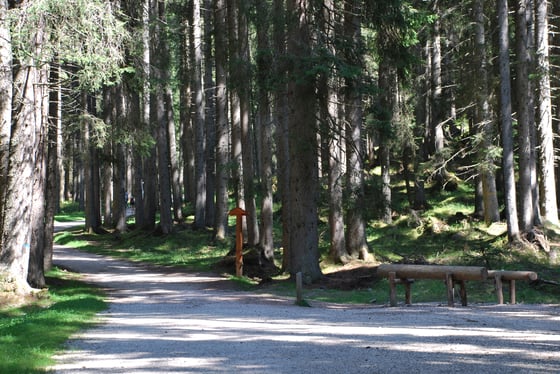
In the Val di Fiemme the beekeepers’ association of Fiemme and Fassa and Italy’s honey-sensory association ran a tasting weekend at Cavalese to learn to tell spruce honeydew from fir: the visitors found both aphids and bud scale insects on a small spruce near Predazzo and walked the Paneveggio forest, il bosco dei violini (the forest of violins), the next day. In Cavalese a delicatessen’s listing, read in October 2026, offers a beekeeper’s honeydew which the seller describes as made at 1,100 metres in spruce woods under a Slow Food presidium, the movement’s scheme for safeguarding a traditional food; on the page of the presidium for high-mountain Alpine honeys (Mieli di alta montagna alpina) the honeydew is melata d’abete only, the fir word that in Italy covers spruce too, dark amber with a slight greenish fluorescence. In Slovenia the beekeepers' association judged spruce honey as a class of its own, beside forest, chestnut and floral honey, in its national honey judging of 2017.
Harvest & Forage
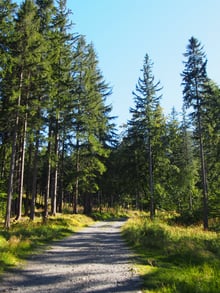
North of the Alps the spruce flow comes mainly in June and July. In the southern German observers’ area the bud scale insects’ flow ran from May to the end of June in 2017, and the aphid flow began around the winged aphids’ dispersal flight toward the middle of June in 2006; spruce comes before fir. One Sudetes apiary takes its spruce honeydew between mid-June and mid-July, a Slovak beekeeper in Orava most often has his mixed with raspberry honey, and in the high Italian Alps the honeydew comes from July into September. One Slovenian beekeeper says the spruce flow begins when the elder flowers and moves uphill from there.
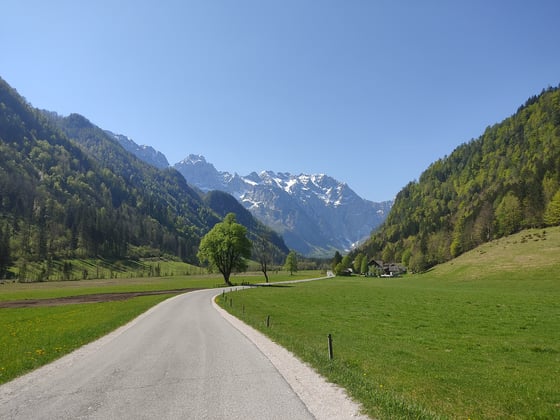
The hives go up to the spruce for the flow: the Slovenian beekeeper takes his to the slopes of the Kamnik-Savinja Alps, and Hohenheim’s researchers note that a beekeeper after spruce or fir honeydew has to move from one forest to another as the insects come and go.
When melezitose comes in, the beekeeper has days. The Bavarian bee institute’s advice is to move the hives away as soon as the weighed hives show the heavy daily gains that mark it, to let the bees draw fresh comb and take the combs off early, and to get out what will come by needling the cells and spinning slowly, by pressing, or by selling it as comb honey; a comb that has set can be soaked and given back for the bees to carry down, at the cost of up to half the honey. Cement honey is never left as winter feed, because it gives the colonies dysentery.
The swing between years is large. The southern German observers recorded cement honey widespread in 2011 and 2013, rare but fierce in 2016, rare in 2017, partial in 2020 and heavy in 2024, probably after April and May rain had set back Cinara pilicornis, and none in 2025, and no spruce flow at all in 2012 and 2014. In 2018 Austria’s beekeeping federation expected almost no forest-honey harvest, and Upper Austrian beekeepers blamed the spruce’s heavy flowering in the drought, one of them telling the Oberösterreichische Nachrichten the saying that when the forest flowers there is no forest honey. The Sudetes apiary had no crop in 2025, and in Czechia the national press agency reported cement honey in several districts in 2024, more than in other years, one district union’s secretary placing the little his district saw mainly on spruce and larch.
Beekeeping Context
Beekeepers move to this honey on a forecast. In southern Germany ten groups of beekeepers at the last count, in 2022, organised since 2020 as a club on Gerhard Liebig’s idea, keep a year-round watch on the aphids and bud scale insects of the Black Forest, the Swabian Forest, the upper Neckar, the Alb edge, Lake Constance and the Allgäu and run weighed hives through the season; Liebig found spruce more reliable than fir and its flow easier to forecast, except that seven producers live on it. Spruce honeydew is a honey of mountain forest: the hives are taken up into the spruce for the flow and brought down again, and one East Tyrol beekeeper summers his colonies above 1,500 metres, where in some years they gather the spruce honeydew. In Austria about half of the honey crop is forest honey, the beekeeping federation Biene Österreich said in 2018, and the agriculture ministry says its honeydew comes above all from spruce and fir and places the forest-honey districts in the higher Mühlviertel and Waldviertel, the Alpine foothills and the Alps. In Switzerland, where the honey is sold inside Tannenhonig (fir honey) and Waldhonig, the federal research station Agroscope calls spruce the most important honeydew source for forest honey.
Source Regions
- Germany, Black Forest and Swabian-Franconian Forest – Picea abies: spruce honey (Fichtenhonig), which German honey guidelines define as a honeydew honey from spruce.
- Austria, East Tyrol and the Lungau – Picea abies: forest honey (Waldhonig), the name spruce honeydew is sold under, with some beekeepers naming the spruce.
- Italy, Dolomites and eastern Alps – Picea abies: spruce honeydew honey (melata di abete rosso), also sold under the two-tree name melata di abete.
- Slovenia, Kočevje forests and Kamnik-Savinja Alps – Picea abies: spruce honey (smrekov med), a type of two EU-protected names, Slovenski med and Kočevski gozdni med.
- Slovakia, eastern Slovakia – Picea abies: spruce honeydew (smreková medovica), also sold as honeydew honey with spruce named as predominant.
- Poland, Sudetes – Picea abies: spruce honeydew honey (miód spadziowy iglasty świerkowy), taken by a Sudetes apiary from mid-June to mid-July.
Translations
- Fichtenhonig – German, the name on the jar and in Germany’s honey guidelines
- Fichtenhonigtauhonig – German, the guidelines’ long form, spruce honeydew honey
- Rottannenhonig – German, a guideline synonym from Rottanne, red fir, another name for spruce
- Melata Abete Rosso – Italian, as the jar prints it; melata di abete rosso in the Italian sheets
- Smrekov med – Slovene, a type of the protected name Slovenski med
- Smreková medovica – Slovak
- Miód spadziowy iglasty świerkowy – Polish, as a Warsaw retailer lists a Sudetes apiary’s honey: conifer honeydew honey, spruce
Certifications
 Slovenski med PGI – Slovenia’s national protected geographical indication (PGI) for honey, registered in 2013, with smrekov med, spruce honey, as one of its types, described in the 2025 specification as red-brown, always clear and very stringy.
 Kočevski gozdni med PDO – The protected designation of origin (PDO) for the forest honeys of Kočevje in southern Slovenia, registered in 2011, with spruce honey as one of four types beside forest, fir and lime honey.