Willow Honeydew Honey
The Story
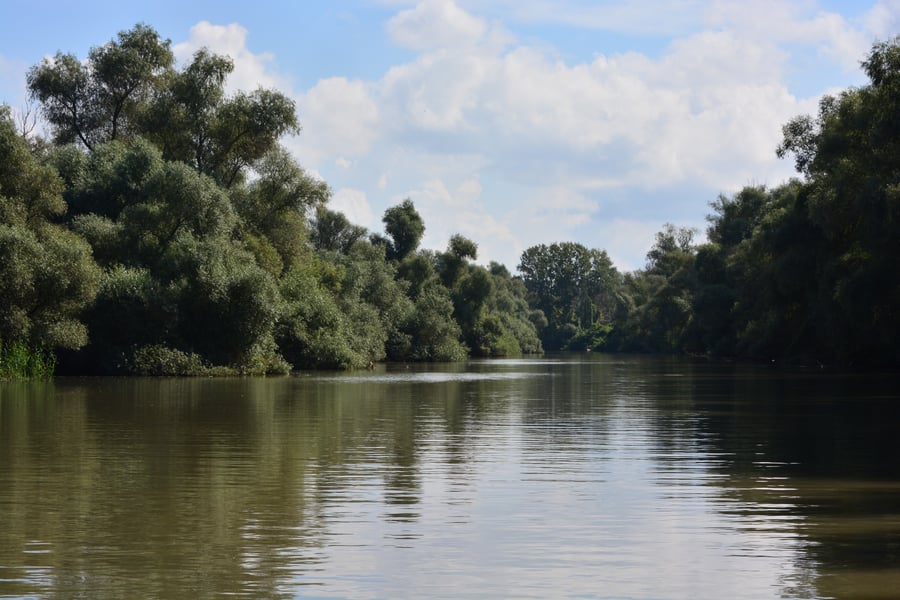
The giant willow aphid has been known to science since 1790. It is one of the largest aphids, five millimetres long; it carries a thorn on its back like a shark’s fin whose purpose nobody has explained, and no male has ever been found. In Britain its colonies vanish from the willows every year, in or around February. An entomology professor has written up the question, citing his former doctoral student’s studies of the aphid; the Royal Horticultural Society asked the country’s gardeners to report sightings; the aphid’s genome has been sequenced; and the Society’s page still says it remains a mystery where the aphid goes. By late summer the colonies crowd the willow bark again, and the honeydew they shed carries a sugar the aphid makes itself. Bees gather it, and the honey can set in the comb.
Bees make honey from willow honeydew wherever the aphid and a hive meet in a year with a flow, and it is recorded on the Danube and the Drava, in Kazakhstan, in Tasmania and in New Zealand, where the honey that can be spun from the comb ends up in multifloral honey and the rest is left in the comb or fed back to the bees. It is sold with the willow named in Romania, where the Danube Delta is printed on the label, and in Serbia, from the willows of the Obedska bara on the Sava. What honeydew honey is, and how it differs from the honey of flowers, is told on its own page.
Characteristics
Sellers describe willow honeydew honey as dark and dense, and its Serbian seller likens it to resin. The honeydew it comes from is rich in melezitose, a sugar absent from the willow’s sap that arises in the aphid’s body, and a honey in which melezitose is a large enough share crystallises in the comb before it can be extracted. What reaches the jar is the honey that could be spun out: a Belgrade retailer says it crystallises slowly, and a Delta apiary that its honeydew does not crystallise as mountain honeydew does. A New Zealand review notes that salicylic and malic acids give it a sour taste.
Click to Display — The Details: honeydew source, sensory profile, pairings, health and what gives it its character
Honeydew Sources:
- Primary: Giant willow aphid (Tuberolachnus salignus). Host: Willows (Salix spp.)
Nectar Contributors:
- Background: Nectar from floodplain summer flowers, varying by site (Multiple species, undocumented)
Bee Species:
The western honey bee, Apis mellifera, which a New Zealand study names as the collector of the giant willow aphid’s honeydew.
Color:
Dark, as its sellers describe it
Flavor Profile:
Resinous by its Serbian seller’s account, sweet with a mild vanilla note by a Belgrade retailer’s; sour, from salicylic and malic acids, by a New Zealand review
Defining Compounds:
Melezitose, a sugar absent from willow sap that arises in the aphid’s body, is what sets this honey in the comb. It dissolves poorly, and a 2017 review cites the finding that it crystallises when its share of the honey is between 8 and 22 percent; it made up about a quarter of one New Zealand sample, a honey that had crystallised in the comb.
Two acids, salicylic and kynurenic, serve as the honey’s markers in a 2011 study, and the 2017 review relays an analyst’s judgement that salicylic acid is a reliable marker, absent from spring willow blossom honey and so present only through the honeydew; with malic acid it contributes a sour taste. A 2010 study names a set of aromatic acids (benzoic, phenylacetic, 2-hydroxybenzoic and 4-hydroxyphenylacetic) and methyl salicylate as the volatile biomarkers of a honeydew honey that, the authors say, probably came from willows: the compounds by which a laboratory can recognise the honey.
Forage Origin: 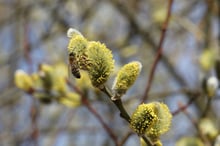
In most markets ‘willow honey’ means the spring honey of the willow’s catkins: sellers in Poland, Germany, the Netherlands, Belarus and Britain, and Italy’s national sheet of single-flower honeys, all mean that honey by the name. The honeydew honey of the same trees is sold under the honeydew word. In Romania the jar reads miere de mană (honeydew honey) with salcie (willow) beside it, and in Serbia a seller in Srem, in the north of the country, lists medljika (honeydew honey) and names the willow in the description. In New Zealand and Australia beekeepers know the same honeydew as cement or concrete honey, hard to extract and often discarded, and Apiculture New Zealand wrote in 2019 that a multifloral honey carrying its melezitose is considered mislabelled.
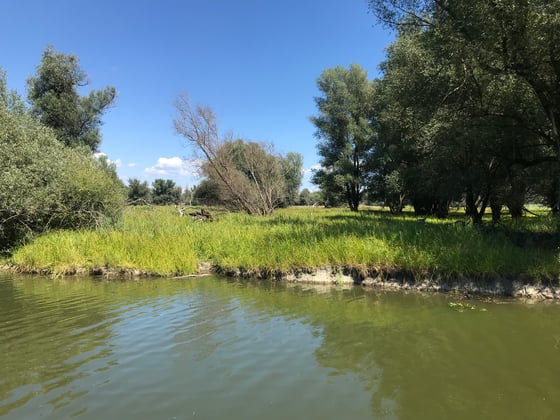
The sellers on the Danube and the Sava speak of aphids, or plant lice, on their willows. The literature on willow honeydew names the giant willow aphid, Tuberolachnus salignus, which feeds in large colonies on the stems and branches of dozens of willow species and very occasionally on poplars. It is found wherever willows grow or are planted and is thought to have come from Asia. The honeydew falls from the bark colonies onto the leaves below, which is where the bees take it, and the Serbian seller speaks of honeydew on the willow leaves. Danube sellers name poplar beside willow in their honeydew.
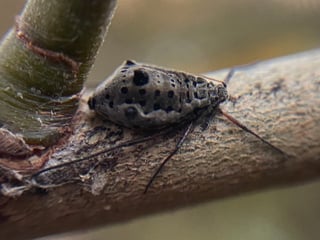
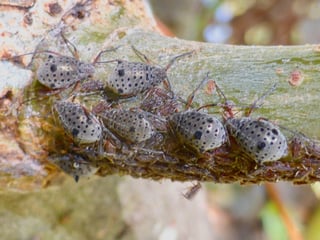
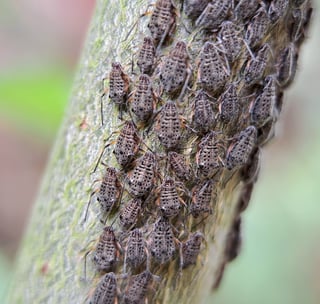
The only sugar in willow sap is sucrose. The aphid’s honeydew carries fructose, glucose, sucrose and melezitose in roughly equal amounts, a composition reported in 1958, and melezitose, as the Croatian handbook of 1980 puts it, is not in the plant’s sap but arises only in the insect’s body. Melezitose dissolves poorly, and as the bees dry the honeydew into honey it crystallises out, so a flow rich in it sets in the comb.
The colonies build through the summer to a late-summer peak, and that is when the bees take most of the honeydew. Their growth can vary widely from year to year, and the aphid does poorly in heat: Landcare Research reports that above 25 degrees Celsius its survival is very poor, with some inconsistency between studies. The spring willow blossom honey, from the nectar of the catkins, is a different honey: analysts found no salicylic acid in it, and a 2011 study called the two completely different honeys. In New Zealand the aphid also reduces the spring blossom: trees weakened by it flower less, and Landcare Research notes that in some parts of the country this removes a spring food source for hives.
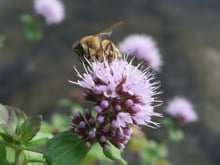
Nectar comes in with the honeydew. A Yugoslav honey-plant handbook of 1973 has the mints of the Sava valley marshes and the Pančevo marsh on the Danube flowering from July to September, and one seller jars willow-and-poplar honeydew inside a Danube floodplain mint honey; nobody has measured the nectar’s share in either willow honeydew jar.
Origin Story
Filip Šimić took up beekeeping more seriously in 1924 in Slavonia, in eastern Croatia, and from 1947 worked at the beekeeping centre in Zagreb. In his 1980 handbook of honey plants he wrote that on the broad willow stands along the Danube and the Drava there can be honeydew from the willow aphid in summer and late into autumn, that it can set very quickly while still on the branch and so too in the comb, and that for bees in winter it is very dangerous. He called the insect by a name from 1835, Lachnus viminalis; entomologists across Europe had described the aphid again and again through the nineteenth century, and the name that stands is the one from its first description. Laboratory studies of 2010 and 2011 identified the honey’s markers, its volatile compounds and its acids, and the 2011 study told it from the willow blossom honey. By 2017 a Belgrade shop was telling its customers that the Srem honeydew honey it stocked was mostly willow honeydew.
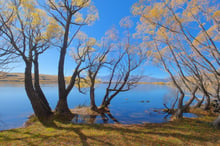
The aphid was first found in New Zealand in Auckland in December 2013, on a crack willow, and was on both islands within months; Australia’s first record came at Longford in Tasmania in March 2014. By May 2016 a New Zealand beekeeper was telling a television programme that the honeydew honey sets like concrete, so was impossible to extract, while some beekeepers kept it in the hive as winter feed. In 2019 Apiculture New Zealand told the Environmental Protection Authority that the aphid’s honeydew forms unusable cement honey and that its excess fructose can look like added corn syrup, on which grounds commercial shipments had been rejected. Tasmania reported its first case of concrete honey in April 2021, and a University of Waikato research page notes that commercial beekeepers currently discard the honey; its authors propose a prebiotic sweet, one meant to feed the gut’s own bacteria, made from it.
The aphid itself now has an enemy. The forest research institute Scion brought the parasitoid wasp Pauesia nigrovaria from California into containment in 2017 and, with the Authority’s permission of December 2019, released it in 2020, shipping mated females to beekeepers and council staff for infested trees. A year on, the wasps had overwintered and were found up to a hundred kilometres from the release sites, though the scientists wrote in 2021 that they could not yet predict how far it would control the aphid.
Harvest & Forage
The flow comes in some years and not others, and the beekeeper works around it. In Serbia the Sava flow comes in July, in some years; the seller of the Srem honey says usually in years whose summers are dry and warm, like 2022, and in limited quantity. Romanian beekeeping manuals place the willow flow around the end of July and the beginning of August, sometimes, in the marsh regions, and, writing of willow as spring forage, tell a beekeeper with no willow near the apiary to plant it; a Delta apiary puts its own honeydew at about once in five years, and a Romanian apicultural page says honeydew is often harvested in certain willow stands of the Danube floodplain. On the Danube and the Drava in Croatia the 1980 handbook gives summer and late into autumn; in Belarus a state veterinary scientist told a newspaper that marsh willow thickets can carry honeydew in the second half of summer and even into September; in New Zealand the flow peaks in late summer. The swing between years is the aphid’s, whose population growth a 2017 review calls highly variable from year to year.
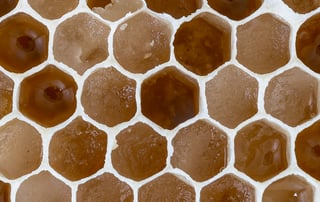
Romanian manuals have the beekeeper take the summer honey off first: when the honeydew flow begins, the combs full of summer honey are removed and stored and empty frames put in, and when the flow ends the honeydew is extracted and combs of good stores given back, so that the winter stores are not honeydew. For honeydew that will not leave the comb, the same manuals advise melting the combs in a bread oven to part the wax from the honey, which goes to industrial use, or soaking them in warm water and setting them between empty combs for the bees to move, and add that even then it is not good to give this honey to the bees as winter food. In New Zealand the melezitose crystals stay in the frames and what spins out clogs the filters, one beekeeper changing a filter every seven boxes; one commercial beekeeper expected 1,300 kilograms from eighty supers of late-summer willow honeydew in 2015 and extracted 900, the rest left in the frames as crystals.
Whether the bees should winter on it is answered both ways. The Croatian handbook calls it very dangerous for bees in winter, Romanian manuals say it compromises wintering, a Serbian agricultural site calls willow and beech honeydew honey ruinous as winter stores, and a Kazakh hobbyist’s account calls it especially dangerous in wintering. Several New Zealand beekeepers have reported it good overwintering material that greatly reduced their winter feeding costs, in a 2017 review that also notes that beekeepers worldwide report melezitose causing dysentery in bees and that most of the crystals are not consumed by the bees at all.
Beekeeping Context
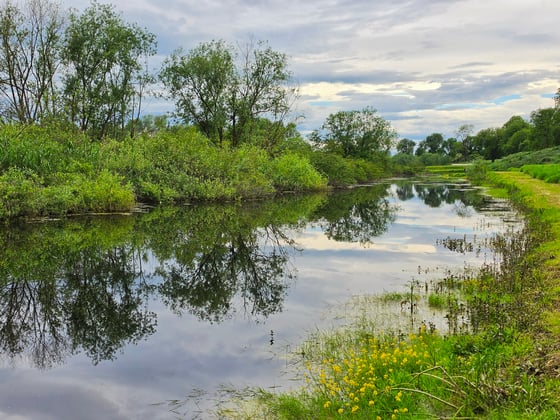
The honey comes from hives that already stand by willows. In Serbia they stand at the willows of the Obedska bara reserve on the Sava, and the honey is sold from Srem. In Romania a Danube Delta apiary that in 2026 lists about seventy colonies harvests its own poplar-and-willow honeydew in the rare years it comes. In New Zealand the honey is a by-product of commercial apiaries near willows: extracted from the supers where it will come out and filtered with difficulty, it ends up in multifloral honey, where the industry body says it has cost export shipments; some beekeepers keep it as winter feed and others discard it.
Source Regions
- Romania, Danube Delta – Salix spp.: willow honeydew honey (miere de mană salcie), the Delta named on the label and by a Delta apiary.
- Serbia, Srem – Salix spp.: willow honeydew honey (vrbova medljika), from the Obedska bara willows on the Sava in July of some years.
- New Zealand – Salix spp.: willow honeydew honey (beekeepers’ cement honey), extracted into multifloral honey or left in the comb, not sold as such.
Translations
- Miere de mană salcie – Romanian, as the label prints it: honeydew honey, willow
- Vrbova medljika – Serbian, willow honeydew honey; the product is listed as Medljika, honeydew honey