Lavender Honey
The Story
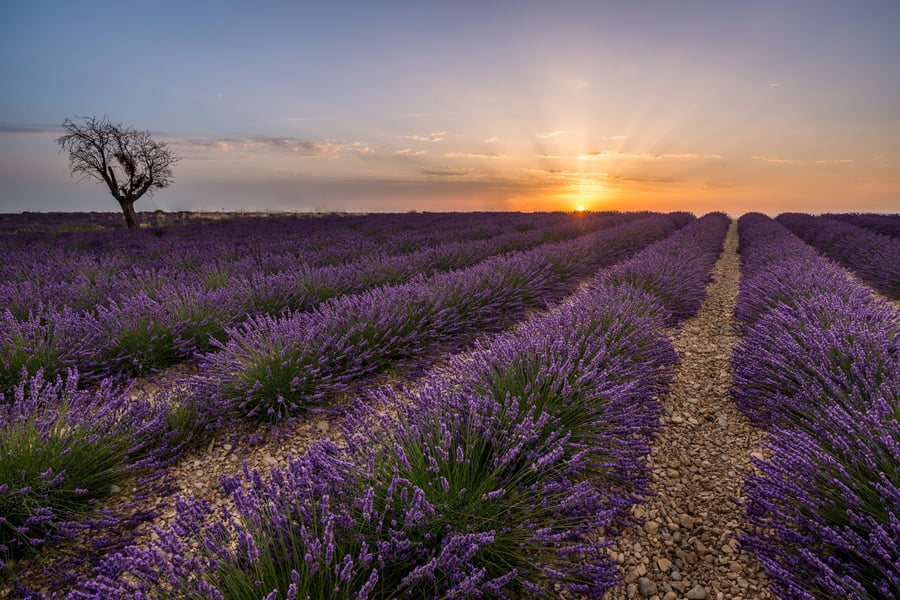
Lavender honey is the honey of the perfume fields. It is made on the lavender that Provence, Bulgaria, Turkey and the Yili valley of Xinjiang grow for its essential oil, in midsummer, when the fields are in flower.
It is made from two plants, and the trade sells it as one honey: true lavender, the mountain plant the honey is named for, and lavandin, its hybrid with spike lavender. Lavandin is the larger plant and yields more oil, and in France, where far more of it is planted, most of the crop comes from lavandin. In Provence the honey’s Label Rouge carries both names: miel de lavande et de lavandin.
The honey’s character comes from what lavandin gives the bee: a heavy flow of nectar and no pollen the bees collect. So the honey carries little pollen and keeps more sucrose than most honeys, and the colonies that make it have to be moved on when the flow ends.
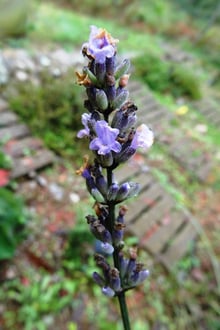
Other lavenders give honeys of their own. Spike lavender in Spain and the wild stoechas lavenders of the Mediterranean coasts are sold under lavender names but are different plants, and their honeys taste different.
Characteristics
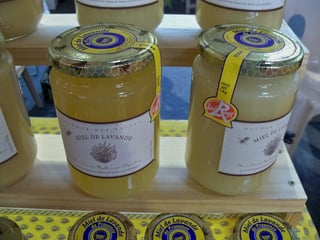
A pale summer honey, clear light yellow when liquid, with a woody, floral and fresh-fruit aroma; sweet, with medium acidity and no bitterness, and crystallising at a moderate pace into a fine grain.
It holds little pollen, and lavender’s share of it varies widely: honey taken straight from the comb cells rarely carries more than 22 to 30 percent lavandin pollen, the Lavandula honeys in the International Honey Commission’s data held 1 to 19.9 percent, and Portuguese Lavandula honeys 16 to 83.
Click to Display — The Details: botanical origin, sensory profile, pairings, health and what gives it its character
Nectar Contributors:
- Primary: Lavandin (Lavandula × intermedia)
- Secondary: True lavender (Lavandula angustifolia)
Bee Species:
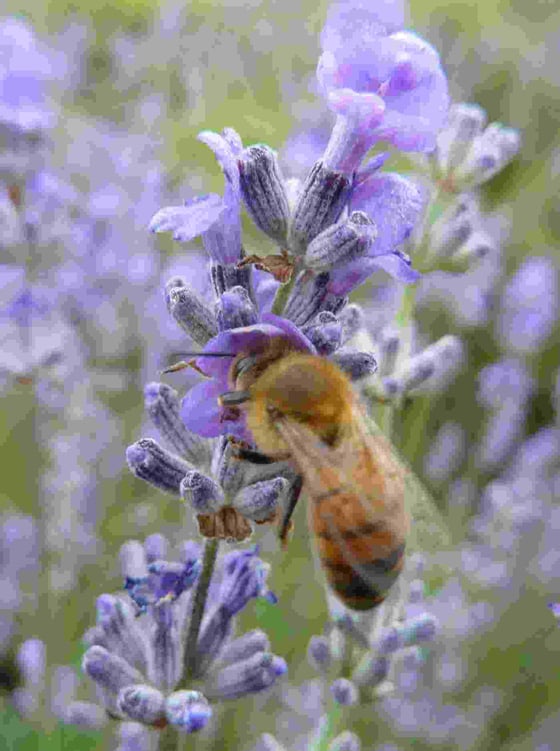
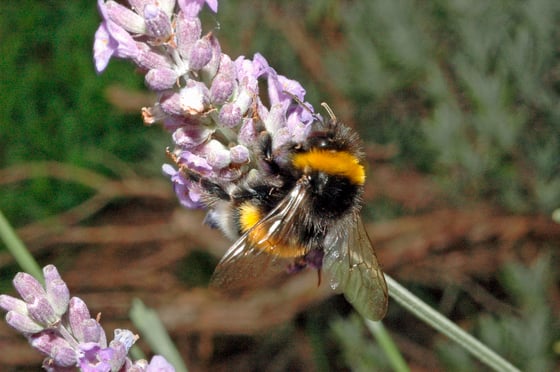
Lavender honey is a western honey bee’s crop (Apis mellifera). In the Yili valley some of it comes from beekeepers keeping the Xinjiang black bee (新疆黑蜂, Xīnjiāng hēifēng).
The honey bee has competition on lavender. Bumble bees have tongues long enough for the flower’s corolla tube and work the flowers three times faster; on lavandin at the University of Sussex they were 92 of every 100 bees counted. In Bulgaria, where a 2022 study found pollinators an important factor in the oil yield, they dominate the visits to true lavender.
Color:
Very pale, clear light yellow in French lavandin honey; light amber in Bulgaria’s true-lavender honey
Flavor Profile:
Sweet, floral, woody and fresh-fruity, without bitterness
Tasting Notes:
The honey tastes of the flowers, not of the oil. It is sweet, with medium acidity and no bitterness; in the mouth it is woody, fresh and floral, it holds for a medium length, and it sometimes finishes on a note of blackcurrant. Provence’s Label Rouge calls its taste “fortement sucrée et légèrement acide, surtout lorsque le miel est issu de lavandes” (strongly sweet and lightly acid, especially when the honey comes from true lavender).
That difference from the oil was once evidence. When the lavender growers blamed the bees for lost oil, the beekeepers answered that the honey’s scent is “très différent de celui de l’essence” (very different from the oil’s), so the bees could not be taking the oil, and the agronomist E. Barbier, reporting the dispute in 1963, agreed: “Cette remarque sur le parfum du miel est exacte” (this remark on the honey’s scent is correct). Bulgarian and Turkish producers say the same of their honey, and Bulgarian producers read a strongly lavender-scented jar as a sign of added oil, though Bulgaria’s 2005 honey ordinance describes the aroma as recalling lavender.
Far from the fields, sellers describe it their own way. In Japan, where specialist shops stock lavender honey imported from France, Bulgaria and Spain, they often say it recalls a rice cake wrapped in a salted cherry leaf (桜餅, sakura-mochi).
Aroma:
Woody, floral and fresh-fruity, with a vegetal note
Defining Compounds:
Its chemistry follows from its flow. The nectar is rich in sucrose and the flow is heavy, so the bees leave more sucrose unconverted than in most honeys: a mean of 5.7 and a maximum of 15.2 grams per 100 grams in the International Honey Commission’s analyses. The Codex honey standard and the European directive give Lavandula honey a sucrose limit of 15 grams per 100 grams, against 5 for most honeys, and Provence’s Label Rouge takes more than 2 percent as its reference.
One authenticity test also returns false results on it. In a study by ITSAP, France’s technical beekeeping institute, 27 of 51 barrels of 2023 Provence lavender honey passed every test but the LC-IRMS isotope test, which laboratories have adjusted for this sucrose-rich honey since 2017; ITSAP judged the failures false positives and advised setting the test aside for it.
Its aroma is harder to pin down. Coumarin, a volatile compound rare in honey, is found in the honeys of true lavender and lavandin and has served in them as a freshness indicator, but no single compound separates the lavender honeys of different species: a 2020 review of honey volatiles found it “not possible to identify reliable markers”.
Forage Origin:
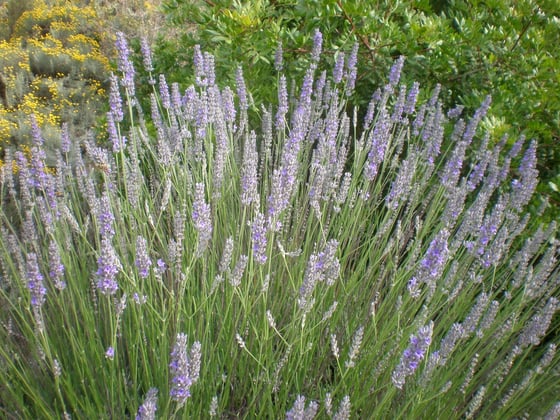
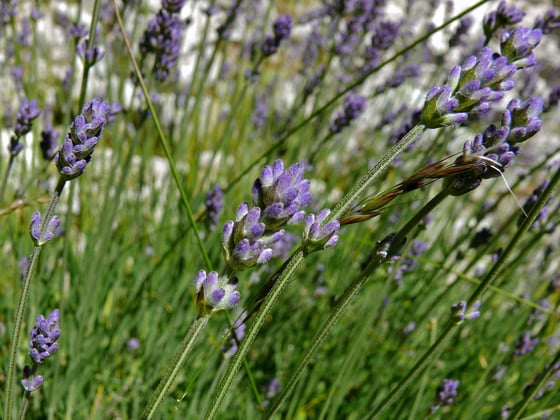
Primary: lavandin (Lavandula × intermedia, Lamiaceae). The large, sterile hybrid that most lavender honey comes from. It arises when true lavender’s pollen reaches the stigma of spike lavender – seed from spike growing near true lavender often comes up lavandin, while seed of true lavender never does – and it sets no seed of its own, so it is grown in named varieties chosen for oil: ‘Abrial’, ‘Grosso’, ‘Super A’, ‘Grande Bleue’. A flower spike carries three to four times the flowers of true lavender and nearly three times the weight of calyces, where the oil cells sit, and each flower gives more nectar than true lavender’s, rich in sucrose, up to 54 percent of its dry matter. Its pollen grains are mostly empty, 2 to 16 percent viable against 94 to 99 percent in the parent species, and bees do not collect them.
Secondary: true lavender (Lavandula angustifolia, Lamiaceae). The mountain parent. It grows on the high plateaus of Sault and Albion in France, above about 800 metres, and in six named varieties in Bulgaria, and a draft Chinese industry standard defines lavender honey on it. It sets seed and gives the bee pollen as well as nectar, but less nectar per flower than any lavandin measured in open-field trials in Provence.
English names do not follow the botany. The International Honey Commission’s list calls lavandin “English lavender” and L. stoechas “French lavender”, and sea lavender (Limonium), whose honey is sold on the Norfolk coast, is a salt-marsh plant and a different honey.
Pairings: 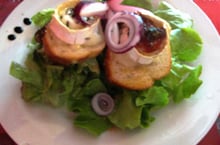
Cheese first, and goat cheese above all. The Paris cheese and dairy trade fair reports experts agreeing that lavender honey suits goat cheeses best, along with creamy cheeses such as Brillat-Savarin, Chaource and ewe’s-milk brousse. Paris honey sellers pair it with Crottin de Chavignol, and a Japanese honey shop with Camembert and Brie. Producers from Provence to Turkey and Japan also suggest it over yoghurt, on bread, and in tea or warm milk.
In the kitchen it is written into the rules for nougat. When nougat became the first confectionery granted a Label Rouge, in November 2022, the rules allowed only Provence PGI lavender honey in it. The Aix confectioner Roy René puts 28 percent into its white nougat, and Nougaterie André Boyer at Sault 30 percent; more on the nougat page. French beekeepers also make it into mead, among them a sparkling mead from lavender honey of the Valensole plateau, and Provence producers suggest it for glazing duck.
Origin Story
The modern crop dates from the lavandin fields. Lavandin was first grown as a crop around 1925, and by the early 1960s it covered large areas of the Basses-Alpes (today’s Alpes-de-Haute-Provence), the Vaucluse and the Drôme, principally on the Valensole plateau. It flowered in a lean season for bees, on large fields easy to reach, and beekeepers brought their hives to it every year. By the mid-1950s some points of the lavandin country held 1,000 to 2,000 hives per square kilometre, and some beekeepers searched by aeroplane for a less crowded site.
So many hives worried the growers. They blamed the bees for losing 7 to 10 percent of their oil, and some wanted migrating beekeepers barred from the fields. The dispute prompted a study by the agronomist E. Barbier, and his cage trials, published in 1963, found the opposite: lavandin visited by bees gave 16 to 20 percent more oil, the plant putting into oil, he suggested, the sugar it no longer spent on nectar. A flower visited by bees closes and stops secreting within two to two and a half days; an unvisited one stays open ten to twelve. On true lavender the gain was temporary, and yields fell back as the seed ripened. In 1971 researchers at INRA in Avignon found the oil varieties poorer in nectar than the common lavandin then going out of cultivation, ‘Abrial’ giving little more than half as much, and asked that nectar be counted when new varieties were bred.
Decades later Provence’s claim to its honey was contested too. When France applied to register Miel de Provence, Germany objected that nothing in the honey was specific to Provence. The Commission answered that the name rested on the honey’s reputation and on “the honey’s floral origin, specific to the botanical environment of Provence”, and registered it by a regulation of 14 November 2005.
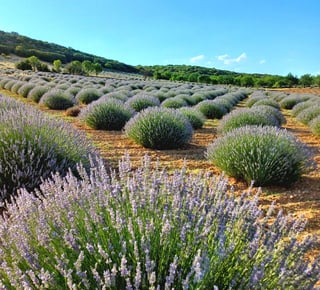
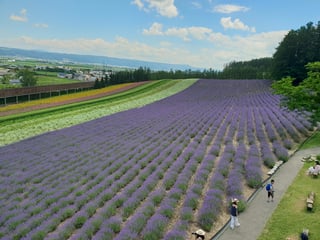
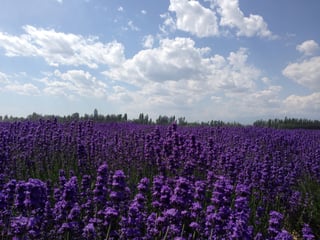
Outside France, the fields were planted later. A rose trader brought lavandin to the village of Kuyucak in Turkey’s Isparta province in 1975. Farmers at Kamifurano in Hokkaido began growing lavender as a field crop in 1948, and the first trial planting in China’s Yili valley was made in 1964; Yili now reports a lavender honey crop. Farm Tomita, the lavender farm at Nakafurano, sells its fields’ honey as a flower-field honey and says it is not lavender-flavoured.
Cultural Context
Much lavender honey is sold where people come to see the lavender, from farm shops in Kent, California, Tasmania and Wanaka in New Zealand to the lavender villages of Isparta. Much of the culture is the plant’s: cultivated lavender became “symbole de la Provence” (a symbol of Provence) by the end of the twentieth century, Isparta’s governor named France as the model and the province planted “lavender honey forests”, and China tells the story of its Yili fields through Xu Chuntang, “the father of Chinese lavender”.
Harvest & Forage
The crop comes in one summer flow, and each field’s timing sets it. True lavender starts flowering six or seven days before lavandin and peaks about three weeks earlier; lavandin’s full bloom lasts longer, and each variety stays in flower for over a month. For the lavandin ‘Super Z’, the start of flowering moved by eight to ten days between years with the weather, and drought ends the bloom early. The plateaus of Provence flower 15 to 20 days after the coast. In Yili the peak is 10 to 30 June.
Keeping the honey pure lavender takes the beekeeper’s care. The hives reach the fields from spring stops on rosemary, thyme and tree heather, and frames still holding that honey darken the crop; oak honeydew gathered at the same time changes its acidity.
The pollen shows the same mixing. Lavandin gives almost none of its own, so the pollen in its honey comes mostly from the fields’ weeds and crops – knapweed, globe thistle, maize, carrot – and from those spring stops. Honey extracted in the usual way carries less lavandin pollen than honey taken straight from the cells: 10 to 15 percent, and sometimes 5.
That makes pollen counts a weak test of this honey at sale, and the legal thresholds differ widely: France sets no percentage; Bulgaria’s 2005 ordinance asks 15, and Croatia and Serbia 10, or 5 where smell, taste and colour are typical. A certified Label Rouge lavender honey analysed in 2022 had oak as its dominant pollen and lavender only among the minor pollens, under 14 percent, and was judged to conform.
Drying the crop is the other concern. Lavandin nectar is 44 to 72 percent water, and colonies thinned by the flow struggle to concentrate it, so a crop can come off the hive too wet and ferment; in 1963 Barbier found the water content often too high. Honey sold under the Label Rouge is held to 18 percent water.
Beekeeping Context
Lavender honey is a migratory beekeeper’s crop. Hives are brought to the fields for the flow, and the fields fill with bees. At Allemagne-en-Provence on 19 and 20 July 1956, a lavandin plant commonly carried about a hundred bees; the last left at sunset, and next morning the first foragers reached the lavandin at 5:45, their hum plain by 5:50.
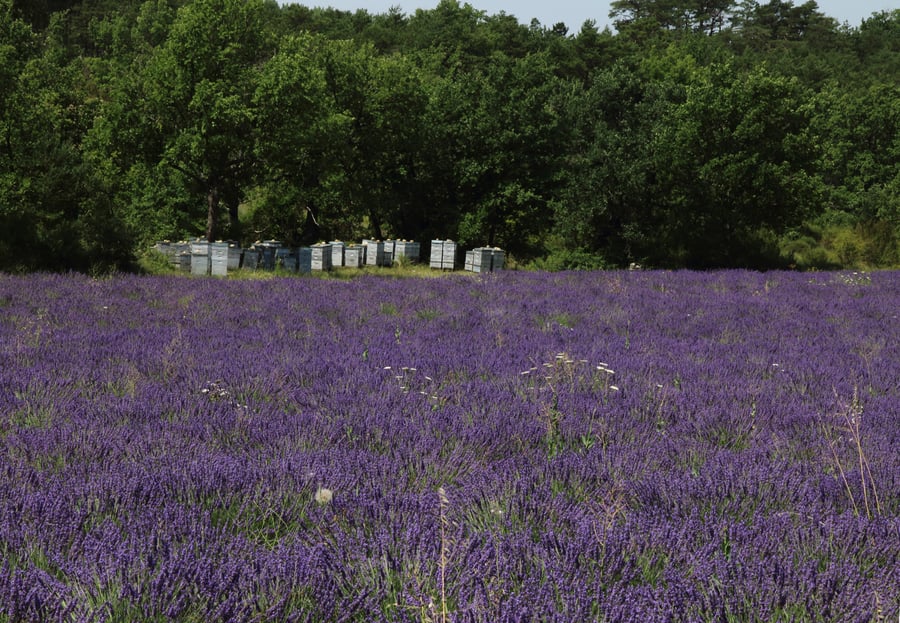
The flow costs the colonies. Lavandin pollen has no food value for bees and other pollen is scarce in the fields, so colonies dwindle during the flow and are moved in autumn to other blooms to rebuild.
Source Regions
- France, Provence – Lavandula × intermedia and L. angustifolia: lavender honey (miel de lavande de Provence), the lavender-and-lavandin family of the Miel de Provence PGI and the Label Rouge LA 24/89; nationally, lavender gave 10.3 percent of France’s 2024 honey crop, second among single-flower honeys only to sunflower, and was the first honey of Provence-Alpes-Côte d’Azur by FranceAgriMer’s count; a Vaucluse beekeeper reported a second short crop in 2026 after five months of heat.
- France, Centre-Val de Loire – Lavandula × intermedia: lavender honey (miel de lavande) from the lavandin planted in Centre-Val de Loire as the crop moved north, sold as Miel de Lavande de Beauce (2026) and, at a Paris specialist, under a Centre-Val de Loire origin (2026).
- Bulgaria, Kazanlak, Stara Zagora and Dobrudzha – Lavandula angustifolia: lavender honey (лавандулов мед, lavandulov med), for which the 2005 honey ordinance set a 15 percent lavender-pollen floor; exported to Japan and Belgium (2026).
- Turkey, Isparta and Burdur – Lavandula × intermedia: lavender honey (lavanta balı) from lavandin, the ‘Super A’ variety in Isparta’s Kuyucak fields, packed nationally and sold with lavender tourism; the Turkish Food Codex sets it a sucrose limit and no pollen minimum.
- China, Xinjiang (Yili) – Lavandula: lavender honey (薰衣草蜂蜜, xūnyīcǎo fēngmì), 145 tonnes from 15,000 hives in 2024 by the prefecture’s count, peaking 10 to 30 June; one beekeeper there sold it at 60 yuan a kilogram wholesale and 80 to 100 retail in 2024.
- Japan, Honshu – Lavandula angustifolia and L. × intermedia: lavender honey (ラベンダー蜂蜜, rabendā hachimitsu) in small farm lots in Yamagata, Chiba and Hyogo (2020-2025).
- United Kingdom, Kent – Lavandula: lavender honey from hives in a lavender farm’s fields, sold at the farm (2026).
- United States, California – Lavandula: lavender honey sold at the farm gate by lavender growers in Fresno and Petaluma (2026).
- Australia, Tasmania – Lavandula angustifolia: lavender honey from the Bridestowe lavender estate, sold with no added ingredients (2026).
- New Zealand, Wanaka and the Hawke’s Bay – Lavandula: lavender honey from lavender farms at Wanaka and in the Hawke’s Bay, where one grower’s honey is sold by vintage year (2024, 2025).
Regional Variants
- Spike lavender honey (miel de espliego) – Lavandula latifolia – Spain, the Alcarria: the espliego type of the Miel de la Alcarria protected designation of origin (PDO), over 10 percent pollen of spike, true lavender and their natural hybrids, with stoechas held to 3 or 4 percent; an intense summer honey of the northern Meseta, Spain’s high central plateau.
- Cantueso honey (miel de cantueso) – Lavandula stoechas – Spain, Granada and the southern Meseta: the cantueso type of the Miel de Granada PDO, over 15 percent stoechas pollen, a pale and delicate honey of late spring to summer; Madrid’s cantueso, of L. stoechas subsp. pedunculata, is on the Slow Food Ark of Taste.
- Rosmaninho honey (mel de rosmaninho) – Lavandula stoechas and L. pedunculata – Portugal, the Terra Quente and the Alentejo: named in two PDOs; the Terra Quente specification reserves the sales name Rosmaninho for honey with at least 35 percent of its pollen. Portugal’s own ministry page gives the plant as alecrim (rosemary), which it is not.
- Wild lavender honey (miele di lavanda selvatica) – Lavandula stoechas – Italy, Sardinia: the only lavender honey made in quantity in Italy, according to Sardinia’s forest agency; on the Slow Food Ark of Taste.
- Karabaş otu honey (karabaş otu balı) – Lavandula stoechas – Turkey, Izmir: the honey of the wild lavender, sold by an Izmir packer apart from its lavanta balı.
- Saudi wild lavender honey (عسل الضرم, ‘asal al-dharm) – Lavandula dentata and L. pubescens – Saudi Arabia, the Taif, Al-Baha and Asir mountains: wild lavenders flowering from mid-December to March, worked by the local honey bee Apis mellifera jemenitica; a 2015 study reported it selling at 50 to 120 US dollars a kilogram, and a 2021 review found it priced above imported honey. In the Gulf the word khuzama (خزامى) on a jar can mean an imported lavender honey or a desert honey from a plant that is not a lavender.
Translations
- miel de lavande – French
- miel de lavande et de lavandin – French, the Label Rouge sale name for the Provence honey of both plants
- miel de lavanda – Spanish
- miele di lavanda – Italian
- лавандулов мед (lavandulov med) – Bulgarian
- levendulaméz – Hungarian
- lavanta balı – Turkish
- ラベンダー蜂蜜 (rabendā hachimitsu) – Japanese
- 薰衣草蜂蜜 (xūnyīcǎo fēngmì) – Chinese
- عسل الخزامى (‘asal al-khuzama) – Arabic, on Gulf jars of imported lavender honey; the word also names a desert plant
Festivals and Fairs
Concours Général Agricole – Paris, Porte de Versailles (late February to early March): the national agricultural competition judges lavender and lavandin honey as one class, Miel de lavande, lavandin, which has run under that name since at least 2005; twelve medals in 2026. (French translated to English
)
Certifications
 Miel de Provence PGI – Registered 14 November 2005; lavender and lavandin form one of the five honey families its control plan checks. (French translated to English
 Label Rouge LA 24/89 – Miel de lavande de Provence and miel de lavande et de lavandin de Provence; excludes L. stoechas and L. dentata by name, sets water and freshness limits and gives colour and sugar references. (French translated to English