A honey bee working conehead thyme, Thymbra capitata, in flower near Málaga, Spain.
Thyme is a kitchen herb, picked fresh for a roast or bought
dried in a jar. On the dry, stony hills where it grows wild it is a nectar
plant of late spring and summer, and the honey the bees make from it is
amber, floral and resinous, with a clear acid edge.
The name covers two genera of plant, and in places a third. Thyme honey
comes from the true thymes, Thymus, and from conehead thyme, Thymbra
capitata, a Mediterranean shrub that botanists have moved out of the
thyme genus and that Crete’s protected honey designation still calls
Coridothymus capitatus. In Turkey
and parts of the Levant the word on the jar also covers oregano.
Thirty-one countries produce and sell the honey,
from Portugal and Morocco through Greece and Turkey to Mongolia, Pakistan
and New Zealand.
Characteristics
Photo: HoneyTraveler
Spanish thyme honey
Thyme honey from Aragon, Spain, on a Paris shop shelf, September 2026.
Thyme honey is amber, light amber to amber in the Italian and Iberian
registers and sometimes with a slight reddish tint, at about 35 to 75 mm
on the
Pfund
scale; Morocco’s is darker, and the Italian sheet gives it beige to hazel
once set. The nose is floral, recalling rose, with woody, spicy and
resinous notes, and the taste is sweet with a clear acid edge and no
bitterness. The honey of conehead thyme stays liquid for months, six to
eighteen in Greece, where the pine honeydew that Greek thyme honey usually
carries slows it further, while Babadağ kekik honey from Turkey, oregano
among its plants, can set in about two months. Its fructose and acidity are high,
which the international sheet says makes its
HMF
rise quickly, so it is best kept cool.
In five countries thyme honey's threshold sits far below the 45 per cent usual for single-flower honeys
Where Greece, Cyprus, Italy, Granada and Turkey define thyme honey, the
threshold sits low because thyme pollen is under-represented: Greek law
asks for 18 per cent thyme pollen, Cypriot law 16, Italy 15, the
Granada designation more than 15, and Turkish law 10 for kekik across four
genera.
Pollen alone cannot settle it. In a Greek study, thyme honeys already
low in thyme pollen, mixed with as little as 5 per cent of chestnut or
eucalyptus honey, could no longer be classed as single-flower by their
pollen count, and European Union law asks for the flower's taste,
chemistry and pollen together before its name goes on a jar. In a 2017
Spanish study every thyme honey bought in Spanish shops matched its label by pollen, and
nine in ten by taste and aroma compounds.
Click to Display — The Details: botanical origin, sensory profile, pairings, health and what gives it its character
Botanical Name: Thymes (Thymus spp.) and conehead thyme (Thymbra capitata)
Botanical Family: Lamiaceae
Bee Species:
Thyme honey comes from the Western honey bee, Apis mellifera, in every
register that names a bee. Some name a local race: both Turkish kekik
designations name the Anatolian bee, Apis mellifera anatoliaca, and
Babadağ’s also admits the Italian and Carniolan races, while Slow Food
names the Saharan bee for the thyme honey of Ida Ou Tanane in Morocco.
Color:
Amber: light amber to amber, sometimes with a slight reddish tint, about 35 to 75 mm Pfund; darker in Morocco; beige to hazel once set
Flavor Profile:
Sweet, with a clear acid edge and no bitterness
Tasting Notes:
Italy’s sensory register describes a nose that opens floral, of rose,
lily and florist’s flowers, then turns pungent, spicy and winey, with the
cedarwood of a pencil and a note it calls chemical, like heated
polystyrene. In the mouth the woody, resinous notes lead: aromatic herbs,
pencil, plastic. Italy’s national sheet adds an aroma of thymol and of a
pharmacy, a comparison by smell rather than a measured compound.
Two registers report a burn at the back of the throat. The Greek
description of thyme honey says it sometimes gives one and attributes it
to the honey’s fructose; the specification of Turkey’s Babadağ kekik honey
describes a light one. The finish is
medium on the international sheet and in the Italian register, and the
Iberian sheet calls the aroma very intense and very persistent.
Aroma:
Floral, recalling rose, with woody, spicy, resinous and fresh-fruit notes and a note the registers call chemical; medium to strong
Defining Compounds:
Thyme honey’s chemical markers differ with the plant and the place. Greek
chemists have proposed a small group of
volatile
compounds, with
carvacrol,
as markers found only in thyme honey. Other Greek chemists judged
one of them no unambiguous marker of thyme honey, and a 2022 study cites
reports of it in honeys with buckwheat pollen, so a buyer cannot read
thyme from one compound.
Thymol, the compound that gives thyme its smell, is a trace in Greek thyme
honey: all 47 samples in one study held it, at up to 65 micrograms a
kilogram, and in another of 80 samples neither thymol nor carvacrol was
among the main volatiles.
Thymol in a honey can come from the hive as well as the flower. It is a
varroa
treatment and leaves residues in the honey of treated hives, 0.12 to 8.80
mg a kilogram in a Sardinian trial, against a taste threshold of about
1.1. In a Turkish study one of six commercial thyme honeys carried thymol
and carvacrol at levels the authors read as a sign of added thyme oil, and
tasted of thyme without the character of honey.
Forage Origin:
Photo: Joey Bom, iNaturalist | CC BY 4.0
Conehead thyme
A flower head of conehead thyme, Thymbra capitata, near Athens.
The bees take nectar from the flowers of low, aromatic plants of the mint
family, Lamiaceae, and two genera give the honey. Thymus, the thymes, counts 273 accepted
species in Plants of the World Online, the Royal Botanic Gardens, Kew’s
world checklist. Conehead thyme, Thymbra capitata, is a single species, a
subshrub
native only to the Mediterranean, from Morocco and Portugal to Cyprus,
Lebanon, Syria, Palestine, Libya and Egypt. Botanists have filed it under
several names, Thymus capitatus and Coridothymus capitatus among them, and
laws and labels still print them: Crete’s protected honey designation
says Coridothymus capitatus, Cypriot law counts its pollen as Thymus type,
and a Jordanian producer prints all three names on its product page.
Photo: Dr. Sven Gippner, iNaturalist | CC BY 4.0
Garden thyme
Garden thyme, Thymus vulgaris, in flower in Huesca, Aragon.
Which plant gives the honey depends on where it is made. Conehead thyme
gives it in Greece, Cyprus, Malta, southern Italy, Israel, Jordan and
Libya. Garden thyme,
Thymus vulgaris, is the main source in Spain and southern France, and gives the honey of
New Zealand’s Central Otago, where it was introduced. In Spain the thymes follow
altitude, Thymus hyemalis in the low, warm zones and Thymus zygis and
Thymus mastichina in the middle and upper zones, both of these fit, Spain’s
agriculture ministry wrote in 1985, for distilling, for the herb trade and
for honey. Morocco’s honey thyme is Thymus satureioides.
In eastern Europe and Russia the wild thymes are sold under their own
names, cimbrișor, kakukkfű, chabrets, with no species on the jar, and in
Poland and Germany beekeepers set colonies beside thyme grown as a herb
crop.
Thyme flowers carry plenty of nectar and few pollen grains, about 2,300 a
flower in conehead thyme and Thymus mastichina, by a figure a study of
Spanish thyme honeys relays, so thyme pollen reaches the honey in
small numbers. The International Honey Commission lists it among the
pollens that can be under-represented, with a range of 13 to 68 per cent,
against the 45 per cent generally expected of a single-flower honey.
Laboratories count the pollen of conehead thyme and of the true thymes
together, as Thymus type.
Conehead thyme is a plant of summer heat. In a 1996 study its nectar rose
with temperature up to 38 degrees Celsius, so long as the plant had water.
Grazing animals find thyme unpalatable and eat it when pasture runs short,
a Spanish ministry leaflet noted, and on grazed hillsides in the Cyclades
conehead thyme did best under light to intermediate grazing, so the
honey’s hillsides can carry flocks as well. The plant has no adaptation to
fire and can vanish locally after one, and with it the flow the bees
worked there.
Turkish kekik, Arabic za'atar and Persian avishan cover more than thyme
Photo: Elliot Greiner, iNaturalist | CC BY 4.0
Turkish oregano
Turkish oregano, Origanum onites, one of the plants sold as kekik, in flower on Kalymnos.
In Turkey kekik is a legal and trade word for several genera. The
agriculture ministry's kekik report lists the species Turkey holds of the
five genera traded as kekik, 38 Thymus, 23 Origanum, 14 Satureja, two
Thymbra and one Coridothymus; the honey law's 10 per cent kekik floor names
four genera.
The Codex Alimentarius, the international food-standards code, has a
standard for raw za'atar products that, a 2021 review notes, allows
four genera, Origanum, Thymbra, Thymus and Satureja. On Libyan
and Jordanian thyme honey it is conehead thyme. In Lebanon and Israel it
is mostly a wild oregano, Origanum syriacum: Lebanese honeys carry its
pollen, a Lebanese house sells thyme honey as asal al-za'atar from wild
za'atar above 1,000 metres, and an Israeli shop names the za'atar in its
za'atar-and-shalmon honey as Origanum syriacum, a blend with Cephalaria
joppensis that the shop says cannot be separated, the two flowering
together. In Persian an Iranian seller glosses avishan as Thymus, and
avishan-e Shirazi, Shirazi thyme, is Zataria multiflora, a related herb that grows wild only in Iran, Pakistan and
Afghanistan.
Savory honey is sold under a thyme word too. Abruzzo's honey from winter
savory, Satureja montana, is known there also as miele di timo, Slow Food
records; Romanian cimbru on its own is summer savory, Satureja hortensis,
where cimbrișor and cimbru de câmp are wild thyme; and Polish cząber is
the savory genus. In Spain mejorana silvestre, wild marjoram, can mean
Thymus mastichina.
A honey with thyme or thyme oil added is not thyme honey. European Union
law allows nothing to be added to honey, and allows a flower's name on the
label only where the honey comes wholly or mainly from that flower and has
its taste, chemistry and pollen.
Pairings:
Photo: ProjectManhattan, Wikimedia Commons | CC BY-SA 3.0
Greek yogurt with honey
Thick Greek yogurt with honey poured over it.
A popular way to eat Thyme honey in Greece is drizzled over fresh Greek
yogurt (known as “Yiaourti me Meli”), perhaps with a few nuts. Italy’s
honey observatory calls Greek yogurt the classic match for thyme honey,
and suggests it as a table honey.
It goes with well-aged cheese. The regulator of the Málaga designation
pairs its thyme honey with cured cheeses, strong infusions, meat stews and
roasts, and rich desserts; Spain’s honey packers’ association with very
cured cheeses and with meat; and Italy’s beekeepers’ union puts thyme
among the floral honeys for
bloomy-rind
cheeses.
As an ingredient it goes into a marinade for raw meat and fish, a summer
fruit salad and a honey vinaigrette, in the Italian observatory’s
suggestions, and a Cretan producer sells a rakomelo of thyme honey,
cinnamon and
tsikoudia.
Health Uses:
In Greece thyme honey is reputed a tonic, antiseptic and strengthening,
in an account of 1971 that Greek honey researchers relay; and in a survey
of 147 Moroccan beekeepers, run in 2017 and 2018, it was the honey most often named for
wounds.
Origin Story
Ancient writers praised thyme honey in two separate ways. One set of
writers names the plant. Aristotle wrote that golden honey is excellent
and that white honey does not come from thyme alone; Varro
that the best honey comes from thyme; Pliny that thyme honey is golden
and most pleasing to the taste; Columella put thyme first for flavour,
ahead of thymbra, wild thyme and oregano; and in Virgil’s Georgics the
fragrant honey smells of thyme.
Photo: George E. Koronaios, Wikimedia Commons | CC BY-SA 4.0
Mount Hymettus
Mount Hymettus behind Athens, seen from Lycabettus.
The other names places, and no plant. Pliny ranked the
honey of Hymettus, the mountain above Athens, and of Hybla in Sicily
first, and that of the island of Calydna next. Strabo wrote that Hymettus
makes the best honey, though, he reports, the best Attic honey of all was
said to come from the silver-mine country; Dioscorides put Attic honey first, especially the
Hymettian, then that of the Cyclades and Sicily; and Pausanias called
Hymettus the best pasture for bees after that of the Alazones.
The two meet in a few texts. Pliny tells of Attic thyme moved
elsewhere to make Attic honey, which would not live away from the sea
air. In the twelfth century the Byzantine scholar John Tzetzes wrote that
Hymettus honey is made from thyme, and that flies shun it for the thyme’s
pungency.
Photo: C messier, Wikimedia Commons | CC BY-SA 4.0
Kaisariani monastery
The church of Kaisariani monastery on Hymettus.
Hymettus honey kept its name into modern times. Under Ottoman rule, Pallis,
a historian of Attic beekeeping, writes, honey was the most
famous and best-selling product of Attica, and he suggests it was for
Attica what mastic, the resin of Chios, was for that island. Tax
registers put Athens’ honey at 15,000 kilograms in 1506 and 21,600 in
1570, made around the monasteries of Kaisariani and Penteli, and by a
late-eighteenth-century account it went to Constantinople, to the
sultan’s palaces and the ruling class. The English traveller George
Wheler, there early in 1676, found Hymettus “celebrated for the best
Honey in all Greece”, its honey “a fair gold-colour” and sent to
Constantinople “for making Sorbets”, and the neighbours’ honey marked with
the monastery’s mark “to make it sell the better”. In 1827
the English beekeeping writer Edward Bevan counted the thyme of Hymettus,
with the balm of Pontus and the rosemary of Narbonne, among the flowers
generally supposed to give the celebrated honey of those places its
excellence.
Cultural Context
Thyme honey is about a tenth of Greece’s honey, by a Hellenic Food
Authority release reported by To Vima in June 2019, which put two-thirds
of Greek honey as honeydew honey and a third as blossom honey, thyme and
orange each about a tenth of the whole. For the 2020 crop, the
agricultural news site agro24, from conversations with beekeepers and
packers, put producer prices at about 5.50 to 6 euros a kilo for thyme
honey, against 3.40 to 4.30 for honeydew honeys, pine among them.
Italy judges thyme honey as a class of its own. Italy’s national
competition, Tre Gocce d’Oro, has a class for conehead thyme honey, Timo
arbustivo. In 2026 ARAS, the Sicilian regional beekeepers’ association,
opened MieliTerraneo, a section of its Sicilian multifloral competition
whose first edition is given to thyme honey alone, open to beekeepers of the Mediterranean
countries with honey of the 2026 crop, its first awards announced for
Sortino’s honey festival on 26 September. Spain’s Cata
Mieladictos sorts its entries by floral origin, and a thyme honey reached
its 2025 final and placed second. The Apimondia congress dropped honey as
a competition category in 2025, because adulteration testing could not be
done in time.
Thyme honey is sold across borders under its name. In September 2026 a Paris
honey shop sold Spanish thyme honey from the Moncayo in Aragon, Cretan
thyme honey and Central Otago thyme honey on the same shelves. Since 14
June 2026 European Union rules have required a blend of honeys from more
than one country to name its countries of origin on the label in
descending order, with each one’s percentage; the rule concerns origin,
not flower.
Harvest & Forage
Thyme flowers about the summer solstice, Pliny wrote; beekeepers looked
for a good crop when it flowered well, and rain made it shed its flower. The timing now varies by plant and place. Conehead thyme flowers
from May into summer: May to June in Italy, from the end of May through
June in Malta, May to July in the Cyclades, where most of the year’s honey
comes from it, and July to August in Jordan, a Jordanian producer writes.
Spain’s thymes follow one another through the year, Thymus
hyemalis flowering in February and March, garden thyme in April and May,
Thymus zygis and Thymus mastichina from June to August.
Thyme honey is rarely the only honey in the hive. Greek thyme honey
usually carries some pine
honeydew,
and Crete sells the two as a protected blend; Spanish thyme honeys carry
other mint-family herbs, rockrose and white wall-rocket. Chestnut,
eucalyptus and myrtle, whose pollen runs high in any honey, often turn up
in Greek thyme honey, mainly from stored pollen spun out at
extraction.
Photo: Zde, Wikimedia Commons | CC BY-SA 4.0
Hives on Amorgos
Hives on a terraced rocky hillside on Amorgos, in the Cyclades.
Beekeepers work to keep the crop clean. A Cretan producer takes off the
earlier honey first, so that the little honey that follows is as nearly
pure thyme as possible. In Granada beekeepers move their hives up to the
sierras at the end of June for chestnut and thyme. In Turkey the Dikmen
designation lets the laboratory decide: each year’s honey is sold as
thyme honey only at 10 per cent thyme pollen or more, since in a poor
year honey that smells of thyme can fall short.
The thyme season is short: colonies on grazed Cycladic land need more
feeding outside it. After three dry years the president of the Lasithi
beekeepers’ association in Crete said in May 2025 that the thyme of
southern Lasithi had died to the root, and that beekeepers were spending
about 30 euros a hive to hold their colonies over to the late thymes after
the early thyme failed; the older beekeepers, he said, would not live to
unload hives there again.
Beekeeping Context
Moving hives to the thyme is an old practice. Columella, writing in the
first century AD, relays the Roman writer Celsus’s advice that where
suitable flowers run out after spring, colonies be taken where the late flowers of thyme, oregano and thymbra would feed
them, as was done in Achaea, whose hives went to the pastures of Attica,
and in Euboea and the Cyclades. Roman beekeepers planted thyme as well.
Varro describes crushed thyme in warm water sprinkled over the bees'
plantings, and two brothers from the Faliscan country north of Rome, the Veianii, who
set hives round their villa, sowed the rest of their small farm with
thyme and other bee plants and, Varro says, took on average not less than
10,000 sesterces, Roman coins, from their honey; Virgil tells the beekeeper to bring thyme down from the mountains
and plant it round the hives.
George Wheler, A Journey into Greece (1682), via Wikimedia Commons | Public domain
The Greek bee-hive
George Wheler's engraving "The Greek Bee-hive", from A Journey into Greece (1682).
On Hymettus, Wheler found the honey taken from basket hives without smoke,
which is why, he wrote, the ancients called it smokeless (ἀκάπνιστον,
akapniston); Strabo reports the name for the best Attic honey. By a late-eighteenth-century
account the four main monasteries of Hymettus could keep about 3,000
hives and lay owners up to about 6,000.
Source Regions
See all 31 countries
Italy, Sicily and Sardinia – Thymbra capitata and Thymus herba-barona: thyme honey (miele di timo), Sicily’s Iblei honey a Slow Food Presidium.
Malta – Thymbra capitata: wild thyme honey (għasel tas-sagħtar), the islands’ summer honey, a type in Malta’s 2026 application for a protected designation.
France, Provence and Languedoc – Thymus vulgaris: thyme honey (miel de thym), a garrigue crop that a few houses sell apart from their garrigue honey.
Spain, Andalusia, Aragon and the Alcarria – Thymus spp.: thyme honey (miel de tomillo), a type of the Granada designation, sold in France and Britain.
Portugal, the Algarve – thyme: wild thyme honey (mel de tomilho selvagem), a beekeeper’s own raw honey, gathered in the Barrocal Algarvio.
Greece, Crete and the Cyclades – Thymbra capitata: thyme honey (θυμαρίσιο μέλι, thymarisio meli), a legal floral name requiring 18 per cent thyme pollen.
Cyprus, the Larnaca and Limassol mountains and the north – Thymbra capitata: thyme honey (μέλι θυμαριού, meli thymariou; kekik balı), gathered in August on stony slopes.
Turkey, the Aegean interior, Artvin and Gaziantep – Thymus, Thymbra and Origanum: thyme honey (kekik balı), kekik covering several genera in Turkish law.
Albania – Thymus: wild thyme honey (mjaltë trumze e egër), sold in Tirana by a shop of Albanian products, with Albania as its stated origin.
North Macedonia – Thymus: thyme honey (мајчина душица мед, majchina dushica med), sold by a mountain apiary whose bees work the herbs around it.
Kosovo – Thymus: wild thyme honey (mjaltë trumze e egër), a beekeeper’s own jar sold through a Pristina farm market, and a Gjakova shop’s label.
Bulgaria, Sredna Gora and Sakar – Thymus: thyme honey (мед от мащерка, med ot mashterka), an organic family farm’s honey, sold through a producers’ cooperative shop.
Poland, Kujawy – Thymus, cultivated: thyme honey (miód tymiankowy), from thyme grown as a field crop in Kujawy, sold with its 2025 crop year.
Germany, the Vorharz and Brandenburg – Thymus: thyme honey (Thymianhonig), from colonies taken to a Vorharz herb farm’s thyme, and from wild thyme in Brandenburg.
Romania – Thymus: wild thyme honey (miere de cimbrișor), from field thyme with a cultivated cimbru crop, sold with no added flavourings.
Russia, the Altai Republic – Thymus: thyme honey (тимьяновый мёд, timyanovyi myod), sold in Moscow from the 2026 Altai crop.
Hungary – Thymus: thyme honey (kakukkfűméz), sold by a Hungarian honey seller, made, it writes, by its own bees from thyme nectar.
Ukraine – Thymus: thyme honey (чебрецевий мед, chebretsevyi med), sold by weight as Ukrainian-made; a Ukrainian honey company also makes it, a 2024 press report says.
Morocco, Souss-Massa and the Atlas – Thymus satureioides: thyme honey (miel de thym; عسل الزعيترة, asal az-za’itra), a geographical indication in Souss-Massa since 2017.
Algeria, the High Plateaus – Thymus: thyme honey (miel de thym; عسل الزعتر, asal az-za’tar), from thyme of the high plateaus, an Algerian honey house writes.
Tunisia – Thymus: thyme honey (miel de thym; عسل الزعتر, asal az-za’tar), a single-flower wild-thyme honey sold direct by its producer, of stated Tunisian origin.
Libya, the Jebel Akhdar and Gharyan – Thymbra capitata: thyme honey (عسل زعتري, asal za’tari), named in a 2014 Jebel Akhdar flora study, sold in Gharyan.
Israel, the Jerusalem hills – Thymbra capitata: koranit honey (דבש קורנית, dvash koranit), from hives in the Jerusalem hills, and sold in shops as koranit-flower honey.
Jordan – Thymbra capitata: wild thyme honey (عسل الزعتر البري, asal az-za’tar al-barri), a limited seasonal crop of several Jordanian mountain districts.
Lebanon, North Lebanon – za’atar, mostly Origanum syriacum: thyme honey (عسل الزعتر, asal az-za’tar), a summer honey of wild za’atar above 1,000 metres.
Palestine – za’atar: wild za’atar honey (عسل زعتر, asal za’tar), listed among Palestinian honeys by the agriculture ministry’s beekeeping department in 2018.
Iran, Mount Damavand – Thymus: thyme honey (عسل آویشن, asal-e avishan), sold by Iranian beekeepers from their own harvests, one from Damavand’s slopes.
Mongolia – Thymus (ganga): ganga-flower honey (ганга цэцгийн зөгийн бал, ganga tsetsgiin zögiin bal), sold as pure ganga-flower honey by a Mongolian beekeeping company.
India, Kullu and Lahaul (Himachal Pradesh) – Thymus: Himalayan wild thyme honey, from high-valley hives in Kullu, and sold as Lahaul honey.
Pakistan, Ziarat and Skardu – Thymus: wild thyme honey, harvested in Ziarat and in the high valleys around Skardu.
New Zealand, Central Otago – Thymus vulgaris: thyme honey, from garden thyme the gold diggers brought, now wild across the valleys; a local speciality.
Regional Variants
Photo: Oleg Kosterin, iNaturalist | CC BY 4.0
Thymus satureioides
Thymus satureioides in flower in the High Atlas, Morocco.
Moroccan thyme honey (Miel de Thym de Souss Massa; عسل الزعيترة, asal az-za’itra) – Thymus satureioides – Morocco, Souss-Massa: Thyme honey has been made for centuries in the Ida Ou Tanane area of the Souss-Massa, by Slow Food’s account, and, in its words, honey is the symbol of the region. Morocco recognised Miel de Thym de Souss Massa as a geographical indication in 2017 and amended it in 2021. Its plant is another thyme species, Thymus satureioides, which an IUCN Red List assessment of 2020 found Vulnerable and decreasing, gathered for medicine, food and trade. The 2017 order describes the honey as dark brown to very dark brown, with a strong floral odour and thymol; that is darker than the amber thyme honeys of the northern Mediterranean. Slow Food lists the Ida Ou Tanane thyme honey on its Ark of Taste, and names among its threats buyers who add sugar and sell it cheaper, and the overharvesting of the local thyme as a medicinal plant.
Photo: John Barkla, iNaturalist | CC BY 4.0
Thyme at Bannockburn
Wild thyme in flower below the old gold sluicings at Bannockburn, Central Otago.
Central Otago thyme honey – Thymus vulgaris – New Zealand, Central Otago: Garden thyme came to Central Otago with the gold diggers, and by 1927 the botanist Cockayne recorded it covering some acres of mining tailings near Ophir. Sheep find it unpalatable, and the thyme spread sharply after rabbit numbers were cut in the 1950s, in an account a 1996 Department of Conservation report relays; a 1979 report gave a recent, informal estimate of about 2,000 hectares under thick thyme, and noted that until recently no thought had been given to marketing thyme honey for human consumption, though a market was developing. The plant is garden thyme growing wild far from its native range, and the honey has a chemistry of its own: a compound isolated from it in 1989 appears to occur only in thyme honeys, and in a 2026 study thymol pointed to thyme in every New Zealand thyme honey sampled, where in Greek thyme honey thymol is a trace.
Photo: Tranceliner, Wikimedia Commons | CC BY-SA 4.0
Conehead thyme in Malta
Conehead thyme in full flower in Malta.
Maltese wild thyme honey (għasel tas-sagħtar) – Thymbra capitata – Malta: Writing about Malta in 1536, Jean Quintin praised its honey because the bees made it from thyme, violets and other flowers. The islands’ summer honey is the one beekeepers label wild thyme honey, from conehead thyme, sagħtar in Maltese, on rocky, arid ground, and a University of Malta researcher calls it the only single-flower honey Malta can produce. Slow Food lists it on its Ark of Taste. In April 2026 Malta’s government published an application for a protected designation, Għasel Malti, whose types include a single-flower thyme honey from Thymbra capitata, and bars blending it with honey made outside the specification; the application is at the national stage. The name has not always matched the jar: a University of Malta team found no thyme at all in some samples sold as Maltese wild thyme honey and priced as such.
Photo: Marcello Manara, iNaturalist | CC BY 4.0
Conehead thyme in Sicily
Conehead thyme in flower at Syracuse, Sicily.
Hyblaean thyme honey (miele di timo ibleo) – Thymbra capitata – Italy, Sicily, Monti Iblei: Varro wrote that Sicilian honey takes the palm because good thyme abounds there. Of the thymes of the Iblei mountains in south-eastern Sicily only conehead thyme, satra or sataredda in dialect, gives a single-flower honey, from the low scrub of thyme and rosemary on the hills. Slow Food has made it a Presidium, with an aim that Italy’s honey observatory gives as reversing the decline of the thyme stands. The observatory calls Italy’s single-flower conehead thyme honey particularly rare, and Italy’s national competition judges it as a class of its own, Timo arbustivo; in 2026 the class’s top award went to a honey from Avola. Italy’s list of traditional food products names thyme honey among Sicily’s honeys. The same hills give the multifloral honey of Hybla, on its own page, Hyblaean Wildflower Honey.
Photo: anasacuta, Wikimedia Commons | CC BY 4.0
Caraway thyme
Caraway thyme, Thymus herba-barona, in flower in Corsica.
Caraway thyme honey (miele di timo erba barona) – Thymus herba-barona – Italy, Sardinia: Caraway thyme, a thyme of Corsica and Sardinia, gives a honey that has been judged as a class of its own: Italy’s national competition gave it one, Timo erba barona, in 2018. A Sardinian beekeeper sells it as thyme honey also called erba barona honey.
Photo: Ирина Хохрякова, iNaturalist | CC BY 4.0
Turkish oregano in Turkey
Turkish oregano, Origanum onites, in flower on Mount Tahtalı, Turkey.
Denizli kekik honey (Babadağ kekik balı) – kekik: Origanum, Thymus, Coridothymus and Satureja – Turkey, Denizli: Turkey leads the world in exporting kekik, the herb its law and trade use for thyme and oregano alike, about 17,000 tonnes a year by the agriculture ministry’s 2022 report, and Denizli is the centre of its cultivation. Babadağ kekik honey, from Babadağ in Denizli, has been a registered designation of origin since 2020; its specification defines kekik as four genera, Origanum, Thymus, Coridothymus and Satureja, and asks at least 10 per cent kekik pollen. A 2023 study of Denizli kekik honey names it oregano, Origanum onites, honey in its title and counts most of its pollen as Thymus. The specification describes a clear, glossy honey in red tones that leaves a light burn in the throat and can set to a creamy, even crystal in about two months at room temperature; that is sooner than the conehead thyme honeys of Greece and Italy.
Photo: Dr. Nasser Halaweh, iNaturalist | CC BY 4.0
Zahter
Zahter, Thymbra spicata, in flower at Ein Arik.
Zahter honey (Antep zahter balı) – Thymbra spicata – Turkey, Gaziantep: Zahter honey has been made in Gaziantep since the 1900s, the city’s geographical-indication portal says, in the mountain districts of the province where zahter grows. Zahter is Thymbra spicata, in the same genus as conehead thyme, known locally also as karabaş kekik, and its leaves and shoots also go into Antep zahter tea, another registered Gaziantep product. The honey has been a registered designation of origin since 2022, defined as a single-flower honey of Gaziantep province with 45 to 60 per cent zahter pollen.
Translations
See all 30 Translations
θυμαρίσιο μέλι (thymarisio meli) – Greek
μέλι θυμαριού (meli thymariou) – Greek, Cyprus
miele di timo – Italian
miele di timo ibleo – Italian, Sicily’s Iblei thyme honey
Kalymnos Honey Festival (Γιορτή Μελιού Καλύμνου, Giorti Meliou Kalymnou) – Pothia and Masouri, Kalymnos, Greece (August; the 2026 festival was held on 11 and 12 August): two evenings in which Kalymnos marks its long beekeeping tradition, an institution since 1998, organised by the Kalymnos beekeepers’ cooperative and opening in Pothia’s Christou square and closing in Masouri. (Greek translated to English )
Sagra del Miele – Sortino, Siracusa, Sicily, Italy (late September; the 44th edition was announced for 25-27 September 2026): the honey festival of a town in the Iblei hills, where the first MieliTerraneo awards, for the thyme honeys of Mediterranean beekeepers, were announced for 26 September 2026 within a Sicilian multifloral honey competition. (Italian translated to English )
Festival du miel (honey festival) – Ida Ou Tanane, Souss-Massa, Morocco (July; the 2026 festival was under way at Tiqqi by 18 July): the region’s honey festival, held at Aqesri in 2025 and at Tiqqi in 2026. Slow Food’s entry for the region’s thyme honey says the region has long hosted an annual honey celebration. (French translated to English )
Festival of Greek Honey and Bee Products – Peristeri, Athens, Greece (early December; the 17th festival runs on 4-6 December 2026): a national honey fair at which, the Agrinio cooperatives’ union’s site lists, thyme honey is among the Greek honeys on sale, with pine, fir, chestnut, orange and blossom honey. (Greek translated to English )
Certifications
Miel de Thym de Souss Massa – Morocco’s geographical indication for thyme honey from a defined area of the Souss-Massa, recognised in 2017 and amended in 2021. The 2017 order defines a honey of the region’s spontaneous vegetation made up essentially of Thymus satureioides.
Babadağ Kekik Balı, designation of origin No. 638 – Registered in Turkey on 23 December 2020 for kekik honey of Babadağ in Denizli, under a specification the Denizli kekik variant above describes. (Turkish translated to English )
Dikmen Kekik Balı, designation of origin No. 635 – Registered in Turkey in December 2020 for honey of the Karacasu district of Aydın. Each year’s honey is graded by pollen analysis: at 10 per cent thyme pollen or more it is sold as Dikmen Kekik Balı (thyme honey), at 3 to 10 per cent as Dikmen Çiçek Balı (flower honey). Its kekik is Thymus alone, five taxa named. (Turkish translated to English )
Antep Zahter Balı, designation of origin No. 1054 – Registered in Turkey in March 2022 for single-flower zahter honey of Gaziantep province, with 45 to 60 per cent zahter pollen. (Turkish translated to English )
DOP Miel de Granada – Its tomillo (thyme) type, named to Thymus sp., requires more than 15 per cent thyme pollen, a colour above 55 mm Pfund and an electrical conductivity, a measure of the honey’s minerals, between 0.3 and 0.8 mS/cm. (Spanish translated to English )
Miel de Provence IGP – Protects the honeys of Provence, and its control plan checks thyme honey as one of its families: a spring crop after rosemary, blended in the hive with what flowers at the same time. The French thyme context is on the Garrigue Honey page. (French translated to English )
Pefkothymaromelo Kritis PDO – Protects Crete’s thyme-and-pine honey (Πευκοθυμαρόμελο Κρήτης), registered in 2017: a natural blend of thyme honey and pine honeydew in which conehead thyme makes up at least 10 per cent of the pollen of nectar plants, with a colour of 70 to 130 mm Pfund, staying liquid for at least twelve months.
Slow Food Presidium: Iblei Thyme Honey – Lists the thyme honey of the Iblei hills in Sicily, from conehead thyme, satra in dialect; Italy’s honey observatory gives the Presidium’s aim as reversing the decline of the thyme stands.

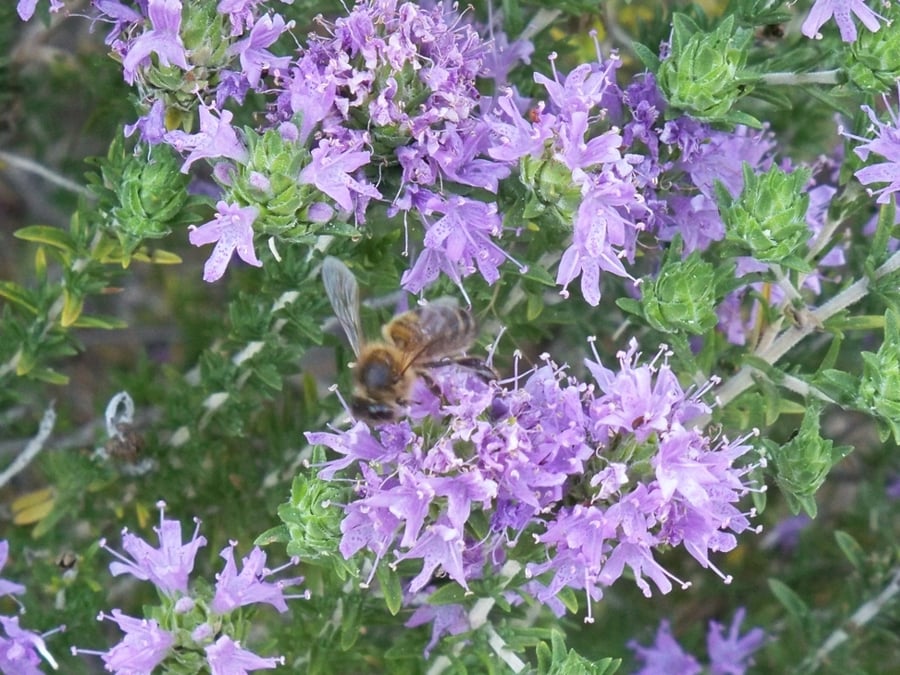
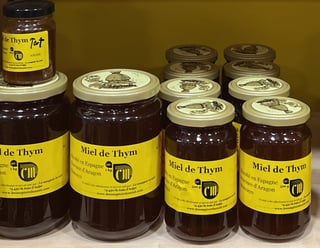
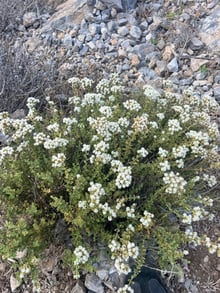
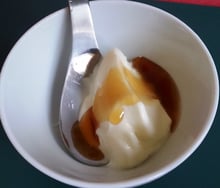

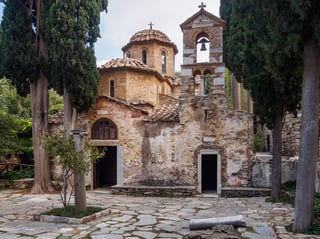
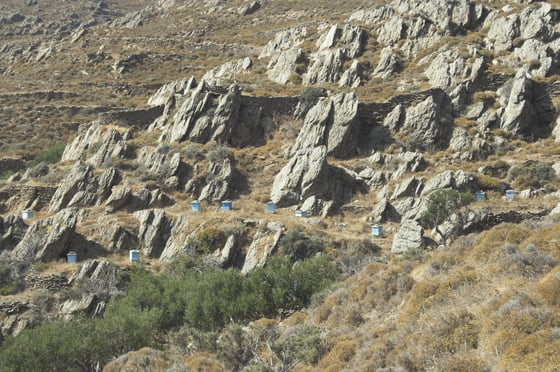
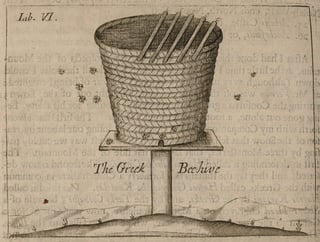
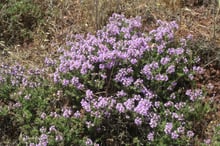 Photo: Oleg Kosterin, iNaturalist | CC BY 4.0Thymus satureioidesThymus satureioides in flower in the High Atlas, Morocco.
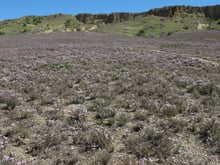 Photo: John Barkla, iNaturalist | CC BY 4.0Thyme at BannockburnWild thyme in flower below the old gold sluicings at Bannockburn, Central Otago.
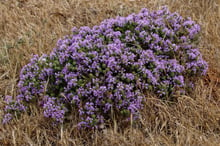 Photo: Tranceliner, Wikimedia Commons | CC BY-SA 4.0Conehead thyme in MaltaConehead thyme in full flower in Malta.
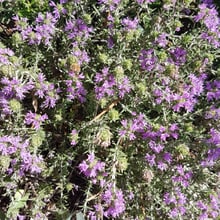 Photo: Marcello Manara, iNaturalist | CC BY 4.0Conehead thyme in SicilyConehead thyme in flower at Syracuse, Sicily.
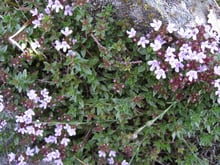 Photo: anasacuta, Wikimedia Commons | CC BY 4.0Caraway thymeCaraway thyme, Thymus herba-barona, in flower in Corsica.
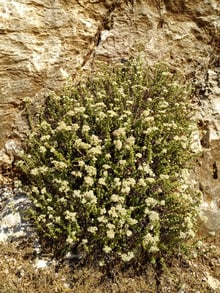 Photo: Ирина Хохрякова, iNaturalist | CC BY 4.0Turkish oregano in TurkeyTurkish oregano, Origanum onites, in flower on Mount Tahtalı, Turkey.
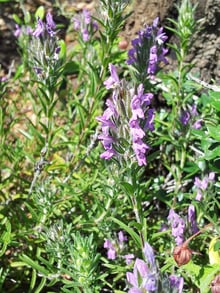 Photo: Dr. Nasser Halaweh, iNaturalist | CC BY 4.0ZahterZahter, Thymbra spicata, in flower at Ein Arik.
)
 Miel de Thym de Souss Massa – Morocco’s geographical indication for thyme honey from a defined area of the Souss-Massa, recognised in 2017 and amended in 2021. The 2017 order defines a honey of the region’s spontaneous vegetation made up essentially of Thymus satureioides.
 DOP Miel de Granada – Its tomillo (thyme) type, named to Thymus sp., requires more than 15 per cent thyme pollen, a colour above 55 mm Pfund and an electrical conductivity, a measure of the honey’s minerals, between 0.3 and 0.8 mS/cm. (Spanish translated to English
  Miel de Provence IGP – Protects the honeys of Provence, and its control plan checks thyme honey as one of its families: a spring crop after rosemary, blended in the hive with what flowers at the same time. The French thyme context is on the Garrigue Honey page. (French translated to English
  Slow Food Presidium: Iblei Thyme Honey – Lists the thyme honey of the Iblei hills in Sicily, from conehead thyme, satra in dialect; Italy’s honey observatory gives the Presidium’s aim as reversing the decline of the thyme stands.